
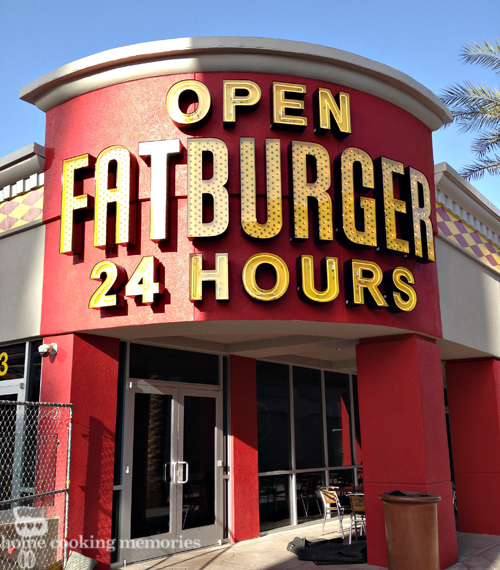
Witness Post: Fatburger
FAT Brands founder Andrew Wiederhorn is stepping down as chief executive of the restaurant company as of March 19, 2026, after a bankruptcy judge approved a deal with creditors for his removal.
The ruling granted a win to FAT Brands’ lenders who have tried for months to force out Wiederhorn after the company issued shares following the bankruptcy filing without obtaining court approval. Under the agreement between the lenders and the company, Wiederhorn’s family members, eight of whom were employed by FAT Brands when the company filed for chapter 11 in January, will leave the company. The company board, aside from its special committee members, will also resign.

In exchange, Wiederhorn, who is stepping down immediately, will receive a total of $5 million in payments over time. “Today’s court approvals mark a clear transition for FAT Brands,” a representative for the company told WSJ Pro Bankruptcy.
According to the judges ruling, Wiederhorn can still bid to buy the company out of bankruptcy and any offer he makes in the future will be treated on equal footing with other bidders in the process.
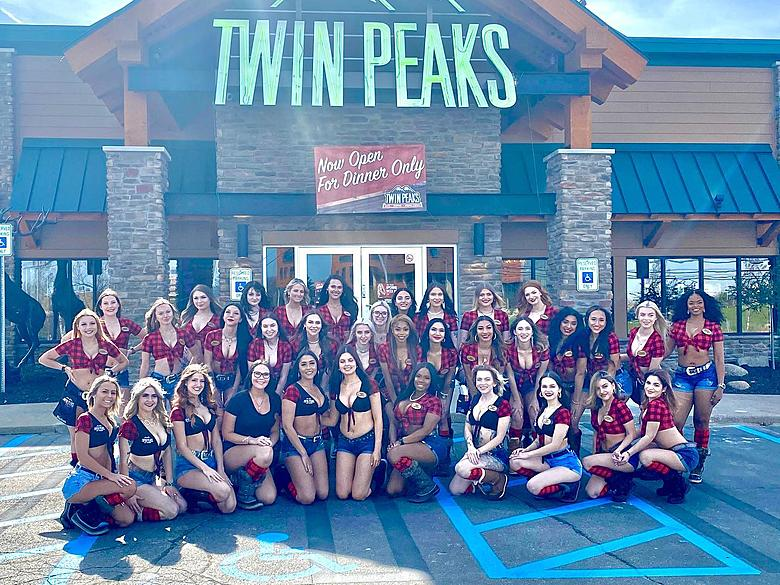
As part of the agreement, the lenders have agreed to provide an $184 million bankruptcy loan, including $46 million in new money. The lenders also have agreed to support Twin Peaks, a FAT Brands-related entity, in its restructuring with $30.9 million in fresh capital, along with a $92.7 million roll-up of their existing debt. Bankruptcy Judge Alfredo Perez in Houston approved the bankruptcy loan on an interim basis Thursday, March 19, 2026.
The operator of restaurant concepts like Fatburger and Johnny Rockets filed for bankruptcy in late January after Jefferies Financial Group-affiliated investment fund 352 Capital sued the company, claiming it defaulted on its debt by failing to deliver certain pledged shares.
FAT Brands sold nine million shares of equity, worth $3.1 million, in the Twin Peaks franchise days after the bankruptcy filing to a small hedge fund that immediately resold them on the public market. Lenders seeking Wiederhorn’s ouster said the company didn’t secure approval from the bankruptcy judge overseeing the case.
The lenders also raised concerns about federal investigations into Wiederhorn for alleged tax crimes and self-dealing. The Justice Department dropped its charges against Wiederhorn last year, and a settlement between Wiederhorn and the Securities and Exchange Commission (SEC) is pending.

Wiederhorn founded Fog Cutter Capital Group, erstwhile known as Wilshire Real Estate Investment Trust Inc., and Wilshire Credit Corporation, a subsidiary of WFSG (Wilshire Financial Services Group). WFSG collapsed during the fall of the 1998 Wall Street financial crisis. Litigation began following questionable investments involving union retirement funds. However, US law enforcement continued a criminal investigation into Wiederhorn’s activities while at Wilshire Credit Corporation, which was ended when Wiederhorn pleaded guilty to filing a false tax return and an ERISA violation by forgiving a loan guaranty from Jeffrey Grayson, the head of Capital Consultants.
But his business cratered in 1999, amid a global debt crisis. Wilshire spiraled into bankruptcy, but that was the least of Wiederhorn’s problems.
He had formed a symbiotic relationship with Grayson, whose company handled union pension-fund investments. Grayson was actually running a Ponzi scheme, funneling money to Wiederhorn in exchange for personal loans.
When Wilshire collapsed, Grayson’s clients took the hit, resulting in what federal officials called the largest union pension fraud in U.S. history. Wiederhorn also paid a $2 million fine and served 14 months in federal prison from 2004 to 2005.
In April 2013, while conducting a CBS Undercover Boss press interview, Wiederhorn attributed his jail sentence to bad legal advice he had received on a business deal, which led to the violation of the pension fund law, ERISA. The controversy around Wiederhorn continued when the board of directors of Fog Cutter Capital Group voted to give Wiederhorn a bonus equal to the fine he paid the US government, and paid his salary during the entirety of his incarceration — despite Federal rules that a convict can not engage in business dealings while imprisoned. The immediate result was that NASDAQ delisted Fog Cutter Capital Group, which discontinued its ability to trade shares in the public markets.
There were also some long-term negative result. For example, Wiederhorn had his membership in the influential Multnomah Athletic Club (MAC) suspended in October 2004. The Wall Street Journal described the MAC Club as “the premier social center for executives, politicians and socialities in this city of more than half a million.” After finishing his sentence, Wiederhorn initiated a legal fight against the Club, in a law suit claiming that it had treated him unfairly. Wiederhorn claimed that other Multnomah Athletic Club members who have committed crimes were not disciplined as harshly as he was. As an example he cited his former business associate, Lawrence Mendelsohn, who had pleaded guilty in the same case involving Capital Consultants, but served no jail time.
Fatburger Commute & Real Estate: Portland & Gearhart
Wiederhorn lost the MAC Club lawsuit and found himself “something of a pariah” as a 2011 Oregonian newspaper article described his situation. Fog Cutter Capital Group owned a major position in Fatburger, a restaurant chain based in southern California, and because he needed to devote more attention to the restaurant chain, moved to Beverly Hills in 2009, saying that will make his commute to Fatburger’s then Santa Monica headquarters considerably easier and cheaper than he could from Portland.
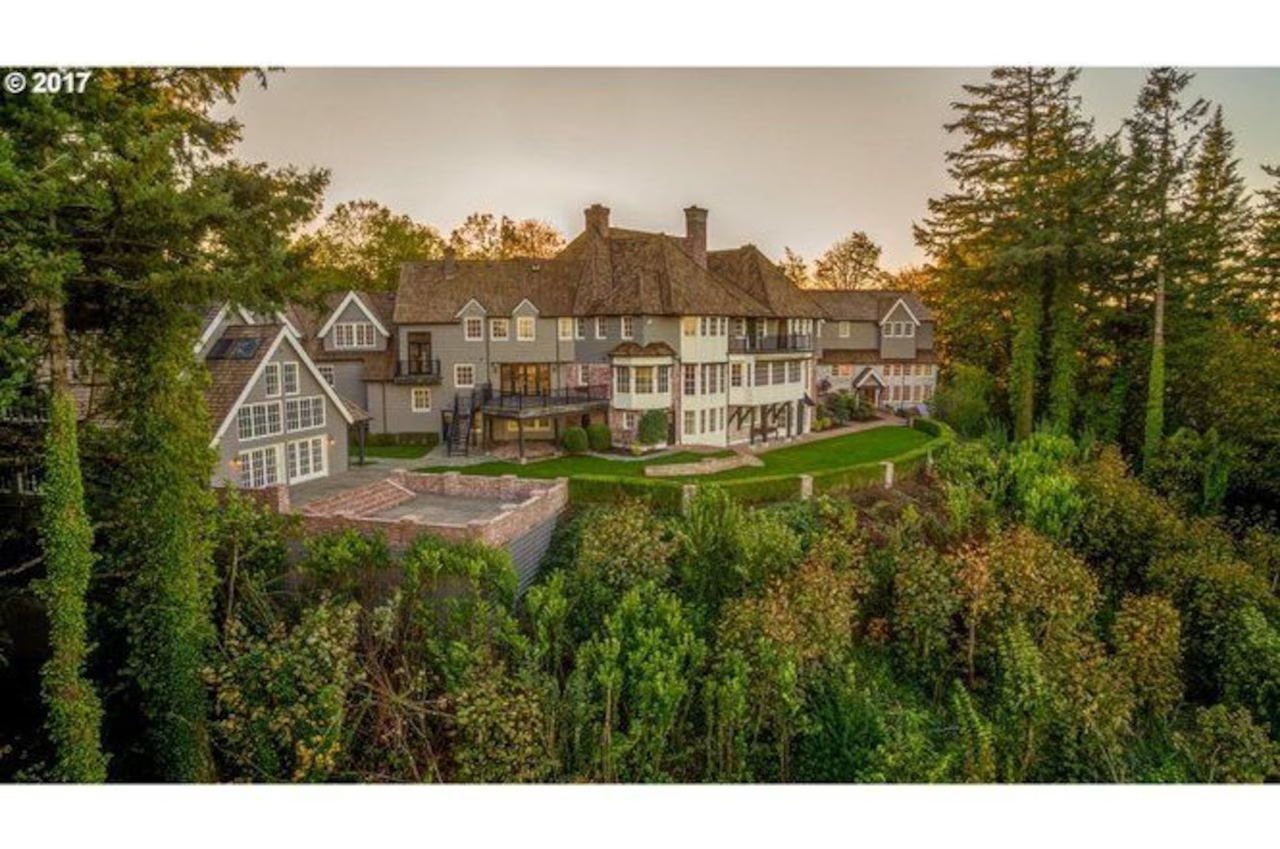
His home in Portland, a 25,000-square-foot (2,300 m2) mansion that he dubbed “The Ivy,” was put up for sale in July 2011 for $5.7 million. Wiederhorn had acquired the mansion and its properties in a trade from Casey Powell, former CEO of Sequent Computer Systems in 1995, and approximately $1.5 million in cash. He then spent $8.7 million constructing a new wing to the house and other improvements, including indoor basketball court, ballroom, 2,000-square-foot pool, 10 bedrooms, a 5-car garage and expansive landscaping. Wiederhorn said he plowed those dollars into a primary residence for his wife, Tiffany, and their six children.
After the Wiederhorns moved to Los Angeles, the Portland home fell into disrepair and the bank placed the property in foreclosure. The upkeep of the grounds alone made the mansion a problem for its wasteful high water usage. In 2015, the property was sold at auction to investor Mike Erickson for the bargain price of $1.95 million.

Andrew Wiederhorn also owned the largest home in Gearhart, Oregon, on an exclusive stretch of the north Oregon coast. Dubbed the Green Pasture Estate, it is approximately 9 acres of prime oceanfront property. There was some community backlash in Gearhart after Wiederhorn fenced off a traditional public access path, known locally as the Hager Avenue Path to Little Beach, on the Oregon Coast, a prized destination for shell collecting and sunsets when the sun was out. Located at 760 Hager Street in Gearhart, the estate was valued at $9 million from 2024 tax assessments. It is believed to hold a valuation of $4.64 million today (2026).
Wiederhorn also holds the title to a lot at the corner of Pacific Way and N. Cottage Avenue in Gearhart that had been a former gas station. The corner lot was not for sale from the Wiederhorn estate due to some sunken gasoline tanks that are believed to be on the property.
People are wondering what Andrew Widerhorn’s next move will be. Stay tuned and steer clear.
===============================================
Sources:
 Henry E. Hooper