
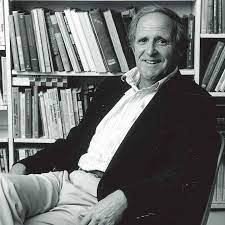
Victor H. Vroom (1932 – 2023)
SOM Revisited: Victor H. Vroom
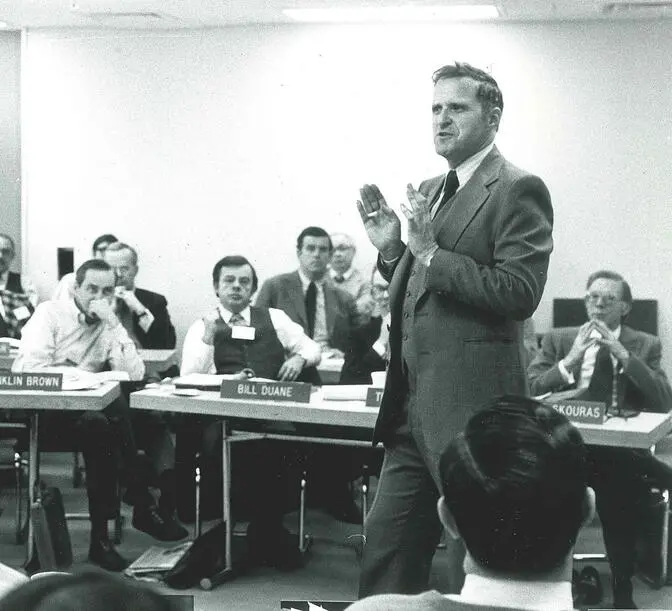
Walking quickly through the Hall of Mirrors, Professor Vroom was in a hurry. He had lots to do and little time, or so it seemed in the moment. “I have this simple set of questions that I have to take to the presidents and chairs of the largest companies in the country,” he was heard saying. “I can help them understand themselves as leaders. Let me at ’em!” Vroom was heralded as one of the “founding fathers of Yale’s School of Organization & Management.” A leader in the field of Organization Behavior, Vroom taught one of the perennial favorite first year classes, called Individual and Group Behavior, nicknamed IGB. The class was one of the many babies he raised in New Haven.
In practical terms, Vroom believed that employee behavior results from conscious choices among alternatives whose purpose it is to maximize pleasure and to minimize pain. And he conjectured that their on-the-job performance was based on individual factors such as personality, skills, knowledge, experience and abilities. And why? The end result would be an array of rewards, that he called Valences, that motivates individuals in leadership. With all of these moving variables, how can you test them out in the real world? That single question powered Vroom as he charged ahead in constant pursuit for answers.
Musical Beginnings
Victor Vroom was born on August 9, 1932 in St. Lambert, a suburb of Montréal, Quebec, Canada. He was first interested in music, playing the saxophone and clarinet in high school. He had no ambitions toward academia. After high school he was discouraged by his father from going on a Big Band tour of Canada, instead he suggested he become a bank teller. Not liking that idea, Vroom enrolled at Sir George Williams College (now Concordia University) and studied psychology. He transferred colleges a year later and earned his BS from McGill University in Montréal, where he added an MS degree in industrial psychology.
He then headed to the states where he earned a Ph.D. from the University of Michigan. Vroom played music professionally, organizing a jazz band in Ann Arbor he called The Intellectuals. His dissertation, “Some Personality Determinants of the Effects of Participation,” received an award from the Ford Foundation and was published by Prentice Hall in 1960. During these years, he met and married a fellow Ph.D. student, Ann Workman.
Starting his post-doctoral work in 1960, Vroom became an assistant professor at the University of Pennsylvania, and the next year he and Ann became parents with their first born son, Derek. In 1963, Vroom moved to Carnegie Mellon University, and the following year his family welcomed their second son, Jeffrey. [1]
Kingman Brewster Beckons
In the spring of 1972, Yale President Kingman Brewster invited Victor Vroom to visit New Haven. Brewster hoped to lure Vroom away from Pittsburgh and to move to New Haven. Brewster offered Vroom a leading role in the creation of a new graduate school of business at Yale. With this mission in mind, Prof. Vroom joined Yale’s Department of Administrative Sciences, where he took on the role of department chair. He knew he was taking a big risk, because administrative science programs were in a difficult financial situation, and there was a possibility it would be eliminated entirely. As added incentive, Brewster threw in an appointment in the Department of Psychology, where Vroom would became the associate Director of the Institution for Social and Policy Studies (ISPS).
Over the next few years, Vroom and others struggled to start a new graduate program at Yale: not an MBA program, not a non-profit management school, and not a public service program. Those were area dominated by Harvard, Penn, and Univ. of Chicago. Instead they wanted the new programs to have the elements of all three. The school was named the School of Organization and Management (SOM) and the graduate degree program was called a Masters in Public and Private Management (MPPM).
Yale SOM’s founding dean, Bill Donaldson, had been a leader in private business, public service and philanthropy. Donaldson noted, “Perhaps the most striking aspect of the initial years [at SOM] was the pervasiveness of Organizational Behavior (OB) in the curriculum and the culture. Essential to education at SOM from the first day of class was building a collaborative community of students who would support one another in learning. In addition, the emphasis on individual and group behavior gave students knowledge and experiences that would inform their work as future leaders in organizations where working effectively in groups is required to be successful.” Vroom’s finger prints were all over the new school.
Art Swersey, now an emeritus professor of operations research, started at Yale during SOM’s inaugural year, 1976, and became a beloved fixture on the faculty. He recalled: “When I think of Vic, I think warmly of the original OB faculty he helped build, which had a huge positive impact. When the early alumni write their thoughts at the reunion, they often have nice things to say about me and others but they always say OB had the greatest influence on their careers.”
The offices of ISPS were located down Prospect Street from SOM in New Haven, while his home with Ann and the boys was on the Connecticut coast. The couple divorced in 1989.
Expectancy Theory
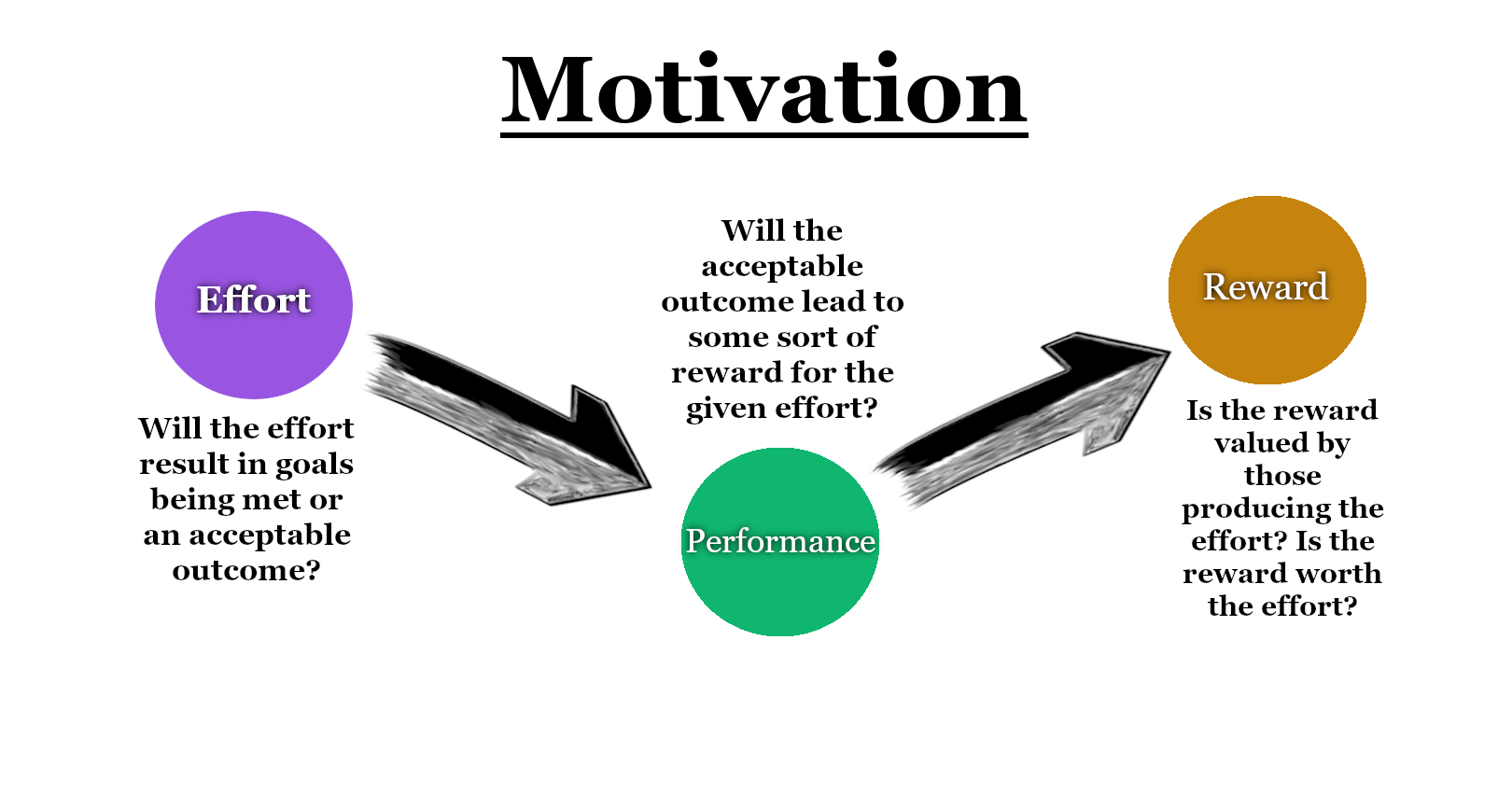
His primary research was on what has been titled, the Expectancy Theory of Motivation. Vroom’s theory attempts to explain why individuals (mainly leaders) choose to follow certain courses of action and prefer certain goals or outcomes over others in organizations, particularly in decision-making and leadership. A prolific writer, Vroom authored and co-authored a plethora of scholarly articles. He also wrote books; the most well-known are Work and Motivation, Leadership and Decision Making and The New Leadership.
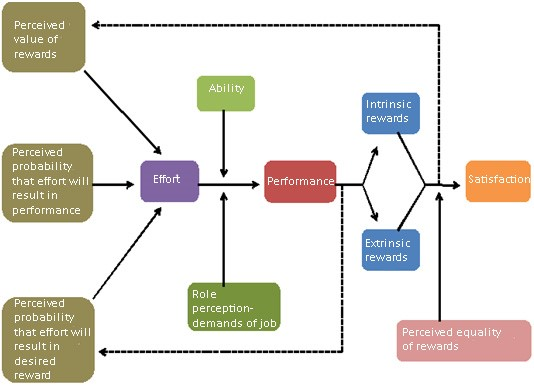
In his expectancy theory, Vroom suggested that motivation is largely influenced by the combination of a person’s belief that effort leads to performance, which then leads to specific outcomes, and that such outcomes are valued by the individual. Several researchers at the time were working on parallel theories of leadership and motivations, mainly Lyman Porter and Edward Lawler. Together with the versions by Porter, Lawler and others, Vroom’s formulation of expectancy theory of motivation is generally considered as making major contributions to the theory, having stood the test of time and it’s inherent historical scrutiny.
Boiling it down to a mathematical formula, Vroom described the valence of a specific outcome as a “monotonically increasing function of the algebraic sum of the products of the valences of all other outcomes and his conceptions of its instrumentality for the attainment of these other outcomes.” Along with this statement, Vroom added a second proposition that is central to his theory: “the force on a person to perform an act is monotonically increasing function of the algebraic sum of the products of the valences of all outcomes and the strength of his [or her] experiences that the act will be followed by the attainment of these outcomes.” [2] Spoken like a professor of one key music, right?
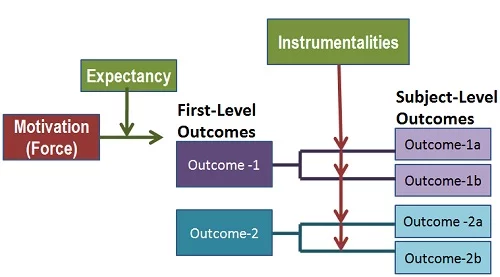
While there are many graphs drawn in the literature which try to capture Vroom’s theories and those of Porter and Lawler, few seem to summarize it either succinctly or exactly. At one point he mentioned to his students at SOM that he had created a simple hand-held device that he could use with executives. After a few clicks of a button, he could decipher what type of leader they were and what level of satisfaction they had in their jobs.
Vroom took his research well beyond the classroom and into the world of business. Over the course of decades, Prof. Vroom surveyed approximately 200,000 managers about how they would respond to different leadership scenarios. Then he wrote about his survey findings. Beyond his writing as a theorist, he worked as consultant to over 100 Fortune 500 corporations such as General Electric and American Express, which gave credence to his theories in the real world.
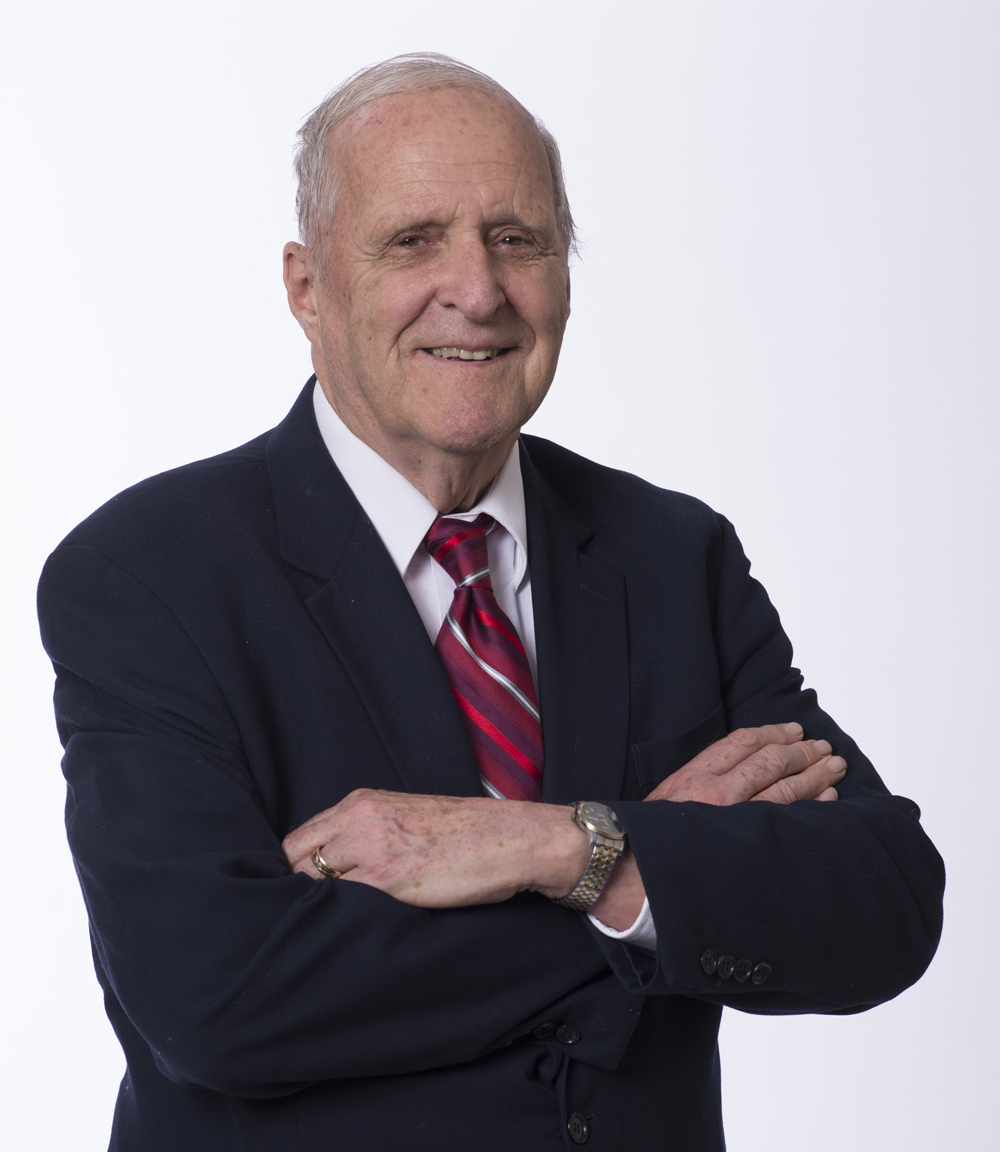
SOM Professor, James N. Baron, was a longtime colleague of Vroom’s and he remembered him as the leading figure in the nearly 50-year history of the school’s organizational behavior group. “He was without question the most influential person not only in the history and evolution of Organizational Behavior (OB) at Yale, but arguably also in the formation and early evolution of SOM itself,” said Baron. “Victor was and will always be the embodiment of OB at Yale. He built up the group and steered it through some difficult times, with grace and poise and wisdom. We are all his legacy. I have met very few people in my life who literally deserve the description of being ‘larger than life,’ but Victor was most definitely one of them.”
Vroom’s former colleagues and students recall not only the quality and impact of his scholarship, but also a rich and unforgettable personality, using terms like “generous,” “good soul,” “wisdom,” and “unbounded kindness” when describing him.
Prof. Jeffrey Sonnenfeld, senior associate dean for leadership studies, said, “I’ve known Victor as a colleague personally for almost 40 years. He was a globally celebrated intellectual… His pioneering research combined with his generous personal warmth, steadfast virtue, and devotion to the school’s ideals made him a magnet who drew so many to SOM, both faculty and students. His selfless, bold dedication to the school, to colleagues, to his friends, and to his family never wavered.”
Vroom’s career produced a long list of academic laurels. He wrote and published nine books in all and 75 scholarly articles. He was elected as a fellow of the American Psychological Association, the Society for the Psychological Study of Social Issues, and the Academy of Management. He was honored with the Distinguished Scientific Contribution Award from the Society of Industrial and Organizational Psychology in addition to being one of its past presidents. His contributions were recognized by the Academy of Management with both the Distinguished Scholarly Contribution Award and the Lifetime Achievement Award.
Victor Vroom lived in Guilford, Connecticut, with his second wife, Julia Francis, and their two sons, Tristan and Trevor. He died on July 26, 2023, at the age of 90.
[1] Many of the notes and ideas for this Witness Post are borrowed generously from the Yale obituary in honor of Vroom: https://som.yale.edu/story/2023/remembering-professor-victor-h-vroom-1932-2023.
[2] Koppes, Laura L. (2014). Historical Perspectives in Industrial and Organizational Psychology. New York: Psychology Press. p. 364.
Other thoughts and ideas come from my memory bank of this professor of note in my formative graduate school years (1984-1986).
 Henry E. Hooper