

Witness Post: John T. Downey
Jack Downey came up to me from the bleachers at Harvard University’s Indoor Athletic Building (IAB), where he was a spectator at a Yale vs. Harvard wrestling meet. I had just lost a close, one-point match to the heavyweight All-Ivy senior at Harvard that afternoon. Despite weighing 175 pounds, I must have impressed Downey enough to come up to me with his congratulations. “I think you did a great job today against a good wrestler at Harvard. How did really well for a little guy. Please call me Jack.” While I did not know his back story at the time, I was impressed with his enthusiasm for the sport and his admiration for the underdog. He said he was aYalie who was graduating from law student that spring from Harvard (1976). In the same conversation he emphasized that he was moving back to his roots in Connecticut after earning his law degree.
He was a imposing physical man with broad shoulders, a Kirk Douglas chin and these intense eyes outlined by wide glasses and bushy eyebrows. His brows were animated up and down while he spoke. I couldn’t help but focus my vision on his facial expressions. He said he was looking to get into law and eventually politics, because those followed his family traits.
I had always wanted to get back in touch with Jack, after his law school years. But when I moved away from Connecticut, to California and then Maryland, we lost contact and I never saw him again. My loss. He was a man with an amazing back story, more than worthy of a Witness Post.
Below are a series of stories, from the New York Times and other sources about this man and his life as the “Longest-servind American Prisoner of War (POW) in US history.”
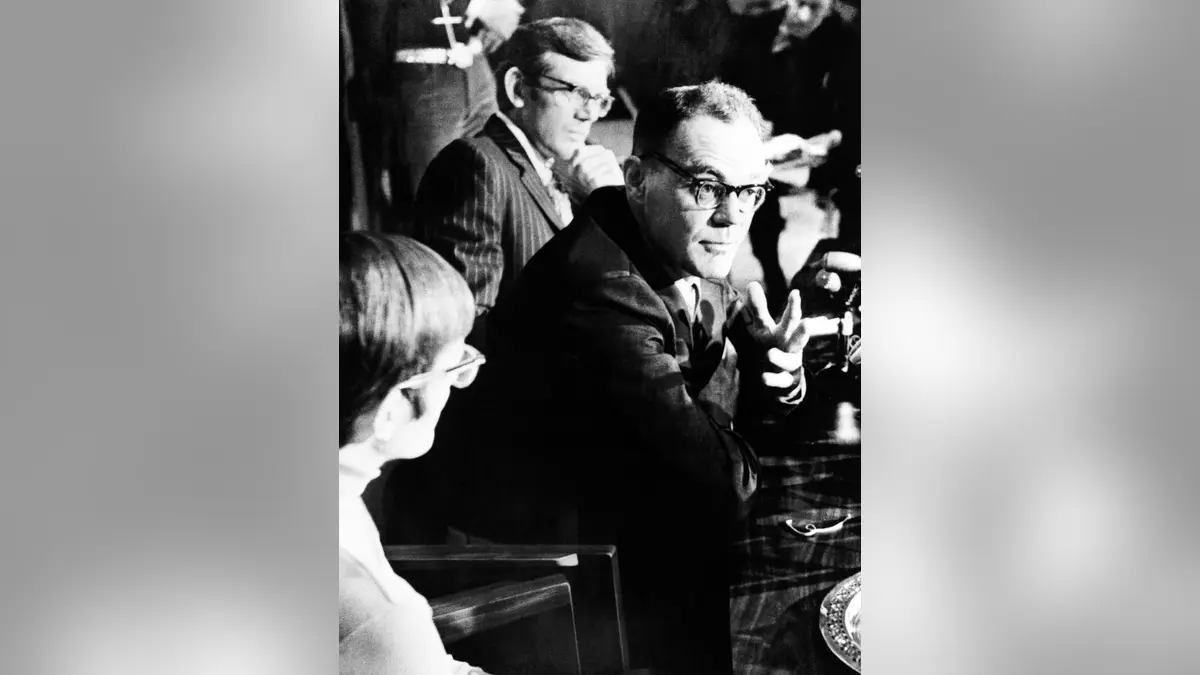
John T. Downey Dies at 84; Held Captive in China for 20 Years
Published in the New York Times, Nov. 19, 2014
John T. Downey, a former C.I.A. agent who became the longest-serving American prisoner of war by surviving more than 20 years in Chinese prisons after he was shot down over Manchuria in 1952, died on Monday at a hospice in Branford, Conn. His family announced the death. He was 84.
After his release in 1973, Mr. Downey graduated from Harvard Law School at 46, served in the Connecticut state government, including a term as commissioner of the Public Utility Control Department, ran for the United States Senate and became a juvenile court judge. He said many times that he did not want to be defined only as a war captive, but his story was so compelling that the Central Intelligence Agency gave him its highest awards and, uncharacteristically, made them public.
Mr. Downey was captured in November 1952, during the Korean War, while on a mission in Manchuria, in northeast China, to rescue a courier who had worked for American spies.
Mr. Downey and another C.I.A. paramilitary operative, Richard F. Fecteau, were aboard a C47 transport plane, on their way to make the rescue, when it was shot down by Chinese artillery. According to a C.I.A. history written in 2007, the courier, turning his back on his American associates, had tipped off the Chinese about the rescue plan. The pilot and co-pilot were killed. Mr. Fecteau and Mr. Downey were captured.
In their first interrogation, a security officer who had clearly been briefed by the courier pointed at Mr. Downey. “You are Jack,” he said in English, according to the C.I.A. “Your future is very dark.”
More interrogations followed, but the men gave up as little intelligence as possible, the C.I.A. said.
At the time, the United States was engaged in covert operations in China in the hopes of organizing resistance to the new Communist government of Mao Zedong and fomenting a rebellion there. A revolt, the Americans hoped, would divert Chinese forces from the Korean Peninsula, where they were helping Communist forces from the north in their struggle with South Korea and its United Nations allies, most of them American troops.
Mr. Downey and Mr. Fecteau were put in leg irons. Nobody outside of China knew what had happened to them, and in December 1953, Allen Dulles, the director of central intelligence, wrote to their families saying they were “presumed dead.”
But in November 1954, the Chinese government announced that the two were alive and serving sentences as convicted C.I.A. spies. Mr. Fecteau was sentenced to 20 years and Mr. Downey to life.
They remained imprisoned until relations between China and the United States warmed in the early 1970s, culminating with President Richard M. Nixon’s groundbreaking visit in 1972. Mr. Fecteau was released in late 1971, after serving 19 years and 14 days.
Nixon personally intervened to secure Mr. Downey’s release after the prisoner’s mother, who had visited China five times to plead on her son’s behalf, suffered a severe stroke. He was freed on March 13, 1973, shortly after the United States acknowledged for the first time that Mr. Downey had been connected to the C.I.A. On his release — 20 years, three months and 14 days after his plane had been shot down — China said he had “confessed to his crimes.”
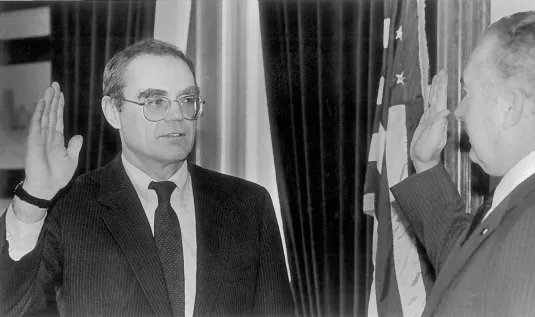
Because they were seized during the Korean War, Mr. Downey and Mr. Fecteau have long been described as prisoners of war, though they were not uniformed service members. Col. Floyd Thompson, who was imprisoned for nearly nine years during the Vietnam War, is America’s longest-serving uniformed serviceman taken prisoner.
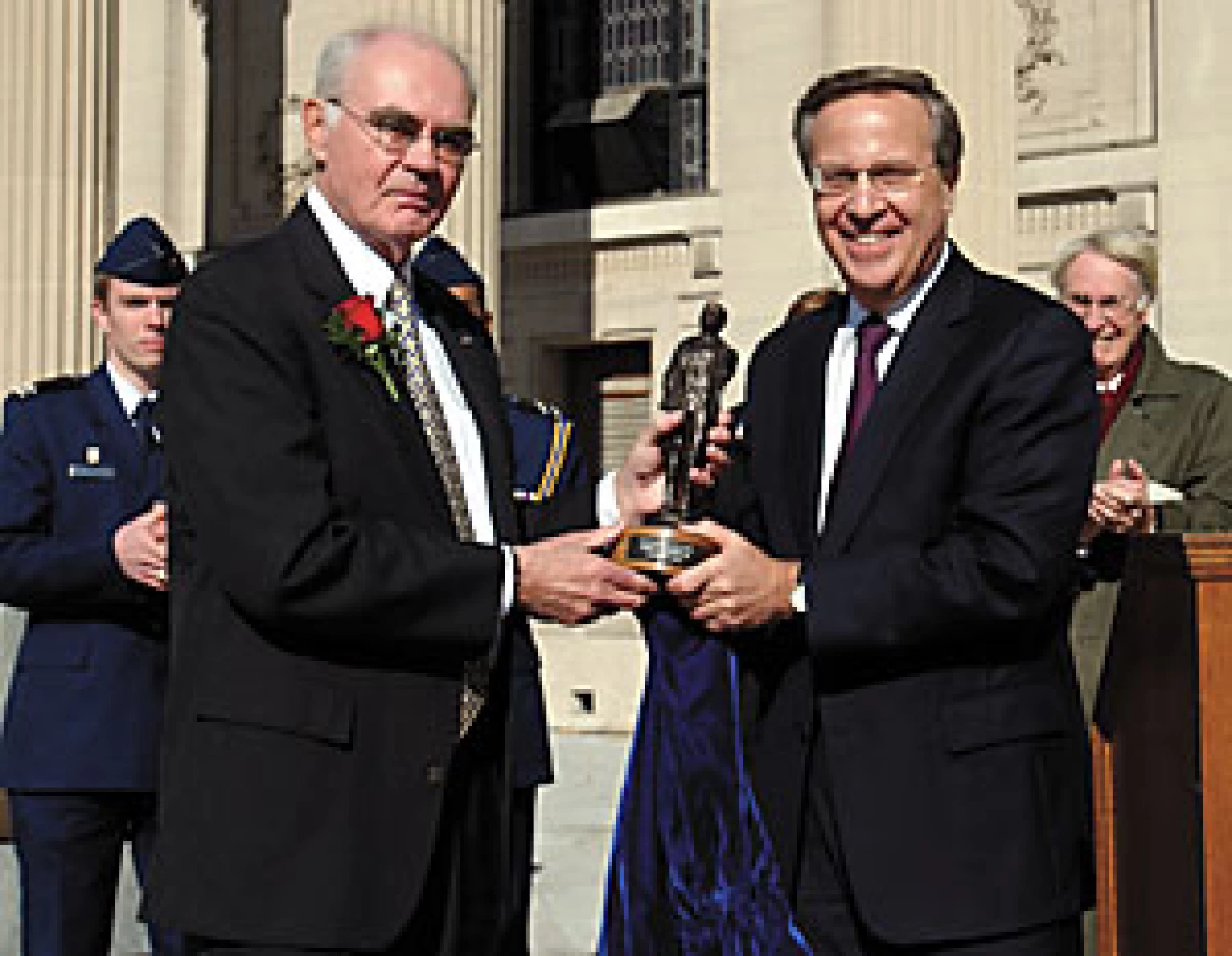
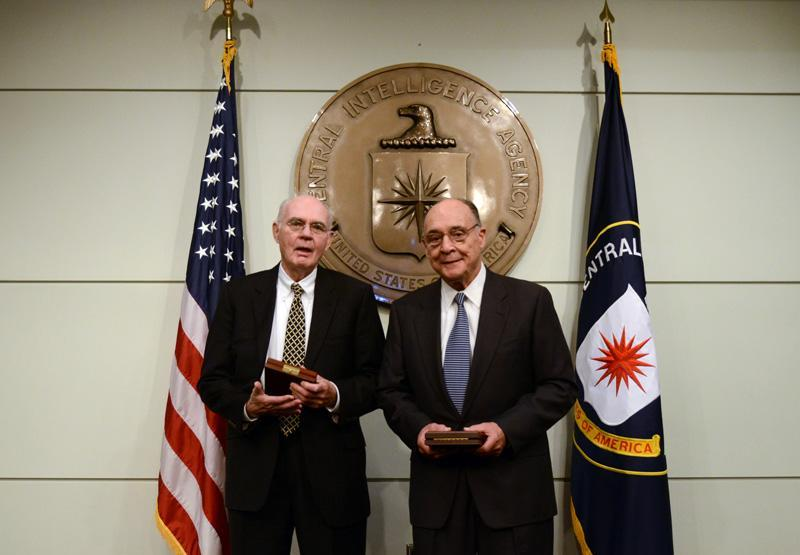
Last year, John O. Brennan, director of the C.I.A., presented Mr. Downey and Mr. Fecteau with the Distinguished Intelligence Cross, the agency’s highest award for valor.
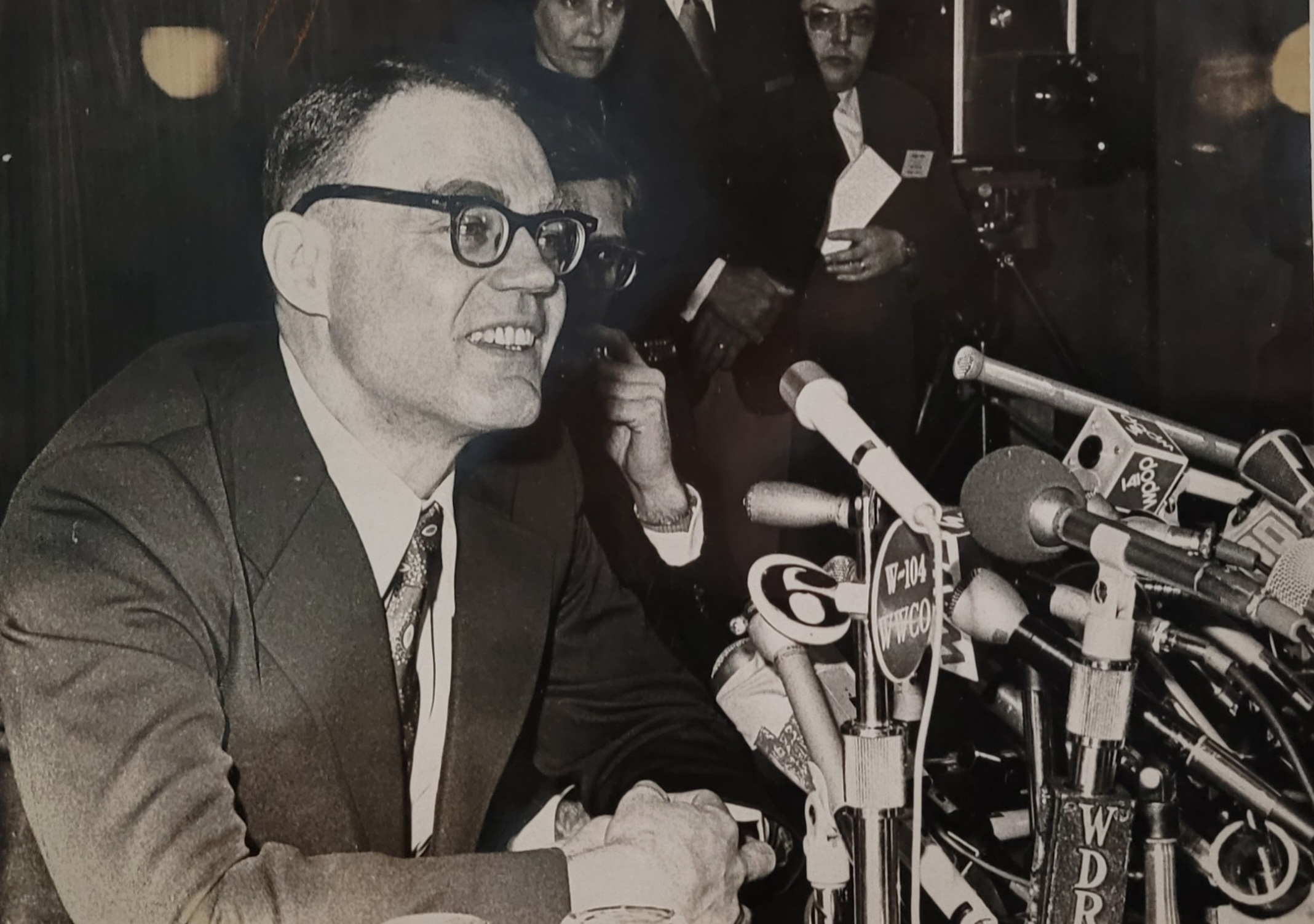
“It has been 61 years since Dick and Jack took to the skies over North Korea and China during the Korean War,” Mr. Brennan said, “and their ordeal remains among the most compelling accounts of courage, resolve and endurance in the history of our agency.” In 2010, the C.I.A. commissioned a documentary film on the men’s experiences that was intended for internal training purposes. The movie, “Extraordinary Fidelity,” has since been released to the public and is available online.
Mr. Downey, who lived in New Haven, Connecticut for many years, is survived by his wife of 40 years, the former Audrey Lee; his son, Jack; and his brother, William.
Downey’s Early Life
John Thomas Downey was born on April 19, 1930, in Wallingford, Connecticut to John E. Downey, a probate judge, and Mary Downey, a middle school teacher. His grandfather had served in the Connecticut General Assembly. His father had died in a car accident, when John was a boy. His mother move John and his two siblings to New Britain, where she continued her teaching. John attended St. Joseph’s School and the Choate School, where he was class president. He was the captain of the wrestling team and a writer for the literary society and the Choate newspaper. He was also a member of the choral club, glee club, honor committee, and student council. At graduation from Choate, Downey was voted the “most popular, most versatile and most likely to succeed.”
Downey went to Yale on an academic scholarship. While at Yale he played football, rugby and wrestling. He inducted into St. Anthony Hall, a literary and social club on campus. His plan after college was to attend law school and become a lawyer like his father. He graduated with a bachelor’s degree in English in 1951. Instead of going directly to law school, however, he accepted an offer to join the C.I.A. after an agency recruiter contacted him in the spring of his senior year.
His first assignment was to go to Korea to help train a team of Chinese agents inside China. While there, he was ordered to participate in the rescue of the courier, who had asked to be taken out of China. The C.I.A. history refuted suggestions over the years that they had jumped on the flight as a sort of “joy ride.” The C47 took off from Korea.
The plan was for the courier to be strapped into a harness that would be hung from a line strung high off the ground between two poles. The idea was that the plane would fly low and slow enough to be able to drop a cable and hook the line. Mr. Downey and Mr. Fecteau would then hoist the courier up with a pulley. As the plane swooped in, however, it was hit by antiaircraft fire.
As a prisoner, Mr. Downey said, he spent much time in solitary — six years in one stretch. He studied Russian and French and was given books and magazines in English. He did not study Chinese, he said, because he felt that would have amounted to an admission that he was not going to get out. He said he was not tortured. Downey kept in physical shape by doing daily jumping jacks, sit-ups, push-ups and burpies, which he had always done as an athlete at Choate and Yale.
Downey came to certain conclusions as his imprisonment stretched on, year after lonely year.
“You have to come to terms with some very hard facts and learn to narrow your expectations,” he told People magazine in 1978. “You face the fact that this is where you’re at, and where you may well be for the rest of your life. You discover the world can get along very nicely without you.”
Aging in Place
Those of us who met Downey in the mid 1970s were amazed that he returned to law school at 43. And we were even more amazed at his youthfulness. He look far younger than any of his Yale classmates in the class of 1951, as if those years as a POW he had physically frozen him in place. As one Yalie wrestler observed, “he maintained a surprisingly youthful appearance for many years post-imprisonment. His age defying appearance, however, eventually faded and he assumed the visage of someone his own age. Before too long he looked even older than his age.”
Time has a way of catching up to all of us.
Lessons for us all
When Downey returned to New Britain, he was truly an international celebrity. At the same time he vowed to not reflect out loud on his years in captivity. He stuck by that vow, giving few interviews, and even fewer POW details. He did loosen that vow in 2005 with a conversation on Slate.com, Downey provided the most detailed account to date of his years in prison. His interview was with Slate contributor Andrew Burt, who was a Knight Law and Media Scholar at Yale Law School.
“Here was a man who played a key role in history, and he could have very easily cashed in on his public persona,” Burt said. “But instead, what I found when I got to know him was a quiet, quintessential public servant who’s not in it for himself, and who seemed to get the most fulfillment dedicating his time and efforts to others.”
 Henry E. Hooper