
Powell’s Pals: The One Who Went Native
Frank Hamilton Cushing was born in the borough of North East, Pennsylvania, in a small town near Erie. His family moved when he was still young to Western New York. As a boy his family called him “Cushy” and he took an interest in the Native American artifacts in the surrounding countryside, and he taught himself how to “knap flint” (make arrowheads and knives from the rock flint). He was innately curious! When he was only 17, he published his first scientific paper, “Antiquities of Orleans County, New York.” The paper was a report on Native American home sites and artifacts he had discovered in rural New York, where he grew up.
After a brief period at Cornell University, where he curated an exhibit of Indian artifacts, Cushing attracted notice from Spencer F. Baird, Secretary of the Smithsonian Institution. Cushing had sent his published paper to Baird, who later included it in the Smithsonian’s annual report in 1875.
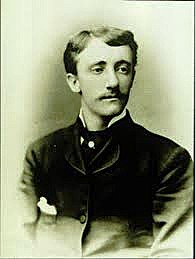
And at the young age of 19, Cushing was appointed by Baird as curator of the ethnological department of the National Museum in Washington, D.C. There he came to the attention of John Wesley Powell, who was leading the newly formed Bureau of American Ethnology (BAE).
Going Native at Zuni Pueblo
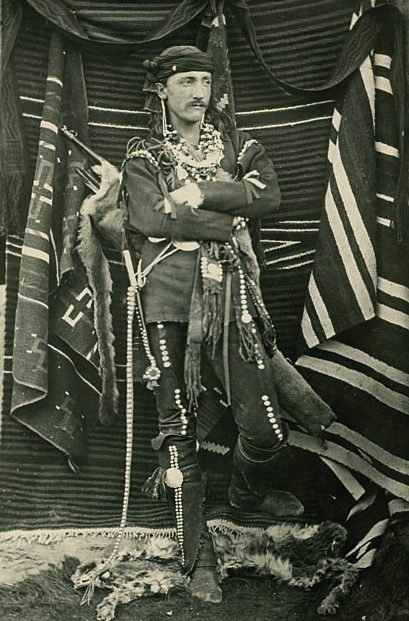
Early in his Smithsonian appointment, Cushing was invited by J. W. Powell to join the James Stevenson anthropological expedition to New Mexico.[2] The group traveled by rail to the end of the line at Las Vegas, New Mexico, then they traveled on foot to Zuni Pueblo. Fascinated by this Native culture, Cushing gained permission to stay at the pueblo. He soon “went native,” and commenced living with the Zuni families. Cushing was supposed to stay at the Zuni Pueblo for about three months. However, he stayed for nearly four and a half years (1879–1884), becoming anthropology’s first Participant Observer.[3]
After some initial difficulties, Cushing was generally accepted by the community. He was adopted by the Governor of the Pueblo, Patrico Pino (Ba:lawahdiwa), who gave Cushing a Zuni name, “Tenatsali”, meaning “medicine flower.” Cushing was allowed to witness and participate in Zuni cultural and spiritual activities. In 1881, Cushing was initiated into the warrior society, the Priesthood of the Bow. Yet, there was always faction among the priesthood who disliked and distrusted Cushing. At least once, members of the Zuni community considered killing him, as they believed he was after their sacred secrets. Despite his later success and quasi-acceptance, the same charge frequently brought him dangerously close to local definitions of “witchcraft,” which was taboo and a serious violation of Zuni norms.
Cushing often recounted Zuni folk tales and legends. In 1882 he took his Zuni father, Pedro Pino (Lai-iu-ah-tsai-lu), and fellow Bow members on a tour to the Eastern United States to show them his culture. Their journey attracted considerable press attention, as there was great interest in American Indians of the West. Cushing considered the tour part of what he called “the reciprocal method.” He introduced his anthropological subjects to his own culture, just as they had introduced him to theirs (Green 1990:166). He was a century ahead of other practitioners of this process, now called “Reflexive Anthropology.”[4]
Personal Life
During their Eastern tour, Cushing married Emily Tennison Magill in Washington, DC. His wife, Emily, and her sister, Margaret, returned with Cushing and other members of his party to Zuni.[5]
Zuni Boundaries and Haze with Hayes
Cushing became embroiled in political intrigue soon after he returned to the Southwest from his expedition to the East. In 1877 President Rutherford B. Hayes signed a bill designating the boundaries of the new Zuni reservation. One 800-acre (3.2 km2) section of Zuni territory, called the Nutria Valley, had been left out parcels of property. Three land speculators, including Major W. F. Tucker, arrived in Zuni in late 1882 to claim the parcel for a cattle ranching operation. The angered Zuni appealed to Cushing for help, and he wrote letters to newspapers in Chicago and Boston in the Zuni’s defense. Major Tucker’s father-in-law was US Senator John A. Logan from Illinois, pulled hard on his political guy-wires. Logan was influential in the Republican Party and would become a vice presidential candidate in 1884. Although the administration of President Chester A. Arthur redefined the Zuni boundaries in 1883 to correct the Nutria Valley omission, the damage to Cushing’s reputation and Pueblo standing had been done.
Senator Logan, who felt besmirched by the episode, resented having his personal reputation tarnished in the “land grab” imbroglio. As US Senator, he threatened director John Wesley Powell of the Bureau of American Ethnology with funding cuts if Cushing’s stay in Zuni were not terminated. Cushing was forced to return to Washington, ending his landmark efforts among the New Mexico native tribes.
Cushing returned to Zuni briefly in 1886 as leader of the Hemenway Southwestern Archaeological Expedition. He was limited by health constraints and forced from this position by his health problems. In 1889 he was succeeded as leader by ethnologist J. Walter Fewkes, who had little field experience.
Professional Controversy
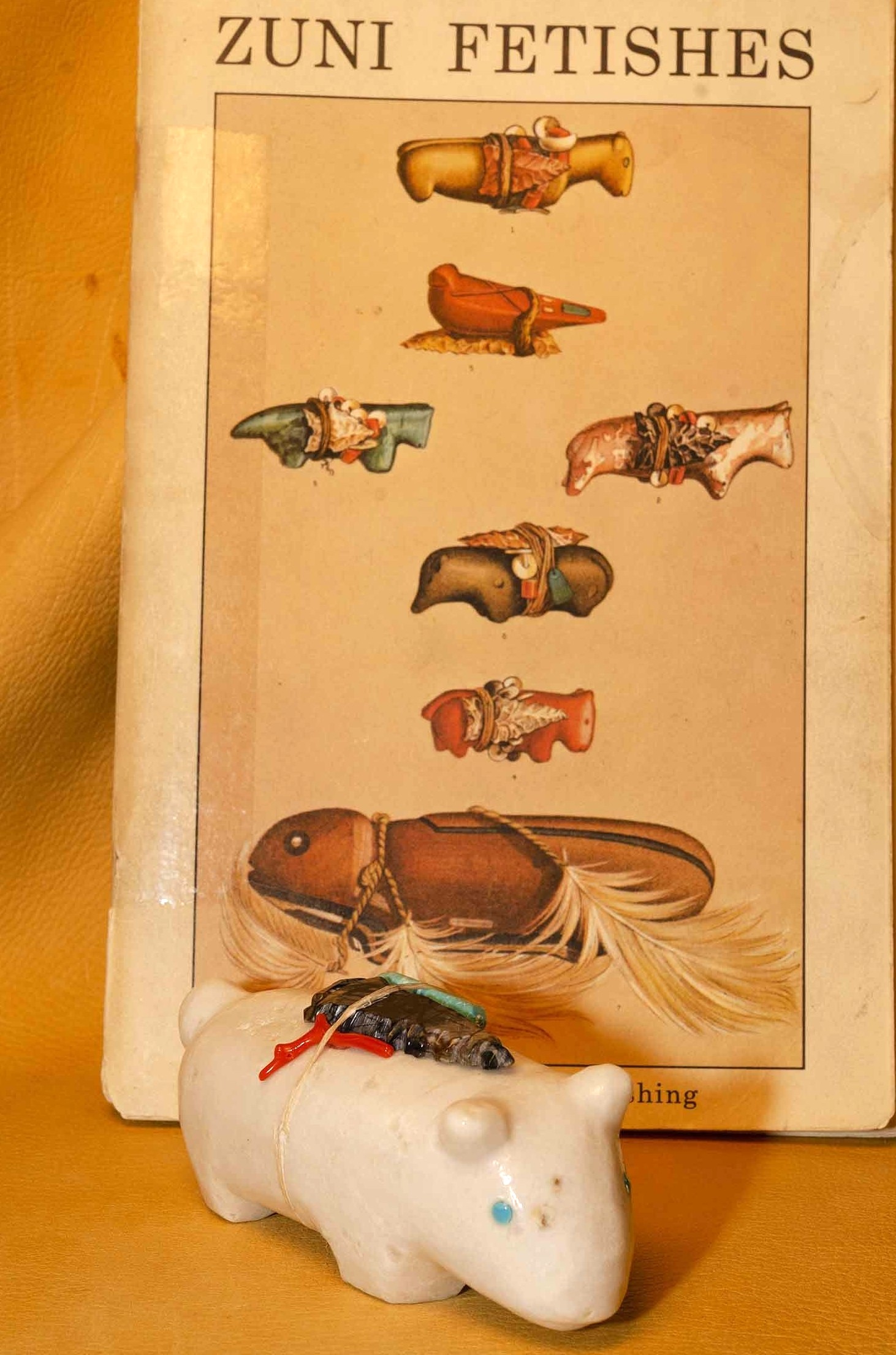
Among the forces driving the growth of the Smithsonian Institution at the end of the 19th century was John Wesley Powell’s belief in the need to document Native American life and to collect Indian materials before the Westward expansion of the United States caused both to disappear. This conviction accounted for the urgency with which the Stevenson expedition, including the inexperienced Frank Cushing, was dispatched to Zuni pueblo in 1879. It is no coincidence that numerous Zuni artifacts, including many sacred objects (some considered living beings by the Zuni), began to be shipped to Washington the same year. By its heyday, the Zuni collection of the Smithsonian’s Museum of Natural History included some 10,000 pieces, the earliest of which were acquired by the members of the Stevenson expedition. Many (if not most) of these artifacts were collected through less-than-honest means, sometimes including outright theft, and often against the express wishes of Zuni elders and traditionalists.[6]
The Zuni authorities tried Cushing, himself, for stealing sacred artifacts. While he managed to survive his trial, it is certain that Cushing, like other members of the Stevenson expedition and later anthropologists, removed sacred items from the Zuni pueblo. Some of these artifacts joined the Smithsonian collection; others found themselves further afield, in the collections of museums as far away as Germany and the UK.
Later years
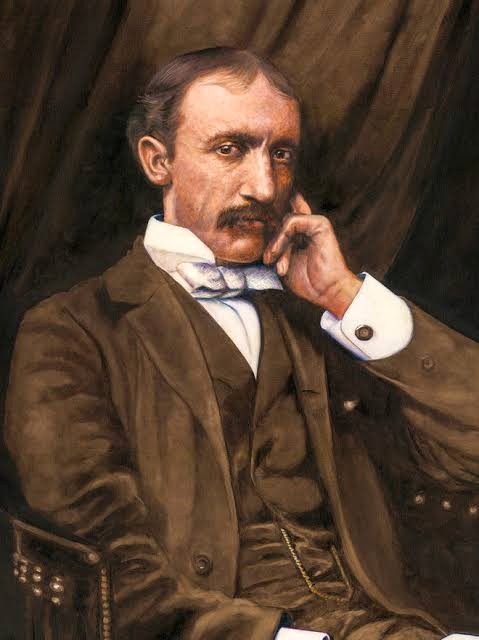
Because of Cushing’s work at Zuni, in 1882 John Wesley Powell assigned the anthropologist to an expedition to the Hopi village of Oraibi. Cushing’s mission was to council with Oraibi’s chiefs and get permission to trade goods for a collection of artifacts and crafts for the Smithsonian expedition. The Oraibi Governor approved the visit and trade, but when that approval was reviewed by the ultra-conservative Oraibi Traditionalists, they held special council and refused to trade. The expedition was forced to leave Hopi mesa territory without engaging in any trade.
Cushing later worked with Tichkematse (Cheyenne), who was employed at the Smithsonian, to document Plains Indian Sign Language. Cushing also led the Pepper-Hearst Expedition at Key Marco (1895–1897) and studied abandoned villages in the American West. He came into contact with Stewart Culin on the World’s Columbian Exposition and began to work with him to write about the history of games and their role in Native culture. Cushing was elected to the American Philosophical Society in 1896.
Cushing’s Legacy
In April 1900 Cushing died suddenly in DC. While preparing for a research project in Maine, he choked on a fishbone. Subsequent hemorrhaging in his throat led to his death. He was only 42 years old. When the Zuni tribesmen heard of his passing, they understood Cushing’s unfortunate and untimely death was the result of spiritual retribution for his handling of secret information and his pilfering of sacred Zuni objects. As a Priest of the Bow, for example, Cushing was accused of constructing his own Mudhead mask. He had been photographed wearing it, which was taboo.
For all of his failings, Cushing was an innovator in the development of the anthropology. He promulgated the view that all peoples have a culture from which they draw. He was ahead of his time as the first participant observer who entered into and participated in another culture, rather than studying and commenting on it as an outside observer. At the same time, Cushing’s work also presents a series of ethical dilemmas that must be considered in tracing anthropology’s relationship to Indigenous people.
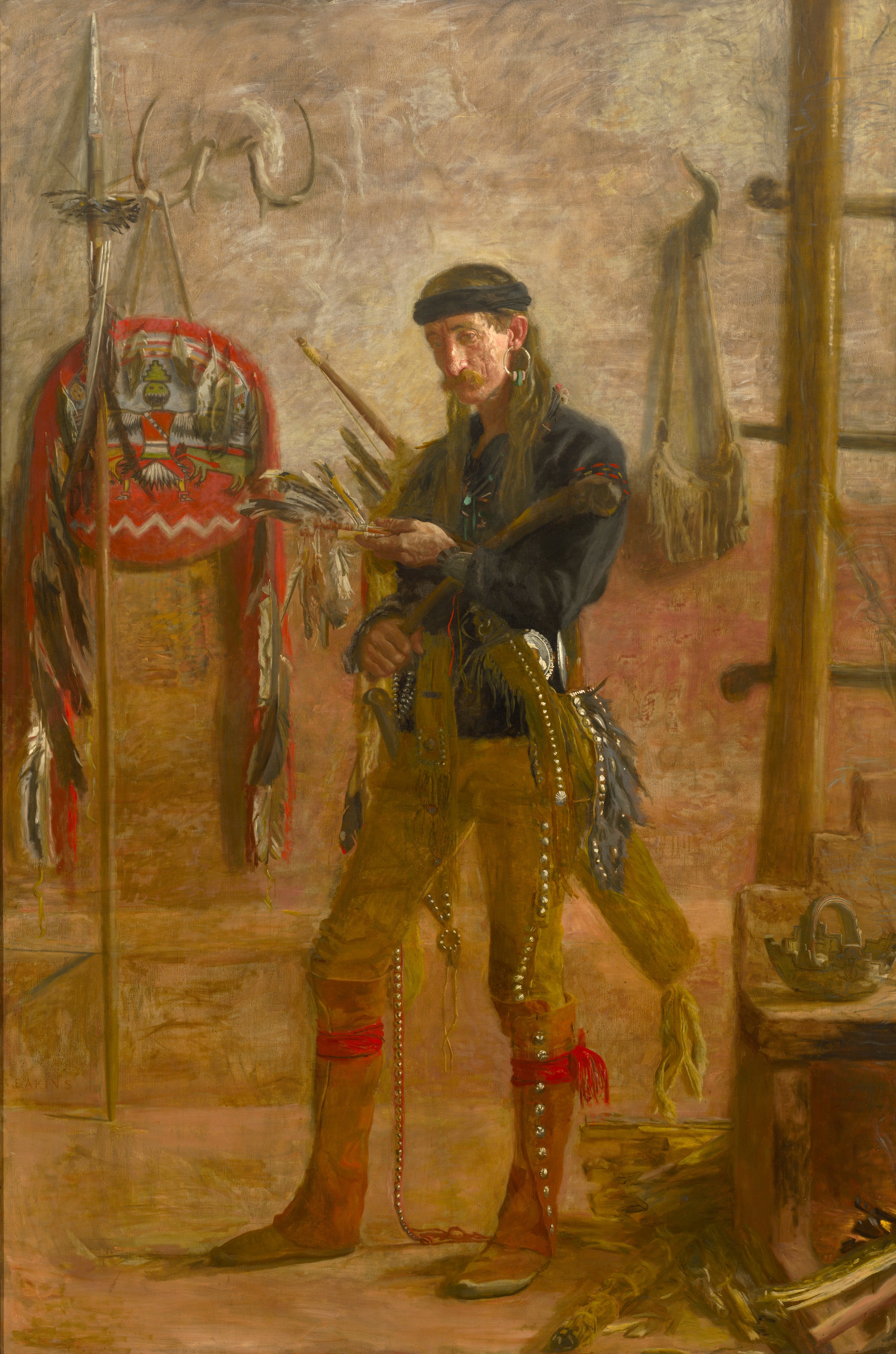
The noted artist Thomas Eakins painted Cushing in Zuni Pueblo attire.
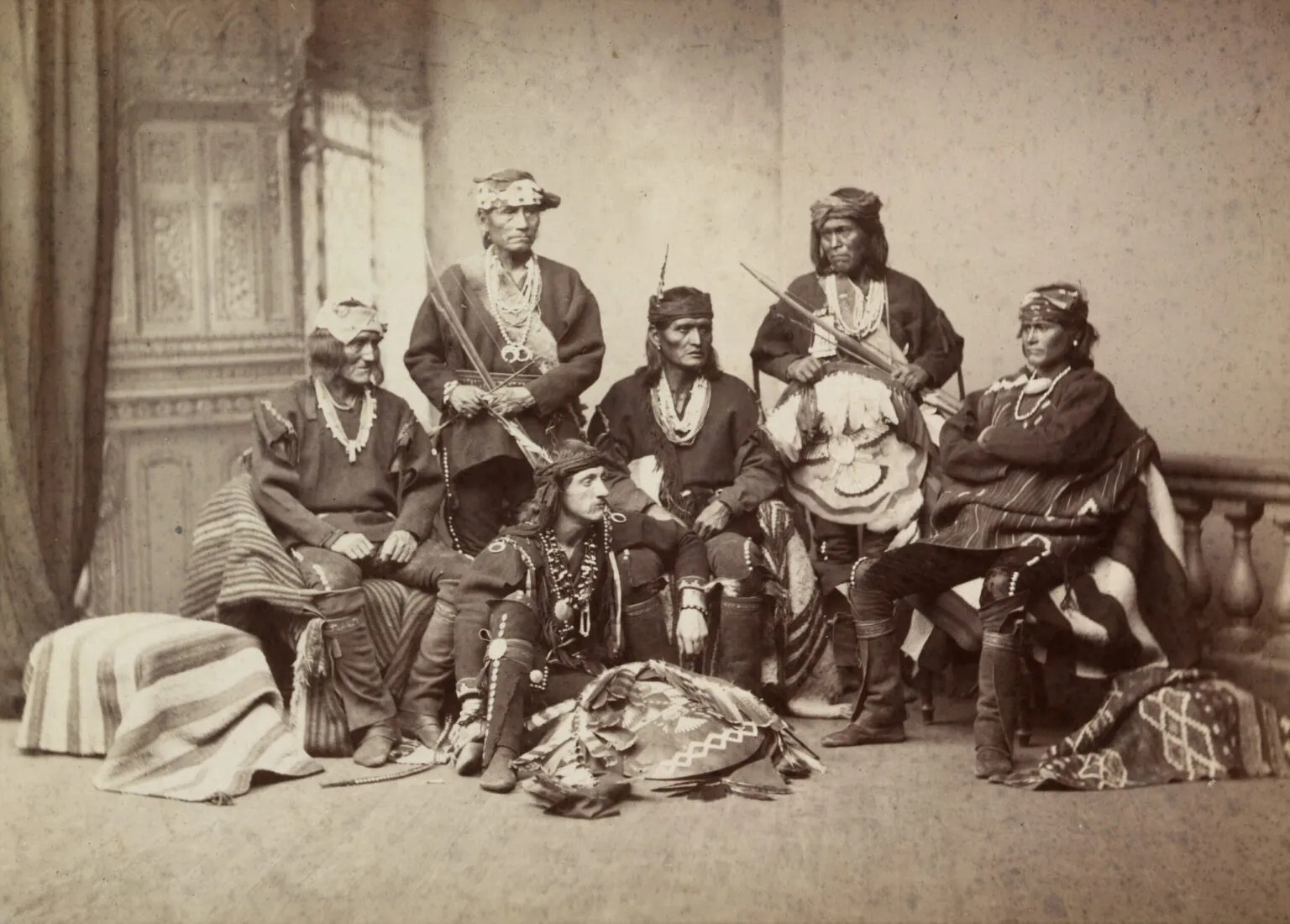
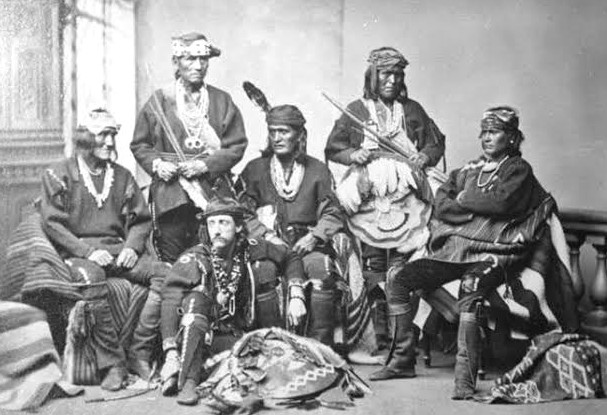
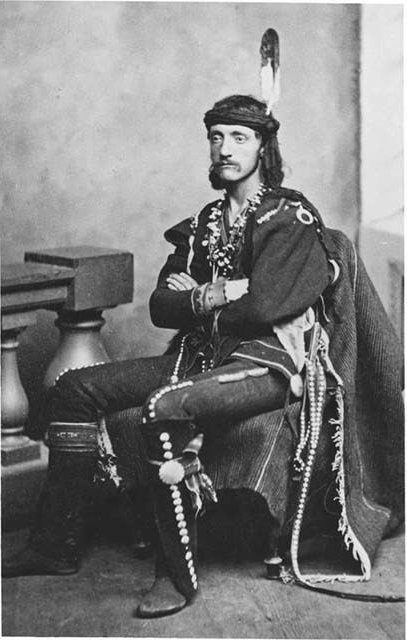
And the photographer, John K. Hillers took photos at Zuni, some showing Cushing as a Bow Priest.
Were Powell and Cushing Pals?
Powell was a distant and rigid military man. As such, Powell did his own ethnographic fieldwork among the Utes and Southern Paiutes (Numic peoples) in 1868–1880. He collected vocabularies and myths in person and was known to them by a nickname referring to his missing arm. In Washington Powell was famously sociable and talkative. He co-founded the Cosmos Club and loved long philosophical arguments.
Their relationship was professional first, but with real warmth and loyalty on both sides. Both men had deep New York roots; both had boyhood obsessions with native artifacts; both were not “schooled” but self-taught in their disciplines; both had physical limitations (Powell lost his arm at Shiloh, and Cushing was chronically ill all his life); and both pushed through hard fieldwork anyway. They grew to appreciate each other deeply.
Their basic differences were in Theory: Powell was a committed cultural evolutionist in the line of Lewis Henry Morgan, ranking societies from “savagery” to “civilization.” His major ethnological legacy is a classification: the 1891 map of Indian language families. Cushing, on the other hand, cared more about Zuni thought from the inside: myth, symbolism, craft. He wrote in a literary, almost novelistic style, as in Zuñi Breadstuff and Outlines of Zuñi Creation Myths.
Their other differences were in Roles: Powell ran two federal agencies at once: the BAE (1879–1902) and the U.S. Geological Survey (1881–94). He had to defend budgets before Congress. Cushing was the gifted, unpredictable field man whose advocacy for the Zuni could endanger those budgets.
Testimentary Statements about Cushing
After Cushing’s death, John Wesley Powell was among the colleagues who wrote for the memorial tribute in American Anthropologist that year, honoring Cushing’s unusual gifts. (Powell died two years later.) Powell made remarks at the 1900 wake before the Anthropological Society of Washington, held in Cushing’s memory. The speakers were Stewart Culin, Alice C. Fletcher, William Henry Holmes, Joseph D. McGuire, Washington Matthews, and Powell. The record includes an assessment of Cushing’s Pueblo research and a bibliography of his works. The remarks were printed as “In Memoriam: Frank Hamilton Cushing” in American Anthropologist 2(2), pages 354–380, with W J McGee also listed among the contributors.
It was also interesting to note that Powell’s personal obituary in the BAE’s 21st Annual Report, gives an opening portrait of Cushing. In the Report, Powell supports the idea that Cushing was a “kindred spirit.” Powell describes Cushing as a physically weak child who withdrew from other children into close companionship with nature. As his body lagged, his mind developed in ways that set him further apart. The woods around the family homestead in New York were his real school. Powell concludes that, spared the drain of social friction, Cushing’s mind grew strong and “he became a genius.”[7]
Powell then traces the craftsman side of Cushing. He describes how Cushing began collecting Indian arrowpoints at age 9 and built a wigwam on the family property as his museum and workshop. By 18, when he went to Cornell, he knew more than his teachers. Powell suggests that Cushing came to think like the ancient arrow makers, sympathizing with Native art and methods before he ever met a living Indian. He also notes that Cushing’s skill at reproducing stone tools gave him a unique understanding of how they were made.[7] sourcelibrary
This is Powell’s admiration on the record, in an official government publication. It’s warm, almost reverent, and it treats Cushing’s frailty and solitude as the source of his gift rather than a flaw.
Cushing’s collection of Zuni stories Zuñi Folk Tales appeared after his death with a foreword by John Wesley Powell. A 1931 edition carries both Powell’s foreword and an introduction by Mary Austin. Since Powell died in 1902, he wrote the foreword for the original 1901 edition. It’s a third place where Powell assessed Cushing’s work, and it’s usually easy to find in Internet Archive scans.[8] wellcomecollection
Would they have been pals?
Yes, they would have been pals. The friendship was more plausibly than my draft suggests. Powell enjoyed eccentric, brilliant talkers, and the two shared a regional upbringing, an autodidact streak, and a love of fieldwork. A good revision statement might be: they were temperamentally compatible, but the friendship was never equal. Powell was 23 years older than Cushing, he was his boss, and the man who paid for his work. So the bond worked as an affectionate patron–protégé relationship rather than a friendship between peers.
References:
[1] https://en.wikipedia.org/wiki/Frank_Hamilton_Cushing
[2] https://en.wikipedia.org/wiki/James_Stevenson_(geologist)
[3] Participant Observer. This anthropological technique has often been attributed to Bronisław Malinowski; however Malinowski did not work with the Trobriand Islanders until more than 30 years following Frank Cushing’s lengthy stay at Zuni.
[4] http://anthrotheory.pbworks.com/w/page/29532672/The%20Reflexive%20Turn
[5] Cushing married Emily Tennison Magill in 1882, during a break from his years at Zuni. After the trip East, Emily went back to the pueblo with Cushing. Emily’s sister, Margaret Magill, was an artist who joined Cushing’s work in the Southwest, including the Hemenway Expedition. Later Margaret married the ethnologist Frederick Webb Hodge.
[6] In 1879, Frank H. Cushing arrived at Zuni Pueblo as part of a Smithsonian Institution expedition led by James and Matilda Coxe Stevenson. While Cushing lived among the Zuni for four and a half years, learned their language, and pioneered “participant observation,” his legacy is severely compromised by his collection tactics. The Smithsonian Collection: Together, the Stevenson expedition amassed over 10,000 Zuni objects for the Bureau of Ethnology (now part of the Smithsonian). Many of these pieces were gathered against the explicit wishes of the Zuni elders.
The most egregious examples of theft involved the Ahayu:da, or Zuni War Gods.
- The Spiritual Context: The Ahayu:da are not “art” or mere “fetishes”; they are living, sacred, communally owned beings carved during the winter solstice to protect the Zuni and the world. Once their immediate ceremonial use is complete, they are placed in open-air mountain shrines where they are meant to naturally decompose and return to the earth.
- The Exploitation: Anthropologists, government agents, and collectors knew the Zuni would never legitimately sell these secret society objects. Taking advantage of the open shrines, figures like Stewart Culin (Brooklyn Museum) and various institutional collectors bypassed the sentries and stole the Ahayu:da directly from the mountains. By the mid-20th century, these stolen gods were scattered across dozens of museums and private collections worldwide.
[7] https://sourcelibrary.org/book/zuni-breadstuff-cushing/page/6992597c3d2d40d1b058fa93. Powell’s obituary, as reprinted in Zuñi Breadstuff: start at page 15 of the Source Library transcription and click forward through the next few pages.
[8] https://identity.wellcomecollection.org/concepts/y33ks2ue
=-=-=-=-=-=-=-=-=-=-=-=-=-=-=-=-=-=-=-=-=-=-=
Appendix:
Cushing’s books on Zuni
- Jesse Green, Sharon Weiner Green and Frank Hamilton Cushing, Cushing at Zuni: The Correspondence and Journals of Frank Hamilton Cushing, 1879-1884, UNMPRESS University of New Mexico Press, 1990, hardcover ISBN 0-8263-1172-5
- Sylvester Baxter and Frank H. Cushing, My Adventurers in Zuni: Including Father of The Pueblos & An Aboriginal Pilgrimage, PMA Online Org Filter Press, LLC, 1999, paperback, 1999, 79 pages, ISBN 0-86541-045-3
- Frank H. Cushing, My Adventures in Zuni, Pamphlet, ISBN 1-121-39551-1
- Frank Hamilton Cushing and Barton Wright, The Mythic World of the Zuni, University of New Mexico Press, 1992, hardcover, ISBN 0-8263-1036-2
- Frank H. Cushing, Outlines of Zuni Creation Myths, AMS Press; Reprint edition (June 1, 1996), Hardcover, ISBN 0-404-11834-8
- Frank H. Cushing, Zuni Coyote Tales, University of Arizona Press, 1998, paperback, 104 pages, ISBN 0-8165-1892-0
- Frank Hamilton Cushing, Zuni Fetishes, pamphlet, ISBN 1-199-17971-X and ISBN 1-122-26704-5
- Frank H. Cushing, designed by K. C. DenDooven, photographed by Bruce Hucko, Annotations by Mark Bahti, Zuni Fetishes, KC Publications, 1999, paperback, 48 pages, ISBN 0-88714-144-7
- Frank Hamilton Cushing, Zuni Fetishes Facsimile, pamphlet, ISBN 1-125-28500-1
- Frank Hamilton Cushing, Zuni Folk Tales, hardcover, ISBN 1-125-91410-6
- Frank Hamilton Cushing, Zuni Folk Tales, University of Arizona Press, 1999, trade paperback, ISBN 0-8165-0986-7
- Frank H. Cushing, edited by Jesse Green, foreword by Fred Eggan, Introduction by Jesse Green, Zuni: Selected Writings of Frank Hamilton Cushing University of Nebraska Press, 1978, hardcover, 440 pages, ISBN 0-8032-2100-2; trade paperback, 1979, 449 pages, ISBN 0-8032-7007-0
- Frank Hamilton Cushing. Zuni Breadstuff (Indian Notes and Monographs V.8), AMS Press, 1975, 673 pages, ISBN 0-404-11835-6
Other works by Cushing
- Preliminary Report on the Exploration of Ancient Key-dweller Remains on the Gulf Coast of Florida. MacCalla. 1896. Republished as Exploration of Ancient Key-Dweller Remains on the Gulf Coast of Florida, University Press of Florida, 2000, ISBN 9780813017914.
- The Florida Journals of Frank Hamilton Cushing, edited by Phyllis Kolianos and Brent Weisman. University of Florida Press, 2005, ISBN 9780813028040.
- The Lost Florida Manuscript of Frank Hamilton Cushing, edited by Phyllis Kolianos and Brent Weisman. University of Florida Press, 2005, ISBN 9780813028033.

