
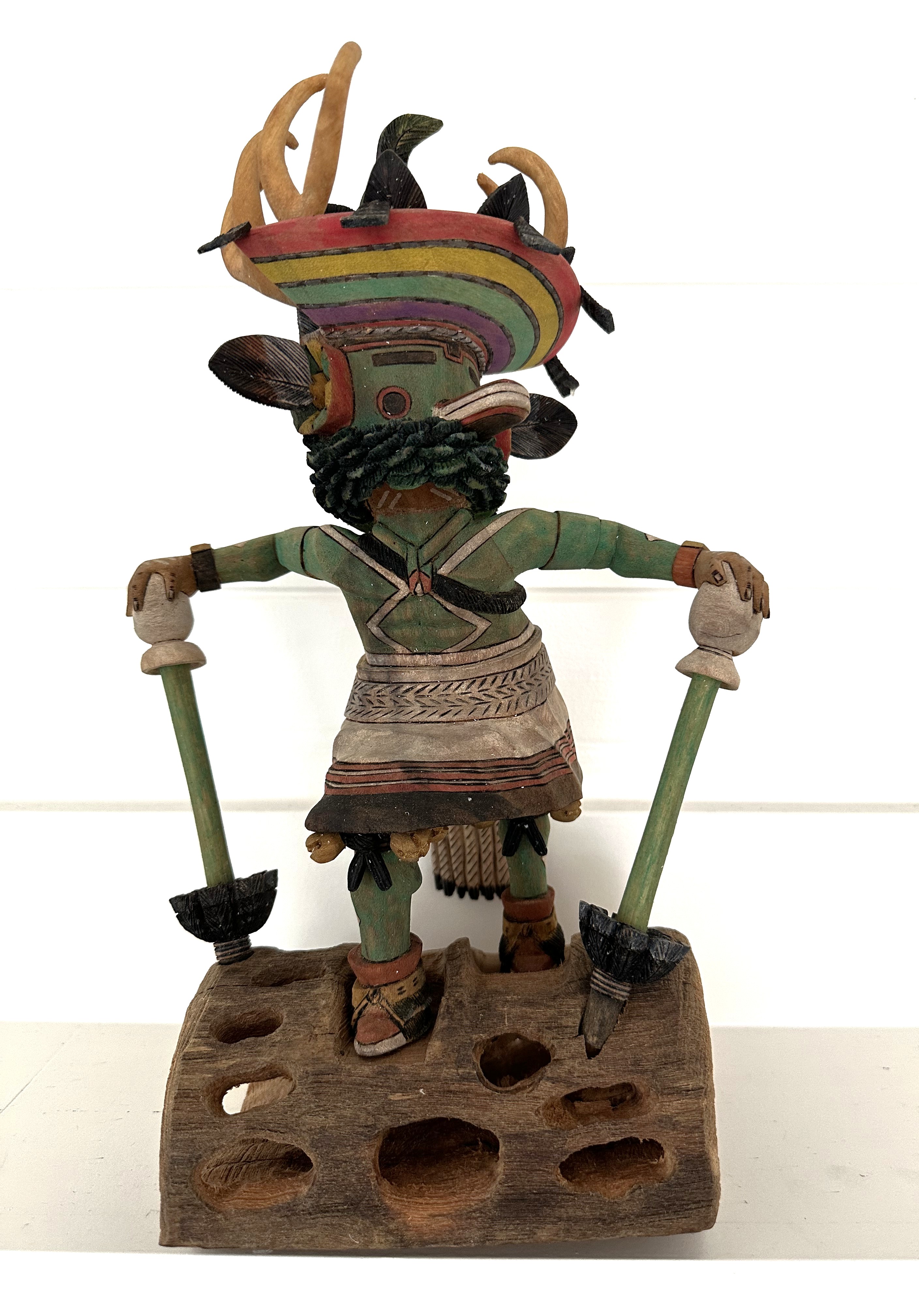
Kachina: Deer
The Deer is a sacred animal to the Hopis, Navajos, Zunis and many Native American Indians. Like most animal Kachinas, the Deer Kachina (Sowi’yngwa) dances to increase his kind. This Kachina also aids in bringing rain, making the grass grow, and ensuring there is plentiful food for the future. Sounding like the opening scenes of The Game of Thrones, the frosted breath of the deer signals that the moisture of winter is coming. The meat of the dear, antelope, and elk are honored as fundamental sources of food and nutrition. The deer, in particular, is honored for its sacrifice on behalf of the people.
In some Hopi villages, if you are a twin, you are not to eat deer meat. This is because the doe often gives birth to tiwns. The mother who is carrying the twins is also instructed not to eat deer meat, while she is pregnant.[1]
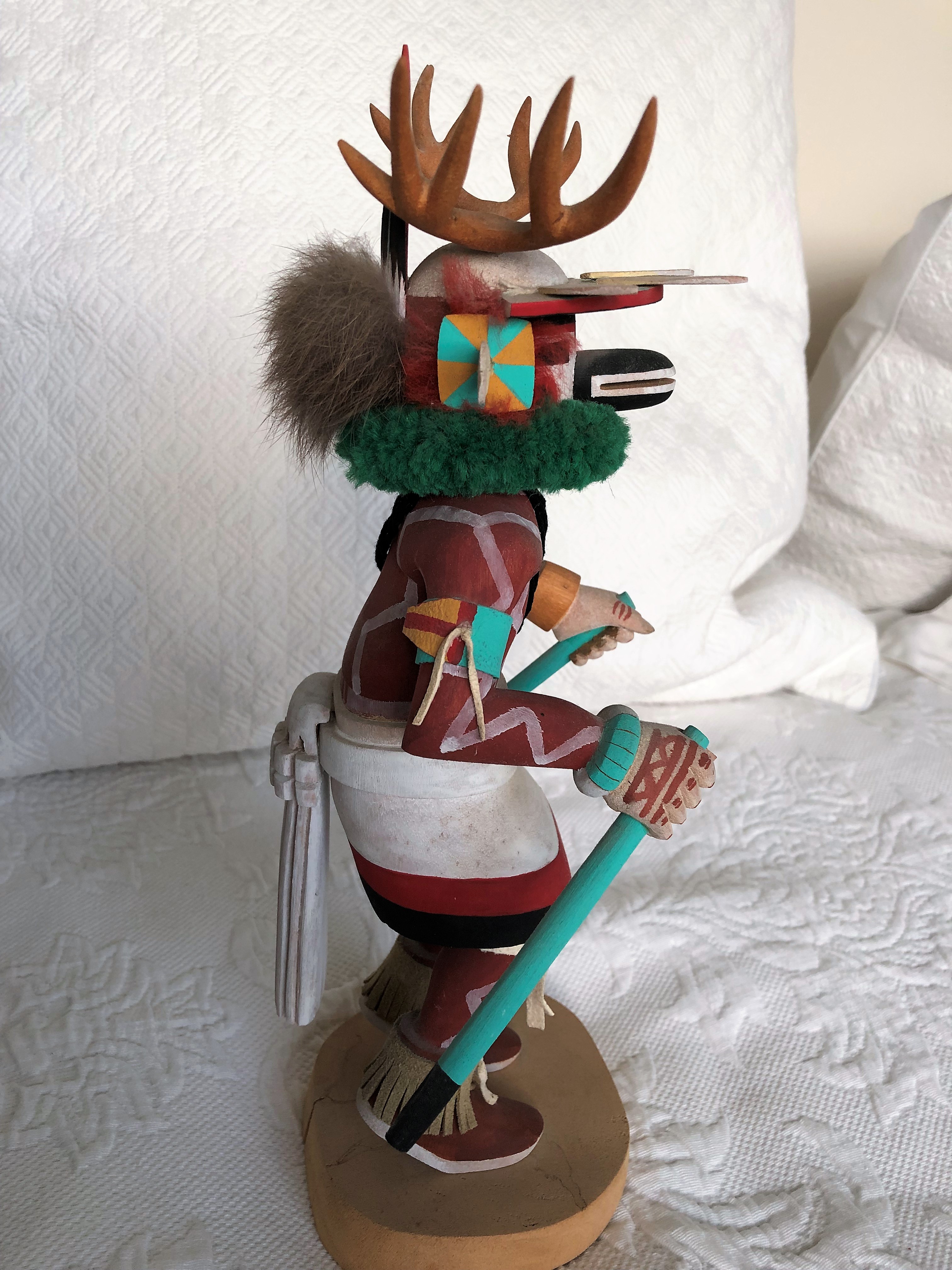
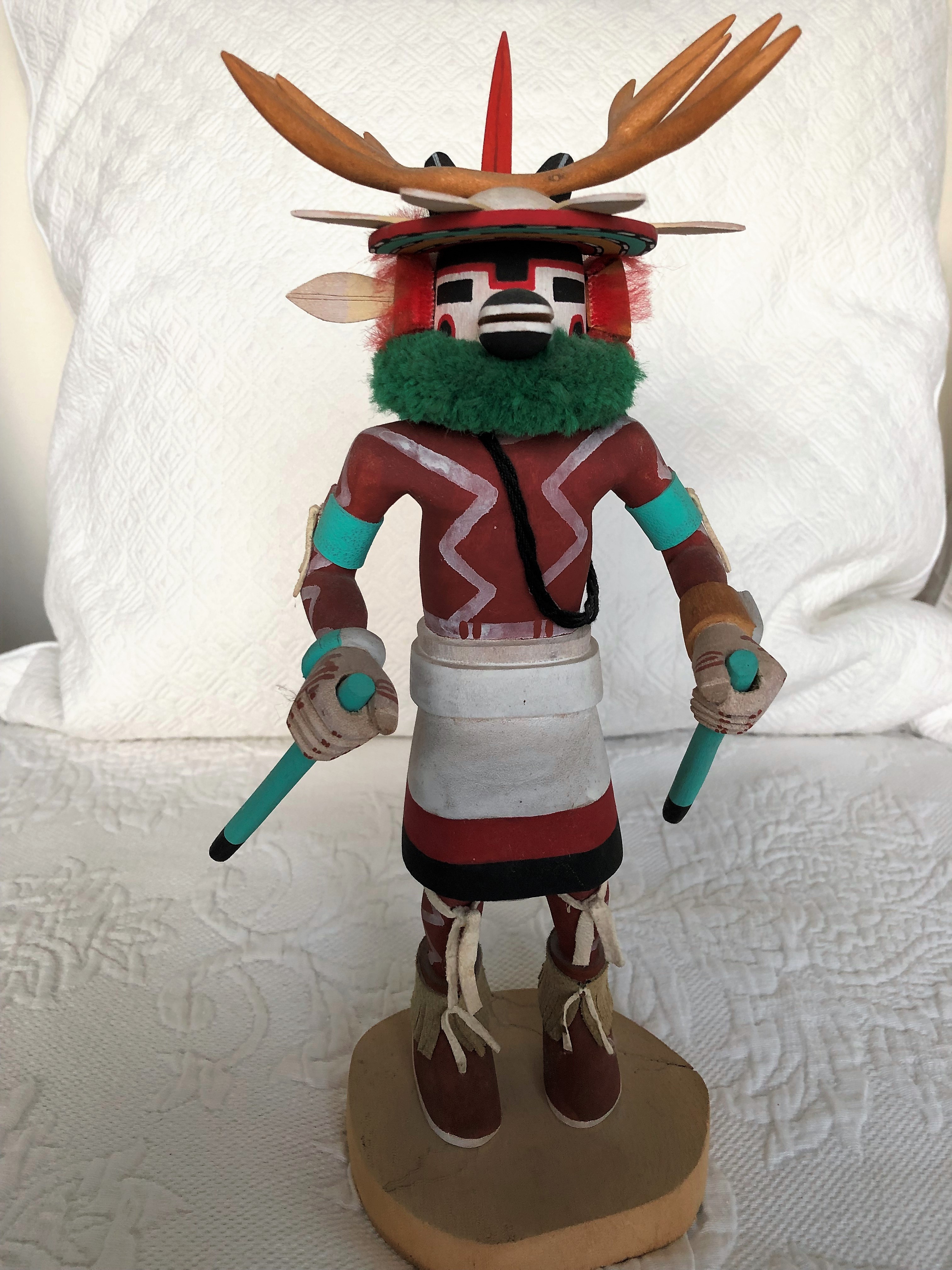
The deer also represents an aspect of self-sacrifice for the good of others; there are times when the individual is less important than the collective. We all have form of sacrifice in our traditions, and the Hopi bring out those virtues through their hunting practices. The deer “give its life” in order to provide food for the tribe. Among those who still observe ancient Hopi values, the deer is honored by the hunters in sacred rituals of thanks. In the seasonal dances, the Deer Kachina dancer carries a staff in each hand, these two poles represent the front legs of the deer and they are pounded on the ground of the plaza with each step.
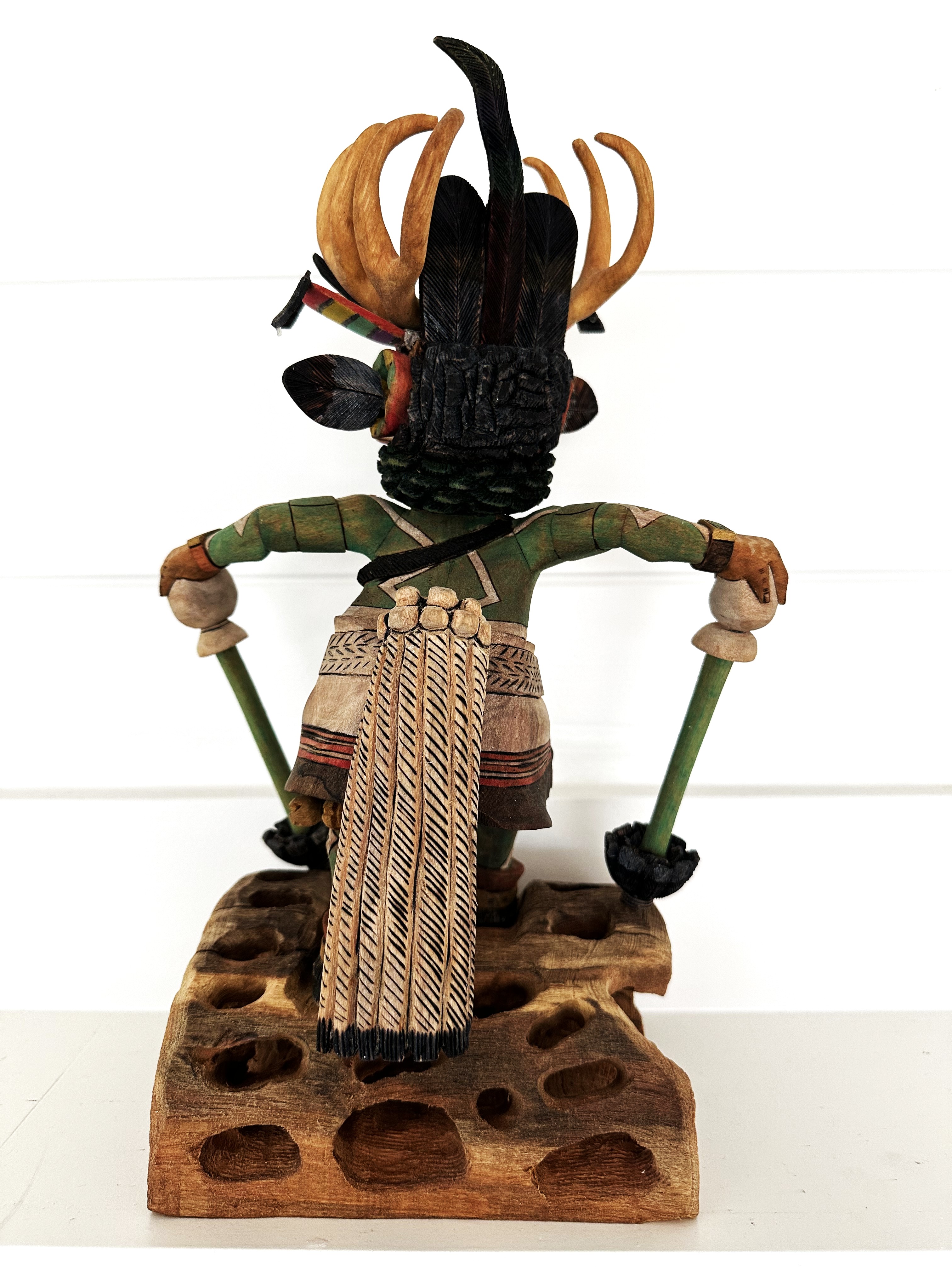
The headdress of the Deer Kachina is often very ornate: antlers, feathers, and a brightly colored green juniper collar are common. The headdress and mask of the Deer Kachina, as carved and painted by Eric Roy, has a rainbow painted brim below the six pronged deer stag. It also has a collection of tall, dark feathers on the top of the headdress, and dangling from the brim.
The Deer Hunter Traditions
The Navajo traditions of hunting deer are similar to the Hopi; however, they have their own sacred rituals that are worth understanding: https://henryehooper.blog/navajo-traditions-the-deer-hunter/
The Hopi, Zuni, Acoma, and other pueblos all have revered hunting practices of deer, fox, antelope, elk, and other wild game which are ritualistically hunted. Their individual ways of curing of their meat are also private to the individual tribes.
Hopi native Americans are recognized as the first Native Americans to create kachina dolls in the image of their Kachina Spirits. Other tribes later adopted similar kachina doll making skills, but elaborated their designs to include fur, leather, beads and other realistic objects in their kachina doll making practices.
The Kachina Traditions
The Hopi conceive of the arrival of the kachinas, also called Katsinas, as coming with a “gift burden.” That is, every Hopi individual carries with himself or herself the obligation and constant concern to do the right thing while caring for one another. They also have deep caring and desires to pass on traditions to the youth in the tribes. The performers in the ritualistic dances all have roles. They are urged to make sure the dances are reverential to their spirit animal, instructive to children, and sacred to the tribe: their crops, harvest, animals and survival are co-dependent on it.
””””””””=-=-=-=-=-=-=-=-=-=-=-=-=-=-=-=-=-=-=-=-=-=-=-=-=-=-=-=-”””””””””
References:
[1] For more on carving of Native American and Hopi kachina dolls see the following link:
http://americanindianoriginals.com/hopi-kachina-carving.html
 Henry E. Hooper