
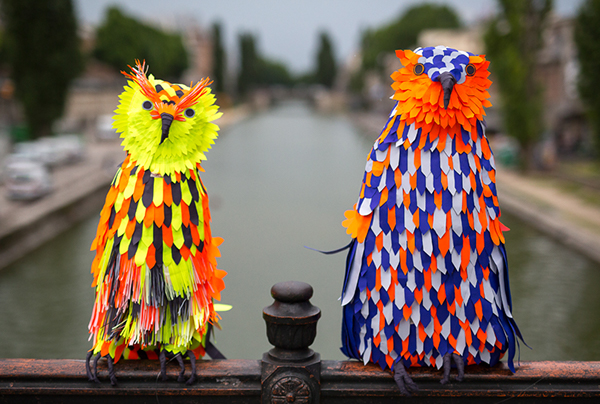
Birds of France
In the summer of 2022, the 13th edition of Les Oiseaux de France, the Guide Vert by Jean-Claude Chantelat, was my go-to guide for all birds French.[1] We picked up the book at a bookstore in Saint Malo, Brittany, a remarkable walled city with a rich history and a magical dance with it’s twice daily summer tides.

The list of bird sightings is short because my binoculars were buried in the bottom of my day pack and it was too hot to retrieve them. This Witness Post is more of random spotting of birds, who happened to be flying by that particular moment and day. Our French trip took us to Paris, Versailles, Provence, Normandy, Brittany, and the Loire Valley, before returning to Paris for one last farewell. Each place, monument and vista was more spectacular than the last.
A point of note: the weather. The trip was in August 2022 and the heat was particularly stifling that month (before, during and after our trip), sending many migrating animals to different latitudes to find cooler climates. The farmers’ fields were fried and the harvests scorched. If we had been traveling earlier in the season, the number of bird sightings would have been several times longer and more robust. But global warming is changing the migration patterns at rapid rate. That said, this was a sight-seeing tip and not a birding trip so the actual bird count is small.
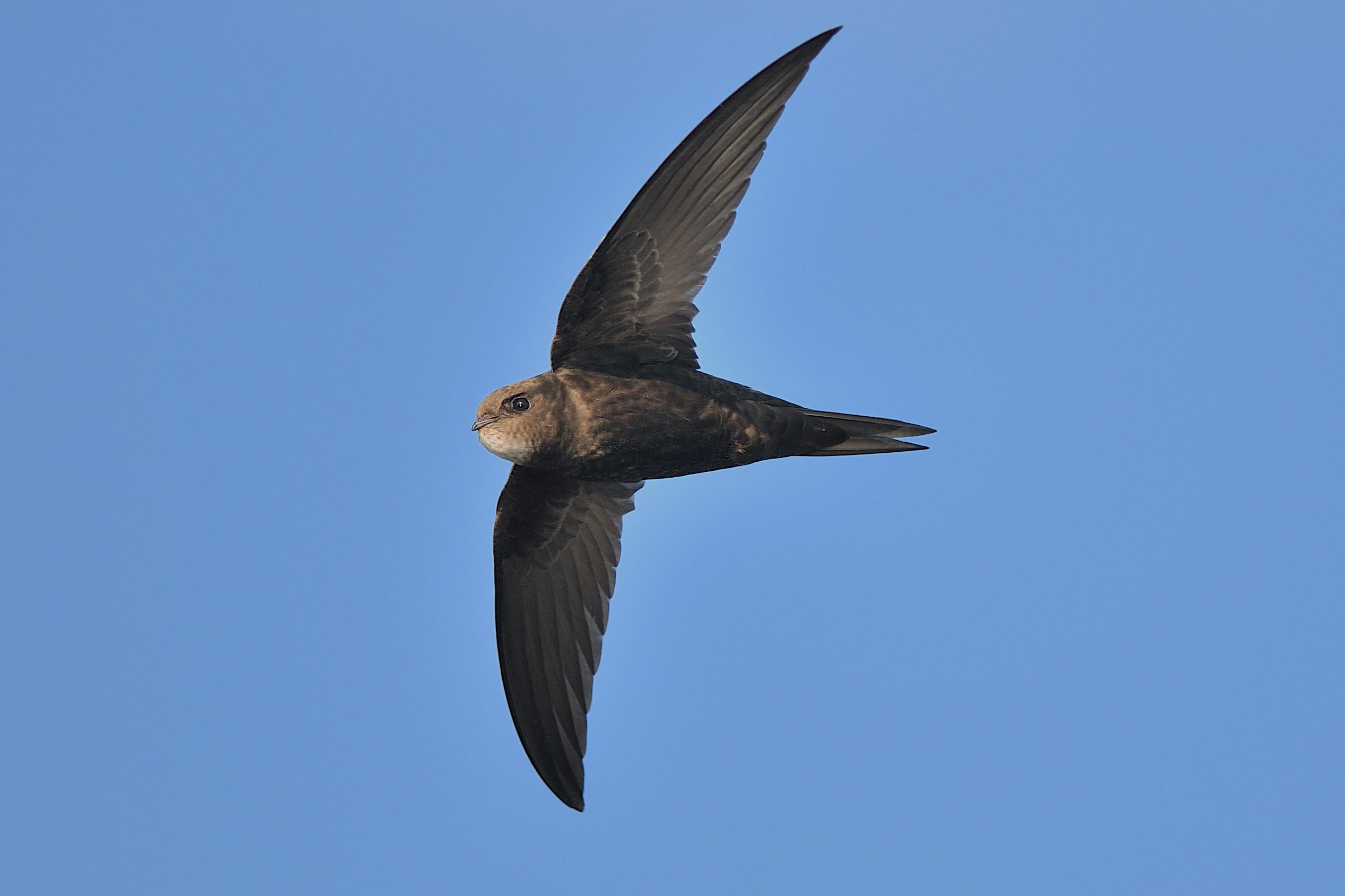
Martinet Noire (Common Swift)
- Martinet Noire: These beautiful fliers are ubiquitous in urban and rural settings and they were fun to watch as the dove for insects in the evening sky, as the sun was setting over Paris and Avignon. They are a dreary grey, but ever-so graceful. The birds seemed to a cross between a swift and a martin, as in the States’ species. My friend Martin called them “fliers that look like cigars with wings.”
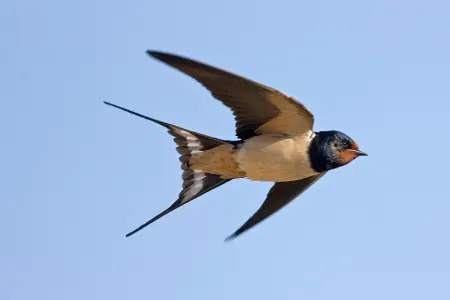
Hirondelle Rustique (Barn Swallow)
- Hirondelle Rustique: The stories of the Hooper family and the tennis/swim club L’Hirondelle (in Ruxton, Maryland) stand apart with my personal affection for swallows. https://henryehooper.blog/witness-post-swallow/. I love swallows, so there are a few more shots of them than of the other birds on the list.
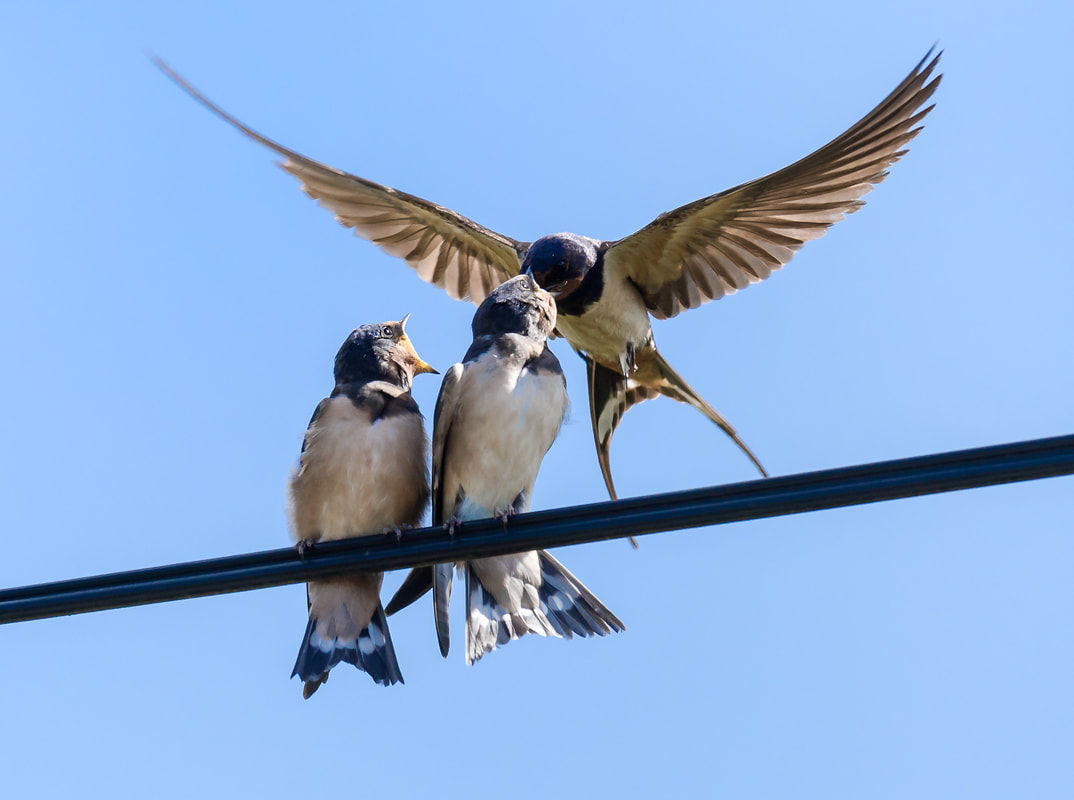
Hirondelle Rustique (Barn Swallow)
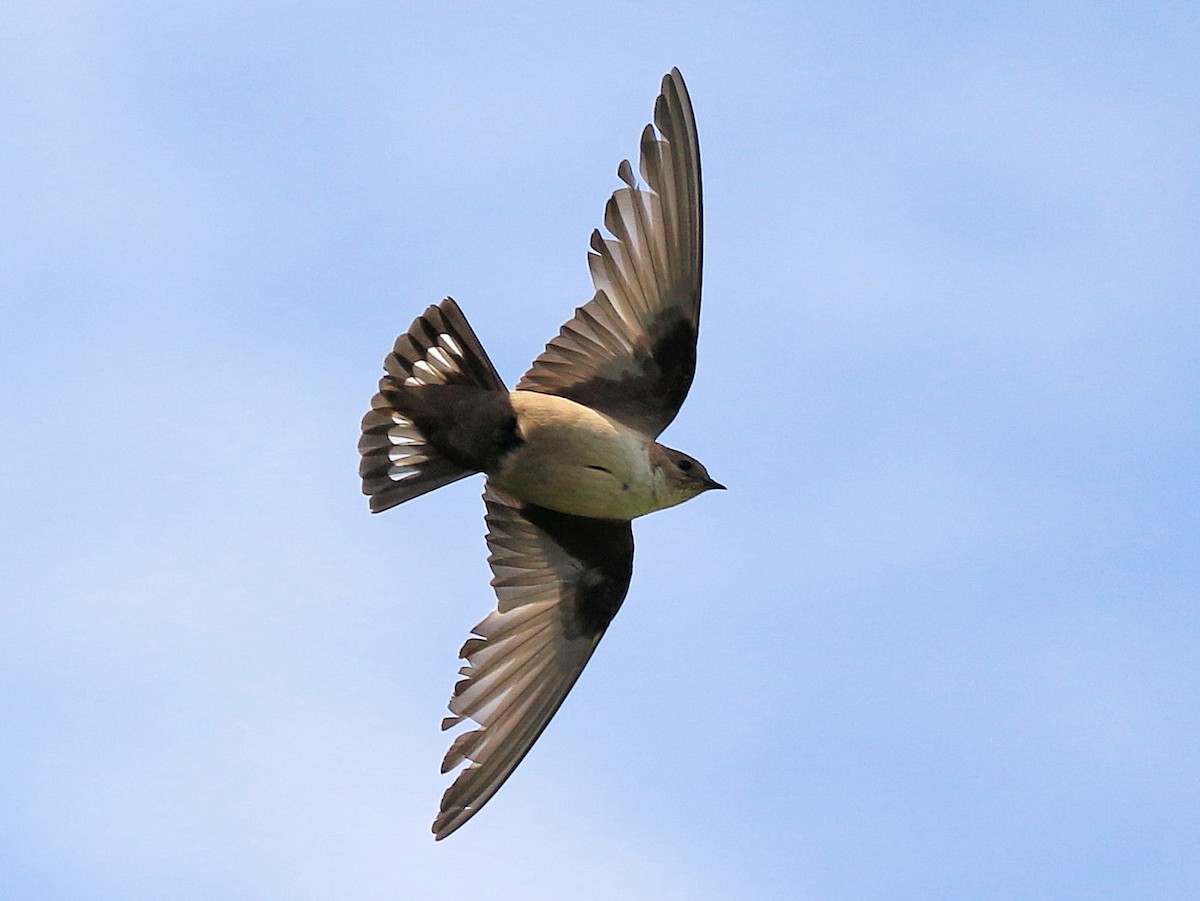
Hirondelle de Rochers (aka Eurasian Crag Martins)
- Hirondelle de Rochers: Also known as bank swallows, crag martins or cliff swallows, these birds are all great fliers with the ability to stop dramatically in mid-air to catch insects and flying prey. Their mud houses are amazing to view and to imagine hanging against underpasses and bridges and cliffs all across the country.
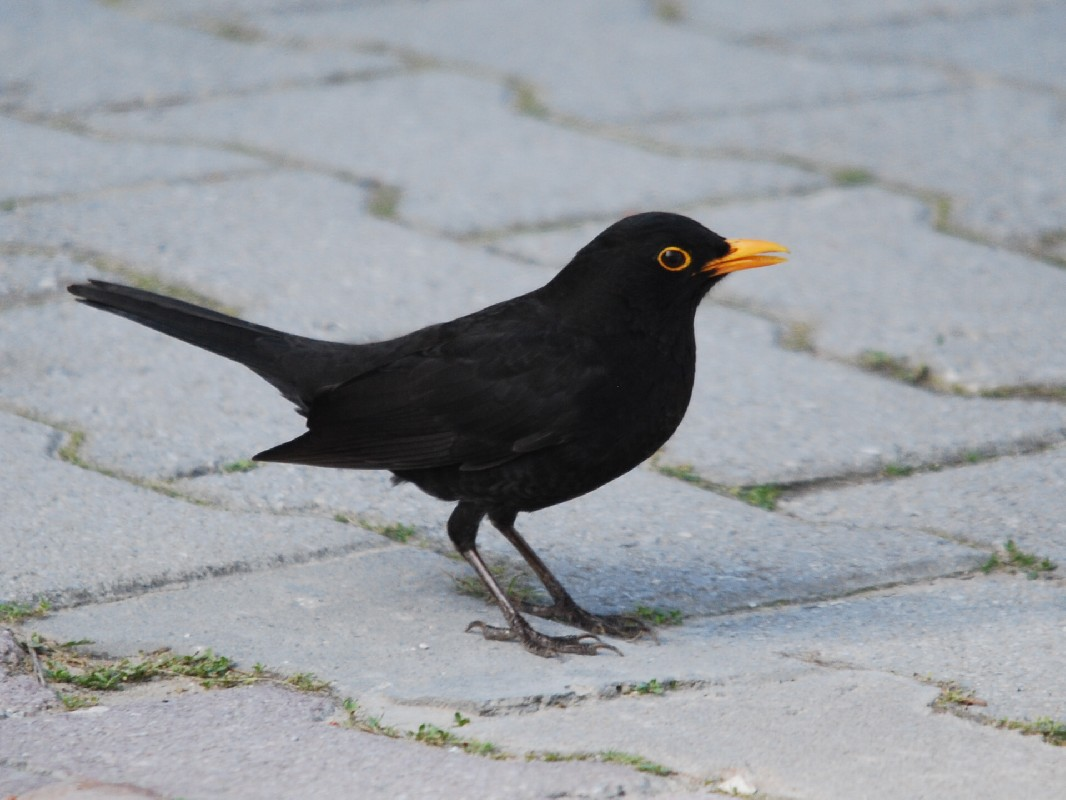
Merle Noir, aka the Common Blackbird
- Merle Noir: This bird seems to be all black body and legs. Yet the most notable feature of these squawkers is their orange eye-ring. It matches their beaks and makes them seem even more boisterous than they already are.
Mesange Charbonniere, Chickadee
- Mesange Charbonniere: These birds are the cross between the European Tit and the Black-Capped Chickadee. The cheerful call seems universal and it is surprisingly audible from many meters away.
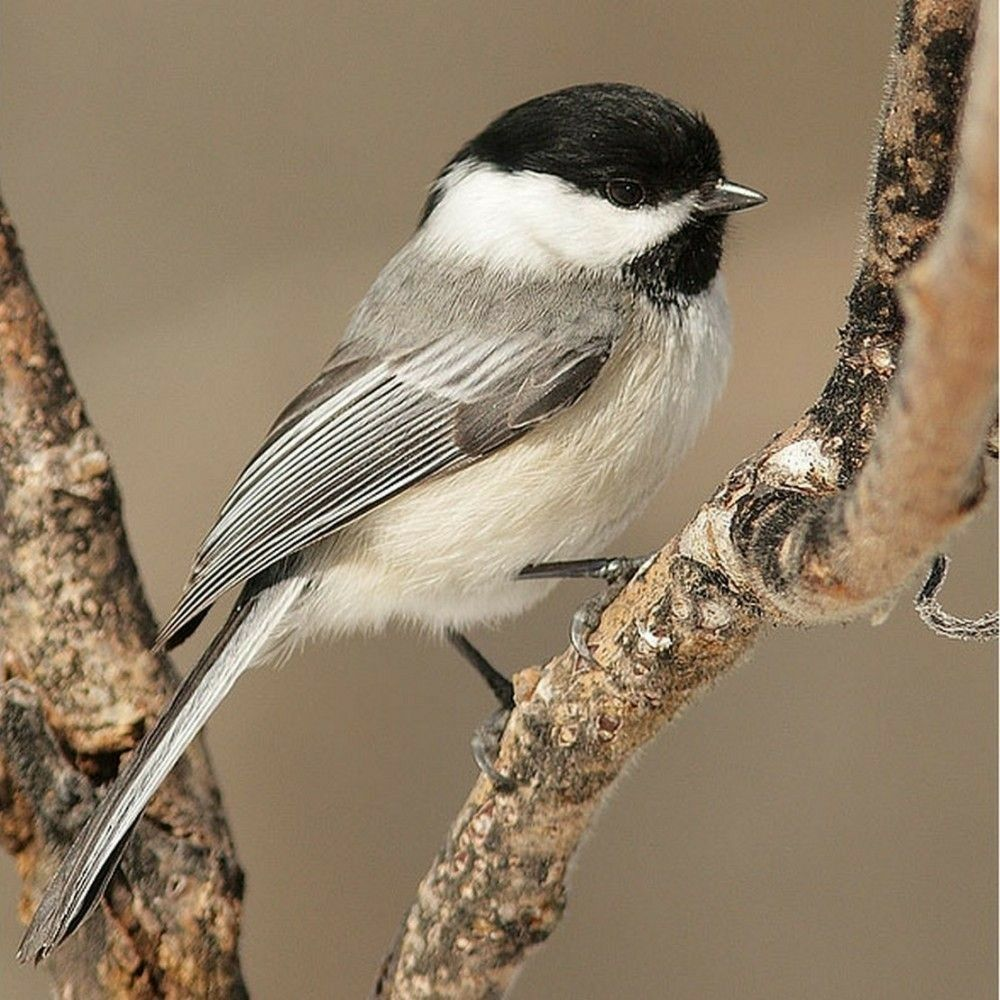
Mesange Nonnette au Boreale, Chickadee’s of the Forests
- Mésange Nonnette au Boréale: One of the more fun birds to imitate and to watch, these Chickadees of the forests are some loud and easily identified birds in the local landscape.
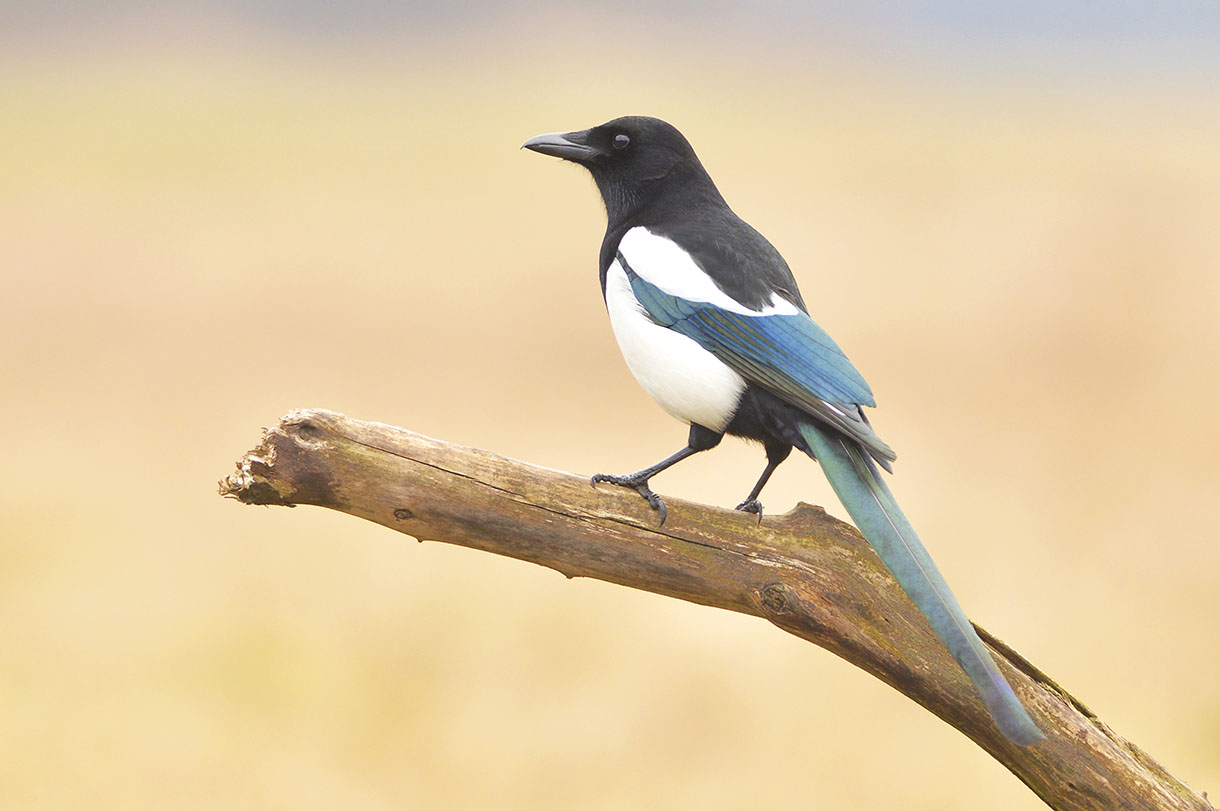
Pie Bavarde, Magpie
- Pie Bavarde: The other bird with its tail longer than its torso (besides the scissor tailed flycatcher), the magpie is often seen in rural areas around waste dumps and in rural areas around compost piles. They are noisy and love to congregate together at feeding times. Their wing patterns are astonishing, as the black on white wing coloring makes them seem like acrobatic flight masters.
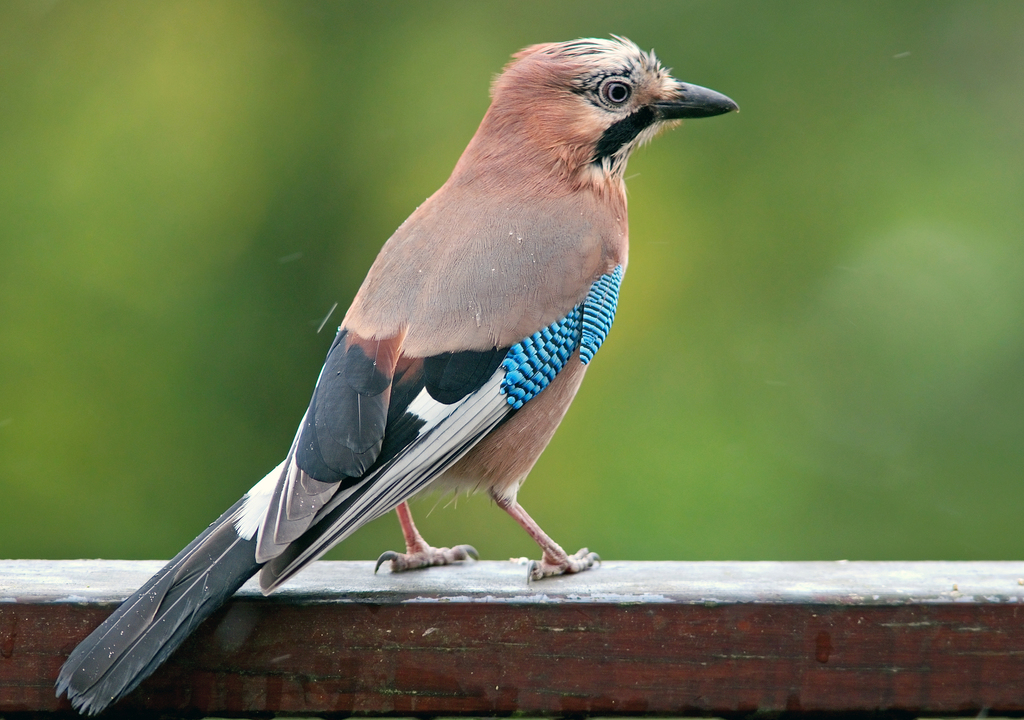
Geao des Chênes or Eurasian Jay
- Geao des Chênes: This Eurasian Jay was one of the birds that my sister, Mary Klaff, spotted on the Camino de Santiago, when she and her daughter, Lindsay, were in Galicia, Spain. Known for their “bad behavior,” as are most jays, this one seems to taunt the Europeans with its beautiful coloration and antics. The Eurasian Jay is in the crow family Corvidae. It has pinkish brown plumage with a black stripe on each side of a whitish throat, a bright blue panel on the upper wing and a black tail. It does not have a crest, like many US jays, but rather a scruffy top of feathers, uncombed for outerwear.
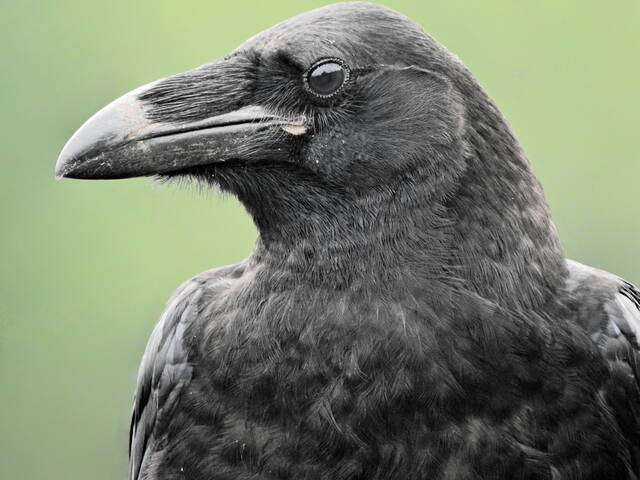
Grande Corbeau, Great Raven
- Grande Corbeau: Larger and more intimidating than a lone crow, the Grande Corbeau has the thick beak and the size to intimidate most other birds and mammals. Notice the feathers extending down the thick beak, which is a key differentiator with other crows and ravens. They are spooky when alone, and down right terrifying when descending in flocks.
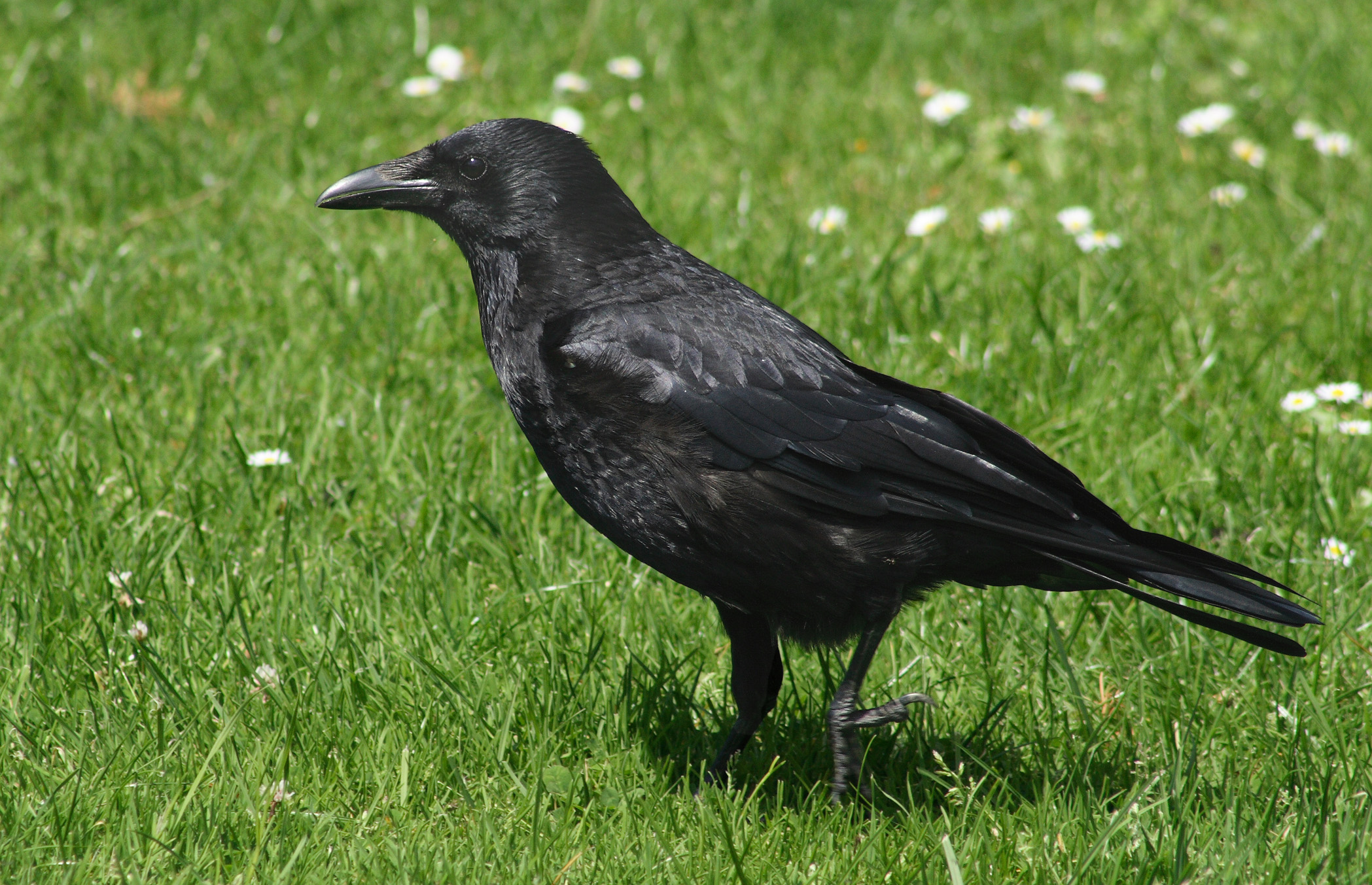
Corneille Noire, Black Carrion Crow
- Corneille Noire: An entirely black bird, it is very close to the Hooded Crow, with which it has long been considered to form one and the same species. It is distinguished from the common raven by its smaller size and more slender beak, from the rook by the bristle-like feathers that cover the base of its beak, and from the thick-billed raven by its shorter, less arched beak. This bird is an opportunist, showing up in cities and on farms, looking for food, wherever it can find it.
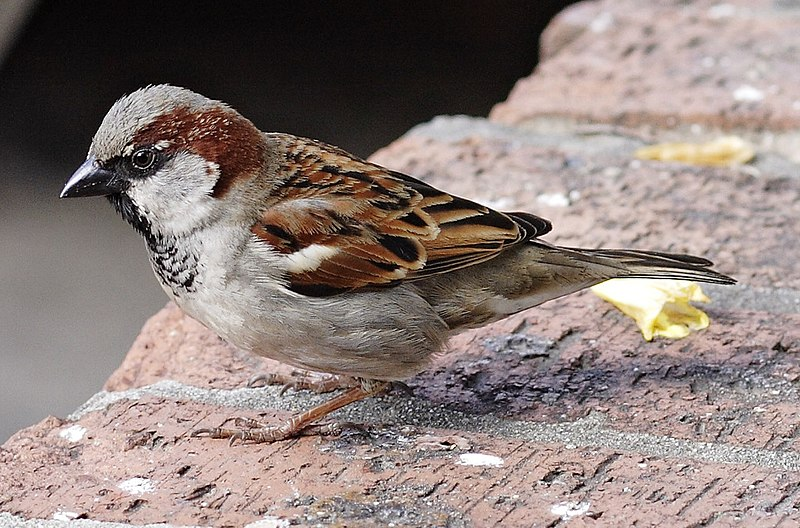
Moineau Domestique, aka House Sparrow
- Moineau Domestique: These birds seem gentle enough, right? In point of fact they have adopted to nearly every rural and urban setting on earth. It is one of the more populated birds and has taken over the habitat of many native birds, which it has chased and outhustled for the best nesting places and food supplies.
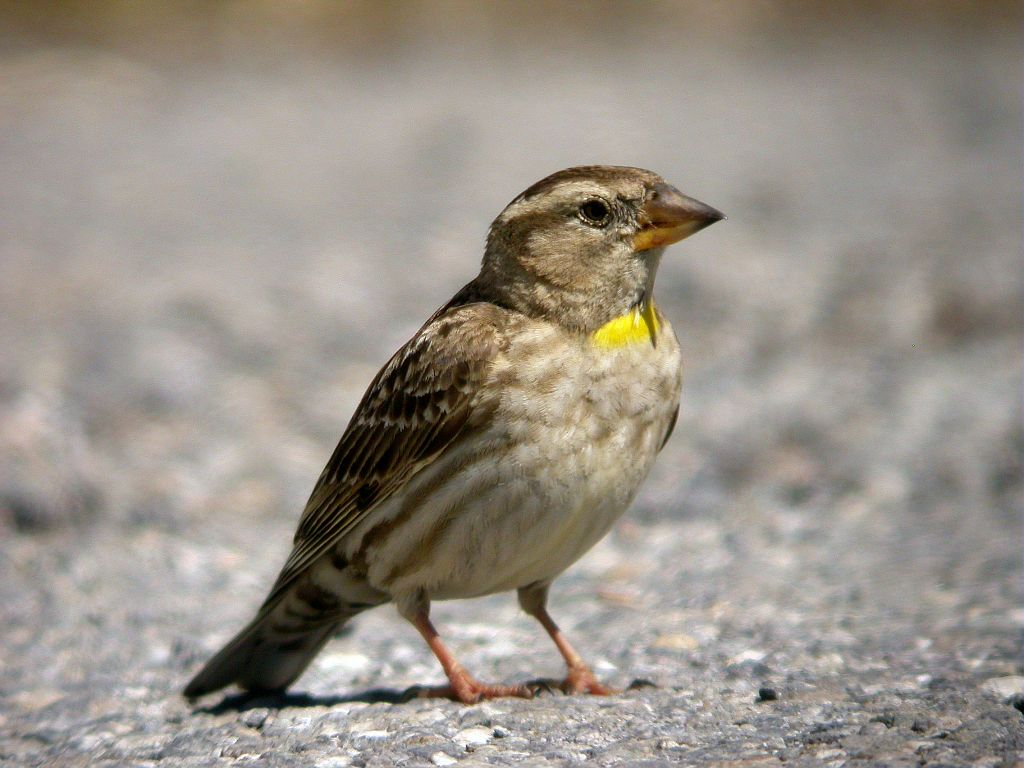
Moineau Soulcie or Rock Sparrow
- Moineau Soulcie: This is a rock sparrow with a yellow ascot draped around its neck. It is well adapted to many environments. The male sparrow also has rufous head feathers, while the immatures and females have little coloring (good as camouflage). The immatures stay beige until they reach breeding age.
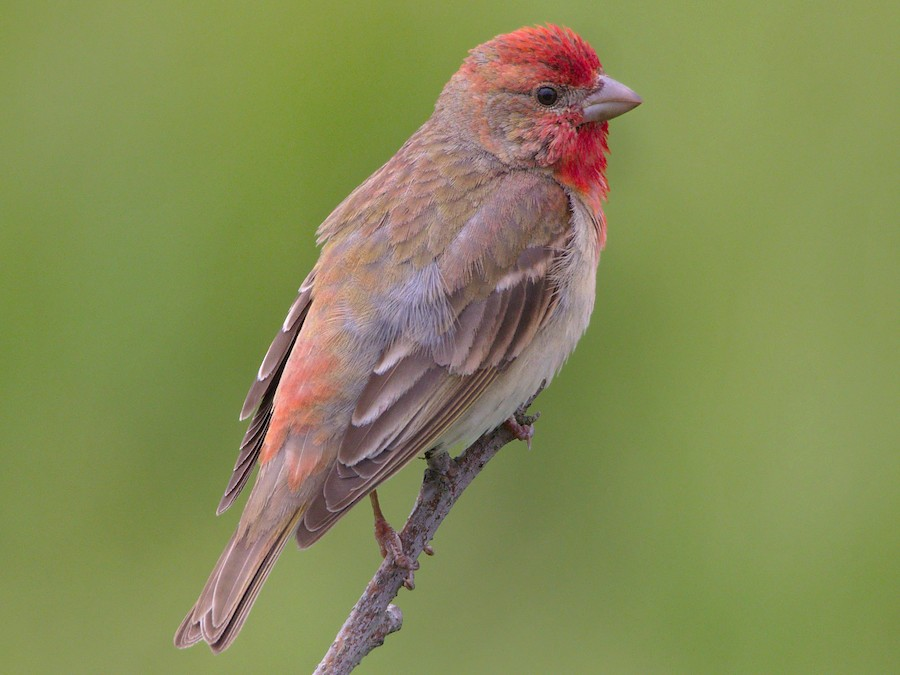
Roselin Cramoisi or Rosefinch
- Roselin Cramoisi: This finch is red headed and has a red tinted breast and back. The bird comes along with a sweet melody and fierce nesting instinct.
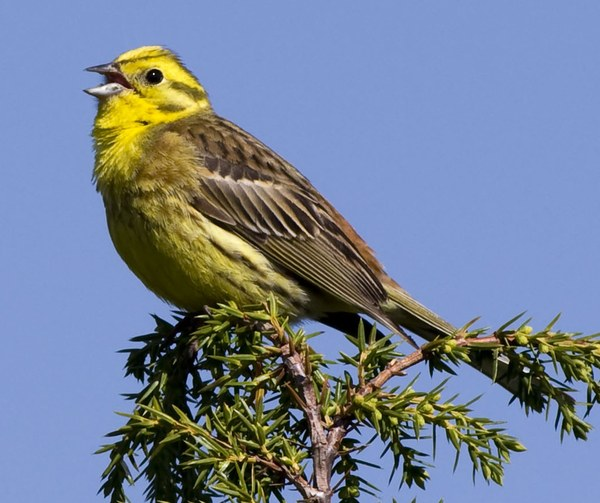
Bruant Jaune, aka Yellowhammer
- Bruant Jaune: Also known as a Yellowhammer, this bird does exactly that — hammers you over the head with its yellowness. A bird found on the forest edge, this bruant also nests in the scrub adjacent to agriculture. The male takes on a brilliant yellow head and breast during the breeding season, while the female is more of a yellowish-brown color, streaked all over her body, creating a camouflage effect.
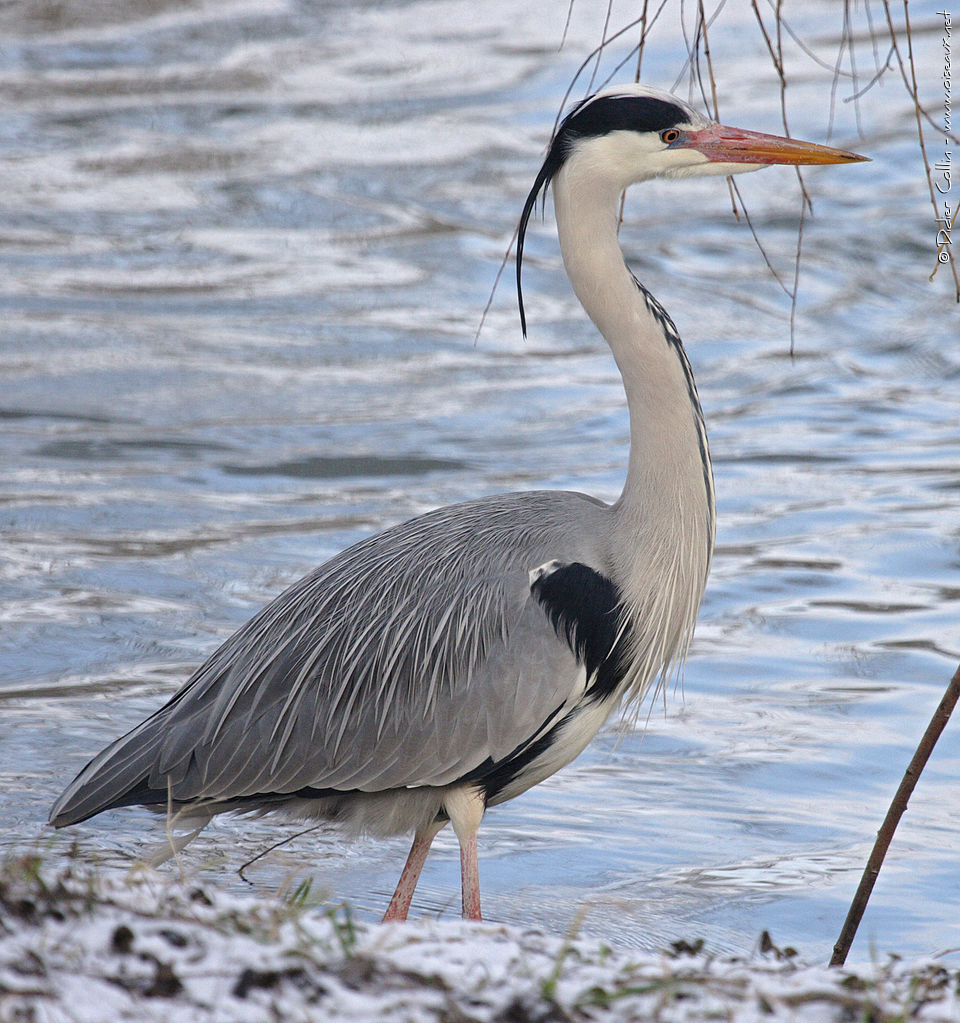
Heron Cendre or Great Grey Heron
- Heron Cendre: The grey heron is a long-legged wading bird of the heron family, known as Ardeidae. This lage water bird is native throughout temperate Europe and Asia, and also parts of Africa. It is resident in much of its range, but some populations from the more northern parts migrate southwards in autumn.

Aigrette Garzette or Little Egret
- Aigrette Garzette: This bright white fresh water bird is elegant and beautiful. Luckily for the species, the Aigrette has adapted to many settings and the population is increasing. Visually, birdwatchers notice its slender black beak, long black legs, And distinctive to the western race, bright yellow feet. As an aquatic bird, it feeds in shallow water and on land, consuming a variety of small creatures.
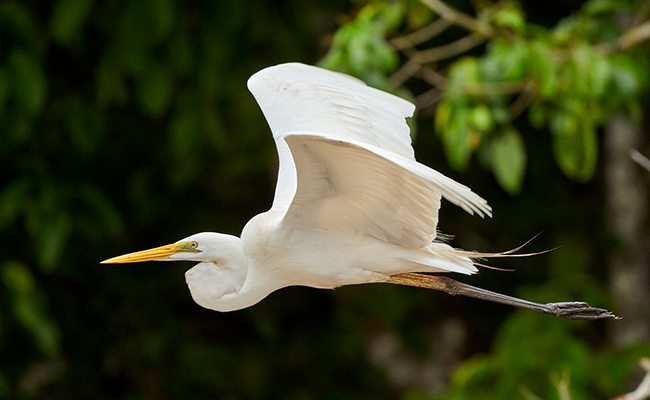
Grande Aigrette or Great White Egret
- Grande Aigrette: This Great White Egret has a green eye mask, bright yellow bill and a yellow eye. Graceful in flight, it shortens its neck and takes off with effortless wing flaps. As good a hunter as the Great Grey Heron, this bird has been prized for its feathers and has had its populations challenged over the years.
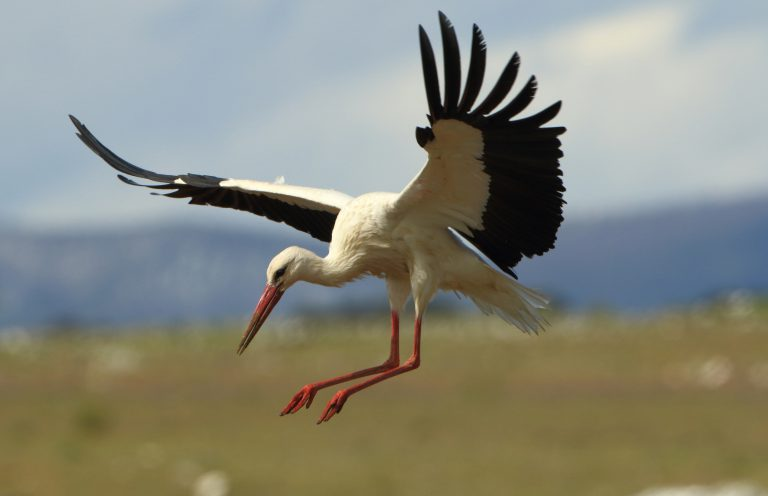
Cigogne Blanche or White Stork
- Cigogne Blanche: This large, black wing-tipped white bird, has red/orange bill and legs and nests on high perches of most rural towns in Europe. They graze in the fields around town and make nests on the churches and public buildings. Known mythologically as the bearer of newborn babies, they are generally tolerated, even as they poop all over the roofs and make some disturbing racket in their nests.
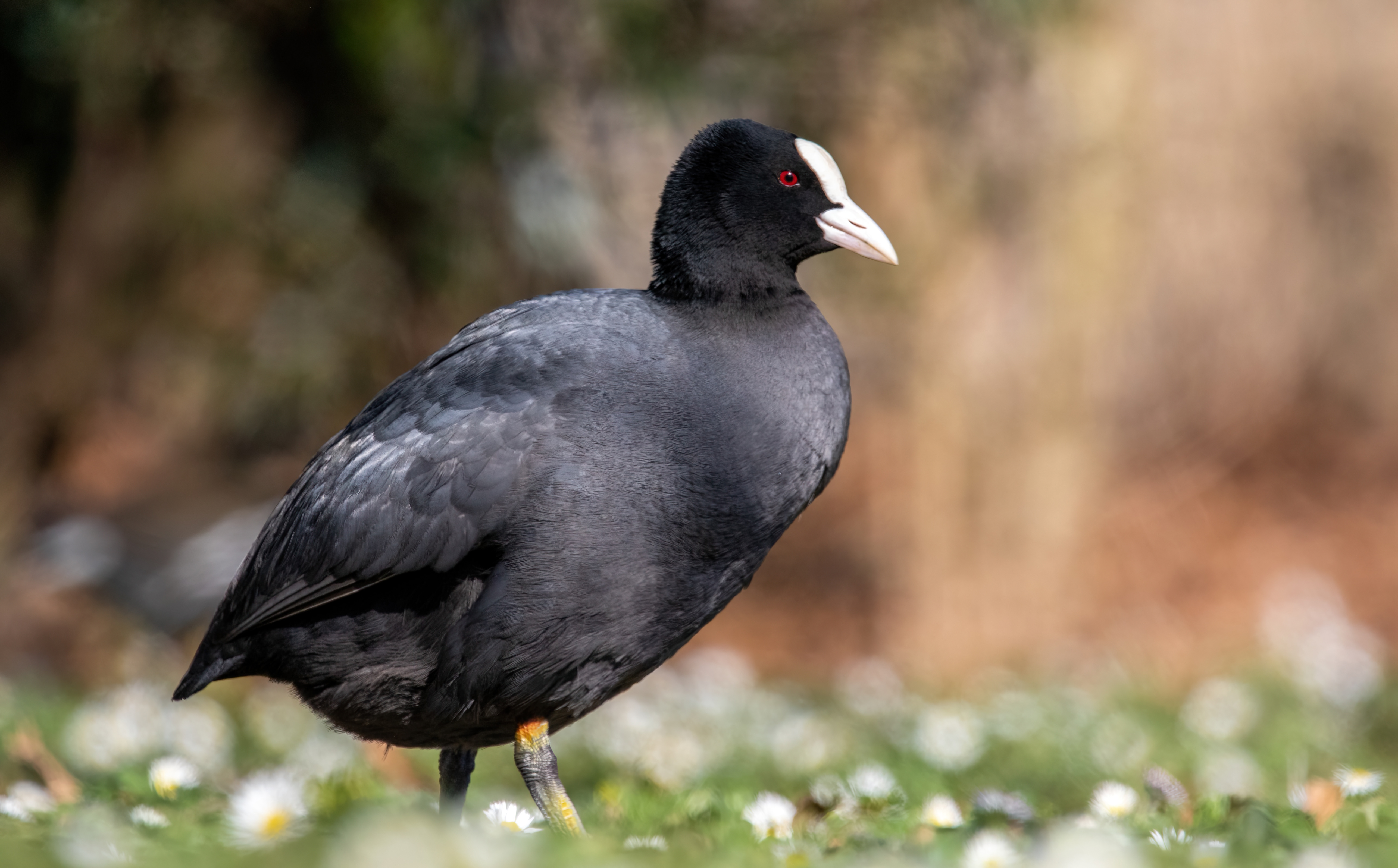
Foulque Macrule or Eurasian Coot
- Foulque Macrule: The Eurasian Coot, also known as the common coot, or Australian coot, is a member of the rail and crake bird family, the Rallidae. It is found in Europe, Asia, Australia, New Zealand and parts of North Africa. It has a slaty-black body, a glossy black head and a white bill with a white frontal shield.
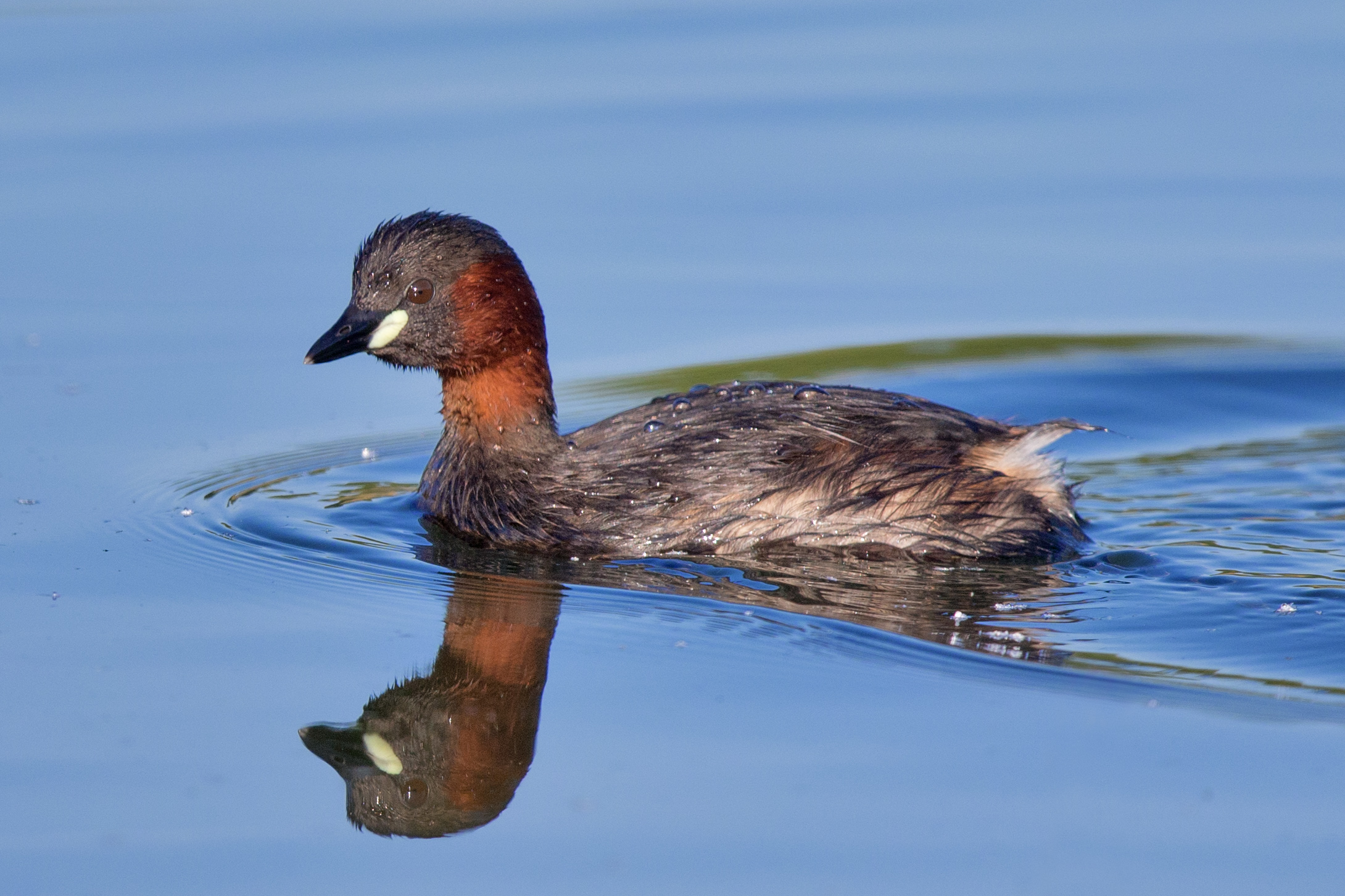
Grebe Castagneux or Little Grebe
- Grebe Castagneux: This diminutive grebe owes its name to the color of its back, castagnous, which means chestnut. This bird is the smallest member of the grebe family, as suggested by its other vernacular name, Lesser Grebe. Unlike other European grebes, it lays eggs regularly twice a year. A discreet bird, the little grebe settles on any lake, pond, or marsh whose shores have sufficiently dense vegetation. We spotted a noisy Chestnut colored grebe at Versailles and watched it squawk and paddle for many minutes before taking cover.
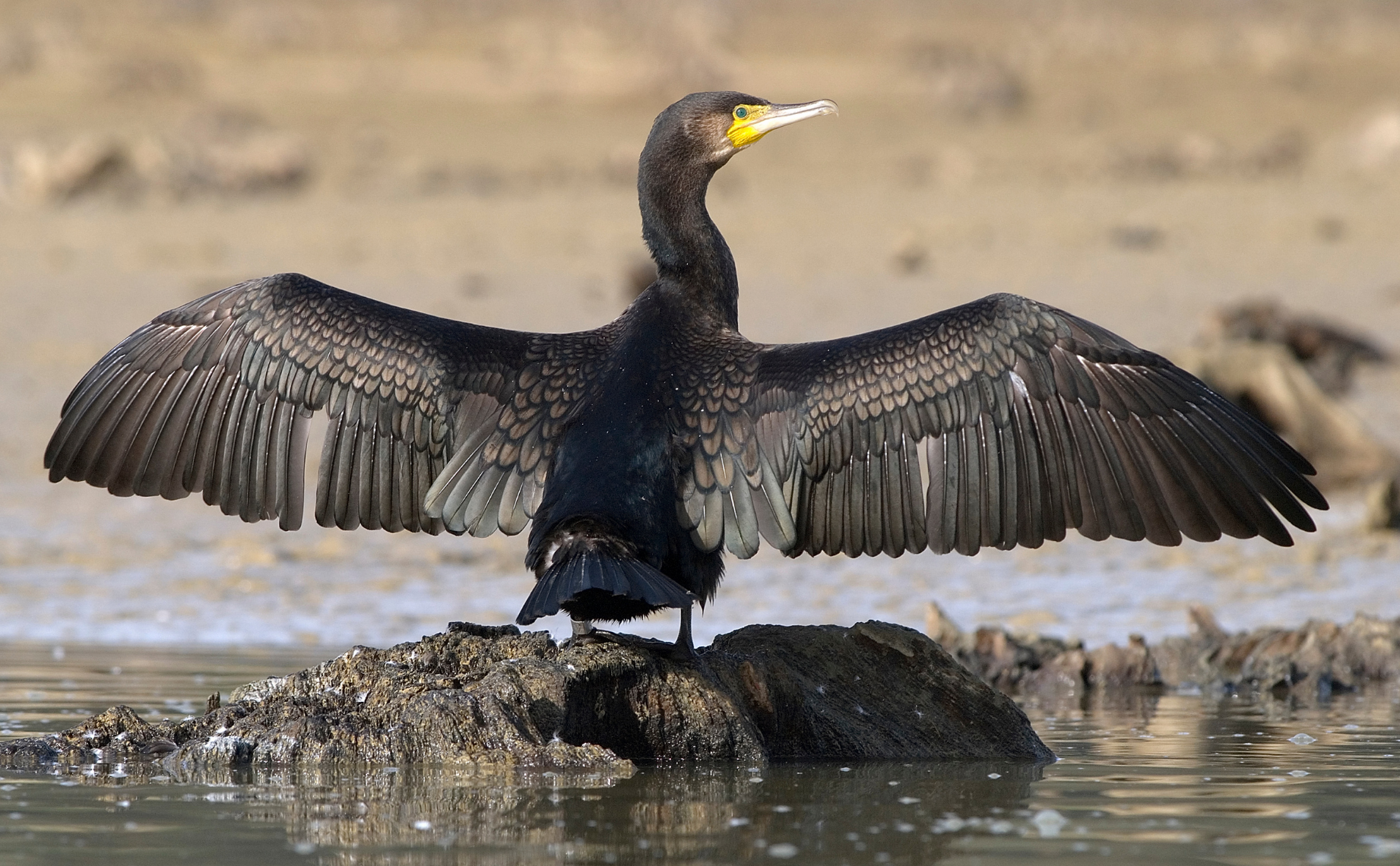
Grand Cormoran or Great Cormorant
- Grand Cormoran: These large-billed, blocky-headed cormorants have a yellow face mask and a white, hooked bill. In breeding season they have a white patch on the thigh. They feed mostly on bottom-dwelling fish captured during dives. Like other cormorants their plumage has limited body oils for waterproofing, and they often stand on rocks with their wings outstretched to dry. In the water, soggy feathers may be a bonus and not a liability, making the birds less buoyant during their dives.
- One cool fact: People have used cormorants to help them fish for centuries. In 5th century China and Japan, and 16th century Europe, fishermen fitted tethered rings loosely around the birds’ necks, keeping them from swallowing larger fish. Cormorants live a long time, and some of the older cormorants would keep fishing even without the rings and tethers. Into the 20th century in Macedonia and Greece, fishermen used captive cormorants to herd fish toward their nets.

Cormoran Huppé or European Shag
- Cormoran Huppé: Fairly common along seacoasts, nesting on steep cliffs; usually seen as singles or small groups, swimming or flying low over the sea. Does not occur on inland water bodies. Rather large, long-necked dark waterbird; feeds by diving and often leaps a little as it dives. Appreciably smaller and thinner necked than Great Cormorant, this species has a more slender bill. Adult glossy black overall with narrow yellow throat patch; first-year dark smoky grayish overall, variably paler on throat and underparts. By spring, it often develops faded pale panel on its upper wing.
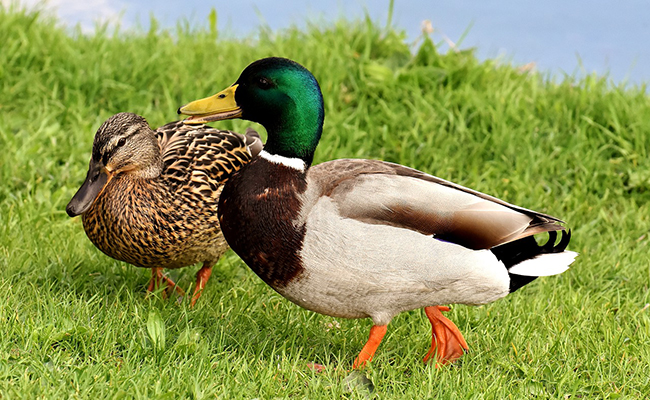
Canard Colvert or Mallard
- Canard Colvert: Also known in some parts as the Mallard is a dabbling duck that breeds throughout the temperate and subtropical Americas, Eurasia, and North Africa. It has been introduced to New Zealand, Australia, Peru, Brazil, Uruguay, Argentina, Chile, Colombia, the Falkland Islands, and South Africa. The males’ distinctive green head, yellow bill, red front, orange feet and white neck ring are some of its key identifiers.
Goeland Argente or European Herring Gull
- Goeland Argente: The European Herring Gull used to be more abundant. They are somewhat common in coastal regions of Western Europe. It breeds across Northern Europe, Western Europe, Central Europe, Eastern Europe, Scandinavia, and the Baltic Countries.
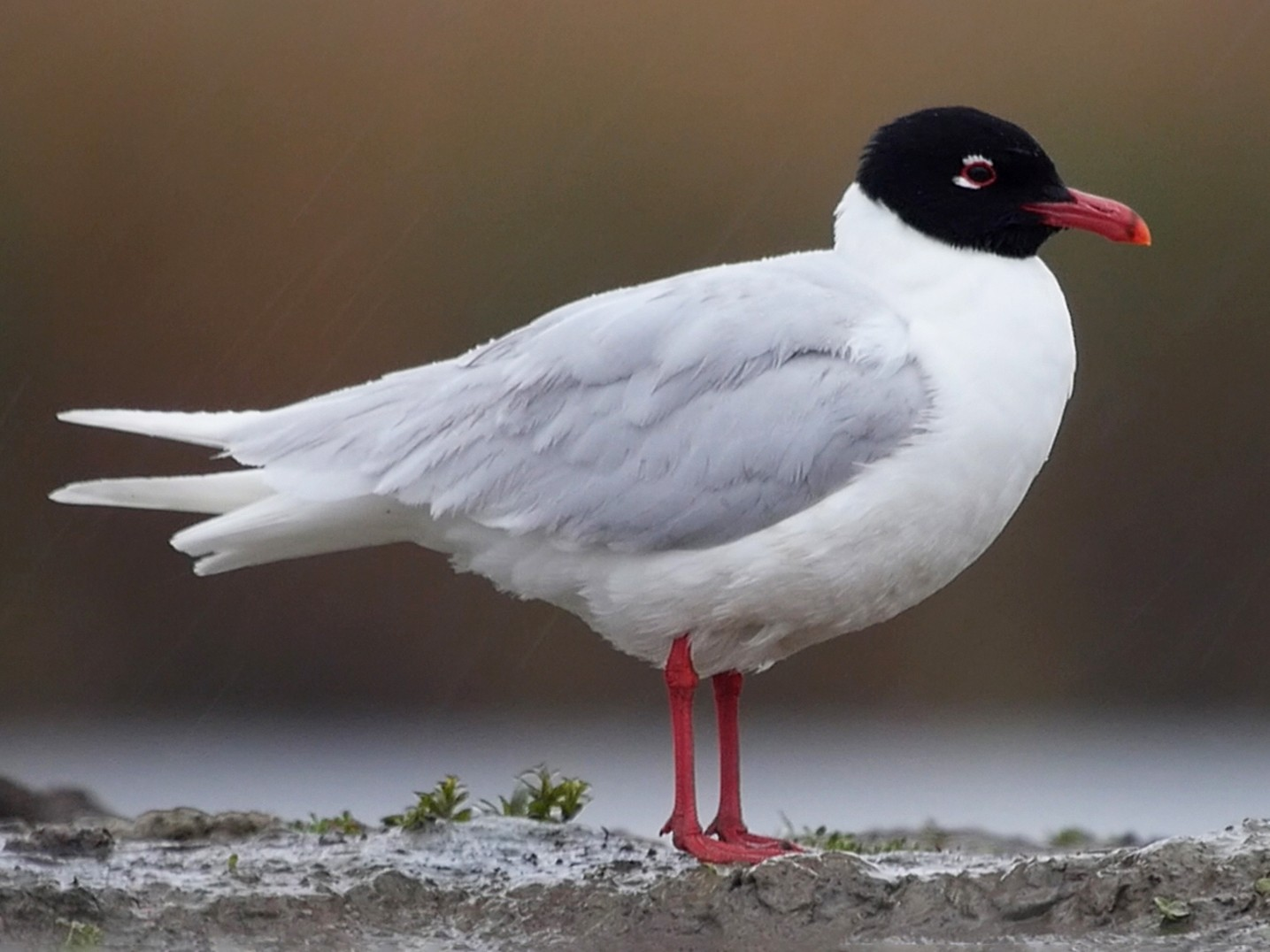
Mouette Melanocephale or Mediterranean Gull
- Mouette Melanocephale: Also known as the Mediterranean Gull, this bird is known for its black head, red beak and red legs and feet. It also has a white eye ring that helps its eye to stand out. But an important note: the male’s dark head only appears during the breeding season. It retains only a small patch of this black hood on the cheek in winter. This species varies from the Black-headed Gull and Bonaparte’s Gull in having a black hood (as its name suggests) instead of chocolate brown and much more extensive than in its relative, uniformly gray wings without a black tip in adults and a slightly stronger beak.
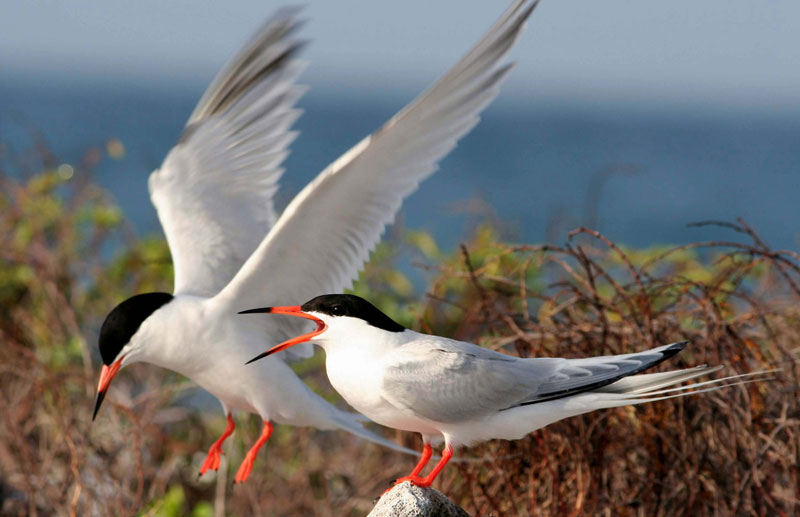
Sterne de Dougall or Roseated Tern
- Sterne de Dougall: This Roseated Tern is beautiful in flight, fishing and on the ground. It benefits from total protection on French territory since the ministerial decree of April 17, 1981 relating to birds protected throughout the territory. It is listed in Annex I of the European Union Birds Directive; therefore, citizens are forbidden to “destroy, mutilate, capture or remove it, to intentionally disturb or naturalize it, as well as to destroy or remove eggs and nests, and to destroy, alter or degrade its environment.” Whether it is alive or dead, it is also forbidden to transport it or peddle it, to use it, to possess it, to sell it or to buy it. According to the IUCN France report on birds on French territory, the roseate tern is in critical danger of extinction in mainland France and its population is declining
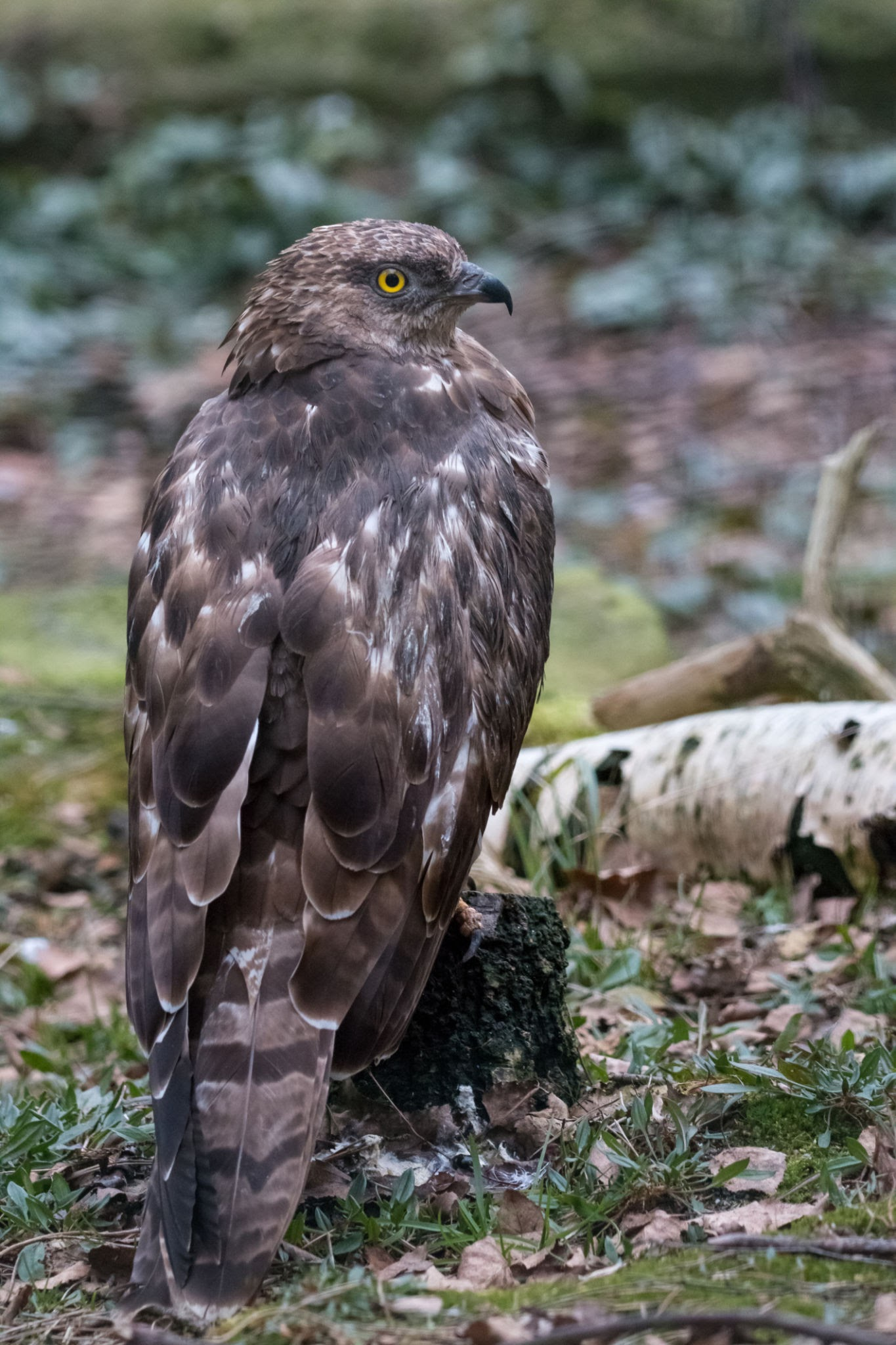
Bondee Apivore or Honey Buzzard
- Bondree Apivore: Also known as the Honey Buzzard, this medium-sized Accipitridea has a silhouette in flight comparable to that of a common buzzard or turkey vulture. It can be recognized by its narrow wings, its small but prominent head and its highly developed tail with three dark bars, including a wide terminal band. Its plumage is very variable. The feathers at the base of the beak and around the eye are short, rounded and compact, providing protection against possible wasp and bee stings. The buzzard searches for its food on the ground and can dig holes up to 40 cm deep, in order to unearth its favorite prey: larvae, and pupae of Hymenoptera (bees). It completes this diet with reptiles, amphibians, small mammals and chicks.
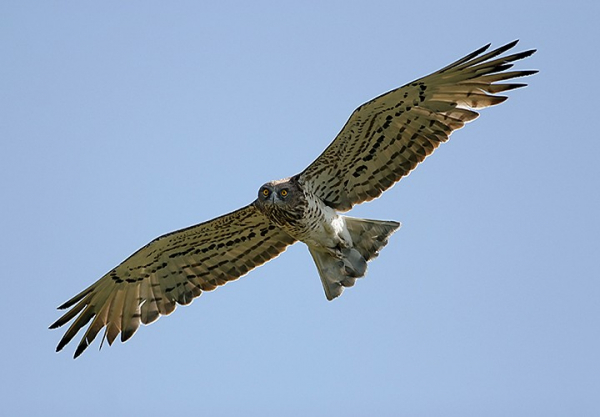
Circaete Jean-le-Blanc or Short-toed Snake Eagle
- Circaete Jean-le-Blanc: This large raptor, measuring up to 70 cm in length and up to 1.85 m in wingspan. The largest females weigh up to 3 kg. It has brown upper-wing and white underside. The body is dotted with colored spots, of variable color and density depending on the individual (between light beige and dark brown). These splashes of color form parallel lines under the wings and three bars under the tail. A darker bib extends from the chin to the chest: according to specialists there is no real sexual dimorphism in the plumage, but generally the females have a rather dark plastron, the male sporting a lighter chest , dotted with dark vertical sparks. The head is rather large, round, with a short beak and large yellow eyes, which gives it a bit of an owl look. In fact, the head of the Short-toed Snake Eagle differs from that of other diurnal raptors: the eyes are larger and directed forward, which gives it very good binocular vision.
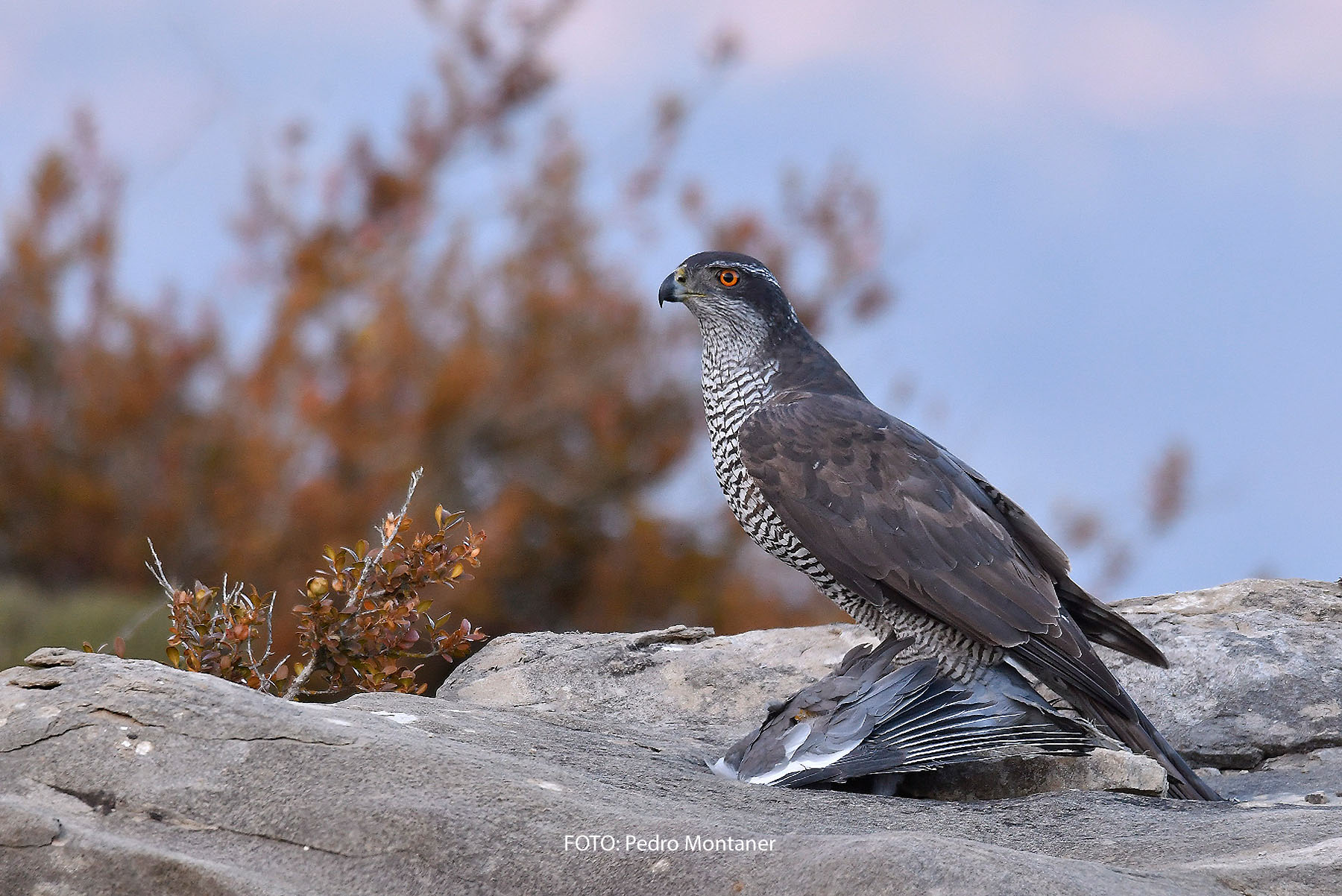
Autour del Palombes aka Eurasian Goshawk
- Autour des Palombes: Known as the Eurasian Goshawk, this bird is the largest accipiter in Europe. It is a raptor with short, wide rounded wings and tail, well adapted to flight in the forest, the habitat where it lives and makes its nest. The male is blue-grey above and streaked with gray below. It measures up to 57 cm and has a wingspan up to 105 cm. The female is larger, it measures up to 64 cm with a wingspan up to 127 cm. It is slate blue above and gray below. Juveniles are brown above and streaked with brown below. Juveniles can be differentiated from adults by the eye which is duller in color (grey-yellow) than those of adults (orange).
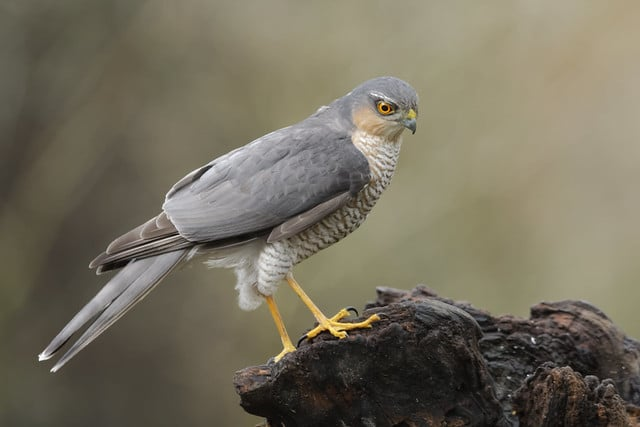
Epervier d’Europe aka the Eurasian Sparrowhawk
- Epervier d’Europe: This is a lethal killer of other birds. Although a specialist predator of woodland birds, the Sparrowhawk can be found in any habitat, and in cities often preys on backyard birds. The males tend to take small birds such as tits, finches and passerines, while the females mainly catch thrushes and starlings. They are able to kill birds weighing up to more than 500 grams. The Sparrowhawk has seven subspecies varying slightly in size and coloration; they inhabit the temperate and subtropical regions. While birds in the northern range migrate south for the winter, their southern counterparts are either year-round residents or only perform dispersal movements. This Sparrowhawk breeds in wooded areas, with a nest built in a tree using twigs and measuring up to 60 cm of diameter. The female lays four or five pale blue eggs speckled with brown, the success of the clutch depending on the female maintaining a high weight, while the male brings the food. The chicks hatch after 33 days of incubation and leave the nest after 24 to 28 days.
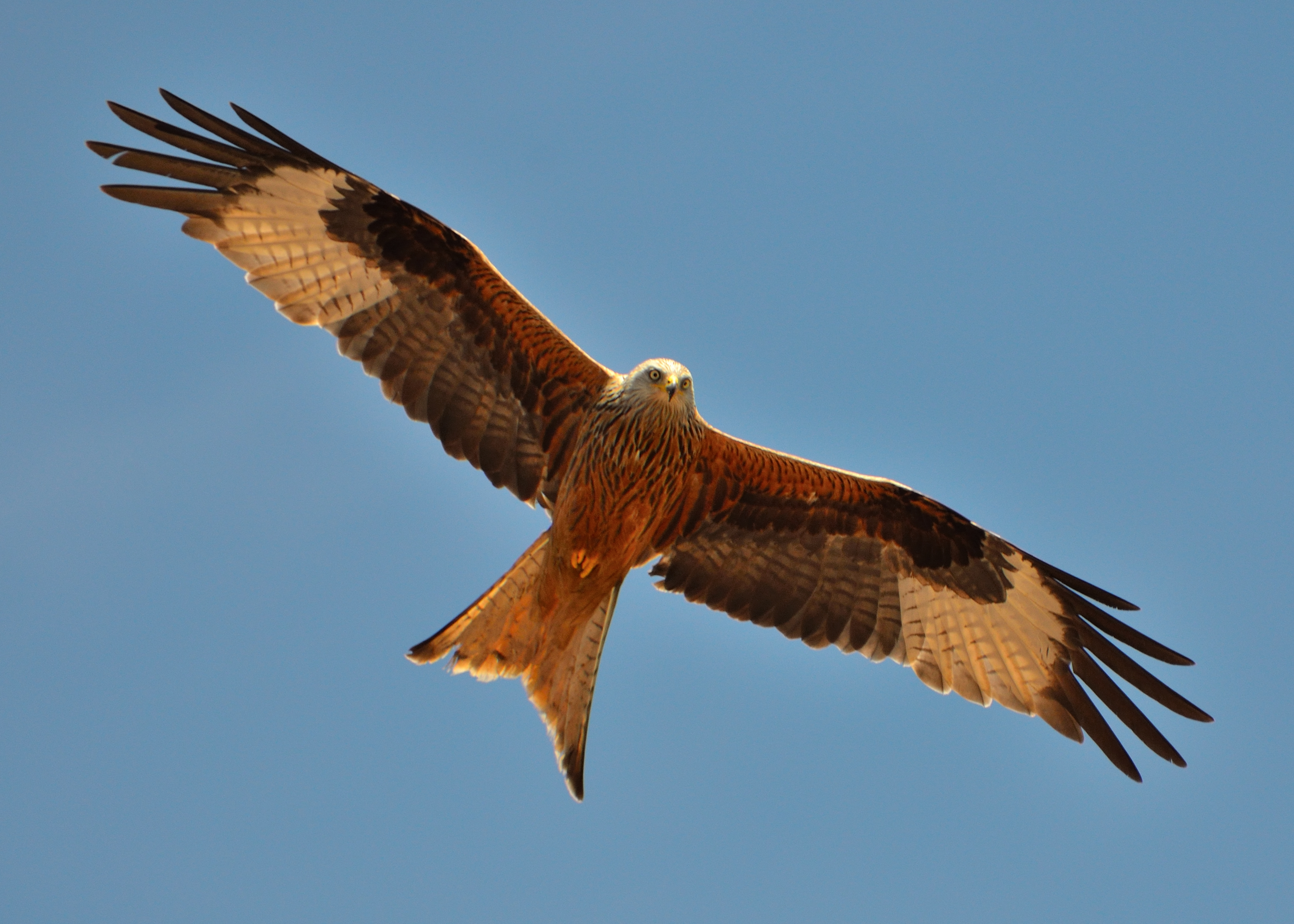
Milan Royal or Red Kite
- Milan Royal: This Red Kite is a masterful flier, as the name kite suggests. It is one of the few species, other than Hummingbirds, which can hover over a stationary spot getting ready to drop from the sky on its prey. Its plumage is reddish brown above, streaked with black below, its head, neck and throat are whitish streaked with dark. His eyes have a green outline with a black dot in the middle. The female is a little duller. The beak is yellow at the base, gray at the tip and rounded like a mini-hook. In flight, it presents a characteristic silhouette, with its long narrow and sharply angled wings, pale spots under the wings and its notched tail.
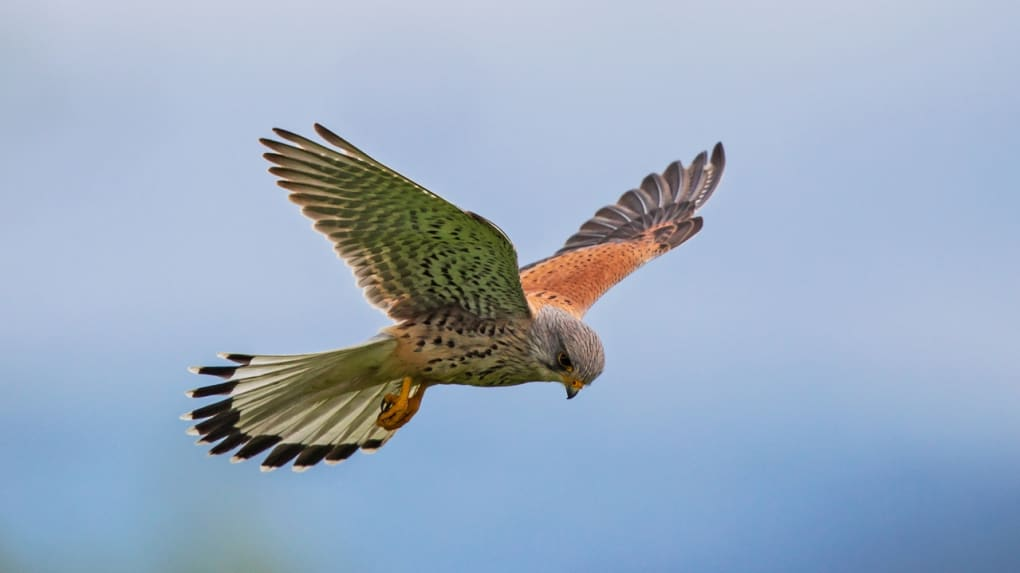
Faucon Crecerelle or Common Kestrel
- Faucon Crecerelle: This Common Kestrel is another beautiful flier, who searches for food on the wing. Very adaptable, it frequents open and sparsely wooded areas, from the seaside to the mountains, but also urban and suburban environments, going so far as to nest in front of the Notre-Dame de Paris Cathedral. The size of a pigeon, the Common Kestrel has a rufous coat speckled with black, with blackish wingtips, while the undersides of the wings and the chest are cream-colored speckled with black. The species exhibits reversed sexual dimorphism: the adult female is larger than the male by about 20%, with a brown head and tail streaked with black, while the adult male has a grey-blue head with gray tail. Juveniles resemble adult female. Its silhouette in flight is characteristic, with its long, narrow and pointed wings. Its hovering flight called “in the Holy Spirit” is a frequent sighting on the roadside.
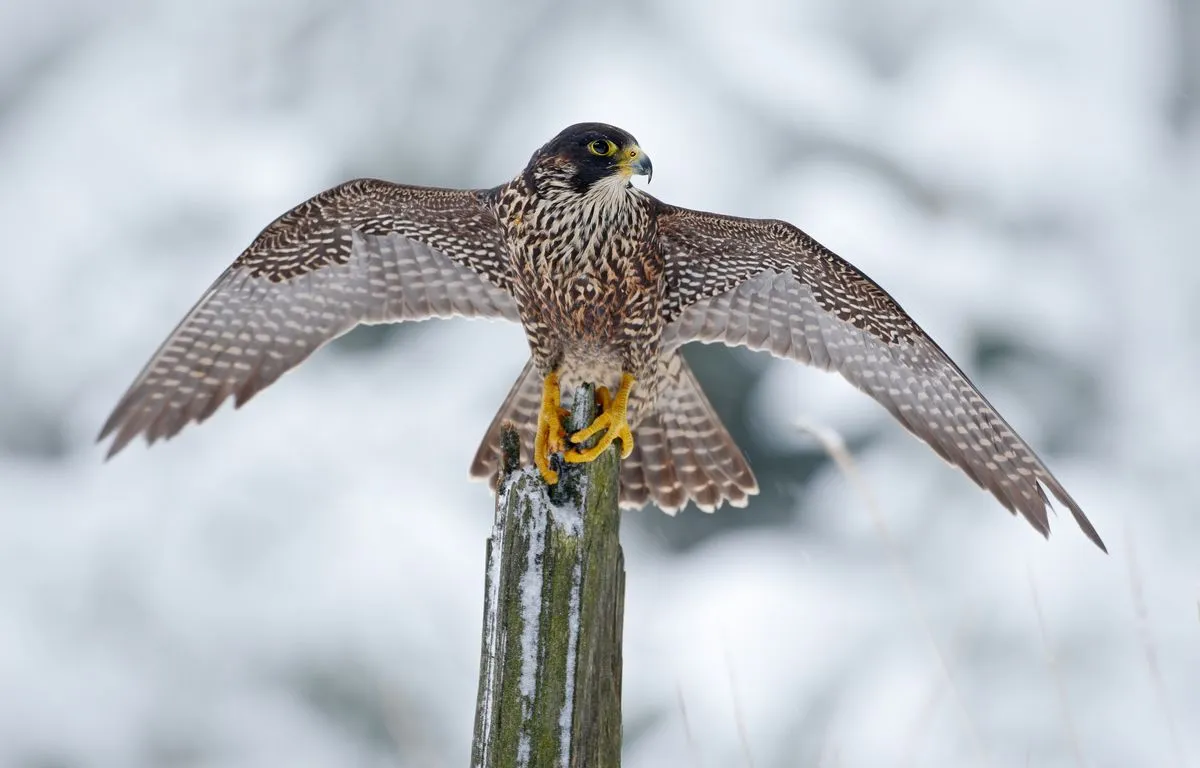
Faucon Pelerin or Peregrine Falcon
- Faucon Pelerin: This Peregrine Falcon is one of the fastest birds of prey in the Eurasian sky. The peregrine falcon, also known simply as the peregrine, and historically as the Duck Hawk in North America, is a cosmopolitan bird of prey in the family Falconidae. A large, crow-sized falcon, it has a blue-grey back, barred white underparts, and a black head. The peregrine, renowned for its speed, can fly up to 240 mph in a dive for prey.
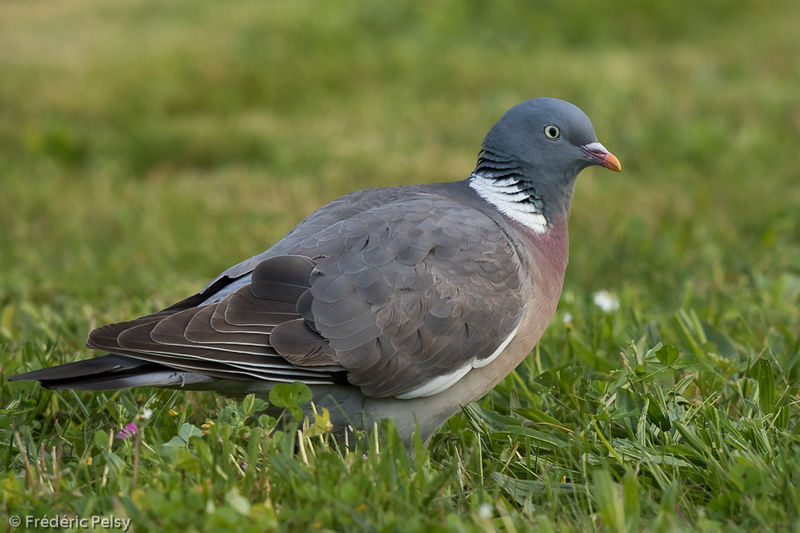
Pigeon Ramier or Common Wood Pigeon
- Pigeon Ramier: The Wood Pigeon is a large species in the dove and pigeon family, native to the western Palearctic. It belongs to the genus Columba, which includes closely related species such as the rock dove. It has historically been known as the ring dove, and is locally known in southwest England as the quist, or in southeast England as the “culver” the latter name has given rise to several areas known for keeping pigeons to be named after it, such as Culver Down and Culver Hole in South Wales. It has a flexible diet, predominantly feeding on vegetable matter, including cereal crops, leading to them being regarded as an agricultural pest. Wood pigeons are extensively hunted over large parts of their range, but this does not seem to have a great impact on their population.
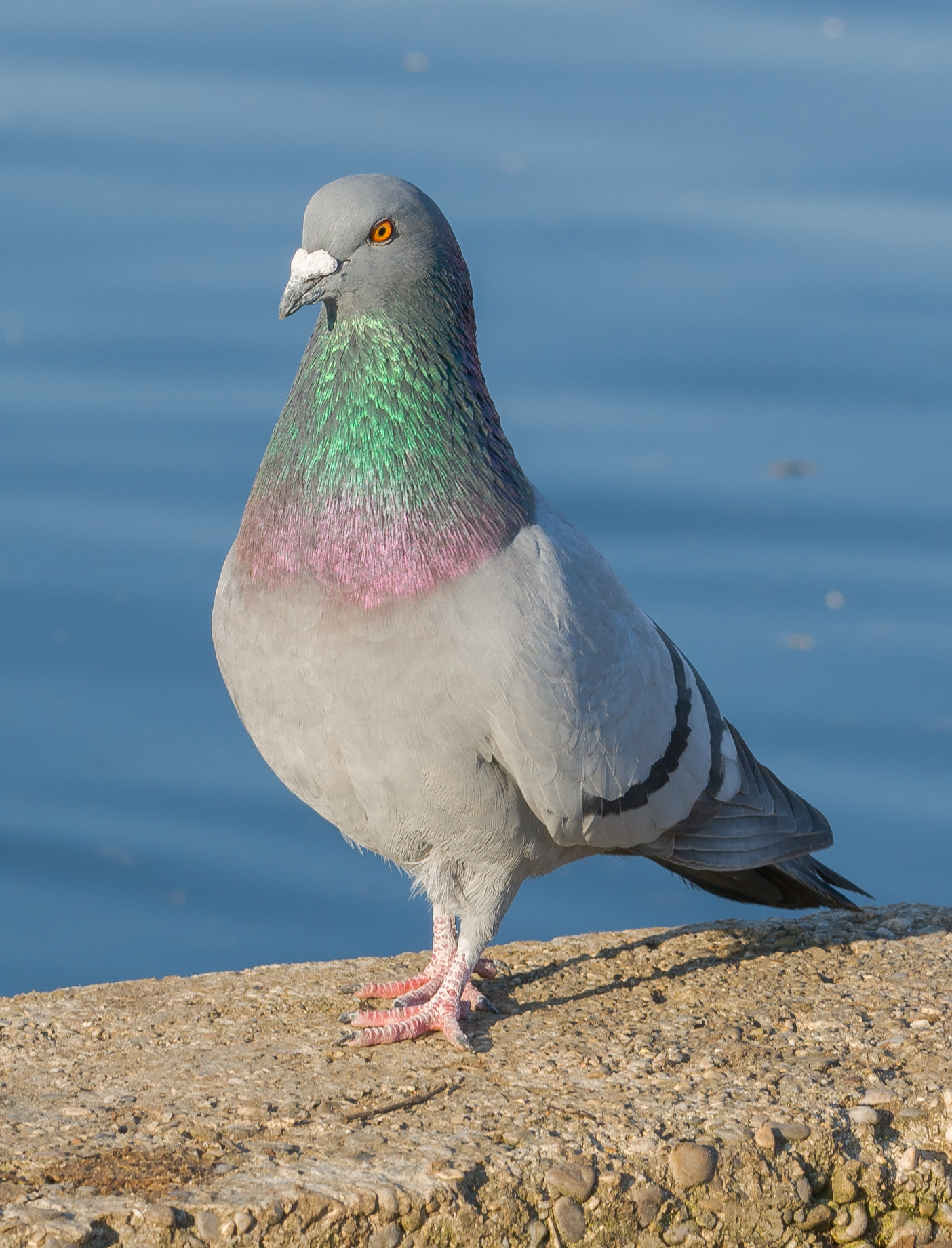
Pigeon Biset or Rock Dove
- Pigeon Biset: The rock dove, rock pigeon, or common pigeon is a member of the bird family Columbidae. In common usage, it is often simply referred to as the “pigeon.” The domestic pigeon descended from this species. Escaped domestic pigeons have increased the populations of feral pigeons around the world.
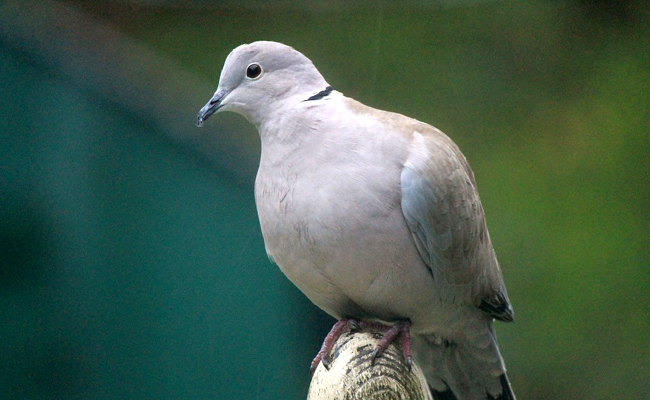
Tourerelle Turque or Eurasian Collared Dove
- Tourerelle Turque: This lovely dove can be spotted and heard all over France. It’s cooing is a reminder of those around us who give us joy.
=============================================
Reference:
Chantelat, Jean Claude, Les Oiseaux de France, Guide Vert Solar, 13th Edition, Paris 2011.
 Henry E. Hooper