
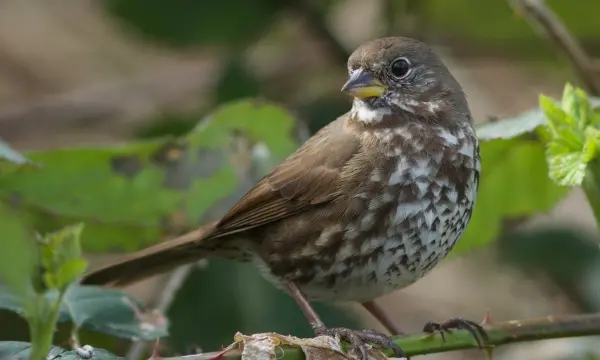
Birds: Fox Sparrow
The native Fox Sparrows in Oregon are often described as “large, chunky and highly visible sparrows found year-round or as winter visitors” to the state. The ones that visit our feeders and are spotten along the roadside, are easily identified by their dark, blotchy breast spotting and habit of scratching at leaf litter. They do not strut and stand tall on branches and telephone wires like Song Sparrows, as they are often darting in and out of the roadway to cover. They are also stealth-like taking small seeds in early morning from our birdfeeder and quickly darting back to the understory.
While they do not look at all like foxes to me, it was worth the research that there are indeed some RED versions of this bird in other parts of North America. Particularly looking at the back and tail feathers, with those red highlights this bird earns the name Fox Sparrow.
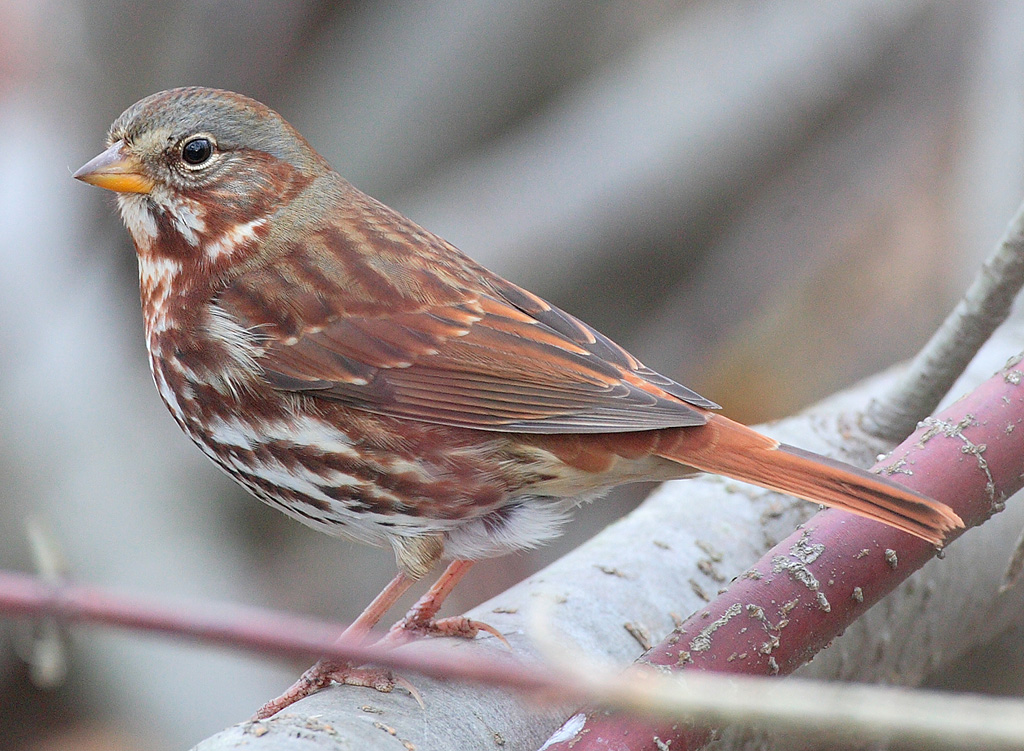
In Oregon, there seem to be three different sub-species of Fox Sparrow. While we see the inconspicuous Sooty Fox Sparrow in the Portland area (and the rest of Western Oregon), they are identified for their dark chocolate-brown appearance. In Eastern Oregon, there are several subspecies that are hard to differentiate without a bird book. There is a Slate-colored Fox Sparrow species that breeds in the Blue Mountains and the Wallowas of northeastern Oregon, and in higher altitudes of Malheur County. I have not seen one, but there is a third sub-species in the Cascades and Sierras known at the Thick-billed Fox Sparrow, and it is true to its name identified for his notably thick upper and lower bill.
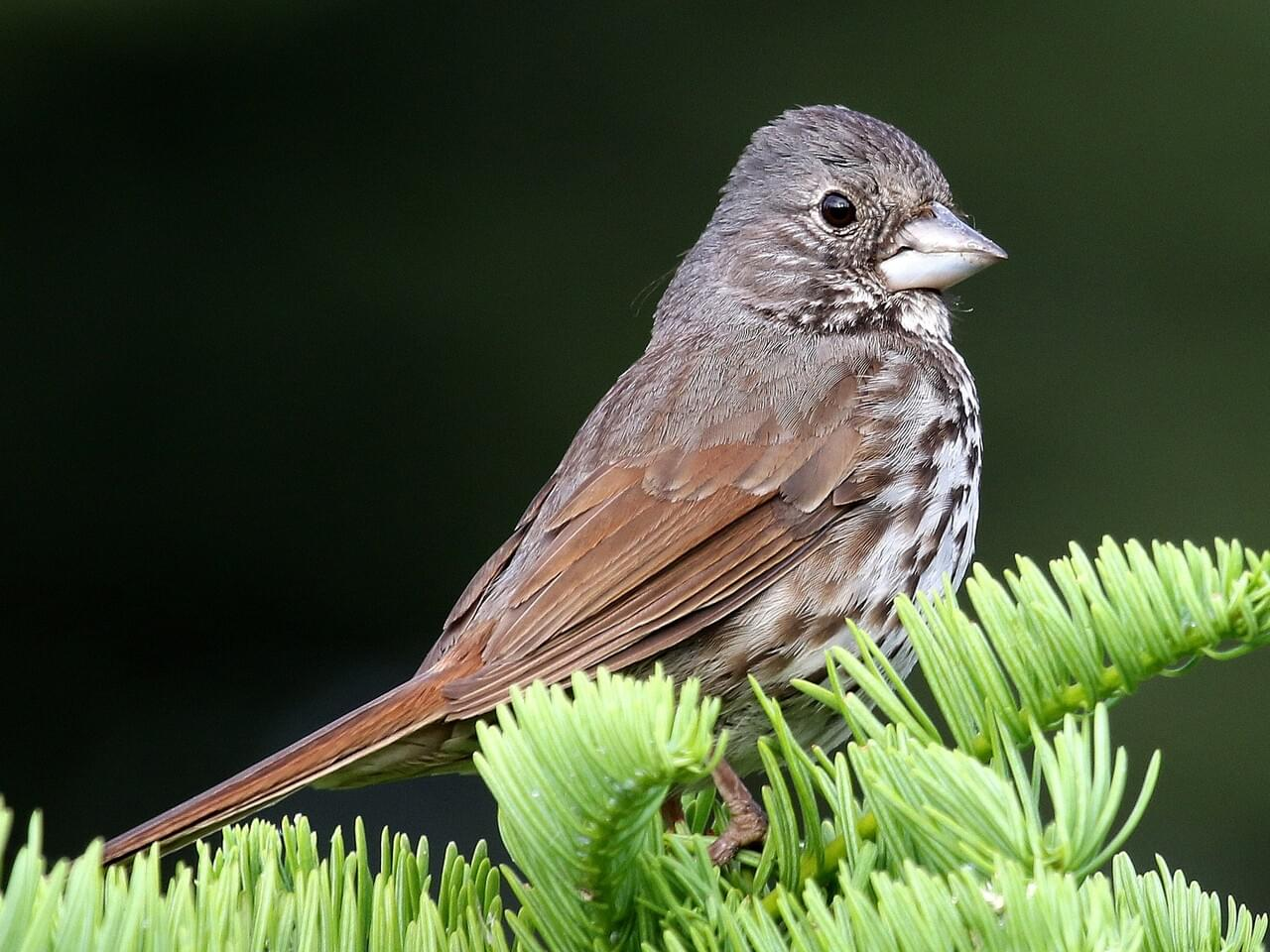
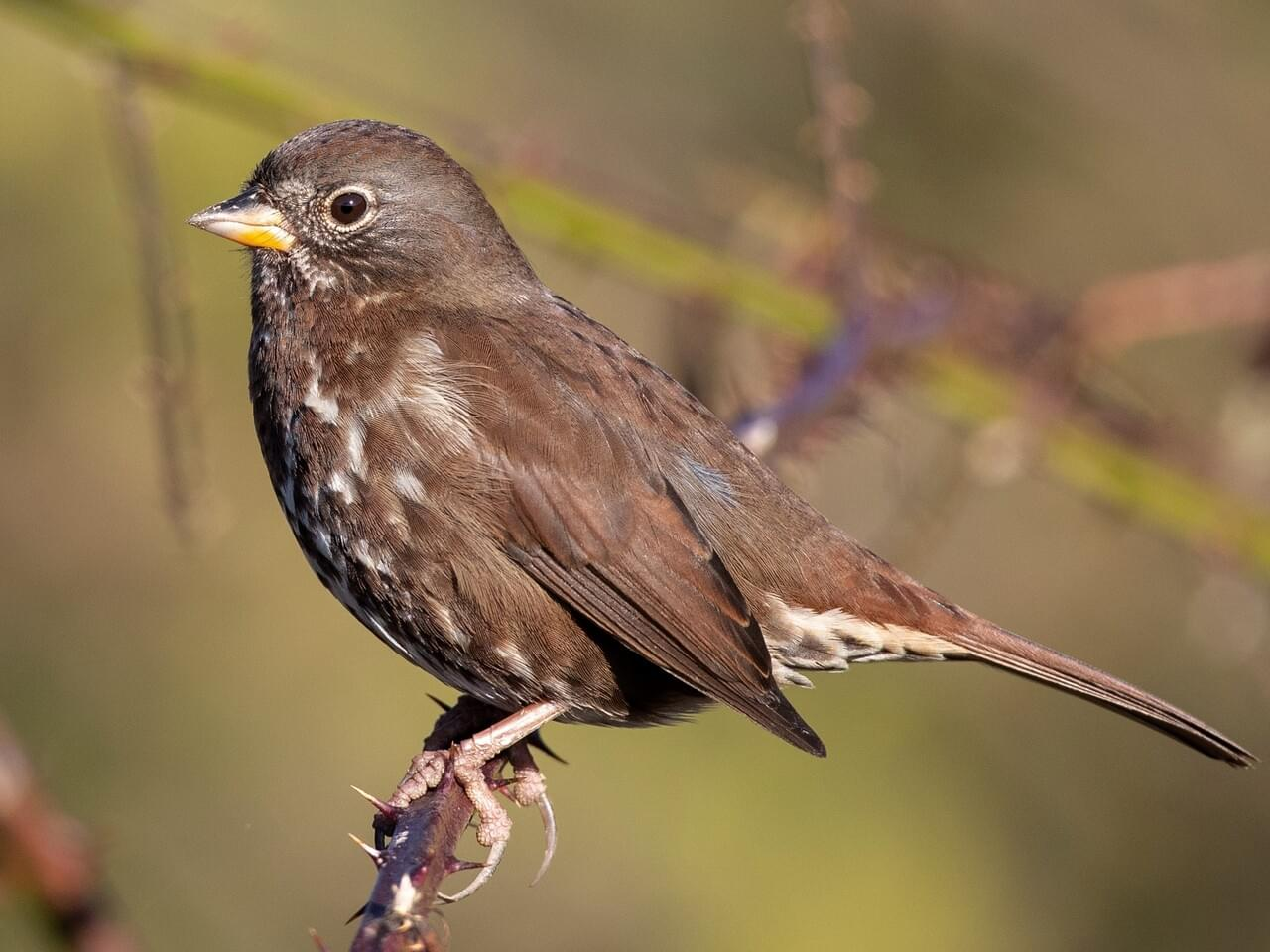
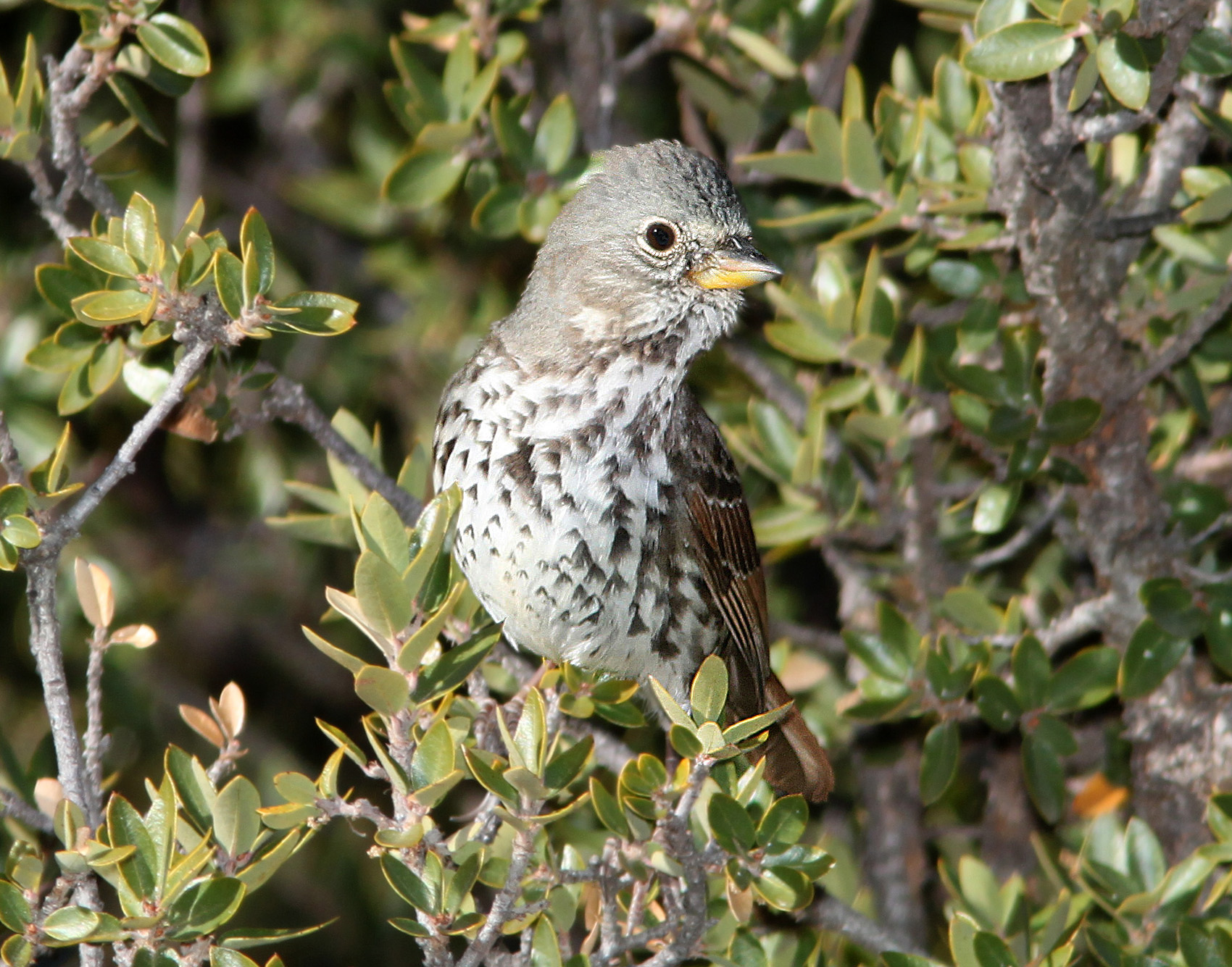
From time to time they are in the underbrush and I have mistaken them for towhees; however, they are not as large, nor as unusual in the nearby undergrowth. They like to forage a meal by scratching through the forest understory in search of seeds and insects. While larger than a Song Sparrow, they have a shorter tail, darker coloring, and some chunky chevrons on their chests, like triangular spots.
While I have not easily identified their songs, they are known by birders for their “loud, beautiful and complex whistling songs.” The male and female seem to sing especially melodiously during breeding season. Imagine that!

