
Word Smith: Ger
Reading a news article about the Pope’s visit to Mongolia the other day, the three letters ger were mysteriously placed in the middle of a sentence. Were they missing a few letters to another word? Did they mean anger, hunger, trigger, or some other sentiment? I kept reading and there it was again, g-e-r. This time it seemed as if the letters referred to a particular place or structure. This Word Smith helped me quell my confusion.
What is a Ger?

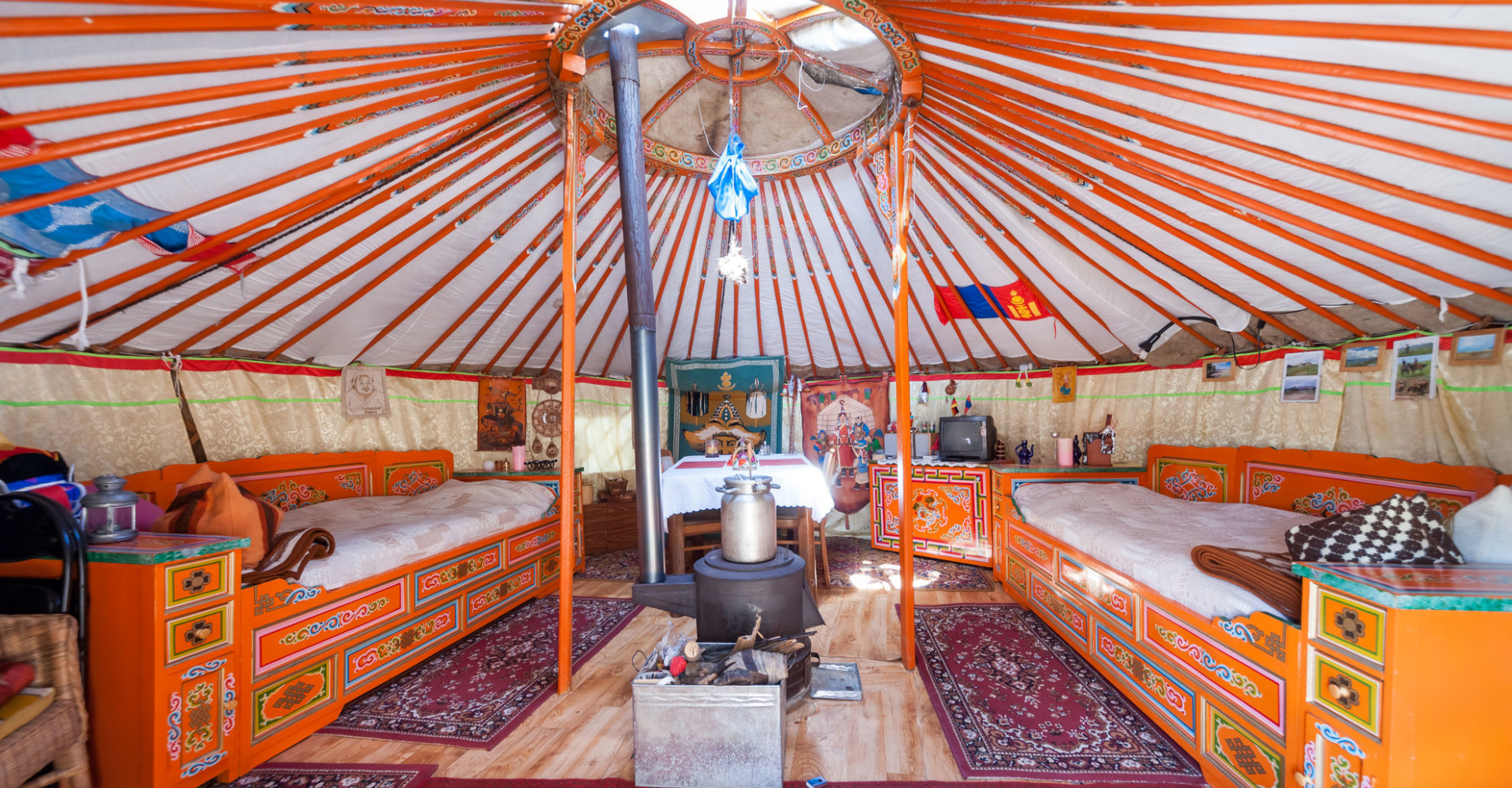
The ger refers to a portable, circular dwelling used by Mongolian nomads. It has become a symbol of Central Asian countries. Its Turkish name – yurt – is adopted into several foreign languages, including Russian and English. That said, each nomadic nation has a word for its traditional mobile home in its native language. The Kyrgyz say “bos” (gray house), the Kazakhs “kiyiz” (felted house), the Turkmen “ak/kara” (white/black house), and the Tuvans “өg” (house). My step-brother, Malcolm, built yurts in his backyard in Nederland, Colorado. Not Turkish nomad country, they were still a hit and were almost always rented.

The Mongolians have held fast to the traditions of a portable tent with the word ger. In Mongolian, the word “ger” describes both a home and a felt tent. Even those living in a high-rise apartment or a McMansion call their homes a ger.
Some 2,500 years ago, the Greek historian Herodotus gave the first written description of the nomad’s felt dwelling. He wrote about the Scythians’ tents in his books, which looked slightly different from those we see today.
The nomads have been designing and redesigning the ger until it took its present form – a simple yet sophisticated housing that can withstand harsh weather conditions.

What makes the ger perfect for migration? It has five important attributes:
- It is easy to disassemble and reassemble. Two or three adults can dismantle the ger in half an hour and assemble it in an hour and a half.
- It is portable. Three camels or three yaks hitched to carts is enough to transfer a whole ger from one camp to another.
- It is weather-resistant. The ger wouldn’t fall in severe wind gusting over 100 km/h. It can also endure both snowstorms and sandstorms.
- It allows heat control; by making a fire in the stove on cold days and lifting the lower end of the felt layer on hot days.
- It is budget-friendly. If skillful enough, one can craft a ger by the do-it-yourself method, using woods, ropes made of horse/yak hair, and felt made of sheep’s wool. Those who lack craftsmanship can purchase it at a reasonable price from a ger artisan.
The Mongolians build the door of their ger directing to the sunrise in order to know the time using the sunlight.
For a long time, Mongolians chose the best day for the moving their home. It is not allowed to build on the base of others’ ger because there is a belief that that would mean getting all the bad omens of the last owner’s home.
Here are the sequences how to build a ger. First of all, base the floor and place all the heavy things, such as upper frame and avdar, on it. After that, start placing their wooden wall from south west of the floor, and make it circle while using the tier in order to bond wall by wall.
While the father or someone elder is lifting the upper frame, other family members support the upper frame by the main uprights and poles. After four main tiers of the upper frame are connected to the wall, start cover the base using the white felt and “tsavag.” The covering process goes from North to South. North root cloth should be the upon the South one. Thus, North tsavag is a span longer than South one, too. After the ger is clothed by white blanket and “hoshlongo,” felt roof, furnace and chimney, and narrow strip of felt will be placed. Finally, attach the curtain and place other furniture in the ger.
To put away the ger.
Mongolians put the ger away when its time to move. They do not allowed families to start from whatever they want. There is a ritual sequence to put the ger away.
First of all, take the rope off and fold it up and then progress starts from felt roof. After that, pull the north and south felts down by bundling it together. Then, the wall of building will be replaced from latticework. After taking the blanket down, start to put wooden base of the ger down. While doing that, south west latticework must not be cleaned, because Mongolians believe that latticework has the all the good things related to the home.
 Henry E. Hooper