

Word Smith: Ezekiel’s Wheel
“Wherever the spirit would go, they would go, and the wheels would rise along with them, because the spirit of the living creatures was in the wheels. When the creatures moved, they also moved; when the creatures stood still, they also stood still; and when the creatures rose from the ground, the wheels rose along with them, because the spirit of the living creatures was in the wheels.” Ezekiel 1:20-21
Samuel J. Ciurca, Jr: the Fossil Collector[1]
The mystery of Ezekiel’s Wheel — the extinct sea creature — may have taken its final turn in the heavens and on earth, thanks to Yale paleontologists. In so doing, the researchers have etched a scientific name to the favorite fossil of a beloved amateur fossil hunter, Samuel J. Ciurca, Jr.

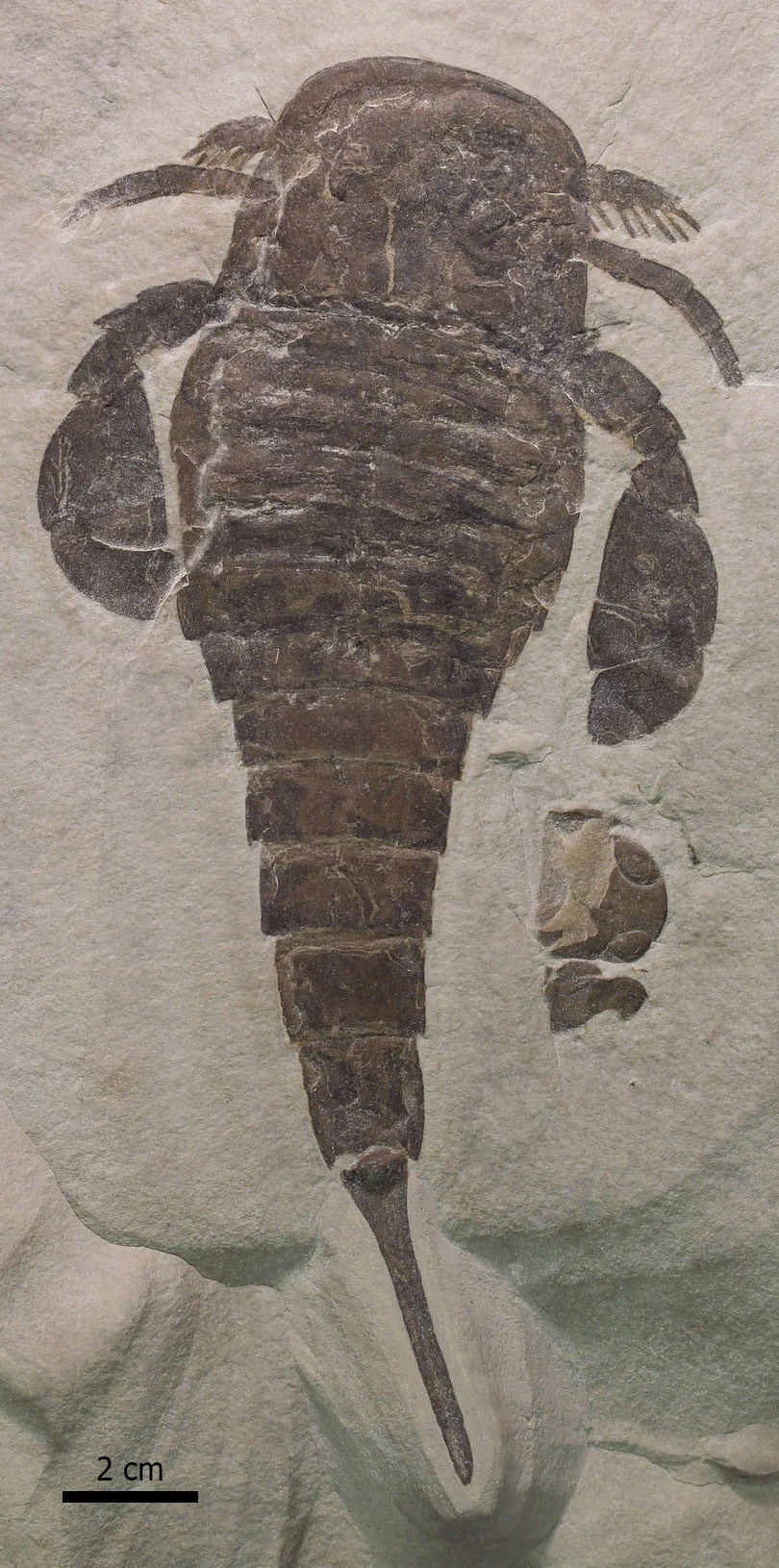
Samuel Ciurca died in 2021, after many years as a curatorial affiliate of the Yale Peabody Museum. He collected tens of thousands of fossils, primarily from the Silurian rocks of upstate New York and southern Ontario, Canada. He donated more than 11,000 fossil sea scorpions, called eurypterids, to the Peabody Museum — the Ciurca Collection in the Peabody’s Division of Invertebrate Paleontology.
One of these fossils, which is perhaps the largest complete eurypterid ever discovered, is a specimen, 1.25 meters in length, of the giant pterygotid Acutiramus macrophthalmus, which will be on display when the Peabody re-opens to the public in 2024 after a multi-year renovation.
But while the vast majority of Ciurca’s fossils are eurypterids — extinct sea scorpions found throughout most of the world in rocks ranging in age from 465 to 250 million years — his favorite fossil was something else entirely. Something living in sea plankton and unidentified for 450 million years.
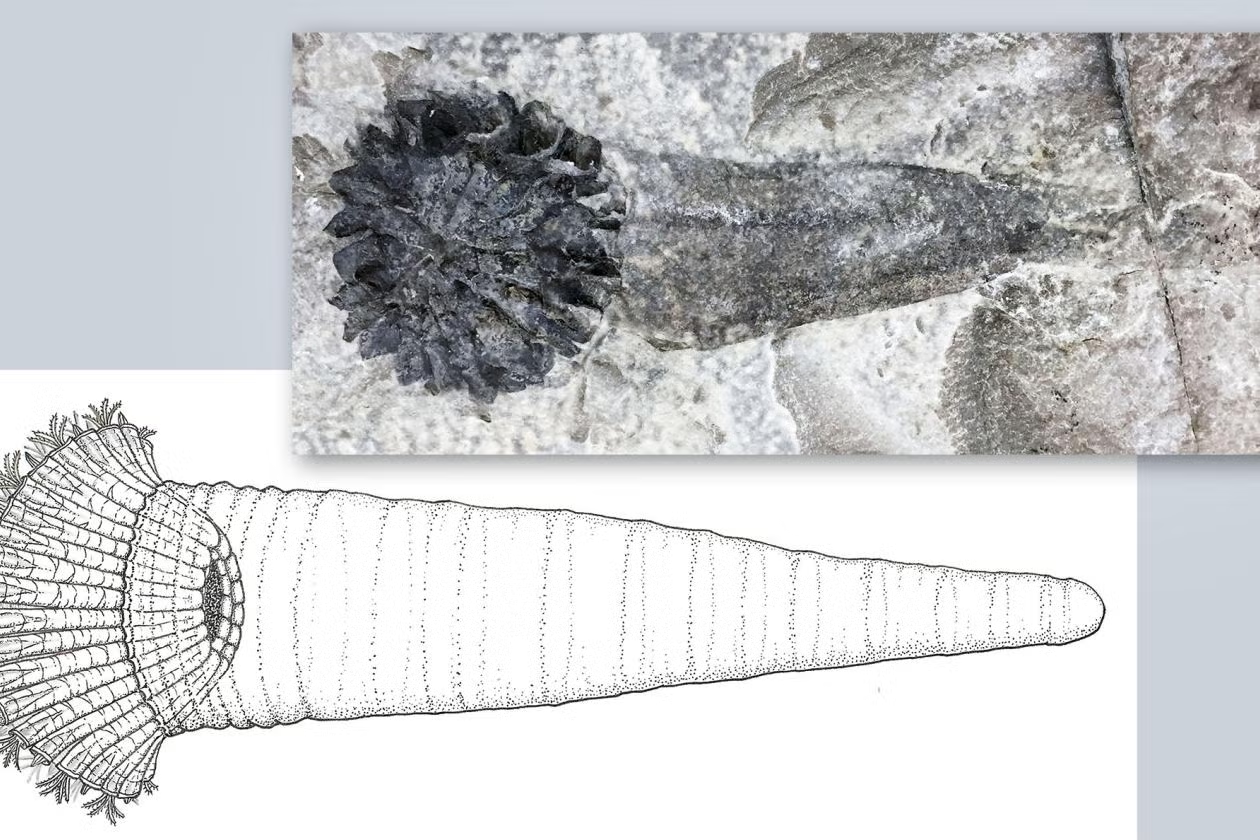
Ciurca called his fossil Ezekiel’s Wheel, after Ezekiel in the Old Testament. The Bible reference is to the prophetic vision of a warrior in a wheeled chariot. Ciurca discovered 10 specimens of the unknown animal in Ontario, starting in the mid-1990s.
“He inscribed the back of the best specimen, the first example he discovered, with the words, ‘the most beautiful fossil ever found,’” said Derek Briggs, the G. Evelyn Hutchinson Professor of Earth & Planetary Sciences in Yale’s Faculty of Arts and Sciences, and a longtime associate of Ciurca. The small, conical specimens consist of a circular aggregate of radiating tubes arranged in two or more levels — thus the “wheel” nickname. The length of the tubes is as much as three-quarters of an inch.
“Ezekiel’s Wheel has long been a mystery,” Briggs said. “Several years ago, a then-graduate student of mine, Nicolás Mongiardino Koch, tried to figure out what it was as a class project for my course ‘Extraordinary Glimpses of Past Life.’”

“He made significant progress on a solution, but additional specimens that came to light when we acquired more of Sam’s collection after he died added important new information. “With a new investigation,” Briggs added, “we now have an answer to the mystery.”
In a new study published in the journal Current Biology, Briggs and Mongiardino Koch, identifies Ezekiel’s Wheel as a 420-million-year-old representative of a group still found in the modern oceans, known as hemichordates.
Although hemichordates are now rare, their ancestors were quite abundant. The most common were known as graptolites, and they were often found in Paleozoic plankton; graptolite fossils play an important role in correlating sedimentary sequences in research. Less common ancient hemichordates were creatures called cephalodiscids, which are still alive today. Both their living and extinct forms lived exclusively on the seafloor — or so it was thought.
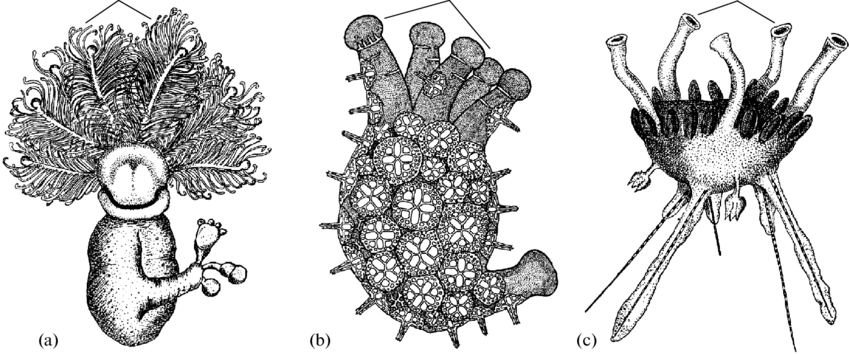
“It turns out Sam’s fossil is a very unusual cephalodiscid which evolved a conical structure that we interpret as a float — it is the only cephalodiscid known to have colonized the plankton,” Briggs said.
The researchers named it Rotaciurca superbus: “rota,” which is Latin for “wheel,” “ciurca” after the fossil hunter, Sam Ciurca, who thought it was beautiful, and “superbus,” the Latin word for “splendid.”[2]
[1] https://news.yale.edu/2023/11/06/last-turn-ezekiels-wheel-honors-yale-affiliated-fossil-hunter
[2] The researchers assigned the name Rotaciurca superbus to a new family, Rotaciurcidae, highlighting its status as an extinct fossil cephalodiscid outside the living group.
 Henry E. Hooper