
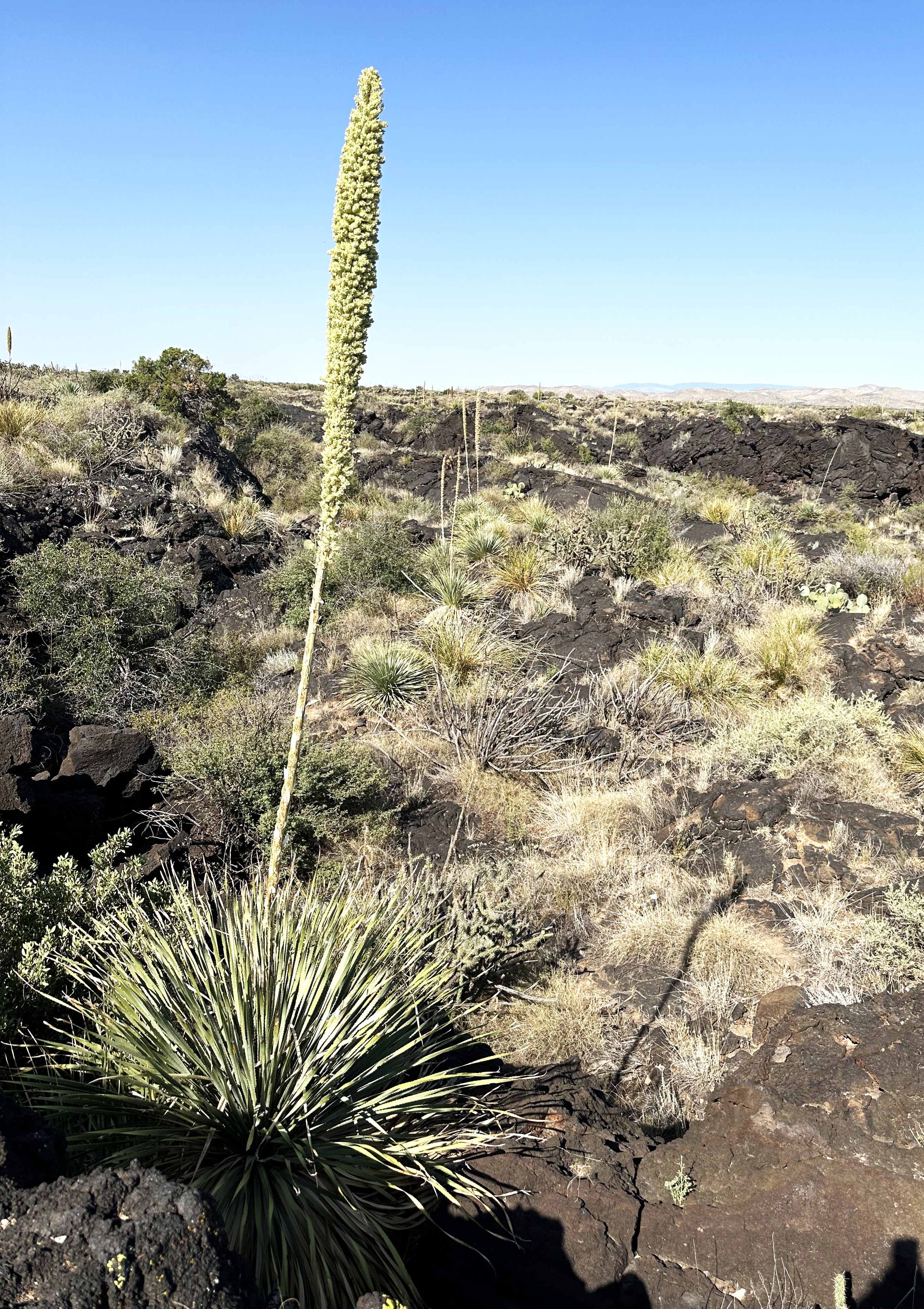
Plants: Sotol
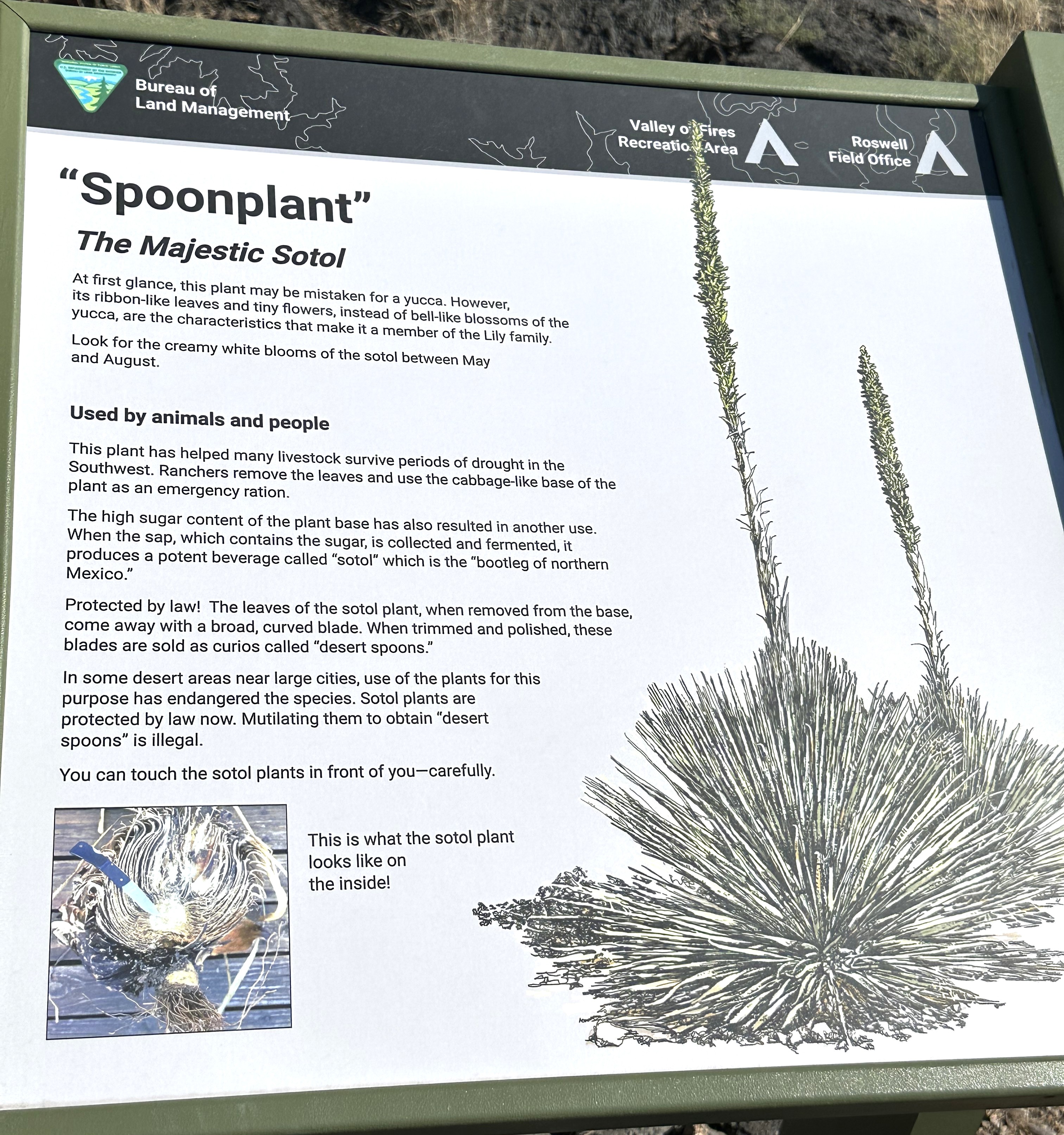
The Majestic Sotol, at first glance, appears to be a yucca plant; however, its ribbon-like leaves and tiny flowers, instead of bell-like Yucca flowers, are more characteristic of the Lily family.[1]
This plant has helped many animals and people survive periods of drought in the Southwest. In times of emergency, ranchers have been known to remove the leaves and use the cabbage-like base as a source of sweet nutrician. The high sugar content of the plant base has also resulted in another use. When the sap, which contains the sugar, is collected and fermented, it produces a potent beverage called “sotol,” which is the “bootleg alcohol of northern Mexico.”
Also known as the Spoonplant, this lily is protected by law! The leaves of the sotol pland, when removed from the base, come away with a broad curved blade. When trimmed and polished, these blades are sold as curios — called “desert spoons.” In some desert areas near large cities, use of the plants for these spoon curios has endangered the species. Sotol plants are now protected by law. Mutilating them to obtain desert spoons is illegal.
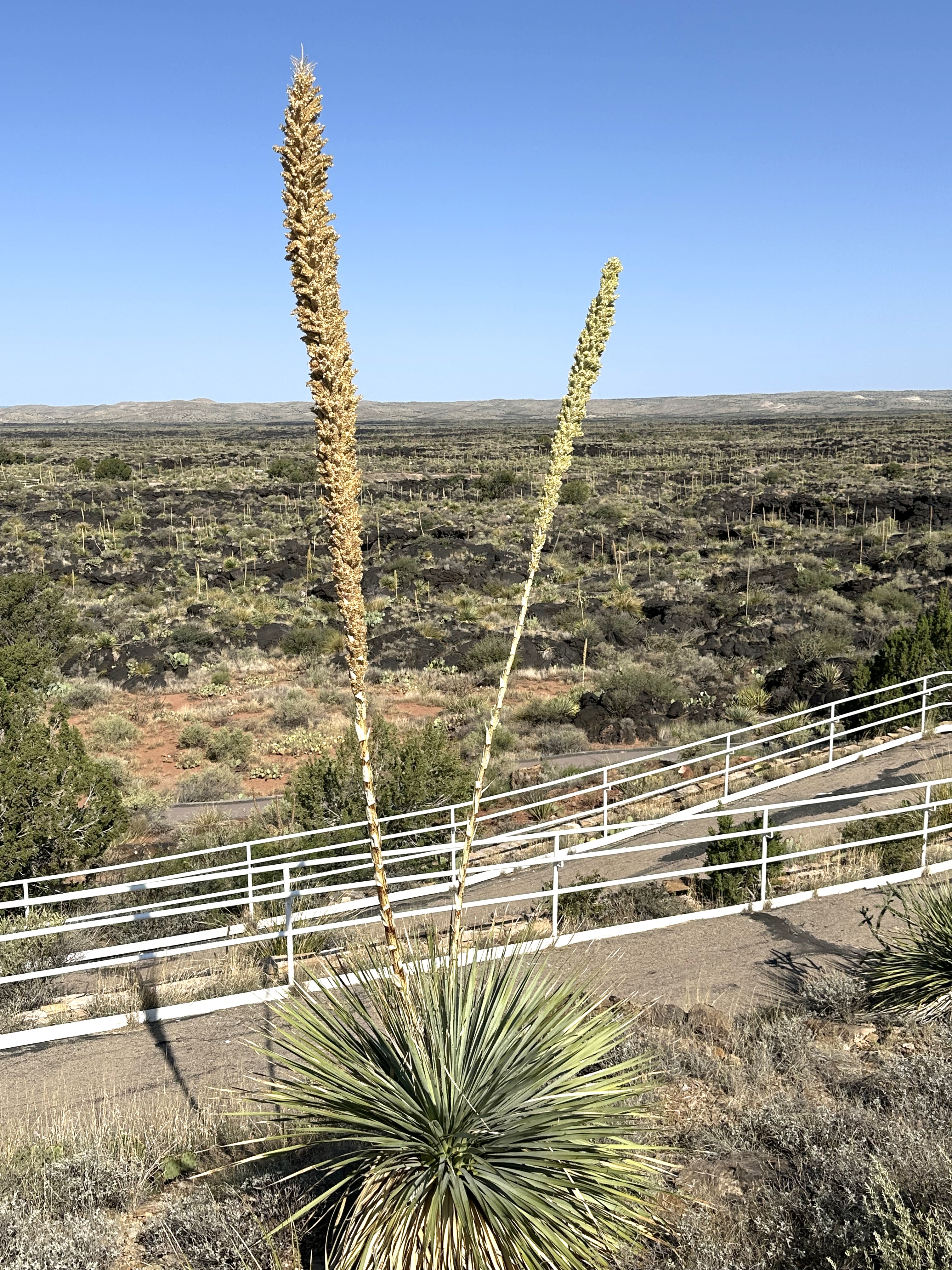
Name Origin
Sotol (a Spanish version of the Nahuatl word tzotolli) is a tough plant growing in the Chihuahuan desert region, often at high altitudes. Like grapes growing in difficult conditions, sotol has distinct and deep flavors. Unlike agaves, sotol puts up a flower stalk more than once. It also regrows from the roots; it’s sustainable. Tzotolli refers to a kind of palm tree. There is an appealing but unattested derivation from a word meaning “sweetness in the head,” which sotol certainly is.[2]
Sotol takes 15 years or more to mature. The heart, the piña, is very small: each piña yields only one bottle of sotol. The plant regrows after harvest, and is considered a sacred plant because it “never dies.”
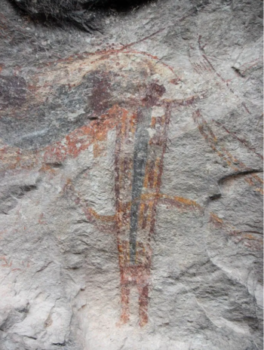
Sotol was not distilled into an alcoholic beverage until after the Spanish conquest. For altered states, instead of alcohol, native peoples used peyote buttons (cactus), referenced in this “White Shaman” pictoglyph. Thousands of years later, modern indigenous Huicholes from Mexico came here and recognized their living peyote iconography.
Sotol has a long shared history with human beings. Starting about 7000 BC, the stalks were used for atlatls[3] and for holding up ceilings, the spine fibers for making sandals, mats, baskets, and cordage, the spine ends for spoons, and the heart roasted and eaten. More recently it was the source, as with agave and pulque, for a viscous beer.[4]
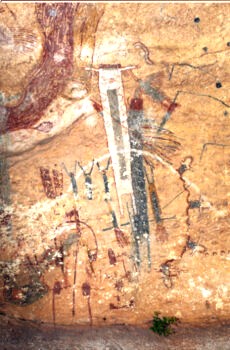
This cave painting from the Pecos River canyon apparently depicts a shamanistic figure incorporating elements of the sotol: note the spray of spiky leaves for a head and the black stripe down the middle of its body: it may represent the magical spirit of sotol. The many examples of rock art in the area refer often enough to sotol, sometimes in connection with hunting scenes, at others surrounded by orange ochre flames and black smoke.
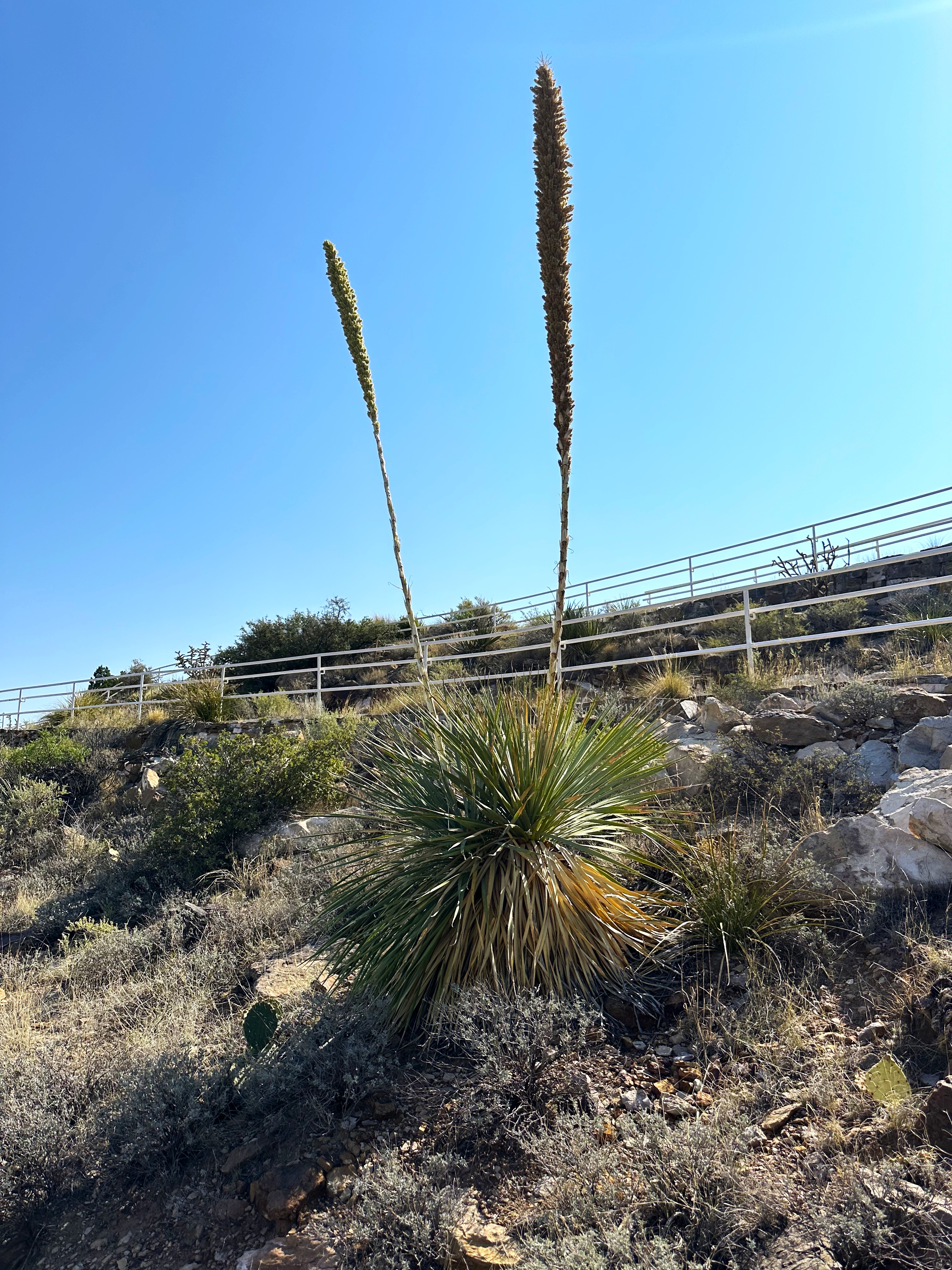
Dasylirion is a compound word from the Greek, literally meaning ‘dense’ or ‘shaggy’ + ‘lily’. The Latin specific epithet wheeleri refers to the American surveyor and plant collector George Montague Wheeler (1842–1905). In the 1870s, George Wheeler carried out the Wheeler survey of the almost totally unmapped southwestern US (and northern Mexico), at a scale of 8 miles to the inch. The survey mapping took many years.[5]
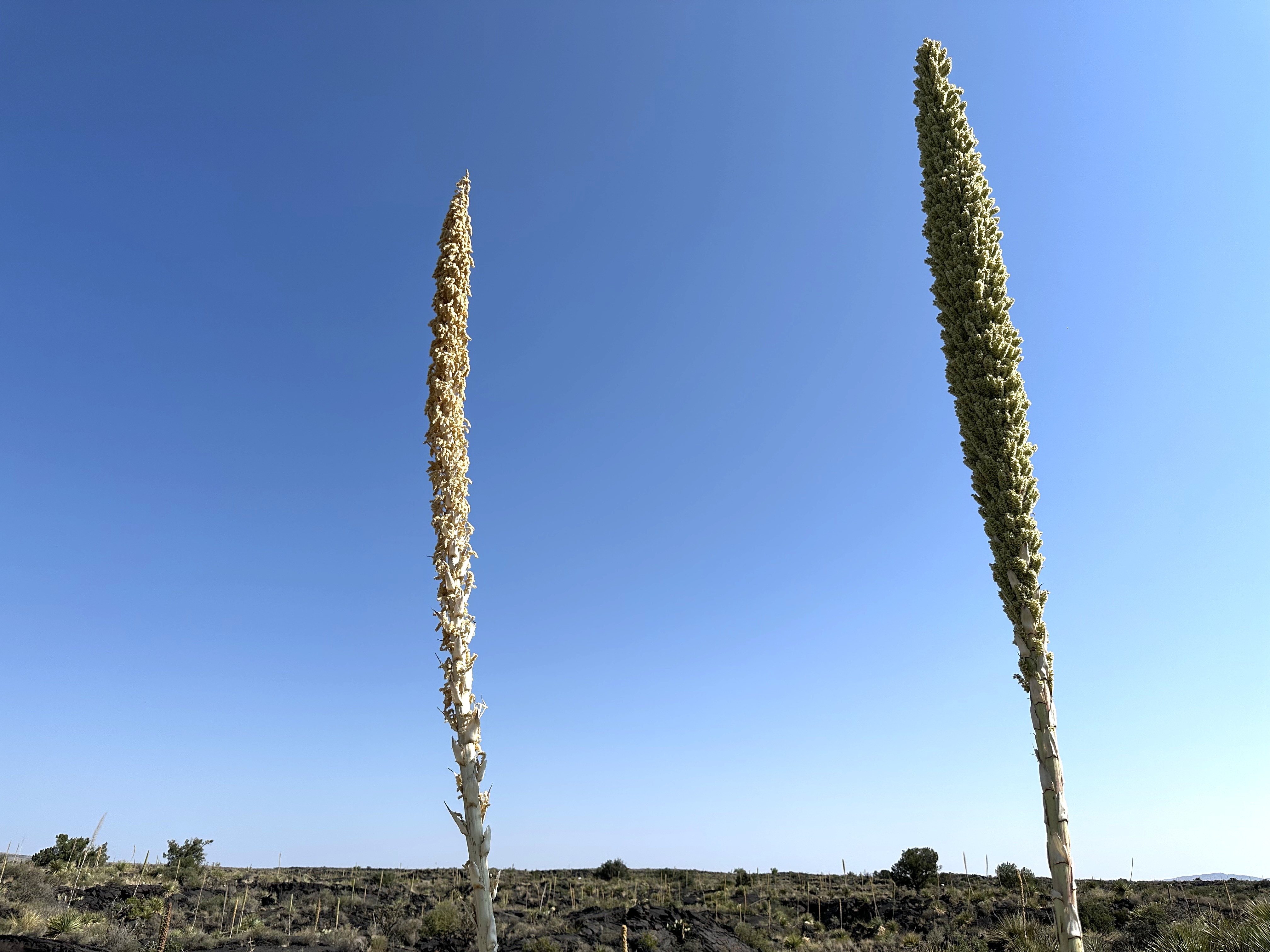
The Tarahumara and Pima Bajo peoples of the Sierra Madre Occidental of Chihuahua weave baskets from the leaves after they strip off the spines from the leaf margins. They also employ the expanded leaf bases in making large artificial flowers as holiday decorations.[6]
References:
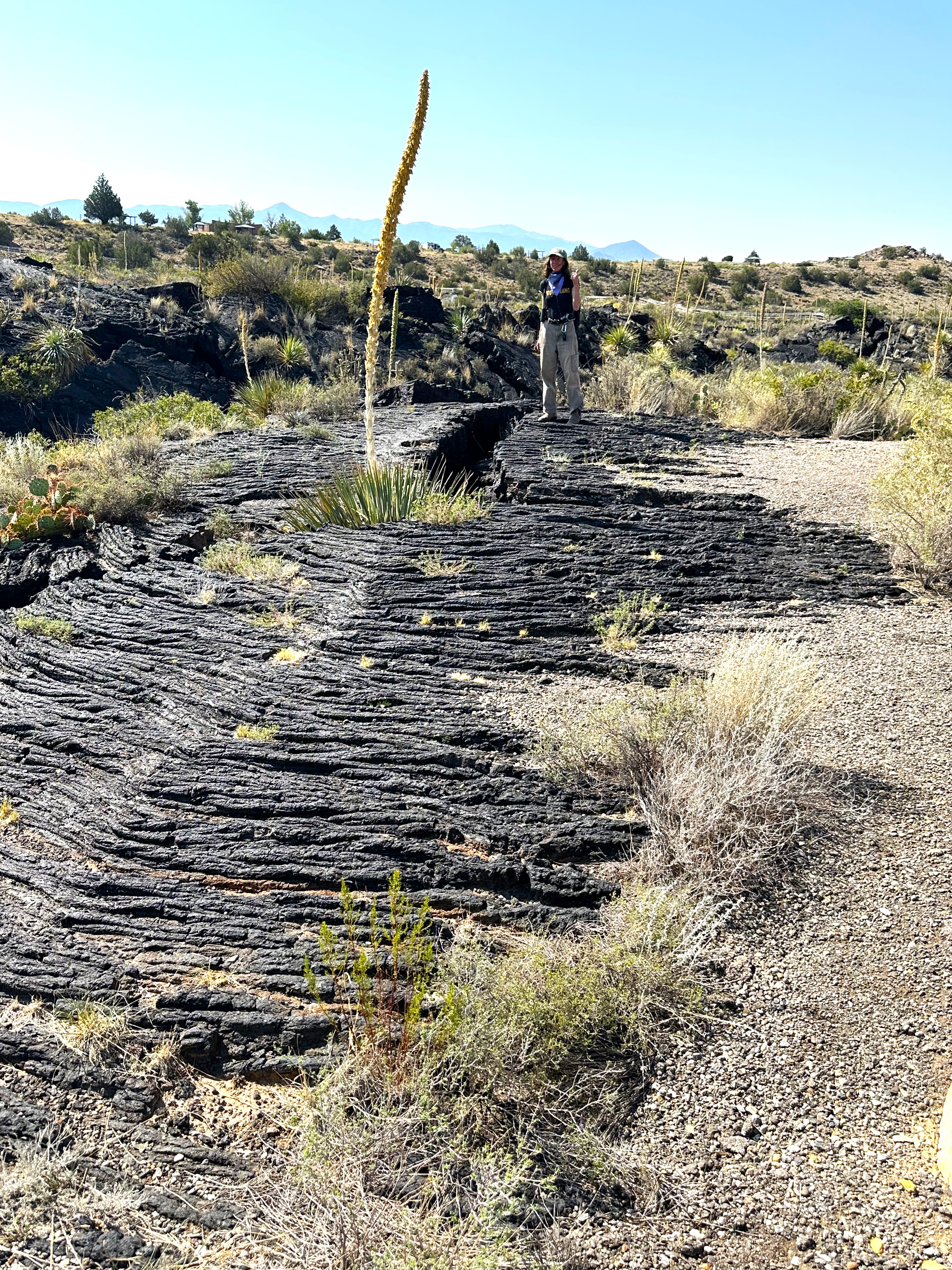
[1] Language was taken from a plaque on display at Valley of Fires by the Bureau of Land Management, Roswell, NM Field Office.
[3] An atlatl is an ancient spear-throwing tool.


An atlatl is a straight shaft, usually wood and about 1.5 to 2 feet long, with a handle at one end and a hook or spur at the other. The hook fits into a notch in the back end of a long, flexible dart, which looks like an oversized arrow. You hold the atlatl and dart together over your shoulder, then sweep your arm forward. The atlatl acts as an extension of your arm, a lever that adds length to the throw, so the dart leaves your hand much faster and travels much farther than a spear thrown by hand. A skilled thrower can send a dart well over 100 yards.
People used atlatls for tens of thousands of years, long before the bow and arrow, to hunt animals like mammoths, bison, and deer. They turn up in archaeological sites all over the world, from Ice Age Europe to Australia, where they’re called woomeras, to the Americas.
The word “atlatl” (pronounced AHT-lah-tul or at-LAT-ul) comes from Nahuatl, the language of the Aztecs, who were still using them when the Spanish arrived in the 1500s. Some atlatls had a stone weight attached to the shaft. Archaeologists call these “bannerstones” and still debate exactly what they did.
Today atlatl throwing is a hobby and competitive sport, and a few U.S. states allow atlatls for hunting certain game.
[4] https://en.wikipedia.org/wiki/Dasylirion_wheeler
[5] https://www.inaturalist.org/taxa/129370-Dasylirion-wheeleri

