
Lectio Divina – Out of Solitude, Henri Nouwen
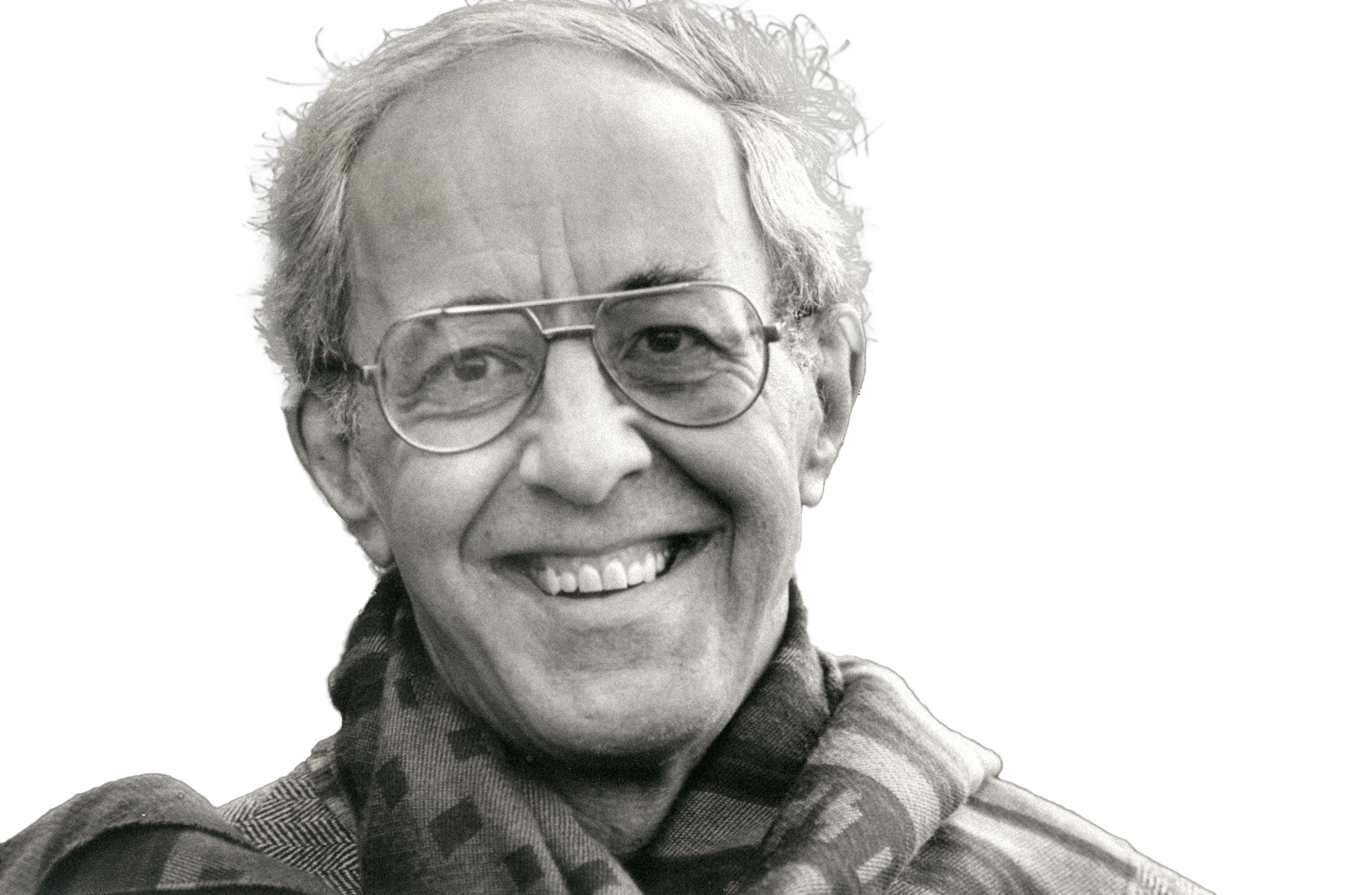
On October 7, 1973, I heard the following homily delivered during a non-demominational Christian service at Battell Chapel at Yale University. I had met Henri J . M. Nouwen the week before at a dinner hosted by the Yale Divinity School. My former high school President, Fr. Leo Murray, was living at the house that hosted the dinner and I was thrilled to be in attendance. There I heard the “hard to immediately translate” words of Henri Nouwen, who spoke in a charming Dutch accent. His English was flawless, and his language skills were huge. That said, Nouwen was able to break down complex Biblical literature into bite-sized pieces that were so easy to swallow.
Over the next three weeks (October 7, October 14, and October 21) we had the pleasure of listening to this theologian as he spoke his lessons from the new testament. The first oration was called “Out of Solitude,” the next was entitled “With Care” and the final was entitled “In Expectation.” There are two other Lectio Divina entries of these other two lectures.
My time with Henri Nouwen was sacred. I will never forget the strong impression of thoughtfulness, insight and quiet I felt around him. His sentences are compound, yet he has a special cadence in his writing and his speaking that lull the audience into understanding and agreement. Nouwen is that convincing! He is a speaker for all times and for all ages. And his messages resonate as loudly and spot-on today as they did more than 50 years ago.

Out of Solitude
Mark 1:32-39
That evening, after sunset, they brought to him all who were sick and those who were possessed by devils. The whole town came crowding round the door, and he cured many who were suffering from diseases of one kind or another; he also cast out many devils, but he would not allow them to speak, because they knew who he was.
In the morning, long before dawn, he got up and left the house, and went off to a lonely place and prayed there. Simon and his companions set out in search of him, and when they found him they said, “Everybody is looking for you.” He answered, “Let us go elsewhere, to the neighboring country towns, so that I can preach there too, because that is why I came.” And he went all through Galilee, preaching in their synagogues and casting out devils.
Introduction
“In the morning long before dawn, he got up and left the house and went off to a lonely place and prayed there.” (Mark 1:35) In the middle of sentences loaded with action; healing of suffering people, casting out devils, responding to impatient disciples, traveling from town to town and preaching from synagogue to synagogue, we find these quiet words: “In the morning long before dawn, he got up and left the house and went off to a lonely place and prayed there.” In the center of breathless activities we hear a restful breathing, surrounded by hours of moving we find a moment of quiet stillness, in the heart of much involvement there are words of withdrawal, in the midst of action there is contemplation, and after much togetherness there is solitude. The more I read this nearly silent sentence locked in between the loud words of action, the more I have the sense that the secret of Jesus’ ministry is hidden in that lonely place where he went to pray, early in the morning, long before dawn.
In the lonely place Jesus finds the courage to follow God’s will and not his own, to speak God’s words and not his own, to do God’s work and not his own. He reminds us constantly: “I can do nothing by myself – my aim is not to do my own will but the will of him who sent me.” (John 5:30) “The words I say to you I do not speak as from myself; it is the Father, living in me, who is doing the work.” (John 14:10) It is at the lonely place where Jesus enters into the intimacy with the Father that his ministry is born.
I want to speak about this lonely place in our lives. Somewhere we know that without a lonely place our life is in danger. Somewhere we know that without silence words lose their meaning, that without listening, speaking no longer heals, that without distance, closeness we cannot cure. Somewhere we know that without a lonely place our actions quickly become empty gestures. The careful balance between silence and words, withdrawal and involvement, distance and closeness, solitude and community forms the basis of the Christian life and should therefore be the subject of our most personal attention. Let us therefore look somewhat closer first at our life in action and then at our life in solitude.
A: Our Life in Action
It is not so difficult to see that in our particular world, we all have a strong desire to accomplish something. Some of us think in terms of great dramatic changes in the structure of our society. Others want at least to build a house, write a book, invent a machine, or win a trophy. And some of us seem to be content when we just do something worthwhile for someone. But practically all of us think about ourselves in terms of our contribution to life. And when we have become old much of our feelings of happiness or sadness depend on our evaluation of the part we played in giving shape to our world and its history. As Christians we even feel a special call to do something good for someone. Give advice, comfort, cast out a devil or two and maybe even preaching the good news from place to place.
But although the desire to be useful can be a sign of mental and spiritual health, in our goal-oriented society it also can become the source of a paralyzing lack of self-esteem. More often than not we not only desire to do meaningful things but we often make the results of our work the criterion of our self-esteem. And then we not only have successes: we become our successes.
“When you are in the habit of giving speeches in this country you gradually discover that, as you get older the introductions given to you become longer; since they have to list all your accomplishments from your college days to the present. One of the advantages of preaching is that you are not introduced, although you sometimes even wonder about that.”
When we start being impressed by these results of our work we slowly come to the erroneous conviction that life is one large scoreboard where someone is listing the points for or against to measure our worth. And before we are fully aware of it we have sold our soul to the many gradegivers. That means: we not only are in the world, but also of the world. Then we become what the world makes us. We are intelligent because someone gives us a high grade, we are helpful because someone considers us indispensable: in short we are worthwhile because we have successes. And the more we allow our accomplishments, the result of our actions, to become the criterion of our self-esteem, the more we are going to walk on our mental and spiritual toes, since we are never sure if we will be able to live up to the expectations which we created by our last successes.
In many people’s lives there is a nearly diabolic chain in which your anxieties grow according to your successes. This dark power drives many of the greatest artists into self-destruction.
And so our lives become more and more dominated by superlatives. We brag about the highest tower, the fastest runner, the tallest man, the longest bridge and the best student. (In Holland we brag in reverse: we have the smallest town, the narrowest street, the tiniest house and the most uncomfortable shoes.)
I am saying all of this because I feel that underneath all of our emphasis on successful action, many of us suffer from a deep seated low self-esteem and are walking around with the constant fear that some day someone will unmask the illusion and show that we are not so smart, so good or loveable as the world was made to believe. Once in a while someone will confess in an intimate moment: “Everyone thinks I am very quiet and composed, but if only they knew how I really feel …..” This nagging self-doubt is at the basis of so much depression in the lives of many students and faculty members. And this corroding fear for the discovery of our weaknesses prevents community and creative sharing. When we have sold our identity to the judges of this world, we are bound to become restless, because of a growing need for affirmation and praise, we are tempted to become low-hearted because of a constant self-rejection, and we are in serious danger of becoming isolated since friendship and love are impossible without a mutual vulnerability.
And so, when our actions have become an expression of fear than our inner freedom, we easily become the prisoners of our self-created illusions.
B: Our Life in Solitude
To live a Christian life means to live in the world without being of it. It is in solitude that this inner freedom can grow. Jesus went to a lonely place to pray – that is to grow in the awareness that all the power he had was given to him, that all the words he spoke came from his Father and that all of the works he did were not really his but the works of the One who had sent him. In the lonely place Jesus was made free to fail.
A life without a lonely place, that is, a life without a quiet center, easily becomes destructive, since by clinging to the results of our actions as our only way of self-identification we become possessive and defensive and tend to look at our fellow human beings more as enemies to be kept at a distance than as friends with whom we can share the gifts of life.
In the solitude we can slowly unmask the illusion of our possessiveness and discover in the center of our own self, that we are, not what we can conquer, but what is given to us. In solitude we can listen to the voice of him who spoke to us before we could speak a word, who healed us before we could make any gesture to help, who set us free long before we could free others, and who loved long before we could give love to anyone. It is in this solitude that we discover that being is more important than having and that I am worth more than the result of my efforts. In solitude I discovered that my life is not a possession to be defended, but a gift to be shared, and there I recognize that the healing words I speak are not just my own, but given to me, that the love I can express is part of the greater love and that the new life I bring forth is not a property to cling to but a gift to be received.
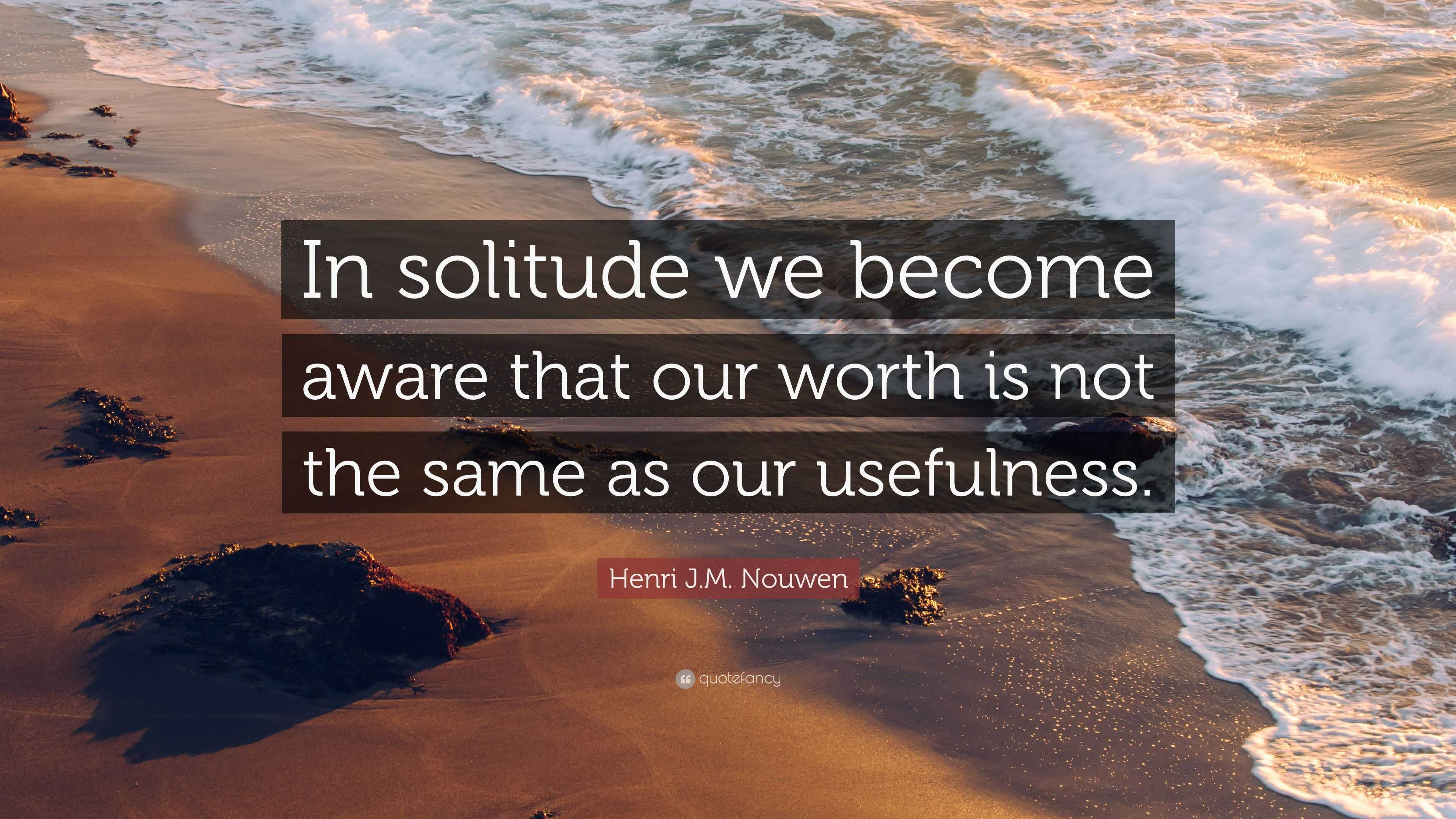
In solitude I become aware that my worth is not the same as my usefulness. We can learn much in this respect from the Old Tree.
There is a Tao story of a carpenter and his apprentice who together walk through a large forest. And when they come across a tall huge gnarled old beautiful oak tree, the carpenter asks his apprentice: “Do you know why this tree is so tall, so huge, so gnarled, so old and so beautiful?” The apprentice looks at his master and says: “No, why?” “Well”, the carpenter says, “because it is useless. If it had been useful it would have been cut down long ago and made into tables and chairs, but because it is useless it could grow so tall and so beautiful that you can sit in its shadow and relax.”
In solitude we can grow old freely without being preoccupied with our usefulness and we can offer a service which we had not planned on. To the degree that we have lost our dependencies on this world, whatever world means, father, mother, children, career, success or rewards, we can form a community of faith where there is little to defend but much to share. Because as a community of faith we take the world seriously but never too seriously.
We can adopt a little of the mentality of Pope John, who could laugh at himself. When some highly decorated official asked him: “Holy Father, how many people work in the Vatican,” he paused a while and then said, “Well, I guess about half of them.”
As a community of faith we work hard, but we are not destroyed by the lack of results. And as a community of faith we remind each other constantly that we form a fellowship of the weak, transparent to him who speaks to us in the lonely places of our existence and says: “Do not be afraid, you are accepted.”

Conclusion
“Early in the morning, long before dawn, he got up and left the house, and went off to a lonely place and prayed there.” When Simon and his companions found him he said: “Let us go …. To the neighboring country towns, so that I can preach there too, because that is why I came.”
The words which Jesus spoke in these neighboring country towns were born in the intimacy of the Father. There were words of comfort but also of condemnation, words of hope but also of warning, words uniting but also dividing. He dared to speak these challenging words because he did not seek his own glory: “If I were to seek my own glory, that would be no glory at all; my glory is conferred by the Father, by the one of whom you say, ‘He is our God,’ although you do not know him.” (John 8:54) Within a few years Jesus’ words caused his rejection and death. But the one who had spoken to him in the lonely place raised him up as a sign of hope and new life.
When you are somewhere able to create the lonely place in the middle of your actions and concerns, your successes or failures can slowly lose some of their powers over you. For then your love for your world can merge with a compassionate understanding of its illusions, then your serious engagement can merge with an unmasking. So let us live our life to the fullest, but let us not forget to once and a while get up long before dawn to leave the house and to go to a lonely place.

 Henry E. Hooper