
Butterflies: American Snout
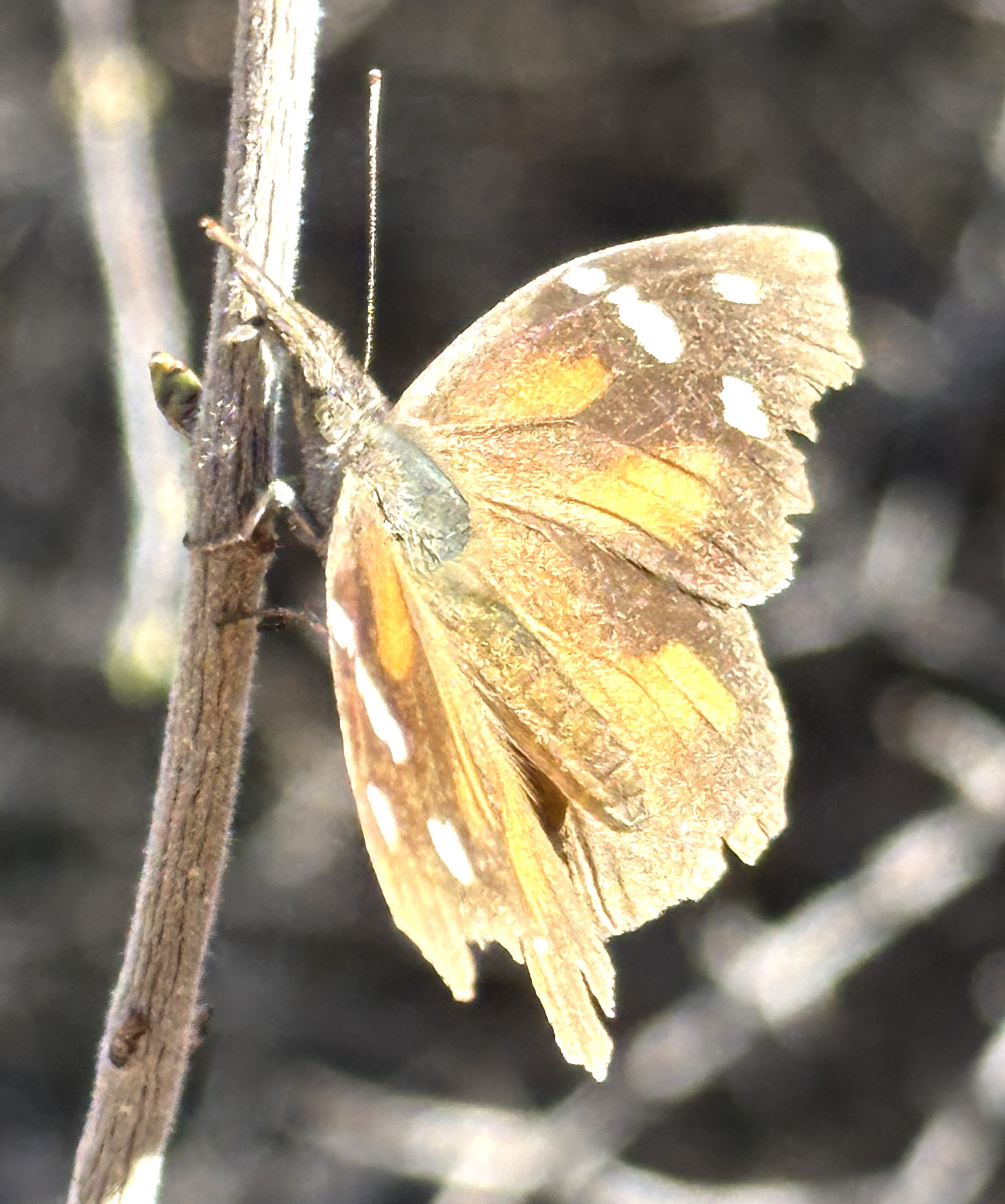
We all know that Americans have big mouths. But what about noses? Does the rest of the world need to rub it into our faces? Maybe they do. Sometimes called the American Snout, Common Snout or the American Snout-Nosed Butterfly, this little fluttering guy has a distinctive schnozola for sure.
This spring (March, 2026) we were in Sedona, Arizona, visiting our friend, Forrest Berkley and I thought that the bevy of butterflies we saw crisply flitting around were Skippers. There were several different butterflies flying around some newly budding shrubs. Upon closer inspection it had the distinctive beak of a Snout.
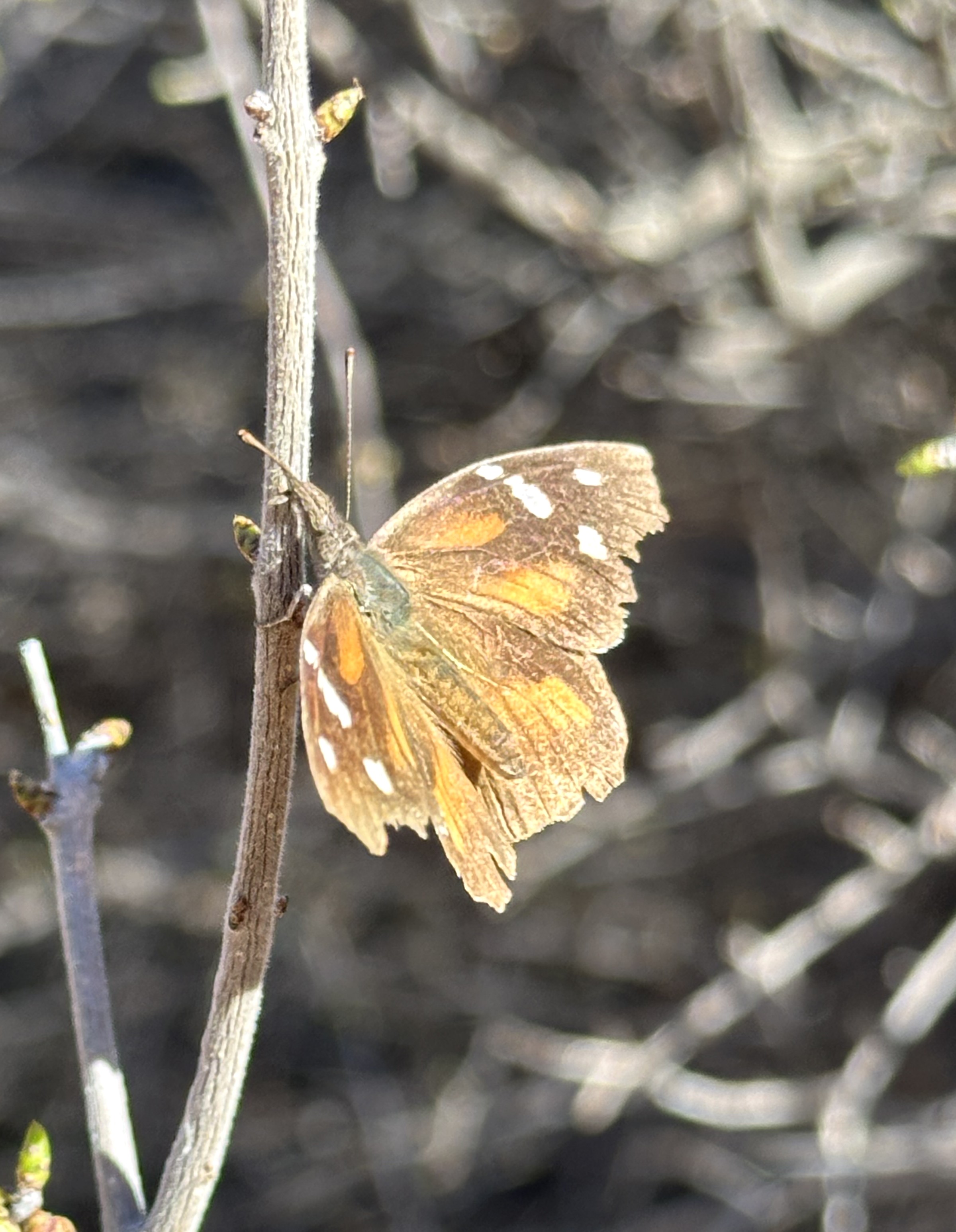
The American Snout Butterfly (Libytheana carinenta) is a member of the subfamily Libytheinae in what is called “the brush-footed butterfly family,” also known as Nymphalidae. This species is found in both North America AND South America, so the American moniker is hemispherically accurate. The larval host plants are Celtis species of berry bushes on which they lay their butterflies eggs singly. It is important to note that when the eggs morph into flying insects, they can have massive migrations, often attracting attention in the newspapers in Arizona, New Mexico, Texas and Mexico, as well as places such as Kansas and around the Great Lakes.
Snout Description
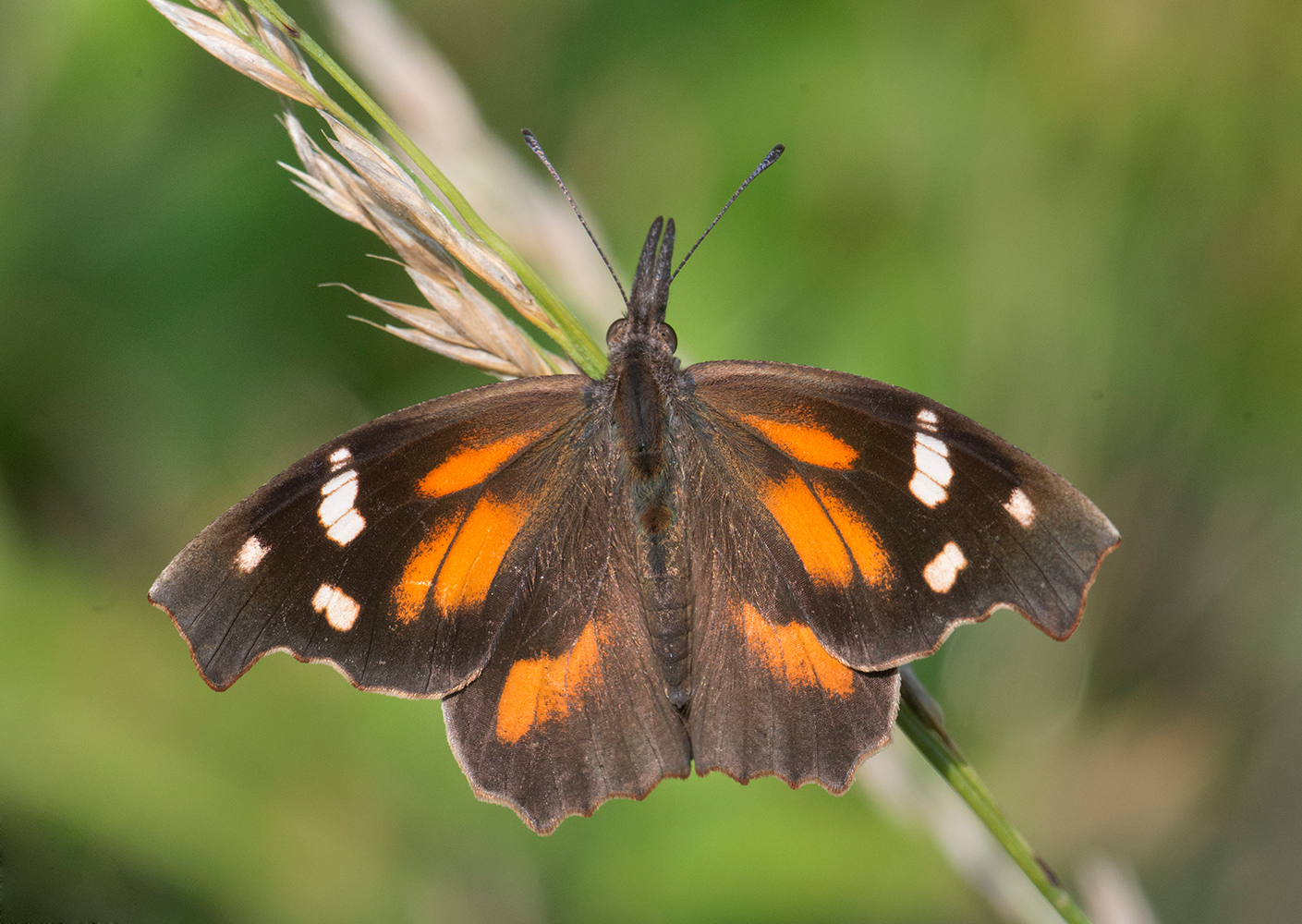
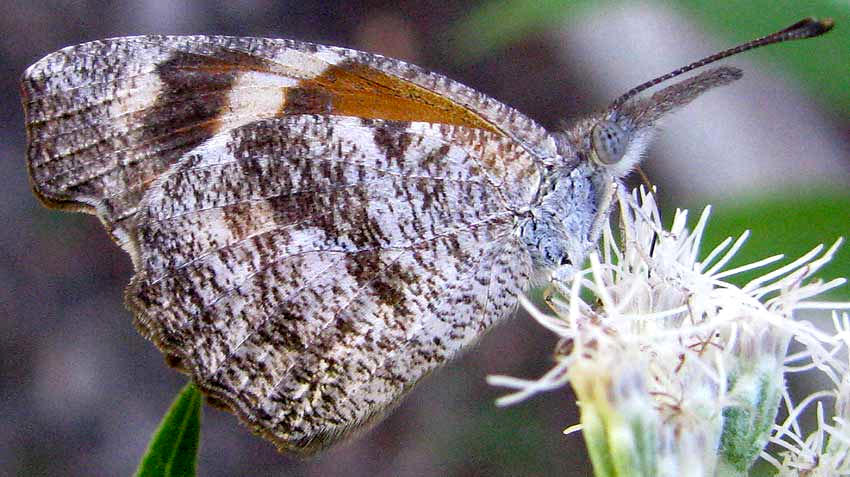
Snout butterflies have prominent elongated mouthparts (labial palpi) which, in concert with the antennae, give the appearance of the petiole (stem) of a dead leaf. Snouts often take advantage of this superb camouflage by hanging upside down under a twig, making them nearly invisible. Wings are patterned black-brown with white and orange markings. The forewings have a distinctive squared off, hook-like (falcate) tip.[1]
The caterpillars appear humpbacked, having a small head, swollen first and second abdominal segments, and a last abdominal segment which is tapered and rounded. They are dark green with yellow stripes along the top and sides of the body, and have two black tubercles on the top of the thorax. Their food is the common hackberry (Celtis occidentalis) tree.[3]
More on Snout Migrations
Although we hear more about the migration of Monarch butterflies more than Snouts, in Texas they have called it a Snoutbreak of butterflies. This species is migratory, and during some years the migrations are so huge as to darken the sky in places. Migrations from South Texas northward occur at irregular intervals when southern populations explode, often affecting San Antonio, the Texas Hill Country, and Austin.
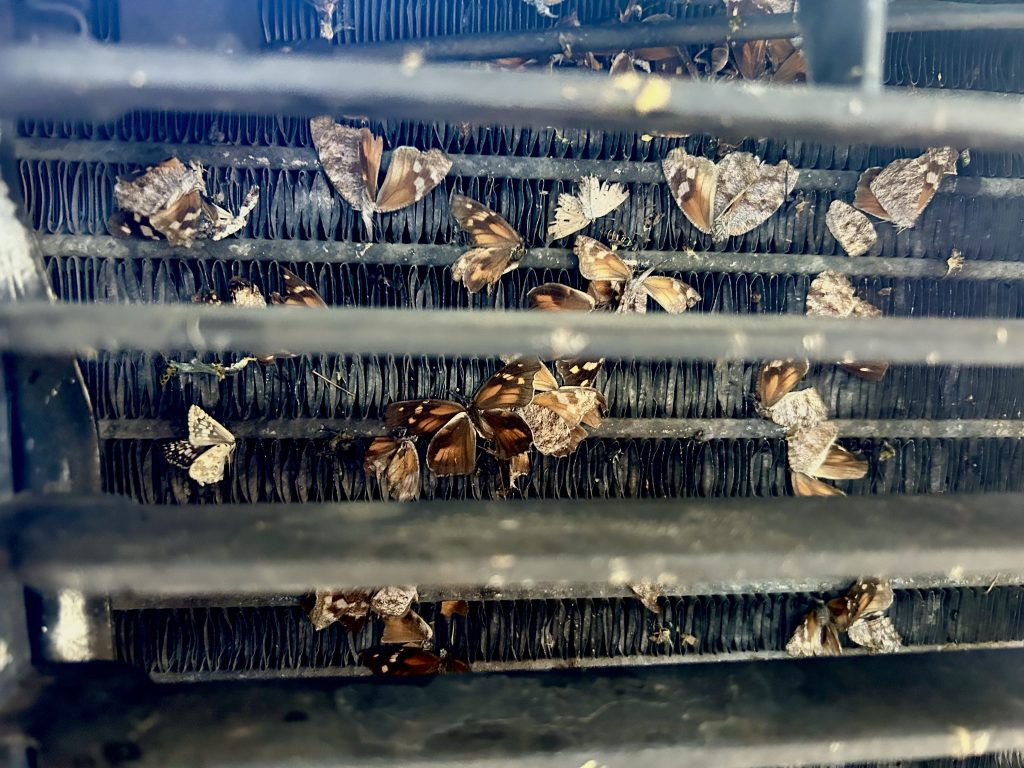
Other migrations have been observed in Arizona, Kansas, and the Lake Erie Islands. Migrations occur from June through October, and are thought to be triggered by droughts followed by heavy summer rains: the droughts reduce a parasitoid that would otherwise limit butterfly populations, whereas the rains induce the spiny hackberry to grow new leaves which provide food for caterpillars. Furthermore, whereas the droughts send the butterflies into a sort of hibernation, the rains bring them out of it all at once to lay eggs, causing a population explosion.
 Henry E. Hooper