
Birds of Couch
For my Bird Names series of Bird Posts, Darius N. Couch pairs well with James W. Abert: both were young officers who collected bird specimens in Mexico during or after the war. Couch is more interesting than Abert as a naturalist, though. The Smithsonian praised Couch for his collecting and written journals. Couch described what he found carefully, and the single bird he’s most connected to (Scott’s Oriole) isn’t the one named after him, but its the one he named for someone else.
As with Abert, the AOS hasn’t singled Couch out. Couch’s Kingbird is on the renaming list only because of the blanket rule for birds named after people, and I found no record of Couch doing anything culturally offensive.
The critics who object to his name on birds, remind birders of two reasons for removal:
- He named the Scott’s Oriole.
Couch is the one who attached General Winfield Scott’s name to the oriole, the name that AOS critics, like Stephen Carr Hampton, find most offensive. That’s a link to Scott’s actions, not specifically to Couch’s actions or behaviors. - His military service.
He was a career Army officer in the Mexican-American War and the Second Seminole War, campaigns tied to U.S. expansion and the forced removal of Native people. From brief research, there appears to be nothing reprehensible about his personal conduct in the Seminole campaign or other U.S. Army campaigns.
Couch is probably among the least controversial figures in the Bird Name series. Beyond Scott’s Oriole, the case against his name rests on the rules of the Names for Birds established and deliberated by the AOS itself.
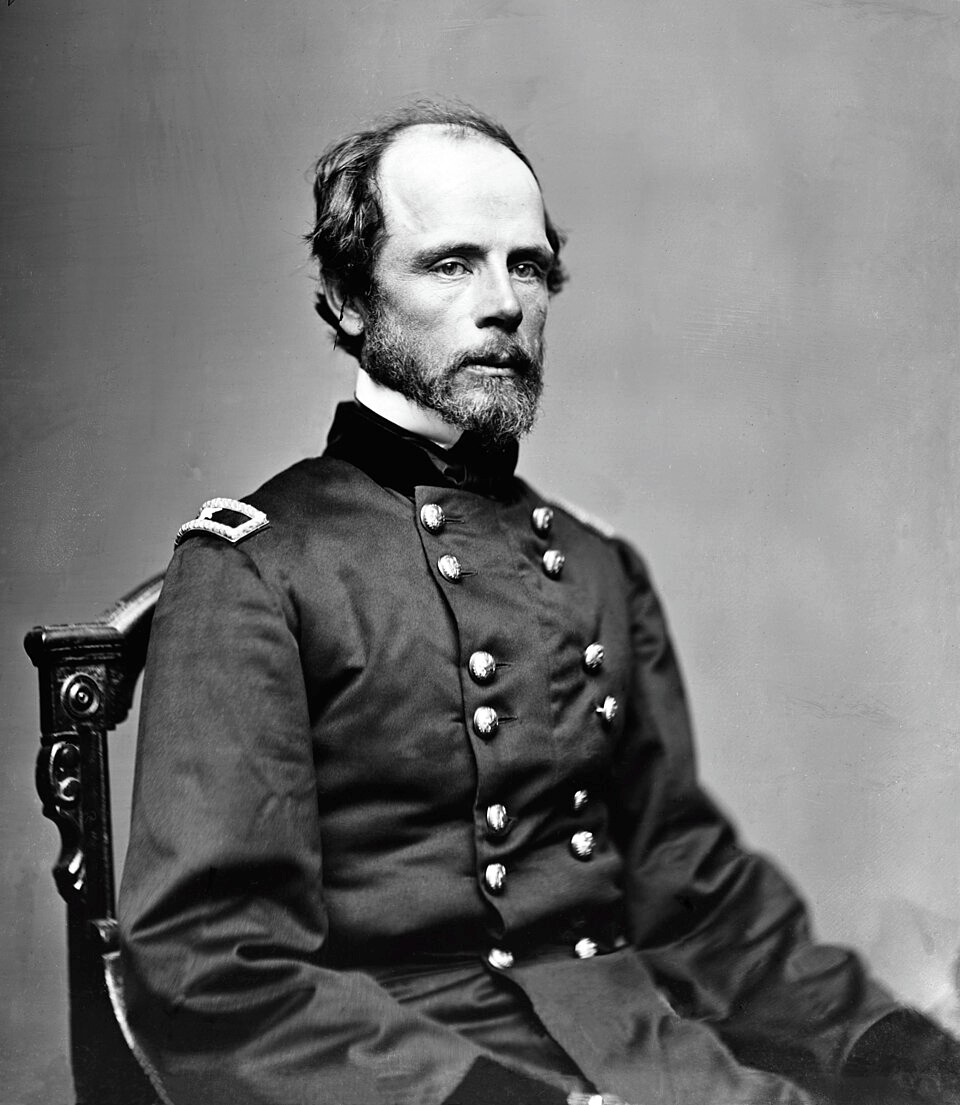
Who Was Darius Couch?
Starting with his family, Darius Nash Couch was born in July, 1822, on his family’s farm near South East in Putnam County, New York. He was the second of three children born to Jonathan and Elizabeth (Penney) Couch. Darius’s grandfather, Thomas Couch, fought in the Revolutionary War. Darius was educated at the local schools in Putnam County, before applying to attend the U.S. Military Academy in West Point, where he became a cadet. Darius Couch married Mary Caroline Crocker of Taunton, Massachusetts, and after leaving the Army, he worked in her family’s copper business there. Darius and Mary raised two children, both of whom lived to adulthood: Alice Leavenworth Couch (Randall) (1855–1884) and Leonard Crocker Couch (1856–1942).[1]
Couch’s Early Military Career
The young New Yorker, Couch attended and graduated from West Point in 1846. He graduated near the top quintile of his class and was commissioned as second lieutenant in the 4th U.S. Artillery. He was promoted to first lieutenant for “gallant and meritorious conduct” at the Battle of Buena Vista in the Mexican-American War. He also served in the Second Seminole War, and later in 1851 he returned to Fort Columbus (now on Governor’s Island in NYC harbor). He then served at Fort Johnston in Southport, North Carolina, into 1852, and at Fort Mifflin in Philadelphia until 1853.[1]
From the War Dept. to the Smithsonian
The War Department gave Couch official leave for him to lead a scientific expedition in Mexico for the Smithsonian Institute. Sources date the leave to either 1852–53 or 1853–54. The Smithsonian’s Ninth Annual Report, published in 1855, praised Couch’s work with four specific hallmarks: 1) he gathered large collections across all branches of zoology, 2) he kept many original notes on the animals’ habits he observed, 3) he found many new species to science, and 4) he made important discoveries about where other species lived. This was the specific trip where he spotted, recorded and named Scott’s Oriole.[1]
The Civil War and Couch’s later life
Darius Couch resigned his Army commission in 1855 and returned to his home in New York. There he briefly became a merchant wholesaling dry goods, before closing shop and moving with his wife and young family to Taunton, Massachusetts. In June of 1861, civil unrest was everywhere, and Couch was appointed colonel of the 7th Massachusetts Infantry. He went on to command a corps in the Army of the Potomac in the East and a division of the 23rd Army Corps in the West. As covered in the Winfield Scott post, Couch briefly took command of the army at Chancellorsville after Maj. Gen. Joseph Hooker (nicknamed “Fightin’ Joe”) was stunned in a Confederate cannon explosion.
In 1863, with the help of Governor Andrew Curtain and engineer, Major James Brady, Gen. Couch built two forts to protect Harrisburg, Pennsylvania: Fort Washington and later Fort Couch. When Couch declared Fort Washington complete on June 19, he worried that a higher bluff to the west left it exposed. His answer to that problem? Build a higher fort. Construction started June 20, 1863, by his command and on the advice of Army engineers, on the higher ground situated one half mile west. Fort Washington came under fire from Hummel’s Heights, a bluff on the west bank of the Susquehanna River across from the city. Fort Couch allowed the Union soldiers to defend the city from higher ground during the Gettysburg Campaign, which was 38 miles away. The second fort was named in Couch’s honor.
After resigning from the volunteer army on May 26, 1865, Couch returned to Taunton, where he ran unsuccessfully that year as the Democratic candidate for Governor of Massachusetts. U.S. President Andrew Johnson appointed him collector of the Port of Boston in 1866, but the Senate never confirmed the appointment, and his term ended in March 1867. That year Couch briefly served as president of a Virginia mining and manufacturing company. In 1871 Couch and his wife moved to Connecticut, where he served as Quartermaster General of the state militia from 1877 to 1878 and as Adjutant General from 1883 to 1885. He also served as president of the board of trustees of the Fitchville Home for Disabled Soldiers from 1881 to 1886, and as a burgess of Norwalk in 1890. In 1888 he joined the Aztec Club of 1847 by right of his service in the Mexican War, and in 1890 he joined the Connecticut Society of the Sons of the American Revolution. Darius Nash Couch died in Norwalk, Connecticut, in February 1897, at the age of 74, and was buried in Taunton. Mary Crocker Couch, his wife since 1854, died in Taunton in December 1912, at the age of 83.[1]
Bird Species connected to Couch
Apart from giving Scott’s Oriole its English name in honor of Gen. Winfield Scott, Darius Couch didn’t formally name any species after himself. Others described his specimens and named them in his honor.
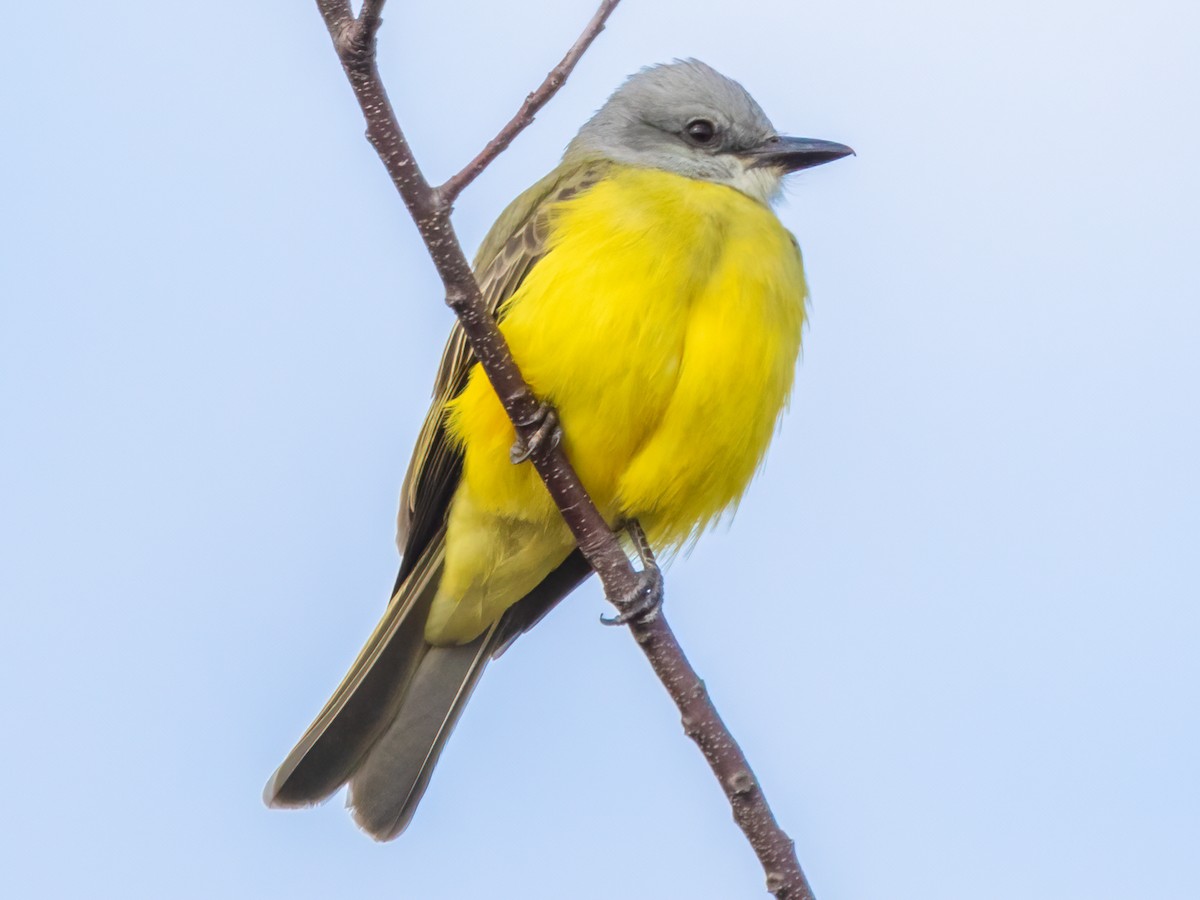
- Couch’s Kingbird (Tyrannus couchii). Couch discovered it in 1853 near the small village of San Diego, in Nuevo León, Mexico. Spencer Baird described it, but sources disagree on the date: Wikispecies and Wikipedia give 1858, in the Pacific Railroad bird volume, while Birds of the World cites Baird’s 1859 Mexican Boundary Survey report. It was later demoted to a subspecies of the Tropical Kingbird and regained full species status in 1979.
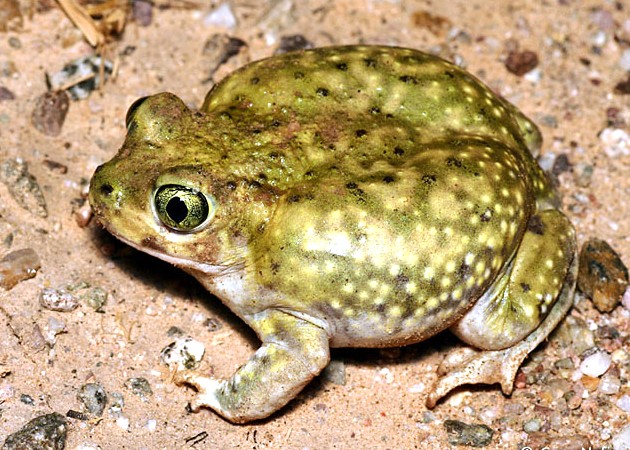
- Couch’s Spadefoot (Scaphiopus couchii), a toad, named by Spencer Baird in 1854.
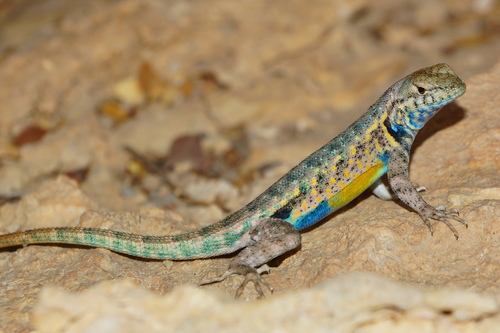
- Couch’s Spiny Lizard (Sceloporus couchii). Its scientific name honors him; the English name is from my own knowledge.
- Sierra Garter Snake (Thamnophis couchii). Its scientific name honors him; the English name is from my own knowledge.
- Couch’s Jay (Aphelocoma ultramarina couchii). Named by Baird in 1858; it’s now a subspecies of the Mexican Jay.
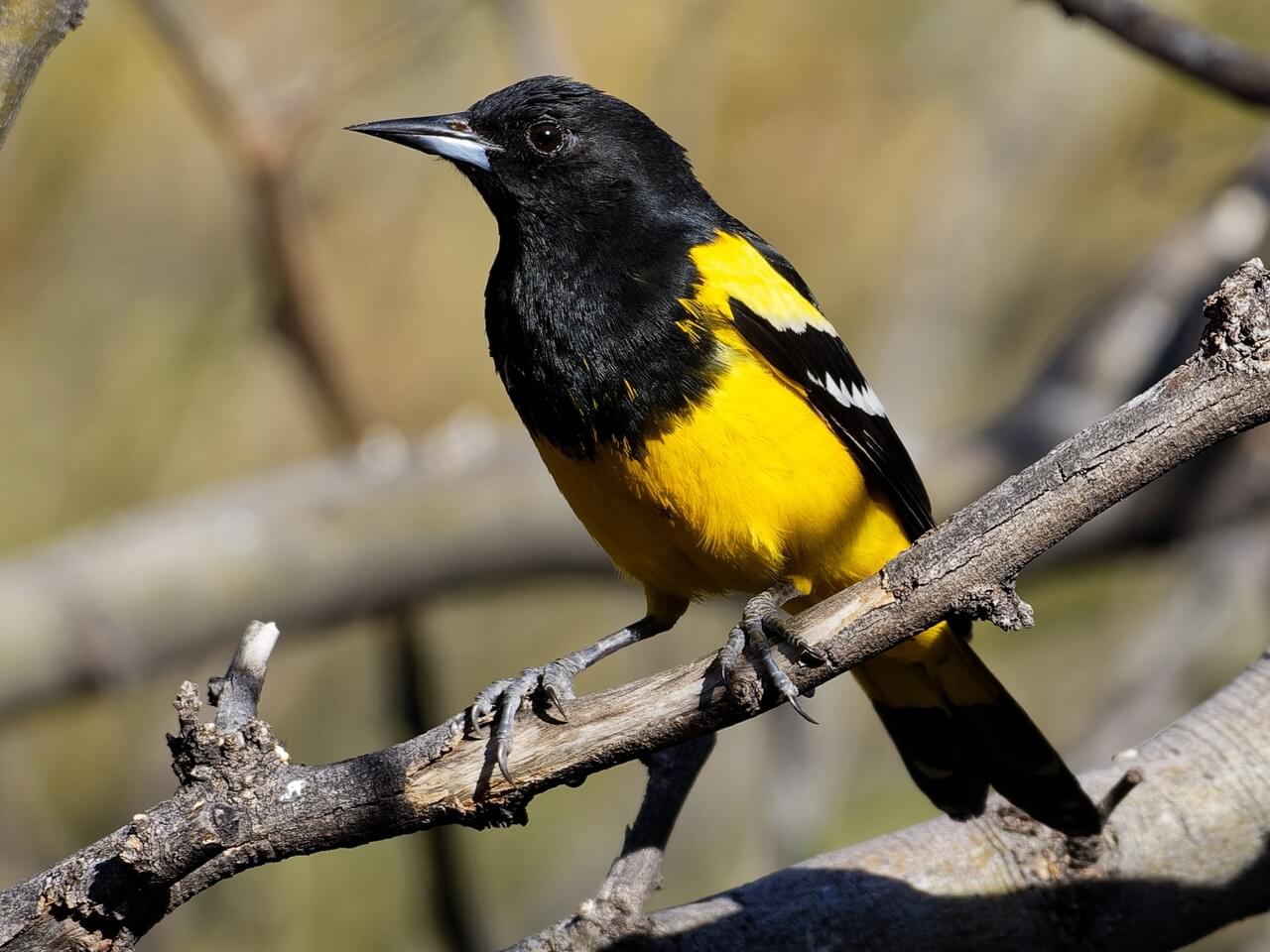
- Scott’s Oriole (Icterus parisorum). Couch gave it its English name in 1854; Charles Lucien Bonaparte had already given it its scientific name in 1838.
Written Works by or about Couch and his bird specimens
- Baird, Spencer F. “Birds of the Boundary.” Report on the United States and Mexican Boundary Survey, by William H. Emory, vol. 2, pt. 2, Washington, 1859. Baird’s “Birds of the Boundary” in the Mexican Boundary Survey report, and the Pacific Railroad bird volume as the kingbird’s original description according to Wikispecies.
- —. “Descriptions of New Genera and Species of North American Frogs.” Proceedings of the Academy of Natural Sciences of Philadelphia, vol. 7, 1854, pp. 59–62.
- Baird, Spencer F., et al. “Birds.” Reports of Explorations and Surveys to Ascertain the Most Practicable and Economical Route for a Railroad from the Mississippi River to the Pacific Ocean, vol. 9, Washington, 1858.
- Couch, Darius N. “The Chancellorsville Campaign.” Battles and Leaders of the Civil War, edited by Robert Underwood Johnson and Clarence Clough Buel, vol. 3, New York, 1888, pp. 154–71. The Battles and Leaders details the Chancellorsville Campaign, including its volume and page numbers, the frog paper’s title and pages, and Sears’s book. Conant’s article is free through the American Museum of Natural History’s digital library. Couch’s official Civil War reports appear in The War of the Rebellion: A Compilation of the Official Records of the Union and Confederate Armies (Washington, 1880–1901), especially the volumes on Fredericksburg, Chancellorsville, and the 1863 Gettysburg campaign, when he commanded Pennsylvania’s militia.
- Smithsonian Institution. Ninth Annual Report of the Board of Regents of the Smithsonian Institution. Washington, 1855.
Works Written about Darius N. Couch
- Conant, Roger. “Zoological Exploration in Mexico—The Route of Lieut. D. N. Couch in 1853.” American Museum Novitates, no. 2350, 1968. This Conant article seems to be the best scholarly source on his Mexican expedition, the Smithsonian’s Ninth Annual Report (1855).
- Searles, Harry. “Darius Couch.” American History Central, www.americanhistorycentral.com/entries/darius-nash-couch/. Accessed 8 Oct. 2026.
- Sears, Stephen W. Chancellorsville. Houghton Mifflin, 1996.

