
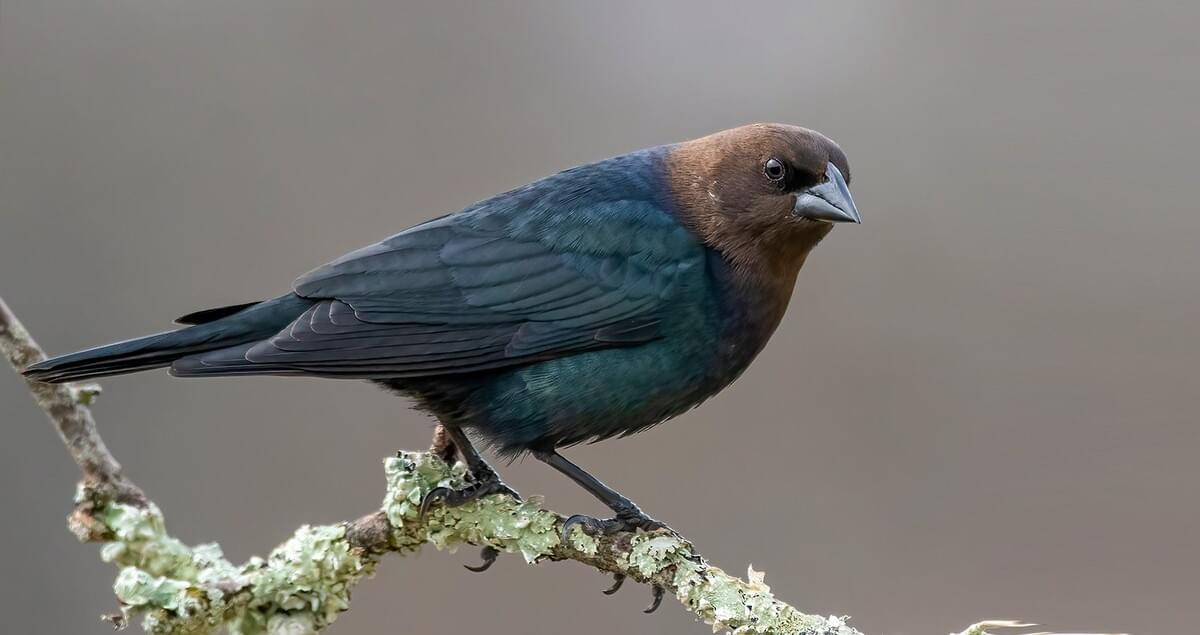
Birds: Brown-Headed Cowbird
Visiting our bird feeder the other day was a pair of Cowbirds: one male and one female. They are quite large this time of year, as they proceed to look around the neighborhood for their next victim. They also are early, meaning they are ready to lay eggs, while other birds are just completing nests and getting ready to lay their own eggs.
While most species in the wild raise their own young to fully fledge. The uncommon advantage of the Cowbird is dramatic.
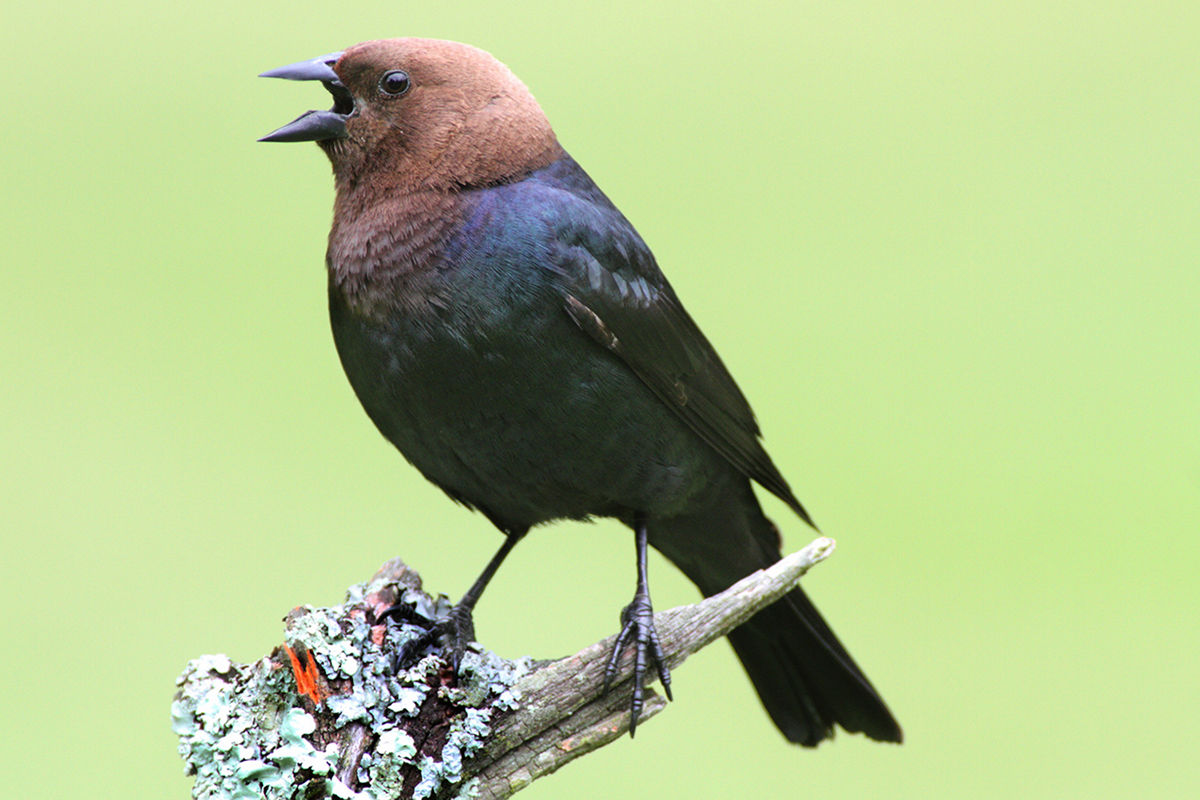
The brown-headed cowbird is larger than their victims. On average the males are seven inches in length (tail tip to bill tip). It has a short, chunky bill. The male has black feathers on the body that are irridescent, similar to the starling, with light brown head feathers. The female cowbird has gray feathers all over. Young birds are lighter gray than the female and have streaked feathers on the breast. Young males during molting in the summer may show both brown and black feathers.
The most disturbing traits of this species to me is that they are known for brood parasitism. What brood parasites refers to is the practice of female cowbirds (and cuckoos) laying her eggs in the nests of another species, usually the nest of smaller birds. These other species raise the chicks and feed the cowbird chicks, filling their large beaks with the most insects. Once the chicks mature, the cowbirds kick out or kill the mother’s own nestlings and grow to maturity alone in the nest.
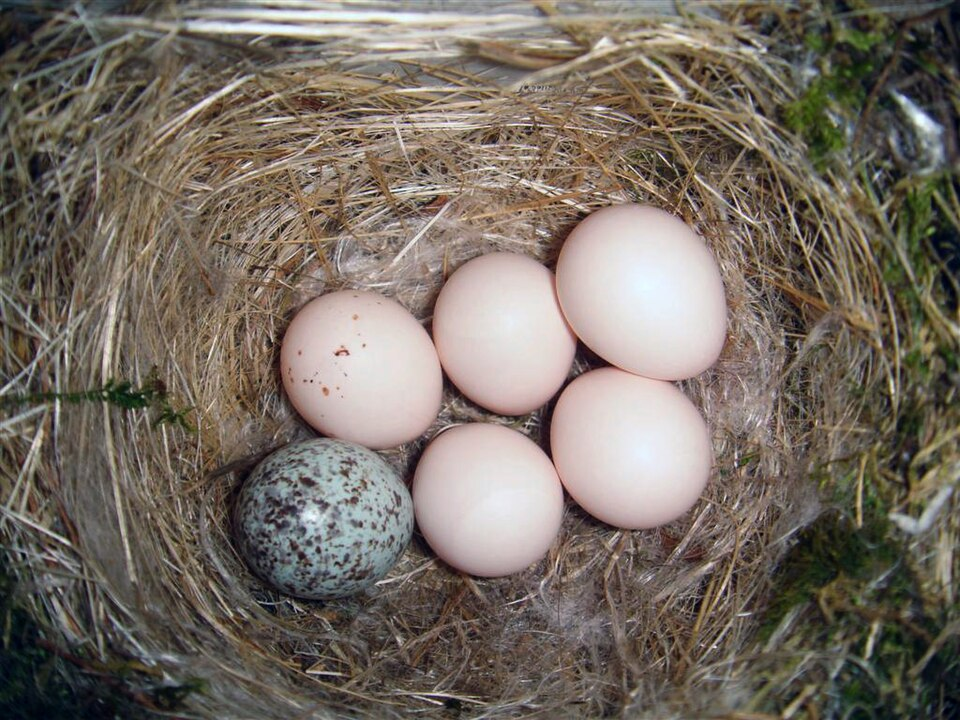

The brown-headed cowbird lives in all habitats but is especially often found in forest edges, fence rows and shrubs, where its “glug-glug-gleeee” song may be heard. Spring migrants begin arriving in February. Eggs are produced from April through July. The brown-headed cowbird shows its brood parasite colors immediately. It does not build its own nest, but lays its eggs in the nests of other birds, generally woodland-nesting species. The female cowbird lays one egg per day at dawn until her full clutch of about six eggs is produced. The eggs may be placed in as many different nests as there are eggs. The egg is white or light blue with brown markings. A female cowbird may produce several clutches, laying as many as 30 eggs in a summer.
The advantage to the cowbird is that it doesn’t have to raise its young. It usually uses the nest of a bird species smaller than itself. The egg or eggs it leaves in the nest are bigger than those of the host, hatch faster and get the most attention from the adult. At least 61 species of nesting birds have been parasitized by the cowbird. Some victims accept the egg(s) and raise them as their own; others remove them from the nest; others may desert the nest; or others may build a new nest on top of the one containing the cowbird egg.
Brown-headed cowbirds form huge roosts in fall and winter. Feeding in open areas around cattle (hence the cow part of their name) and in short-grass fields the cowbird eats insects, fruits, seeds and grains.
Yellow Warblers and Brown-headed Cowbirds
When a Brown-headed Cowbird lays a parasitic egg in the Yellow Warbler’s nest, this species, among the 220 other species who are duped by cowbirds, has a plan. The Yellow Warbler often responds to the intruder egg by building a new floor over the top of the egg, entombing the foreign soo-to-be hatchling. Some Yellow Warbler nests have been found with up to six floors built this way.

