

Birds of America: J.J. Audubon
The bird population in the US has several species named after J.J. Audubon: Audubon’s shearwater, Audubon’s warbler and Audubon’s oriole, for example. Many bird names are on the chopping block in 2024-2026 because of an upheaval in the American Ornithological Society (known by its initials: AOS). The impending changes are due to more than simple naming conventions.

More Than Bird Names
The Audubon Society faces a backlash after deciding to keep its name which, according to publications “evokes a racist enslaver.” John J. Audubon may have inspired generations of birders with his Birds of America compendium, but his legacy also includes racist views. He is now known to have owned and sold enslaved people, and to have robbed graves of Native Americans for brain-size measurement to prove inferior intelligence, all of which is bringing calls for the National Audubon Society to change its name.
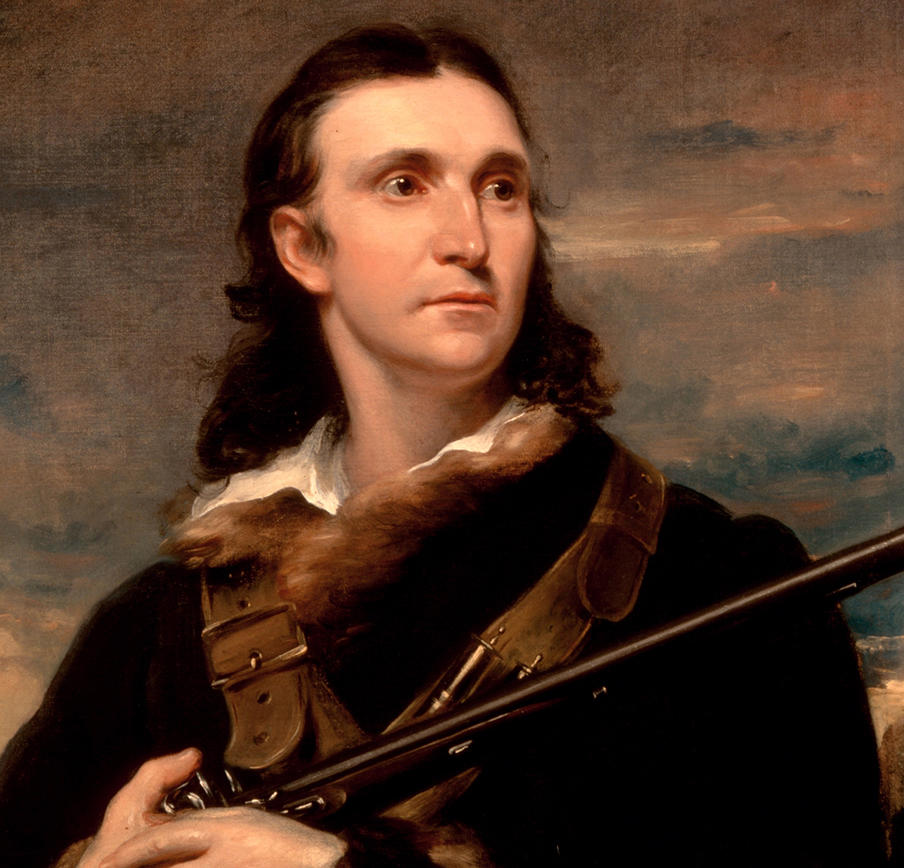
J.J. Audubon: Genius or Fraud?
John James Audubon (1785-1851) was not the first person to attempt to paint and describe all the birds of America. Alexander Wilson has that distinction and for it George Ord named Wilson as the Father of American Ornithology. However, for half a century he was this young country’s dominant wildlife artist. His seminal elephant folio The Birds of America, a collection of 435 life-size prints, quickly eclipsed Wilson’s work and it is still a standard against which 20th and 21st century bird artists, such as Roger Tory Peterson and David Allen Sibley, are measured.
It’s fair to describe John James Audubon as a genius, and a pioneer. His contributions to ornithology, art, and culture are enormous. At the same time he was a fabulist. More specifically he is now known as someone whose actions reflected a dominant white man’s view in his pursuit of scientific knowledge, and he was a complex and troubling character who did despicable things even by the standards of his day. He was contemporaneously and posthumously accused of both academic fraud and plagiarism. But far worse, he enslaved Black people and wrote critically about emancipation. He was accused of stealing human remains and sending the skulls of those he disinterred to a colleague who used them to assert that whites were superior to non-whites.
Complicating this history is his ambiguous background: Some researchers have credibly argued that Audubon was born to a woman of mixed race, which would mean that the most famous American bird artist was a man of color. Others insist that Audubon’s mother was white. Audubon himself lied about the circumstances of his birth, claiming to have been born in Louisiana. Whatever his circumstances of his birth, his beliefs and actions speak for themselves.
The Origin of the Audubon Society
Audubon died decades before the first Audubon societies were founded, so how did National Audubon Society come to bear his name? A naturalist named George Bird Grinnell, one of the founders of the early Audubon Society in the late 1800s, was tutored by Lucy Bakewell Audubon, John James Audubon’s widow. George Grinnell chose the society’s name because of Audubon’s stature in the world of wildlife art and natural history. The Audubon name was honored and venerated by the Society for the next 175 years.[3] That is until it was not honored any longer.

Audubon: Early Years
John James Audubon was born in Saint Domingue (now Haiti) in 1785, the illegitimate son of a French sea captain and sugar plantation owner. The identity of his mother is in dispute; she could have been a French chambermaid named Jeanne Rabine, but there is compelling evidence that she was a mixed-race housekeeper named Catherine “Sanitte” Bouffard. At the age of five — which coincided with the beginnings of the Haitian Revolution — Audubon was sent to Nantes, France, and was raised by his father’s wife, Anne. There, John James Audubon took an interest in birds, nature, drawing and music.
In 1803, at the age of 18, he was sent by his family to America, in part to escape conscription into Emperor Napoleon Bonaparte’s army. Audubon lived on the family-owned estate at Mill Grove, Pennsylvania, near Philadelphia, where he hunted, studied and drew birds. It was there that he met his wife, Lucy Bakewell. While living in Mill Grove, he conducted the first known bird-banding experiment in North America, tying strings around the legs of Eastern Phoebes; he learned that the birds returned to the very same nesting sites each year.

Audubon spent more than a decade as a businessman, traveling down the Ohio River to western Kentucky — then the beginning of the western frontier — and setting up a dry-goods store in Henderson. He continued to draw birds as a hobby, amassing an impressive portfolio. He also bought and sold enslaved people during this time to support his venture. Audubon was successful in business for a while, but hard times hit, and in 1819 he was briefly jailed for bankruptcy.
With no other prospects, in the early 1820s Audubon set off to depict America’s avifauna, with nothing but his gun, artist’s materials, and a young assistant. In 1826, he sailed with his partly finished collection to England, where his life-size, highly dramatic bird portraits, along with his embellished descriptions of wilderness life, hit just the right note at the height of the Continent’s Romantic era. Audubon found a printer for The Birds of America, first in Edinburgh, then London, and later collaborated with the Scottish ornithologist William MacGillivray on the bird biographies — life histories of each of the species in the finished work.

The last print was issued in 1838, by which time Audubon had achieved fame and a modest degree of comfort, traveled the country several more times in search of birds. He eventually settled in New York City. He made one more trip out West in 1843, the basis for his final work of mammals, the Viviparous Quadrupeds of North America, which was largely completed by his sons and the text of which was written by his long-time friend, the Lutheran pastor, John Bachman (another anti-abolitionist, two of whose daughters married two of Audubon’s sons).

Audubon died at age 65. He is buried in the Trinity Cemetery at 155th Street and Broadway in New York City.[1]

Birds depicted throughout Audubon’s Birds of America reflect the once-common practice of naming flora, fauna, and landscape features for the person who “discovered” them. The record of this in Birds of America stands to remind us of the colonialism, racism, and violence that marked the period during which Audubon was collecting and drawing American birds.
While the majority of birds in his books are named with descriptive language that helps identify them (information about their behaviors, as in Hermit Warbler; or about their plumage, as in Black Throated Gray Warbler), some carry the names of slave owners, anti-abolitionists, Confederate generals, U.S. Calvary officers associated with the genocide of indigenous peoples, and “scientists” whose work is now understood to be disreputable, damaging, or spurious.
A growing number of scientists and naturalists now advocate for replacing so-called eponymous bird names with descriptive alternatives. Many recommend the removal of all eponymous bird names, regardless of the character or qualities of the individuals for whom birds were named. A comprehensive change, they argue, honors wildlife and natural history over human endeavor and the will to dominate the natural world.
It’s especially hard for me to imagine calling certain birds, such as Cooper’s Hawks and Swainson’s Hawks, for example, by another name. That said there’s a long list of other birds we regularly or occasionally see in the wild whose biologist’s names would likely be changed by the AOS, including the following names in the Appendix of this Bird Post and in other sources.
=-=-=-=-=-=-=-=-=-=-=-=-=-=-=-=-=-=-=
Appendix A:
Birds of America with an Audubon influence (or not)
- Bullock’s Oriole (Icterus bullockii). Named by William Swainson in 1827; Audubon painted it.
- Cassin’s Finch (Haemorhous cassinii). Named by Spencer Baird in 1854, after Audubon’s bird work was finished, so it has no direct Audubon connection.
- Clark’s Grebe (Aechmophorus clarkii). Named by George Lawrence in 1858; no Audubon connection.
- Clark’s Nutcracker (Nucifraga columbiana). Named by Alexander Wilson in 1811; Audubon painted it from specimens collected by John Kirk Townsend.
- Cooper’s Hawk (Accipiter cooperii). Named by Charles Lucien Bonaparte in 1828; Audubon painted it.
- Gambel’s Quail (Callipepla gambelii). Named by William Gambel in 1843; not in Audubon’s original Birds of America.
- Lewis’s Woodpecker (Melanerpes lewis). Named by G. R. Gray in 1849; painted by both Alexander Wilson and Audubon.
- Lincoln’s Sparrow (Melospiza lincolnii). Named by Audubon in 1834 for Thomas Lincoln, who collected it on Audubon’s 1833 Canadian expedition to Labrador.
- MacGillivray’s Warbler (Geothlypis tolmiei). Audubon gave it its English name in honor of William MacGillivray, who wrote much of Audubon’s Ornithological Biography. The scientific name comes from John Kirk Townsend, whose 1839 written description came first.
- Say’s Phoebe (Sayornis saya). Named by Bonaparte in 1825; Audubon painted it.
- Steller’s Jay (Cyanocitta stelleri). Named by Johann Gmelin in 1788; Audubon painted it.
- Swainson’s Hawk (Buteo swainsoni). Named by Bonaparte in 1838.
- Townsend’s Solitaire (Myadestes townsendi). Named by Audubon in 1838.
- Williamson’s Sapsucker (Sphyrapicus thyroideus). Named by John Cassin in 1852; no Audubon connection.
- Wilson’s Phalarope (Phalaropus tricolor). Named by Louis Vieillot in 1819; Audubon painted it.
- Wilson’s Snipe (Gallinago delicata). Named by George Ord in 1825; Audubon painted it.
- Wilson’s Warbler (Cardellina pusilla). Named by Wilson in 1811; Audubon painted it.
- Woodhouse’s Scrub-Jay (Aphelocoma woodhouseii). Named by Baird in 1858; no Audubon connection.
- Of the eighteen birds in this list, only Lincoln’s Sparrow and Townsend’s Solitaire were formally named by Audubon, and he coined the English name for MacGillivray’s Warbler.
Appendix B:
Written Works by J. J. Audubon
- Audubon, John James. “Account of the Habits of the Turkey Buzzard (Vultur aura), Particularly with the View of Exploding the Opinion Generally Entertained of Its Extraordinary Power of Smelling.” Edinburgh New Philosophical Journal, vol. 2, 1826–27, pp. 172–84.
- —. Audubon and His Journals. Edited by Maria R. Audubon, 2 vols., New York, 1897.
- —. The Birds of America. 4 vols., London, 1827–38.
- —. The Birds of America, from Drawings Made in the United States and Their Territories. 7 vols., New York and Philadelphia, 1840–44.
- —. “Facts and Observations Connected with the Permanent Residence of Swallows in the United States.” Annals of the Lyceum of Natural History of New-York, vol. 1, 1824, pp. 166–68.
- —. “Notes on the Rattlesnake (Crotalus horridus).” Edinburgh New Philosophical Journal, vol. 3, 1827, pp. 21–30.
- —. Ornithological Biography, or An Account of the Habits of the Birds of the United States of America; Accompanied by Descriptions of the Objects Represented in the Work Entitled The Birds of America, and Interspersed with Delineations of American Scenery and Manners. 5 vols., Edinburgh, 1831–39.
- —. A Synopsis of the Birds of North America. Edinburgh, 1839.
- Audubon, John James, and John Bachman. The Quadrupeds of North America. 3 vols., New York, 1849–54.
- —. The Viviparous Quadrupeds of North America. 3 vols., New York, 1845–54.
Notes on the Appendix Lists Above:
- Audubon’s written works are confirmed from the Pennsylvania Center for the Book: the full title and Edinburgh 1831–39 publication of Ornithological Biography, the 1827–38 London dates for the folio, the swallows article in the Lyceum Annals (1824), and the turkey buzzard and rattlesnake articles in the Edinburgh New Philosophical Journal, including their volume and page numbers. That source lists the folio as Birds of North America, but the correct title is The Birds of America, containing the word The and not specifying North America.
- The folio was first published in installments from 1827 to 1838. William Lizars in Edinburgh engraved the first plates, and Robert Havell Jr. in London finished the work.
- The swallows article’s volume (1, 1824) is confirmed, but the Synopsis page range for the seven-volume octavo Birds of America, and Audubon and His Journals is not confirmed. The Bachman entries match the earlier Bachman lists.
- The turkey buzzard paper is the other half of the vulture-smell debate from the Bachman Bird Post, where Bachman’s experiments backed Audubon. Later naturalists disputed Audubon’s conclusion, and modern research has confirmed that turkey vultures do find food largely by smell.
Footnotes:
[1] https://johnjames.audubon.org/john-james-audubon-0
[2] https://beineckeaudubon.yale.edu/whats-name-reading-and-resources
[3] https://www.nypl.org/events/exhibitions/galleries/explorations/item/4094
[4] More about the AOS movement to change bird names: What’s in A Name? – reading and resources.

