
Birds of Bachman
John Bachman is a complicated figure to explain in my series of Bird Names Posts. He didn’t desecrate any human remains by grave robbing (like John Audubon and John Townsend did), he didn’t oversee the death march of Native peoples (as Gen. Winfield Scott did), and he didn’t change allegiances to fight for the Confederacy during the Civil War (as Thomas McCown had done). Instead, in many ways he was an ordinary man, living contradictory stories, and trying to lead a God-fearing life.
An ordained Lutheran minister from New York, Bachman was a real naturalist with major scientific achievements. He also displayed deplorable behavior: he enslaved people, he publicly defended slavery as biblical, and he blessed South Carolina’s secession from the Union. Simultaneously, he fervently championed Black members of his church and argued scientifically that all humans are one species. For these diverse opinions, Bachman remains on of the most hated names on American birds. That broad mix of contradictory actions and reactions is why some people revere him, while others want the Bachman name scrubbed from American birds and mammals.
Who was Rev. John Bachman?
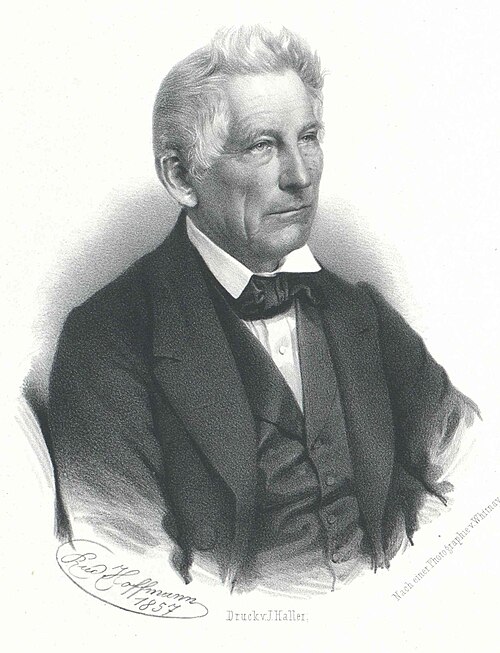
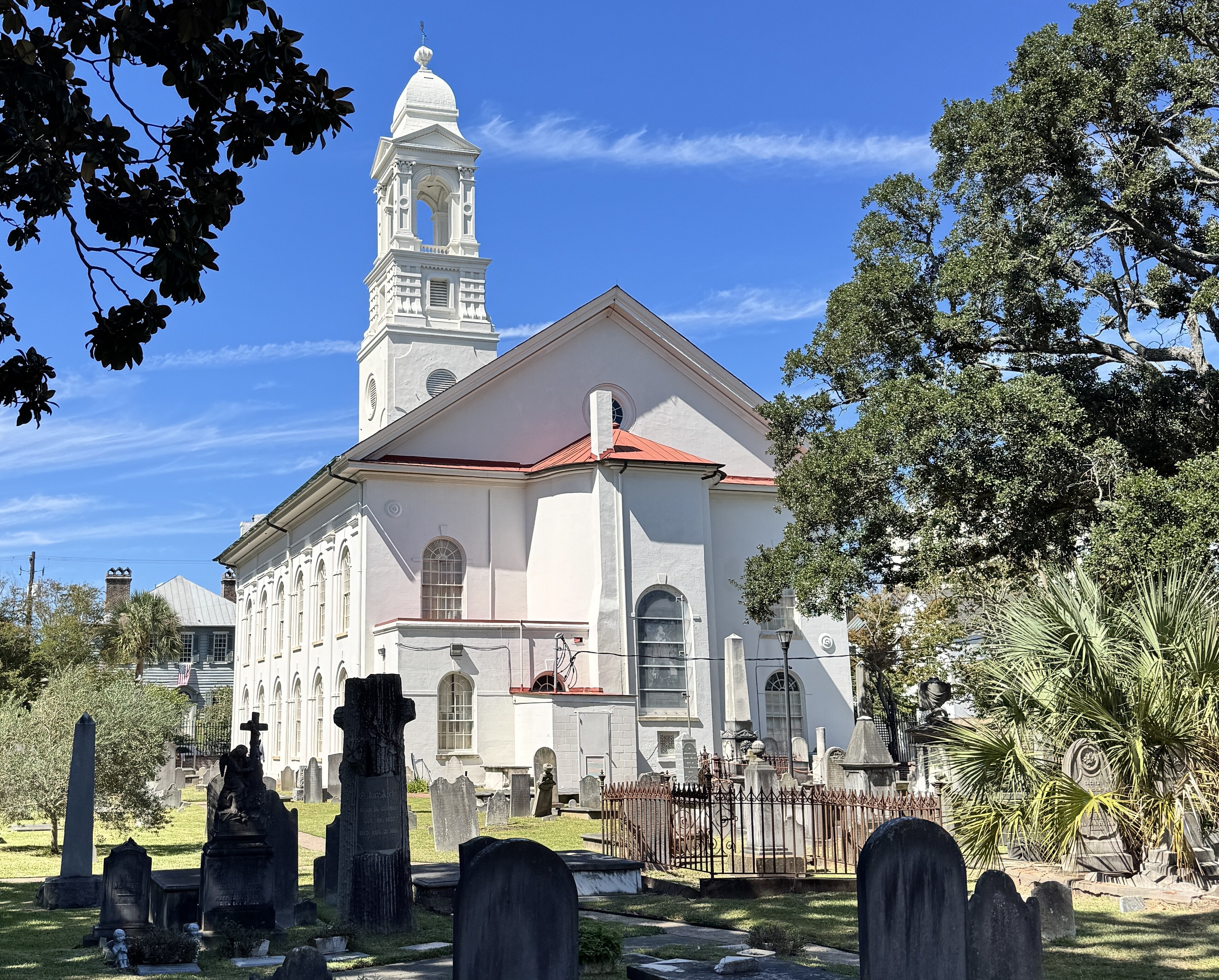
John Bachman was born in 1790, in Rhinebeck, New York. He was ordained a Lutheran minister at age 24, in 1814. Within a year he was appointed to a parish in Charleston, South Carolina. He reportedly chose Charleston hoping that its warm coastal climate would ease his chronic respiratory problems. Bachman stayed as pastor of St. John’s Lutheran Church until 1871, 56 years in all. He founded the Lutheran Synod of South Carolina, served as its first president, founded the state’s Lutheran theological seminary, and helped establish Newberry College. Bachman, and the other naturalists of his circle, made Charleston one of the leading centers of natural history in the Western Hemisphere, rivaling Boston and Philadelphia.[1]
In 1816, one year after arriving to lead St. John’s Lutheran Church, Bachman married Harriet Martin, whom he met in Charleston. Together over the next 16 years, they had fourteen children. There were also “servants” in the household, so the family clearly enslaved people. It was crowded at home. Sadly the church records in the 1830s show “5 died young, 4 died grown, and 5 still alive.” In 1845 Harriet’s sister, Maria Rebecca Martin, moved into the Bachman household as a care giver of her ailing older sister. Maria soon became a surrogate mother and tutor to the Bachman children. Within a year (1846) Harriet died of tuberculosis (“consumption”) and the physical challenges of 14 pregnancies in her short life.
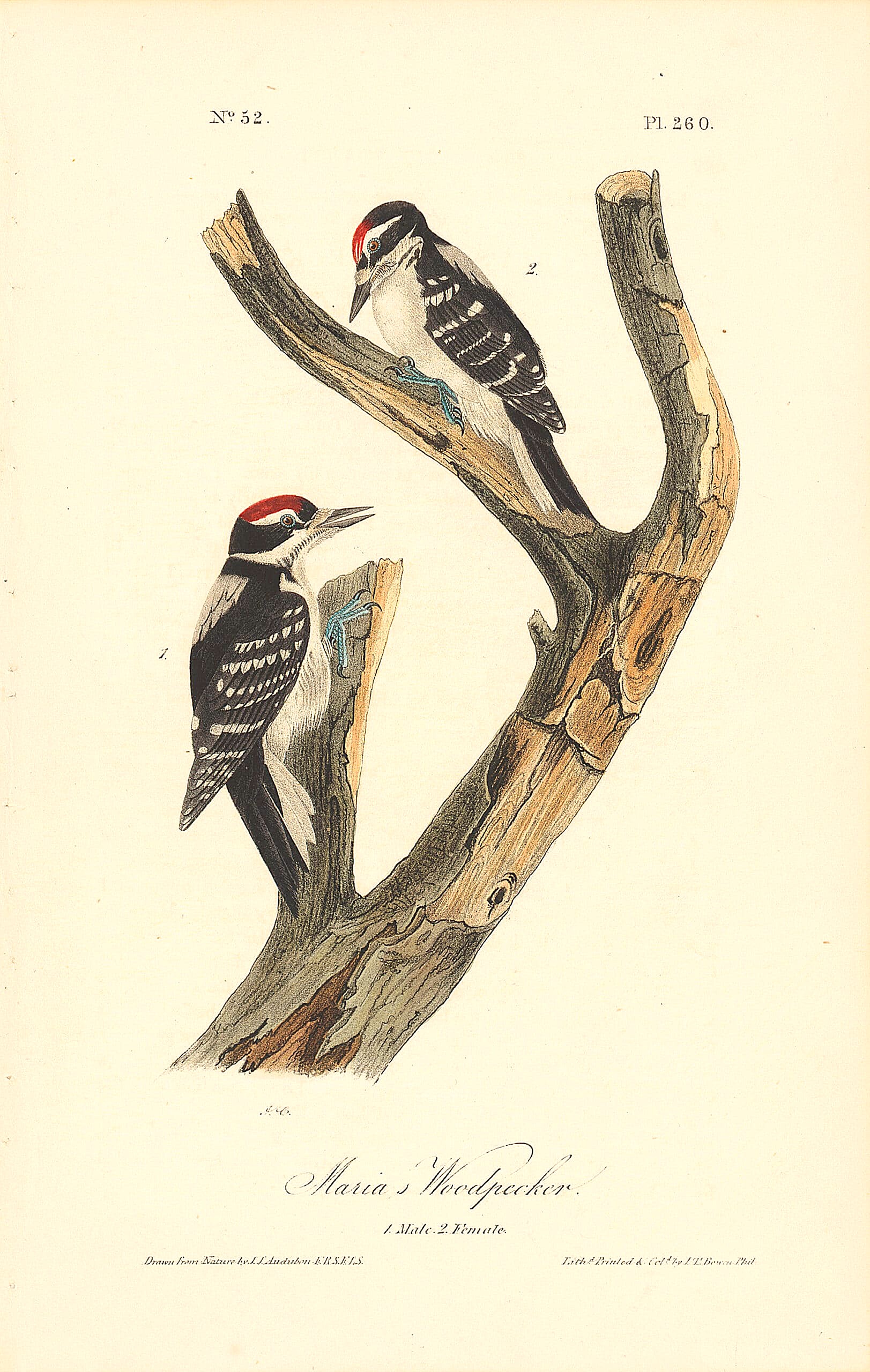
A frequent visitor to the Bachman family home in Charleston was John James Audubon. Bachman and Audubon spent much of their time collecting bird specimens across the South Carolina coastal plain. Maria became an important figure in her own right. Audubon encouraged her drawing and taught her the art if natural history illustration. She painted many of the plant and insect backgrounds for Audubon’s birds and later worked as an editor of the text of The Viviparous Quadrupeds of North America. A woodpecker was even named for her, Picus martinae (“Maria’s Woodpecker”). [For more on the Bachman/Audubon relationship see Footnote 2.]
After Harriet died, Maria Martin was happily living with Bachman and his children and working on her drawings. She decided to draft her own marriage settlement. Maria and John Bachman, her widower brother-in-law, were married in late December 1848. She was 52, and he was 56 and losing his eyesight. They had no children together, and Maria remained his wife and working partner for the rest of her life.
Maria Martin Bachman died in 1863 of tuberculosis. John Bachman died in Charleston eleven years later in 1874 at the age of 84. They were both buried in the graveyard at St. John’s Lutheran Church, as were many of their children.
The AOS Bird Naming Debates
The debates among the AOS and other organizations raise important questions about the English Names associated with Bird Names. Therefore, it made sense to me to examine the topics more deeply, trying to capture the debates of that era and the outrage that their lives have meant to society today. Below are a set of questions that I used to pivot among the many sides of the strong AOS debates. Below are some questions and answers I derived from the AOS inquiries:
Q: Was Bachman revered, beyond bird and animal science? A: Yes. His church work with Black Charlestonians was unusual for his time and place. Soon after arriving in 1815, he asked his church’s leaders whether he could invite Black people into membership. By 1860, (noted as 45 years later) St. John’s had 200 Black members and a Sunday school of 150. A 2006 South Carolina resolution credits him with educating enslaved and free people of African descent and nurturing three notable Black clergymen: Jehu Jones became the first African American Lutheran minister ordained in North America. Boston Jenkins Drayton became a missionary to Liberia and later chief justice of its Supreme Court. Daniel Alexander Payne became the sixth bishop of the African Methodist Episcopal Church. When South Carolina barred Black people from teaching or running schools, Bachman and others wrote letters of introduction to help Payne move north. Payne went on to become the first Black president of a college in the Western world, Wilberforce.
His scientific stance on race was also ahead of many peers. In 1850 he wrote The Unity of the Human Race, arguing correctly that all humans are a single species. He was the one South Carolina minister who tried to refute the scientific polygenists like Louis Agassiz and Samuel Morton, who claimed different races had separate origins, on their own published research grounds. Articles on Bachman note that his work influenced the development of evolutionary theory. [For a deep dive into Polygenics and the misguided promoters of that belief system see Footnote 3.]
Q: How were the Audubon and Bachman families connected? A: They intermarried. Two of John and Harriet Bachman’s daughters, Maria and Eliza, married two of Audubon’s sons, Victor and John, thereby joining the two families even more concentrically. The marriages, however, ended in grief. Maria Rebecca Bachman Audubon died of tuberculosis in 1840 at age 23 and her sister Eliza died of the same disease about a year later. Both Audubon sons lost their Bachman wives within short periods of time. [A list of the children is included in Footnote 4.]
Q: Why is Bachman so maligned? A: Its complex! The other side of the record is serious and complicated. One short biography describes him directly as “Clergyman, educator, friend of Audubon, and enslaver.” The South Carolina Encyclopedia says he condoned slavery, was an unyielding defender of states’ rights, championed South Carolina’s secession, and worked hard to support the Confederacy. Perhaps his most famous moment came on December 20, 1860, when Bachman gave the opening prayer at the Secession Convention in Charleston, which then voted unanimously to leave the Union.
Bachman promoted the religious defense of slavery. He credited the South’s unanimity on slavery to public confidence in the biblical arguments in favor of servitude, that had been clearly laid out by White clergy and laymen. His “unity of the human race” argument has also been reassessed. Historian John Haller found that monogenists like Bachman, for all their emphasis on environment, were no more favorable to Black people than polygenists, except in their own abstract theories. In other words, Bachman could insist that Black and White people shared one ancestry, while still treating Black people as inferior and slavery as legitimate.
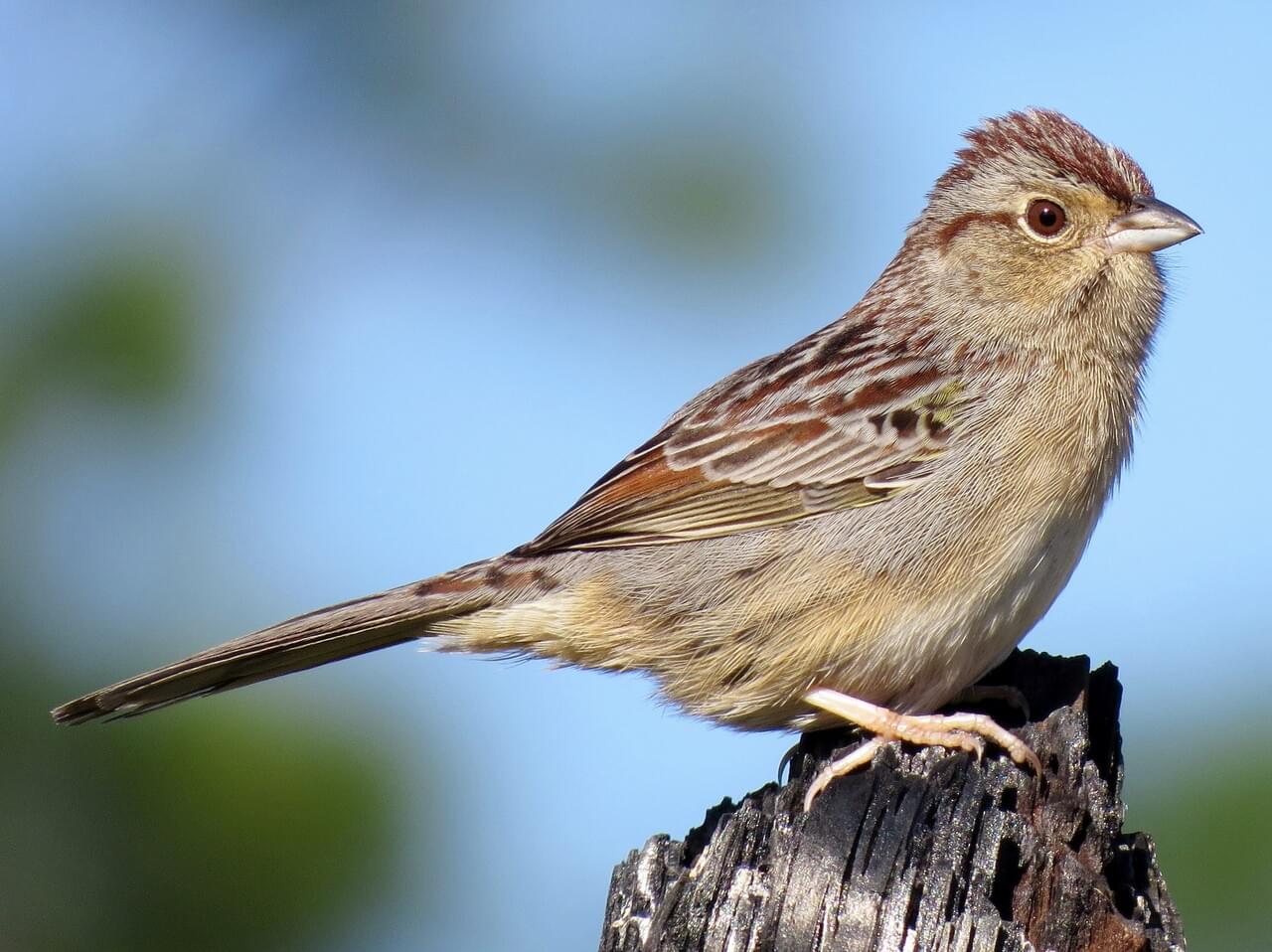
Q: What has the AOS decided to do? A: Use Bachman as a test case. Bachman’s Sparrow is one of the four eponyms that the AOS chose in its pilot project to remove names. The AOS described its namesakes as having engaged in what most people today would agree was reprehensible behavior. Critics like Stephen Carr Hampton point specifically to John James Audubon and John Bachman together as supporters of slavery. Proponents of Bachman’s name saving plea noted that most of his behavior emphasizes a scientific legacy. Much of his work was exemplary: mentorship of Black church members and three Black preachers as noted above, for example. And as recently as 2006, South Carolina declared February “John Bachman Month.” The state’s declaration of Bachman deserving praise, however, does not make him praiseworthy. Charleston Magazine sums him up as complex: an enslaver who still made it possible for Black Charlestonians to be ordained, and who stood his ground against Louis Agassiz, Samuel Morton and others who argued Black and White people didn’t share a common ancestor.
So “one of the most hated birders” may overstate Bachman’s reputation compared with someone like Gen. Winfield Scott. Bachman doesn’t anger people the way a General who forcibly removed Native people from their homeland does. He’s controversial because he’s a genuine scientific figure whose moral record is deeply mixed. And, ironically, the Bachman case is exactly the kind of case the AOS decided it shouldn’t try to weigh in on, one name at a time. And TIME may be what it takes to sort out the Bird Name matters.
=-=-=-=-=-=-=-=-=-=-=-=-=-=-=-=-=-=
Footnotes:
[2] The Audubon Connection: Did that relationship work equally for Bachman? The Audubon partnership is central to Bachman’s fame, and their collaboration covered mammals as well as birds. He met Audubon by chance in Charleston in 1831, helped him considerably with his study of birds, and Audubon encouraged him to publish his own research. The two families became tightly intertwined: two of Bachman’s daughters married Audubon’s sons, and Bachman’s second wife, Maria Martin, helped illustrate Birds of America. They also enjoyed teasing each other’s differences. The strait-laced pastor often scolded Audubon for his love of “grog and wine and snuff.”
The great mammal collaboration culminated in their masterful books in three volumes: The Viviparous Quadrupeds of North America (1845 – 1854). Audubon admitted that Bachman knew far more about the habits of these animals, so Audubon painted while Bachman wrote the text. After Audubon died in 1851, Bachman and Audubon’s sons published the third and final volume of the Quadrupeds. Across all his work, Bachman described 31 mammals new to science, 11 of them with written with Audubon’s images.
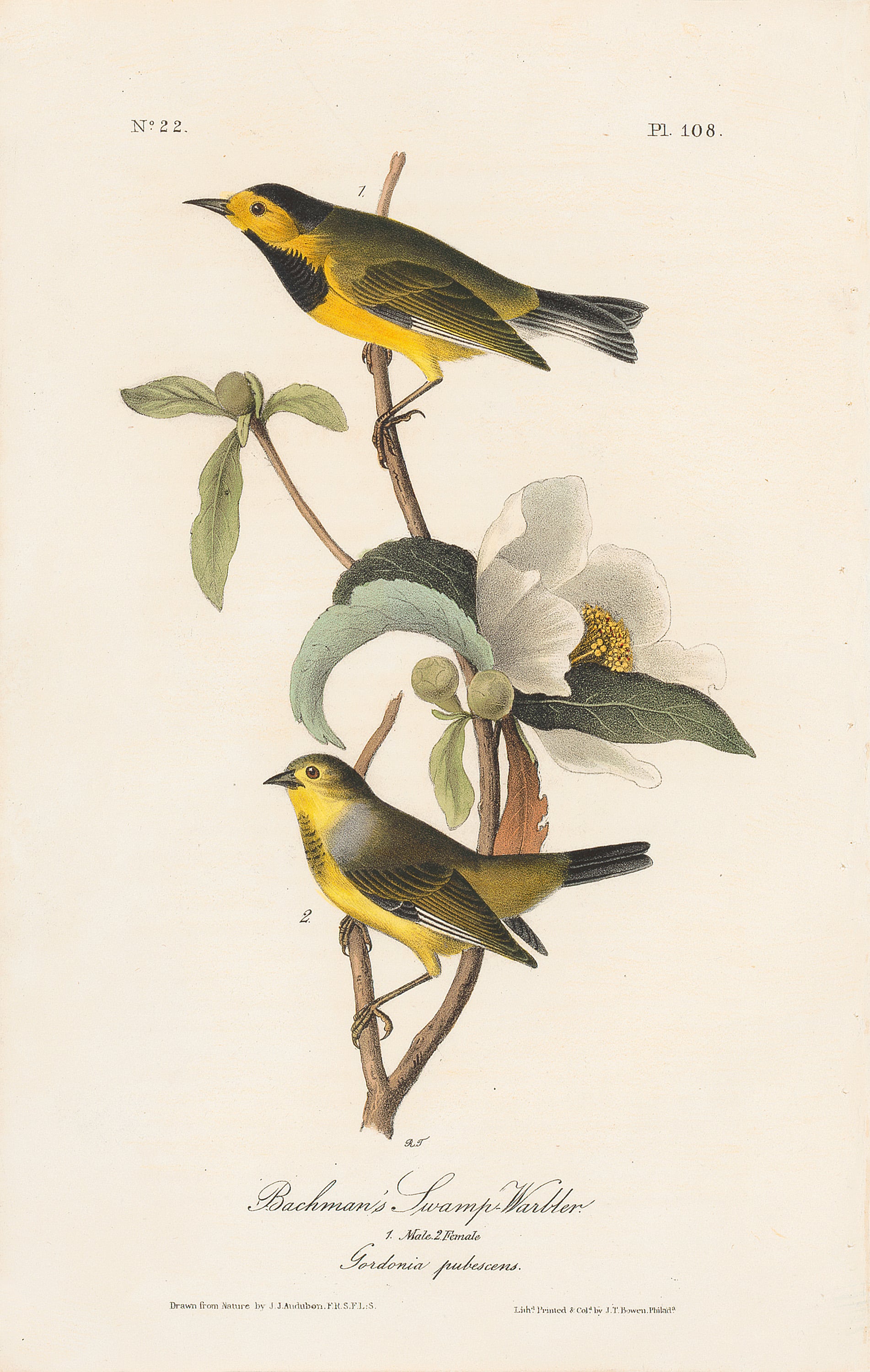
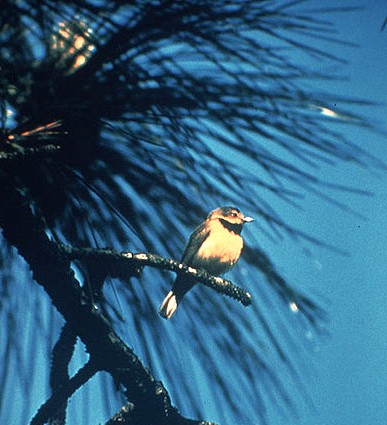
Several Birds of America bear the Bachman name because of Audubon. While working in Charleston, Audubon and his assistants painted the bird he named Bachman’s Sparrow in honor of his friend. He also named the Bachman’s Warbler for him, but that bird is now classified as extinct and hasn’t been seen since the 1960s. The brush rabbit, Bachman’s hare, was named for Rev. John Bachman, too.
[3] Polygenism, the belief that human races were created separately as distinct species, has deep roots in Europe, but in the United States it became an organized scientific school in the decades before the Civil War. Its leaders were some of the most respected scientists in the country, which is what made this racist theory so influential and so damaging.
- What was the “Polygenism debate?” Historians call this group of scientists the “American School” of ethnology. It thrived as the leading voice for multiple human origins and sparked a long debate with defenders of human unity like John Bachman. It broke with the Judeo-Christian teaching of a single creation, and many of its scientists rejected the biblical account of human origins in favor of separate lineages. The core claim was that racial differences were fixed and permanent. That idea found a ready audience in a country struggling with the ethics of African slavery and the dispossession of Native Americans. The school dominated scientific thinking about race, until Charles Darwin’s On the Origin of Species appeared in 1859.
- Who were the leading proponents of Polygenism? One was Samuel George Morton (1799 – 1851). A Philadelphia physician, Morton was the school’s data collector. From 1830 until his death, Morton gathered more than a thousand skulls, the largest collection of human skulls in the world. He measured their cranial capacity, which he treated as a measure of brain size, and published the results in Crania Americana (1839) and Crania Aegyptiaca (1844). Those books strongly influenced polygenists in Europe as well. Morton’s legacy is still debated in the current era. In 1978, Stephen Jay Gould accused Morton of unconscious racial bias in his measurements and made him the centerpiece of The Mismeasure of Man. In 2011 a team re-measured about half of Morton’s skulls and found his measurements were mostly accurate, with no errors that pointed to bias. A 2018 study of Morton’s newly found handwritten notes concluded that his measurements were accurate, but that his racial bias shaped his conclusions. That’s probably the fairest summary: the numbers were sound, but the story he built on them was not.
- “The Morton Collection,” as it was dubbed, has also faced its own reckoning. In 2021 the Penn Museum, which held what remained of the collection, apologized for possessing the skulls and announced plans to rebury or repatriate the remains of more than 50 enslaved people from Cuba and the United States. In February 2024, the remains of nineteen Black Philadelphians from the collection were buried at Eden Cemetery, a historic Black cemetery, with a public interfaith service. Some descendants criticized the museum for not doing more to identify the remains.
- Another outspoken proponent of Polygenism was Louis Agassiz (1807 – 1873). A Swiss-born naturalist, Agassiz was the most prestigious of the group. Before moving to the U.S. he defended common human origins, then changed his view after arriving in 1846. Among the first things he did in America was to visit Morton’s skull collection. He told his mother that seeing the collection was worth the trip in and of itself. In the same letter, he described his first encounter with Black people, servants at his Philadelphia hotel, with open revulsion (which was a passage Gould later found in the original manuscript). Gould also found that Agassiz’s widow Elizabeth had quietly cut out all racist passages, when she published his letters in 1885. By 1850 Agassiz was publicly promoting polygenism.
- Agassiz’s most notorious act ties directly to Rev. John Bachman. In 1850 Agassiz commissioned daguerreotypes of seven enslaved people, including a man named ‘Renty’ and his daughter, ‘Delia.’ They were brought to Joseph Zealy’s studio in Columbia, South Carolina, stripped, and forced to pose. The photographs were meant to support his theory that Black and white people had no common ancestor. The photos sat forgotten at Harvard until 1976. Tamara Lanier, who identifies Renty as her great-great-great-grandfather, fought Harvard for about fifteen years to reclaim the photographs, and 43 of Agassiz’s own descendants supported her. In May 2025 Harvard settled and agreed to transfer the images to the International African American Museum in Charleston, SC, and they were unveiled there on March 11, 2026. The photographs are now in Bachman’s adopted city.
- Two other outspoken proponents were Josiah Clark Nott (1804 – 1873) and George Gliddon (1809 – 1857). Nott, a physician in Mobile, Alabama, was the most openly political of the group. He used zoology and phrenology to justify slavery as an institution in which supposedly “inferior” Black people would reach their full potential under white guidance. Gliddon was an Egyptologist and follower of Morton. Together they published Types of Mankind in 1854, an 800-page book that reprinted work by Louis Agassiz and Samuel Morton and spread openly racist views to popular audiences. They followed it with Indigenous Races of the Earth (1857). After Morton died in 1851, Josiah Nott was expected to lead the school.
- Other notably racist figures across the globe. In America, influential polygenists and racists seemed to pop up everywhere in the South. It also popped up in Western Europe. The list included Charles Caldwell, Samuel A. Cartwright, and South Carolina Governor James Henry Hammond. Two more supporters were the archaeologist Ephraim George Squier and the Southern publisher James D. B. DeBow. Historically, polygenist ideas go back to Isaac La Peyrère’s 1655 theory of “pre-Adamite” humans. Voltaire, Lord Kames, the Jamaican planter-historian Edward Long, and the English surgeon Charles White all advanced versions of polygenics in the 1700s. In Europe the tradition continued after the American School with Robert Knox in Scotland, Paul Broca in France, Carl Vogt in Germany, and James Hunt’s Anthropological Society of London.
- The brave and vocal opposition. After Types of Mankind, abolitionists and, for the first time, African American scholars joined the scientific debate on race with rebuttals. Frederick Douglass answered the American school directly in his 1854 address “The Claims of the Negro Ethnologically Considered.” He argued that slaveholders portrayed the enslaved as fit only for slavery to excuse refusing them freedom. And Douglass said the “slavery propagating statesmen” of the day had consulted Nott, Gliddon, Morton, and Agassiz. The revered Black physician, James McCune Smith, also wrote rebuttals to Polygenism.
- There’s an important irony here. Many devout Southern defenders of slavery rejected polygenism, because it contradicted the biblical account of ‘one creation,’ and they defended slavery with Scripture instead, as Bachman did. Some slaveholders found justification in the Bible, while others turned to the new ‘science’ of that era.
- Q: Was it a movement of blatant racism? A: Yes. Its central claim was that some races were permanently and naturally inferior. It built that claim on a racial hierarchy assumed from the start, and its leaders openly applied it to defend slavery. Historians describe the full racial science of the era as laying groundwork that justified slavery, shaped the Supreme Court’s Dred Scott Decision (1857), supported laws against inter-racial marriage, and later fed into the segregated Jim Crow laws in the South.
- Polygenism was scientific racism. It was a movement that gave racist laws the prestige of science. In John Bachman’s case, it’s the context that makes him complicated. He was right that humanity is one species, but he shared much of his opponents’ racial thinking and used his own arguments to defend slavery in his own home and in the South.
[4] Listing of the Children of John and Harriet Bachman
- Maria Rebecca Bachman Audubon (1816 – 1840). Maria was the first wife of John James Audubon’s son, John Woodhouse Audubon.
- Mary Eliza Bachman Audubon (1818 – 1841). Eliza married John James Audubon’s other son, Victor Gifford Audubon. Both she and her sister, Maria, tragically died of tuberculosis early in their marriages at young ages.
- Jane Lee Bachman Haskell (1819 – 1903). Jane married into the Haskell family: William E. Haskell. She remained in South Carolina for the rest of her life, outliving all but two of her siblings.
- Cordelia Bachman (1820 – 1821), died in infancy.
- John Edward Bachman (1822), died in infancy that same year.
- Harriet Eva Bachman Haskell (1823 – 1858). Harriet also married into the Haskell family: Charles Thomson Haskell Jr.
- Henry Bachman (1824), died in infancy that same year.
- Julia Margaret Bachman (1825 – 1848)
- Clara Adeline Bachman (1827 – 1828), twin; died in infancy.
- Ellen Rosaline Bachman (1827 – 1828), twin; died in infancy.
- Lynch Helen Bachman Chisolm (1828 – 1906)
- Samuel Wilson Bachman (1829 – 1923)
- William Kunhardt Bachman (1830 – 1901)
- Catherine L. Bachman (1832 – 1908)
Appendices
Birds named in Bachman’s honor:
A 2006 South Carolina resolution counts three birds, two mammals, and one butterfly named in his honor.
- Bachman’s Warbler (Vermivora bachmanii). Bachman found it near Charleston and gave specimens and descriptions to Audubon, who never saw the bird alive but named it for him in 1833. It is now considered extinct.
- Bachman’s Sparrow. Its English name honors Bachman, while the scientific name Peucaea aestivalis comes from an earlier description. The resolution lists it as Aimophila aestivalis bachmani.
- Black Oystercatcher (Haematopus bachmani), formerly called Bachman’s Oystercatcher.
- Brush Rabbit (Sylvilagus bachmani), described by George Waterhouse in 1839 as Lepus bachmani, from a specimen collected by David Douglas between Monterey and Santa Barbara, California. Douglas, by the way, has the Douglas Fir named after him.
- Bachman’s Fox Squirrel (Sciurus niger bachmani).
- American Snout Butterfly. The resolution’s text is cut off after the genus Libytheana; from my own knowledge, the full name is Libytheana carinenta bachmanii.
Animals Named by Bachman
- Marsh Rabbit (Sylvilagus palustris), 1837. Bachman had found this species in South Carolina fifteen years earlier and had given the specimen to the Charleston Museum. When no one else described it, he did so himself, naming it Lepus palustris, the “swamp hare.”
- Swamp Rabbit (Sylvilagus aquaticus), 1837, originally Lepus aquaticus, described from western Alabama.
- Mountain Cottontail (Sylvilagus nuttallii), 1837, originally Lepus nuttallii, “Nuttall’s Little Hare.”
- Douglas Squirrel (Tamiasciurus douglasii), 1839.
- Townsend’s Chipmunk (Neotamias townsendii), 1839.
- Least Chipmunk (Neotamias minimus), 1839.
- Townsend’s Ground Squirrel (Urocitellus townsendii), 1839.
- Townsend’s Mole (Scapanus townsendii), 1839.
- Broad-footed Mole (Scapanus latimanus), 1842.
- Southeastern Shrew (Sorex longirostris), 1837.
- Red Wolf (Canis rufus), with Audubon, 1851.
Many of the 1839 western species came from specimens collected by John Kirk Townsend and Thomas Nuttall on their Oregon journey with Nathaniel Wyeth, which is why their names appear so often. Bachman wanted to give attribution to the key scientists. David Douglas was a scientist in the mix of these species, as was Audubon.
Animals Named with Audubon
- Black-footed Ferret (Mustela nigripes), 1851, in volume 2 of The Viviparous Quadrupeds of North America. The type locality for the ferret is Fort Laramie, Wyoming.
- Harris’s Antelope Squirrel (Ammospermophilus harrisii), 1854.
Works Cited
- Audubon, John James, and John Bachman. The Quadrupeds of North America. 3 vols., New York, 1849–54.
- —. The Viviparous Quadrupeds of North America. 3 vols., New York, 1845–54.
- Bachman, John. An Account of Some Experiments Made on the Habits of the Vultures Inhabiting Carolina, the Turkey Buzzard, and the Carrion Crow, Particularly as It Regards the Extraordinary Powers of Smell Usually Attributed to Them. Charleston, 1834. (The vulture paper makes a good story for this Bird Post. Bachman ran experiments in Charleston to test whether vultures find food by smell or by sight, and his conclusion that they relied on sight sided with Audubon in a heated public dispute.)
- —. Characteristics of Genera and Species, as Applicable to the Doctrine of the Unity of the Human Race. Charleston, 1854.
- —. A Defence of Luther and the Reformation. Charleston, 1853.
- —. “Description of a New Species of Hare Found in South Carolina.” Journal of the Academy of Natural Sciences of Philadelphia, vol. 7, 1837, pp. 194–99.
- —. The Doctrine of the Unity of the Human Race Examined on the Principles of Science. Charleston, 1850.
- —. “Observations on the Different Species of Hares (Genus Lepus) Inhabiting the United States and Canada.” Journal of the Academy of Natural Sciences of Philadelphia, vol. 7, 1837, pp. 282–361.
- —. “On the Migration of the Birds of North America.” American Journal of Science and Arts, vol. 30, 1836, pp. 81–100.
- —. A Sermon on the Doctrines and Discipline of the Evangelical Lutheran Church. Charleston, 1837.
=====================================

