
Art: Childe Hassam
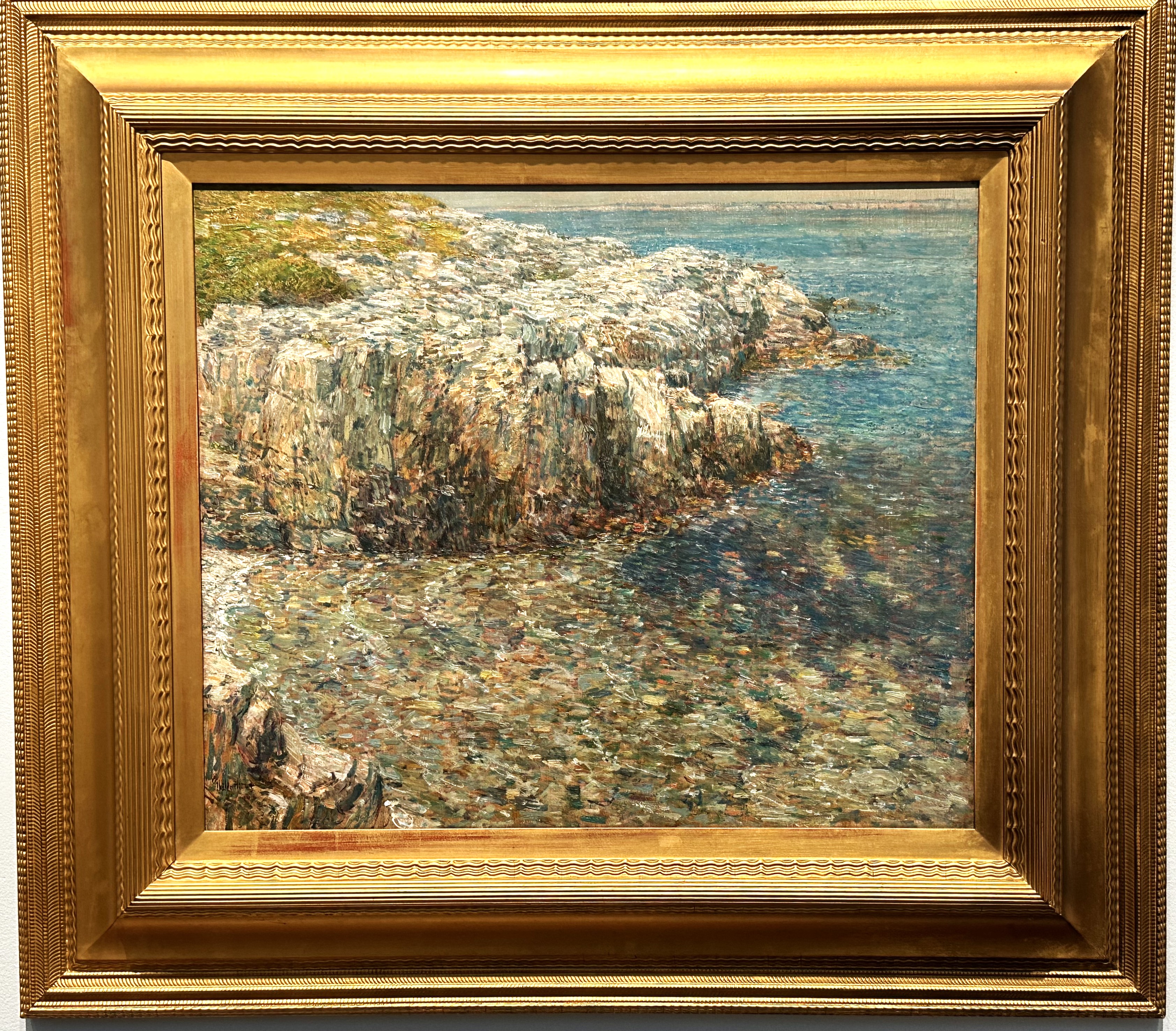
Frederick Childe Hassam is an American artist who spend much time at Appledore House on the Isles of Shoals, in the North Atlantic. The first piece of art by Childe Hassam that commanded my attention was his image of the Isles of Shoals which he drew in situ off the coast of Maine and the border of New Hampshire.
The image above from the Portland, OR, Art Museum is a preparatory sketch for a frieze that he would later paint. In this image, Hassam makes the rocky mass of islands seem rugged and attractive, while at the same time forbidding, as if the steps can be treacherous.
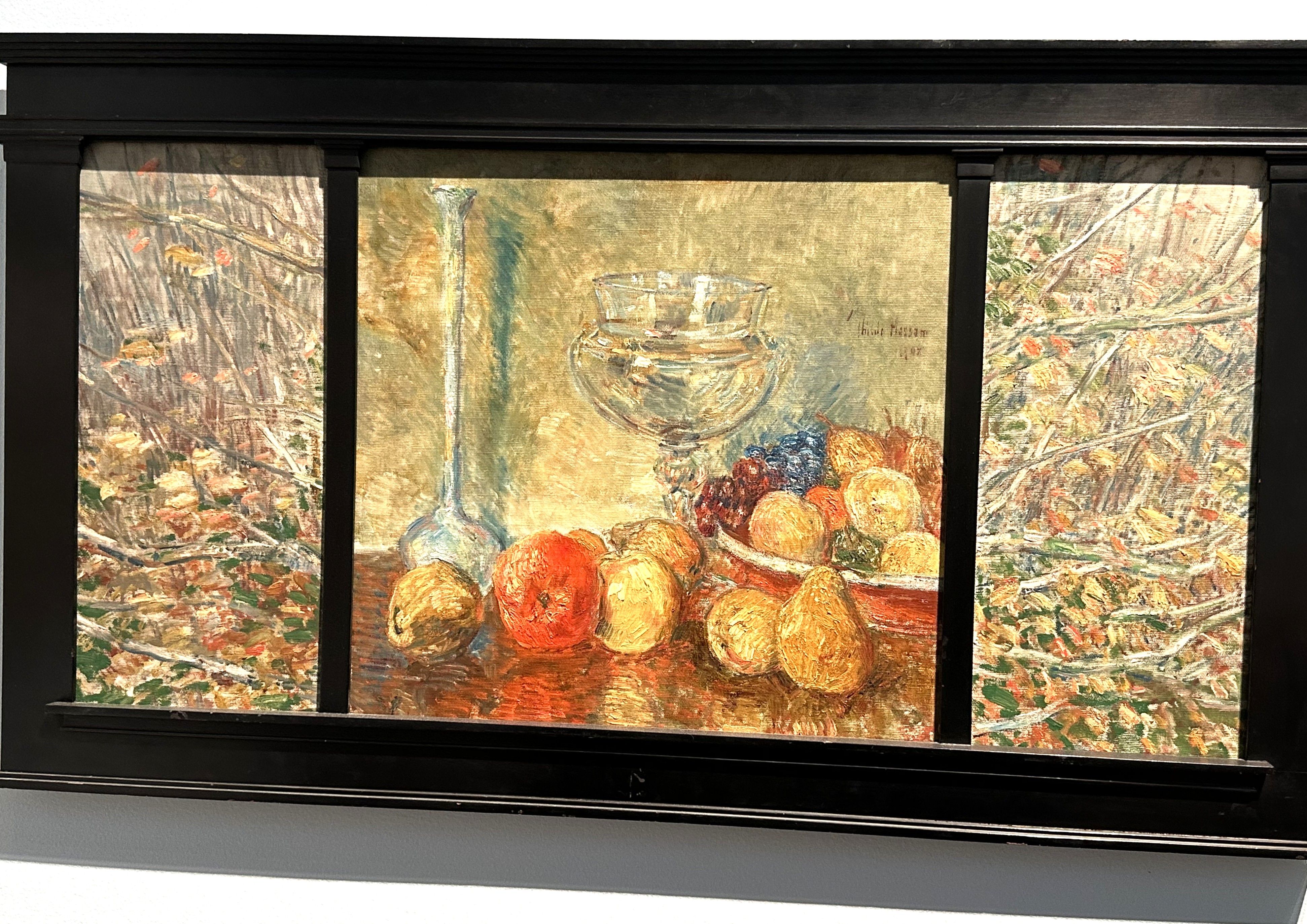
While the still life above is technically a single, self-contained oil-on-canvas painting (rather than a multi-paneled triptych), it is highly unique for Hassam and carries a deep connection to Oregon’s history:
- A Rare Venture into Still Life: Hassam is internationally famous for his bustling Impressionist cityscapes and coastal scenes. He painted only about forty still lifes during his entire career, making this piece exceptionally rare.
- The Portland Connection: Hassam painted this piece during his first trip to Portland in August 1904. He was visiting Colonel Charles Erskine Scott (C.E.S.) Wood, a prominent Portland attorney, author, and major patron of the arts.
- Hyper-Local Subject Matter: The painting features a vibrant arrangement of fresh fruits—specifically Oregon plums—gathered directly from the grounds of Colonel Wood’s estate on King’s Hill in Southwest Portland. (Fun historical fact: That exact property was later donated to the Portland Garden Club and is where their clubhouse stands today).
- The Composition: Hassam utilizes classic Impressionist brushwork to capture the texturing of the fruit and vessels, relying heavily on natural sunlight to give the arrangement volume and a glowing warmth. It was later gifted to the museum by Colonel Wood in memory of his wife, Nanny Moale Wood.
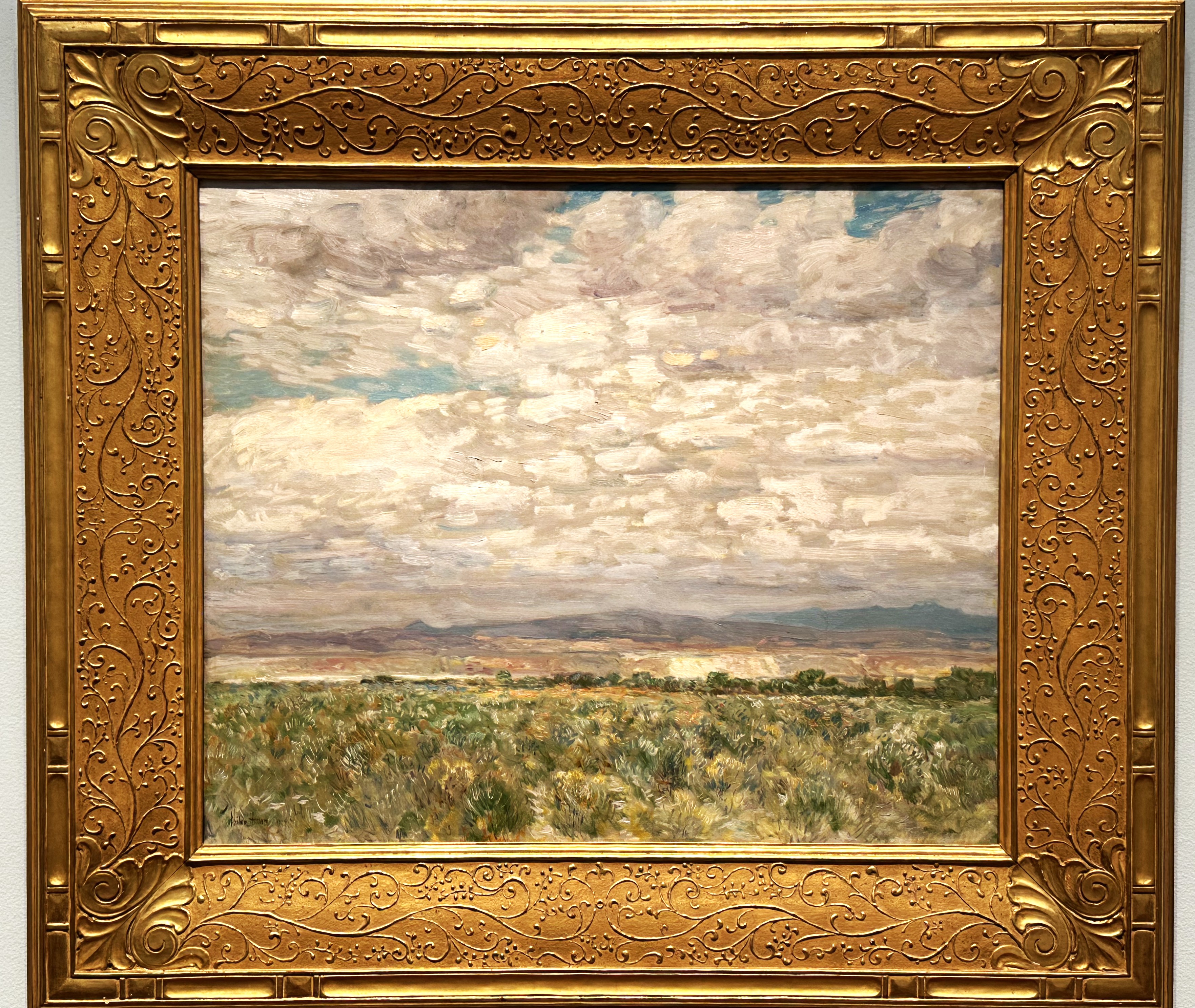
This striking image of the Snake River is further evidence of Hassam’s love of the high desert in eastern Oregon. The vibrant colors, the dramatic sky scape, the appearance of endless space, make this image one of the treasures of the Portland, OR, Art Museum.
He had done some additional renderings of nature off the coast of Oregon and along the Snake River in eastern Oregon. He is the first known artist to paint landscapes in Harney County, Oregon. In 1904 and 1908, Hassam spent several months visiting the Oregon Coast, Portland, and the high desert country with his friend, C.E.S. Wood. Hassam was enchanted by the brilliant colors, beautiful western skies, and the endless open spaces of eastern Oregon. During their visits Hassam and Wood frequently set up easles side by side to interpret the same scene.
Hassam and Thaxter
Childe Hassam developed a “close working relationship” in the Isles of Shoals with a poet named Celia Thaxter. She wrote a sonnet in honor of Hassam, that talked about the magnificence of the moon, sun, planets and sky. The sonnet is as follows:
A crescent with its glory just begun
A spark from the great central fires sublime
A crescent that shall orb into the sun
And burn in splendor through the mists of time.
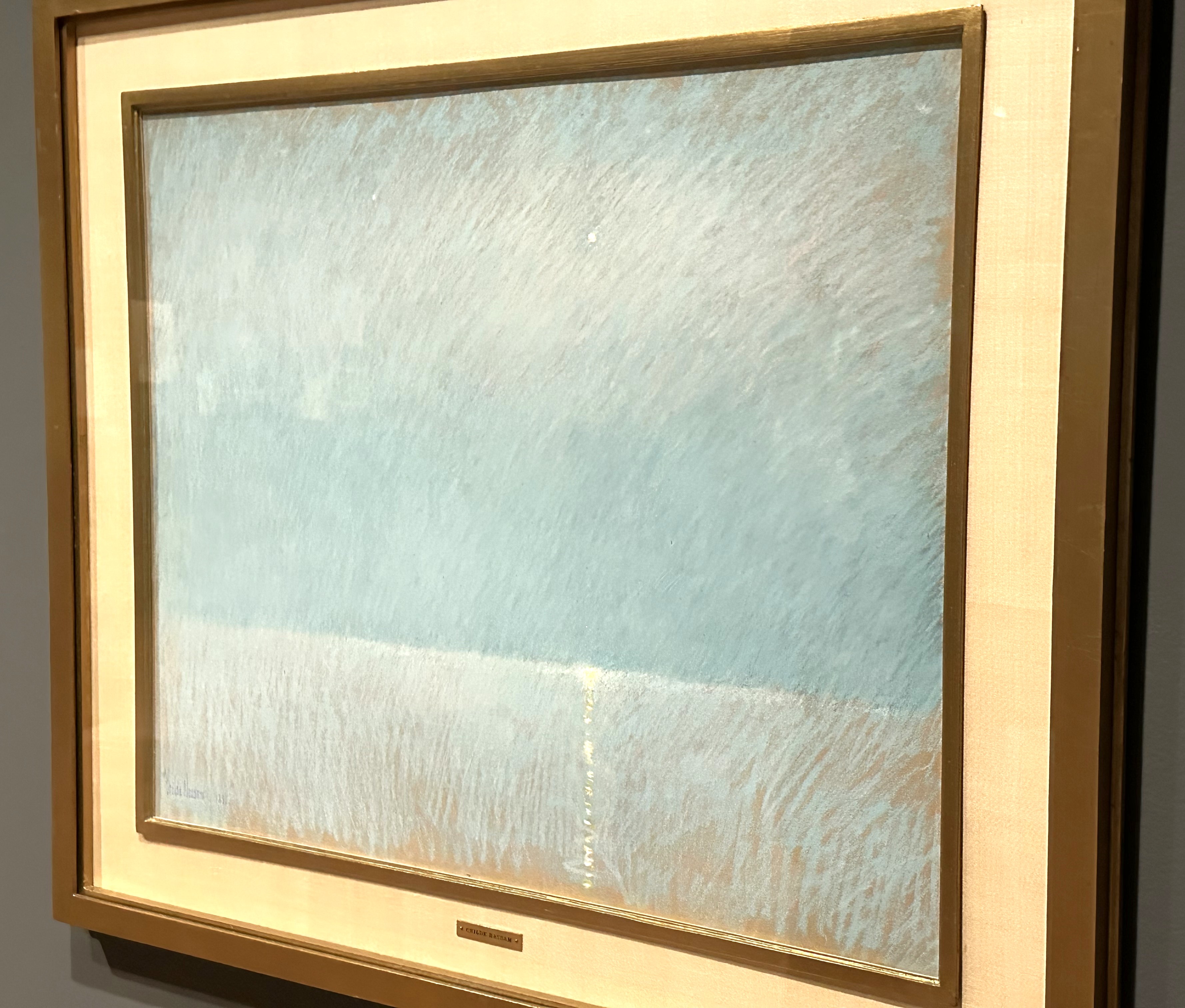
Hassam drew this pastel image “The Evening Star,” in honor of his romance with Thaxter. In the pastel, Hassam represents not the bright full moon, but the early rising of the planet Venus. Yet his restrained palette and rapid strokes conjure the verse’s “mists of time,” representing a subliminal space between day and night.
Many viewers thought the image looked like the moon; however, it is the evening star, Venus. The bright spot and reflection are too small to be the moon. After all, yes, Venus is the evening and the morning star. It is also the name of the Roman goddess of love, beauty, desire and fertility. Venus is the counterpart to the Greek goddess, Aphrodite, and is famously the mother of Aeneas, the ancestor of the Roman people. Venus was considered the embodiment of love and sexuality, often depicted alongside her son with the bow and arrow of love, Cupid.
Hassam was 24 years younger than Thaxter, but there was a spark between them nonetheless. Cupid at work, no doubt.
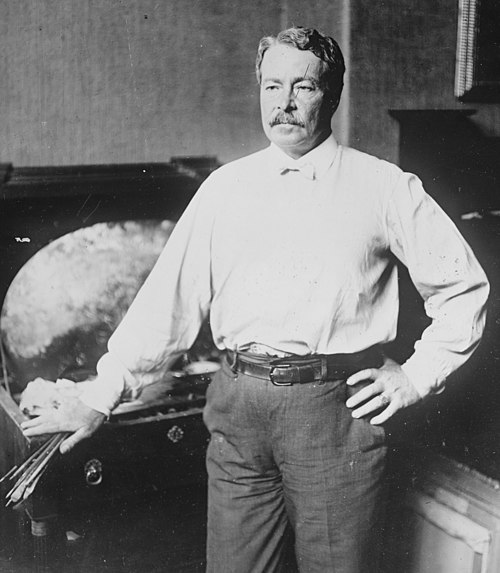
Hassam Back Story
Frederick Childe Hassam was an American Impressionist painter, noted for his urban and coastal scenes. Along with Mary Cassatt and John Henry Twachtman, Hassam was instrumental in promulgating Impressionism to American collectors, dealers, and museums. He produced over 3,000 paintings, oils, watercolors, etchings, and lithographs over the course of his career, and was an influential American artist of the early 20th century.
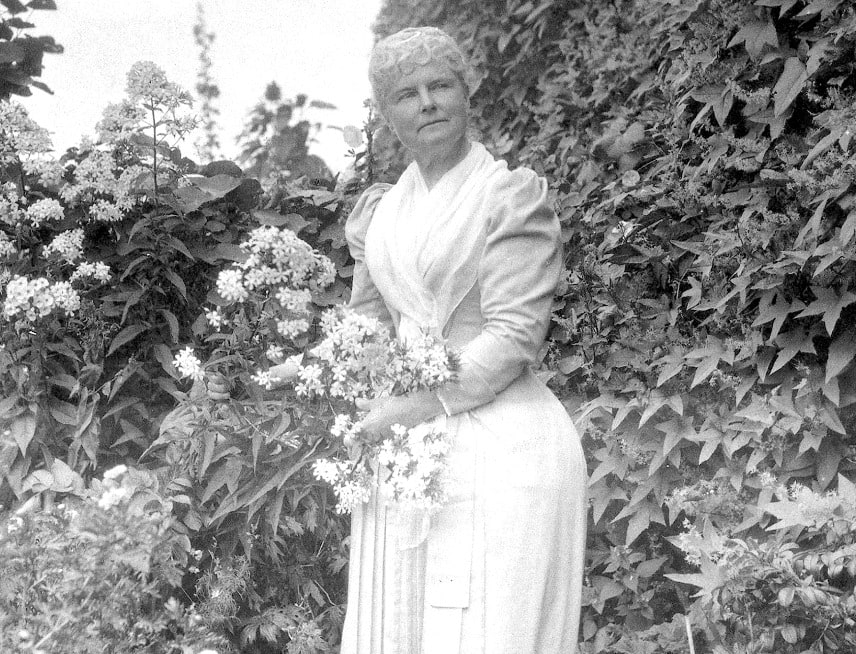
Celia Laighton Thaxter was an American poet whose work centred thematically on the islands and ocean of her youth. Celia Laighton grew up in New Hampshire. On Appledore Island her father operated a successful resort hotel that included among its guests Ralph Waldo Emerson, James Russell Lowell, John Greenleaf Whittier, Henry David Thoreau, William Morris Hunt, Childe Hassam, Lucy Larcom, and Sarah Orne Jewett. In 1851 she married Levi L. Thaxter, who had been her father’s business partner. They settled in Newtonville, Massachusetts, in 1856.
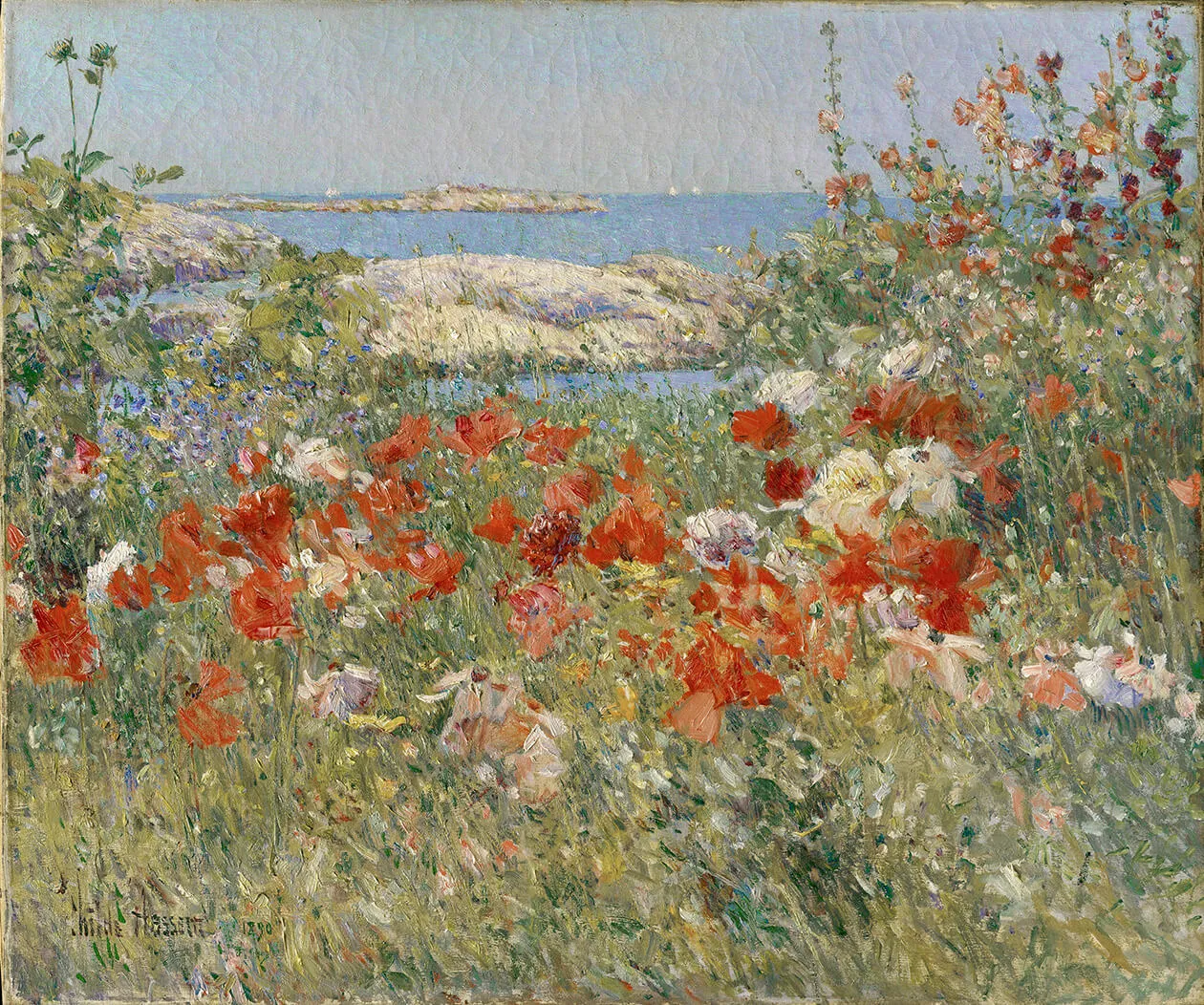
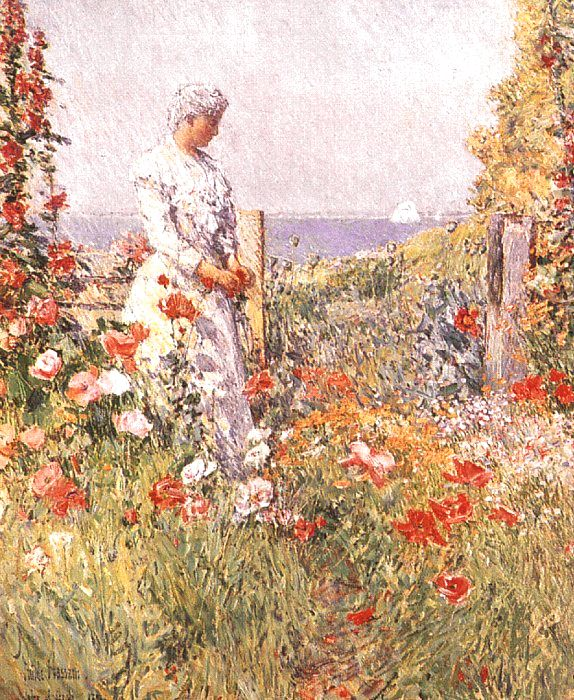
According to Wikipedia: Hassam was known to all of his colleagues as “Childe” (pronounced like child), a name taken from his uncle. Hassam was born in the family home on Olney Street in the Dorchester neighborhood of Boston, in 1859. His father, Frederick Fitch Hassam (1825–1880), was a moderately successful cutlery businessman with a large collection of art and antiques. He descended from a long line of New Englanders. His mother, Rosa Delia Hawthorne (1832–1880), a native of Maine, shared an ancestor with American novelist Nathaniel Hawthorne. His father claimed descent from a seventeenth-century English immigrant whose last name was Horsham. Apparently the name morphed over time to become Hassam.[1]
With his dark complexion and heavily lidded eyes, he seemed “exotic and mysterious.” Many took Childe Hassam to be of Middle Eastern descent, which is a speculation that he enjoyed stoking. In the mid-1880s, next to his signature, he took to painting an Islamic-appearing crescent moon (which eventually degenerated into only a slash). And he adopted the nickname “Muley” (from the Arabic “Mawla”, Lord or Master), invoking Muley Abul Hassan, a fifteenth-century ruler of Granada, Spain, whose life was fictionalized in Washington Irving’s novel Tales of the Alhambra.[1]
References:

