
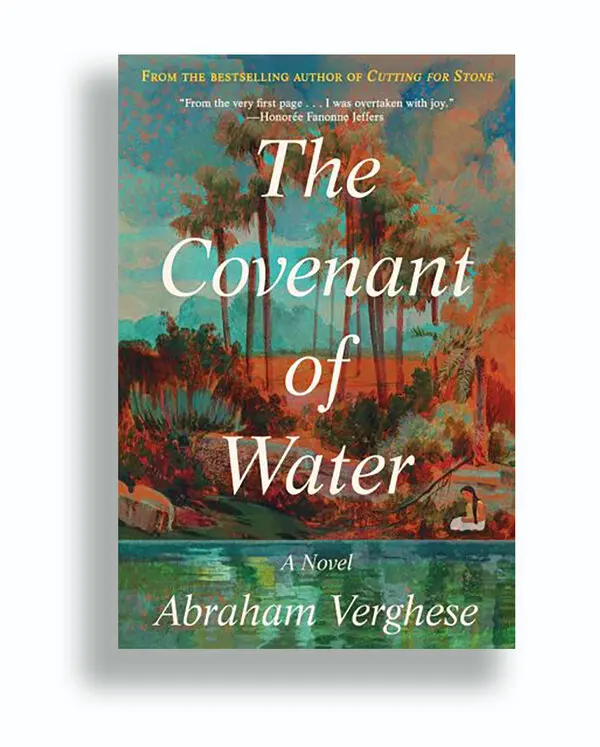
Lectio Divina – Whatsoever We Do
The novel, The Covenant of Water, is a powerful journey into and through the multi-generational trauma of an Indian family in Kerala, on the Malabar Coast. Abraham Verghese masterfully tells the sweeping stories of a twelve-year-old girl, grieving the death of her father, as she is sent by boat to her wedding, where she will meet for the first time her forty-year-old husband. The extraordinary tale weaves together family afflictions, hidden secrets and globe trotting adventures into the aromatic spice coast of India.
Throughout the novel, Verghese injects the through-lines of Indian wisdom and Kerala Christian community beliefs. There are recurring theme and biblical quotes that are profoundly affecting without being heavy-handed or intrusive. The quotations and rituals strengthen the narrative and form a basis for much of the book. One quotation, often repeated and particularly moving, is from Ecclesiastes 9:10 – “Whatsoever thy hand findeth to do, do it with thy might; for there is no work, nor device, nor knowledge, nor wisdom, in the grave, whither thou goest.”
The compulsions, ambitions, aspirations and fates of several of the principles are bound up in this one phrase. The intersection of superstition, faith and art also forms much of the fuel for the compelling flow of this broad-ranging tale. As strange and exotic as the setting may be, the reader recognizes the feelings and fears that drive these people.
Themes of time and eternity symbolized by the flow of water, the universal element that ties everything in the world together and is never the same twice with the inevitable changes brought upon the characters by fate and their own hubris. This is countered by a loving portrayal of family life and the bonds that transcends generations, castes and cultures. There are echoes of the importance of religion and the consequences of abandoning faith which provide a warmth that pervades the reader and characters in a reassuring way.
Power and submission. Health and sickness. Love and hate. Faith and betrayal. What we do in life with all of our might matters.
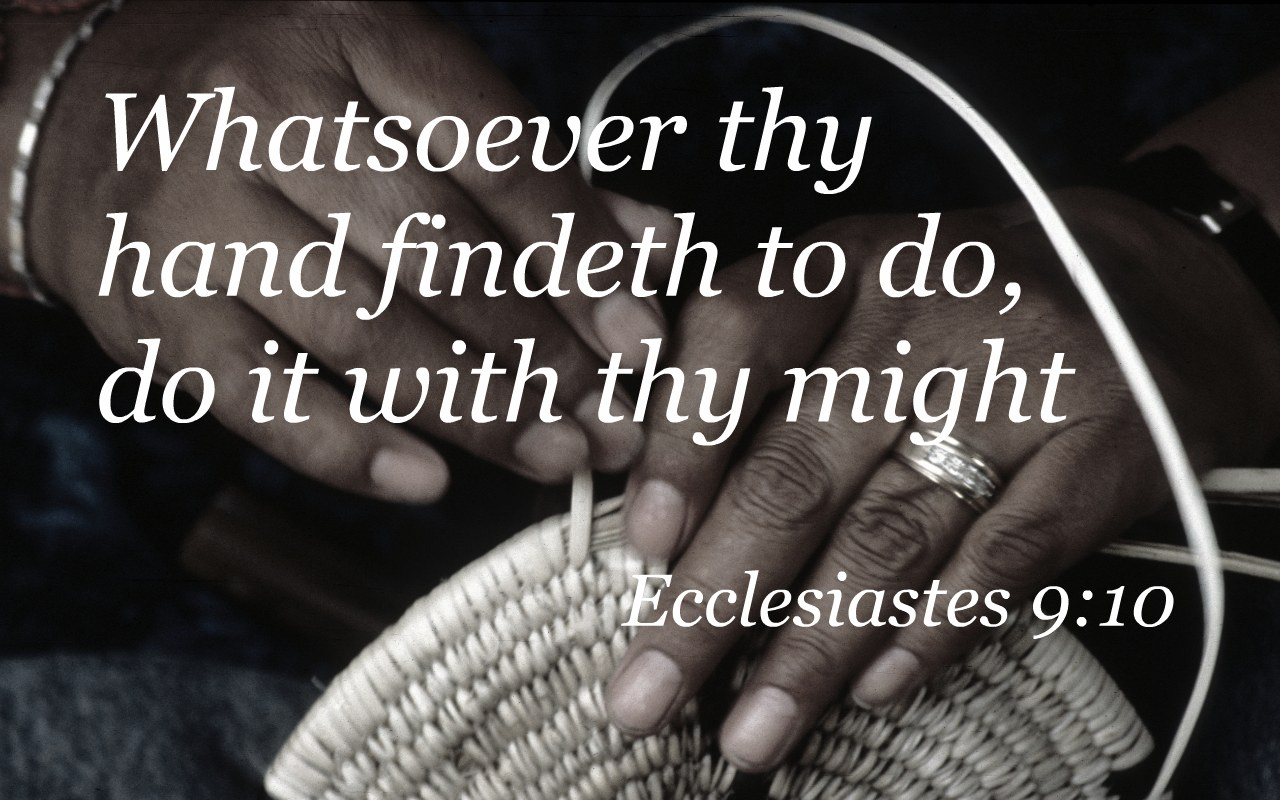
The Bible Quotation
As found in the Old Testament of the Christian Bible, Ecclesiastes 9 is the ninth chapter of the Book of Ecclesiastes in the Hebrew Bible. The book contains the philosophical and theological reflections of a character known as Qoheleth, a title literally meaning “the assembler,” but traditionally translated as “the Teacher” or “The Preacher.” The identity of Qoheleth is unknown. In Jewish tradition, the author of Ecclesiastes is attributed to King Solomon. In Ecclesiastes 1:1 Qoheleth is identified as the “son of David, king in Jerusalem.” However, today contemporary scholars believe that the book was written between the 5th and 3rd centuries BCE, long after the reign of Solomon.
This chapter brings together some of the book’s major themes: the shared human fate of death, the importance of enjoyment in the midst of an unpredictable world and the value of wisdom.
The following structure has been provided by biblical scholar Michael V. Fox.[11]
- Ignorance, Death, and Pleasure (9:1–10)
- Death and Ignorance (9:1–3)
- Life’s Superiority to Death (9:4–6)
- Life’s Pleasures (9:7–10)
- Time and Contingency (9:11–12)
- Wisdom and Folly (9:13–18)
The central theme of this section is that death is the fate that ultimately awaits all people.[6] Though traditional wisdom might suggest that one’s fate should be determined by how righteously they lived, this does not turn out to be true.[3] Death is the great equalizer. However, for Qoheleth this grim reality is not a reason to fall into nihilism. He instead emphasizes that life is always preferable to death. While the living may know that they are going to die, the dead know nothing at all.[11] Therefore, Qoheleth exhorts his audience to live fully while they still can, finding joy in every moment. Such pleasures will no longer be possible in the realm of Sheol.[11] Although Sheol has often been mistakenly equated with the hell of later Judaism and Christianity, it is more accurately described as a “place of non-being where all consciousness and all passions have ceased.”[6] Enjoyment passages like verses 7-10 are strategically placed throughout Ecclesiastes. Though some have claimed that these exhortations of joy are hedonistic or naïve, they are better understood as recognitions of life’s possibilities even in the midst of its uncertainties and inexplicable contradictions.[12] To experience joy is not to deny the pain and confusion of life but to appreciate the small pleasures within it.
Explanation and Commentary of Ecclesiastes 9:10
The author of Ecclesiastes is not speaking of our eternal existence with God in the New Heavens and Earth at the End of Days. The weight of biblical scholarship is that there will be work, planning, knowledge, and wisdom in the afterlife. The “realm of the dead” is not the present Heaven where Christians go to await Christ, but is Sheol, possibly hell. Throughout the Old Testament, God progressively revealed the realities of the afterlife, but early Jews believed that everyone who died went to this inhospitable and gloomy place.
Nevertheless, the wisdom for living this life is sound. We are called to do all things “for the glory of God” (1 Cor 10:31). That includes working or anything else good that our “hand finds to do.” We should live this life to the full in the presence of God, filling every minute here on earth with meaningful activity.
Breaking Down the Key Parts of Ecclesiastes 9:10
#1 “Whatever your hand finds to do,”
Christians should be busy. If we abide in Christ (John 15), then we will have things set before us by God to undertake for his glory and his purposes. We are meant to work and take responsibility for what is given to us to steward.
#2 “Do it with all your might,”
Why do anything in a mediocre way? Wise people say, “If it is worth doing, it is worth doing right.” Add to that, “If it is worth doing, it is worth giving your very best.” Some people have a way of rationalizing mediocre work because people in today’s culture are plagued by a sense of entitlement. The thinking is that unless you give me this much reward, I will only give you this much effort (pay to play thinking). But that is not the way God intended his people to operate. Rather, being like him, we should seek to be excellent in our efforts, trusting God for the results.
#3 “For in the realm of the dead, where you are going,”
The fact that revelation in Scripture is progressive does not mean that the Bible contradicts itself. The human race did go to Sheol before God in His mercy saved an individual and brought him to Paradise. Today, scriptures foretell that unbelievers will still go to hell, a place of eternal conscious torment, and they will pay for their sin and rebellion against God. Believers have a better promise then this verse reveals. Yet the promise of “where you are going” is often told through allegorical stories rather than in places and facts.
 Henry E. Hooper