
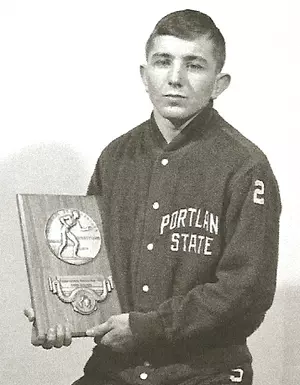
Wrestling: Rick Sanders
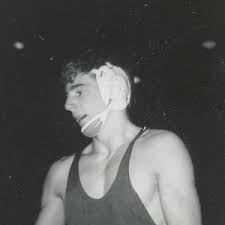
Rick Sanders was a wrestling phenom in the era of great US wrestlers. Single handedly, Sanders put the city of Portland and the state of Oregon on the national and international wrestling map. Over the course of 10 years he won many national collegiate titles (all divisions), a half-dozen US freestyle titles, a pair of Olympic silver medals, and six other international medals, before dying tragically in a car accident at the age of 27.[1]
Background
Born in Fairview, Oregon in 1945, Sanders was the youngest of three. His mother, Anita, had two children from a previous marriage. The Sanders family moved from Fairview to Bly, to Klamath Falls and finally to Portland.
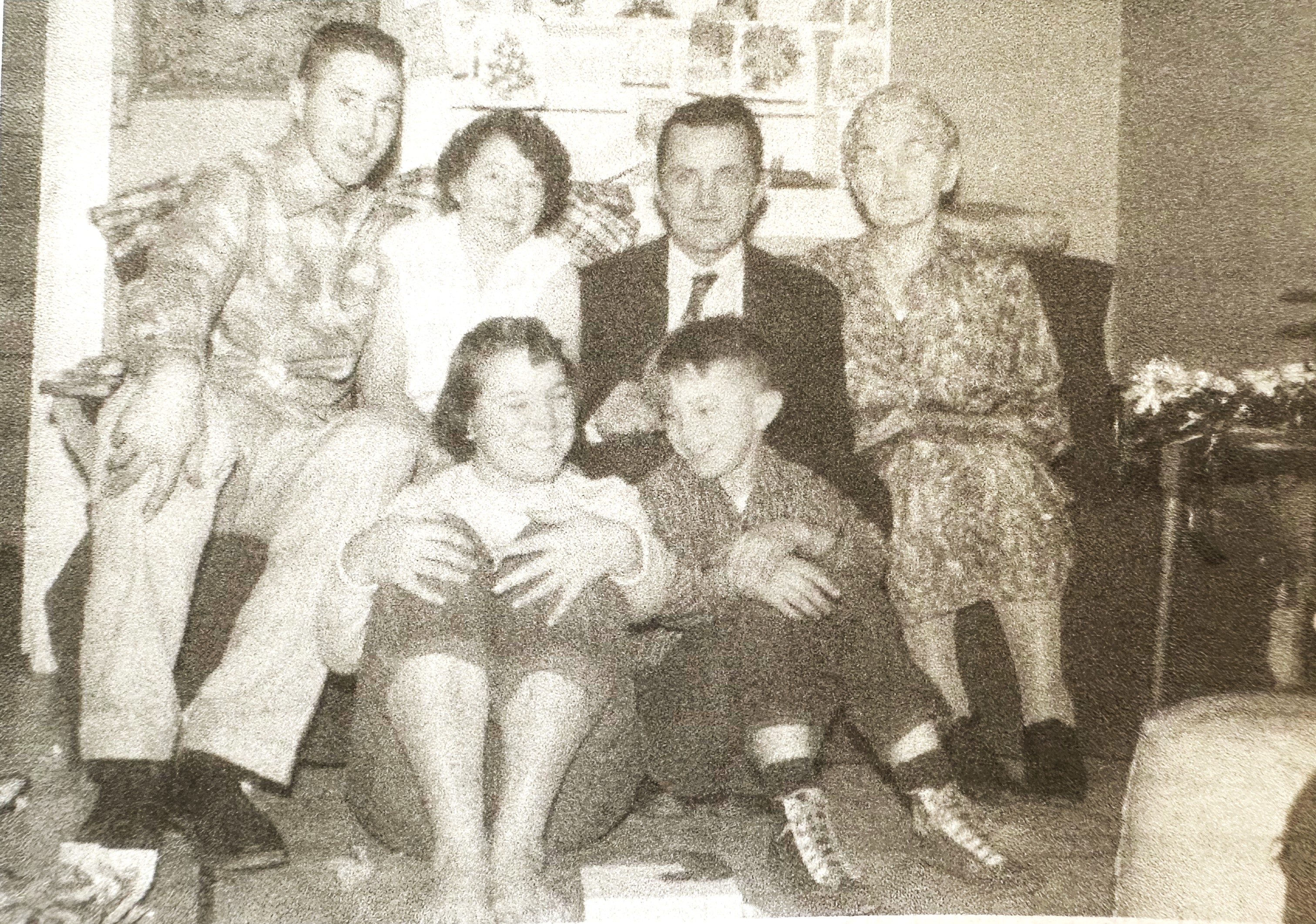
Rick attended Lincoln High School in downtown Portland, Oregon. He quickly acclimated to the large, urban school and was active in the Lords (an all-male service club), the Chess Club, and the Order of L (athletes who raised money for athletic equipment). At about five feet tall, Sanders was not up to the football or basketball standards, so he was not to be found on the gridiron or hardcourts; however, he was noticed by the physical education instructor, Larry Keck, for his inate aptitude for wrestling.
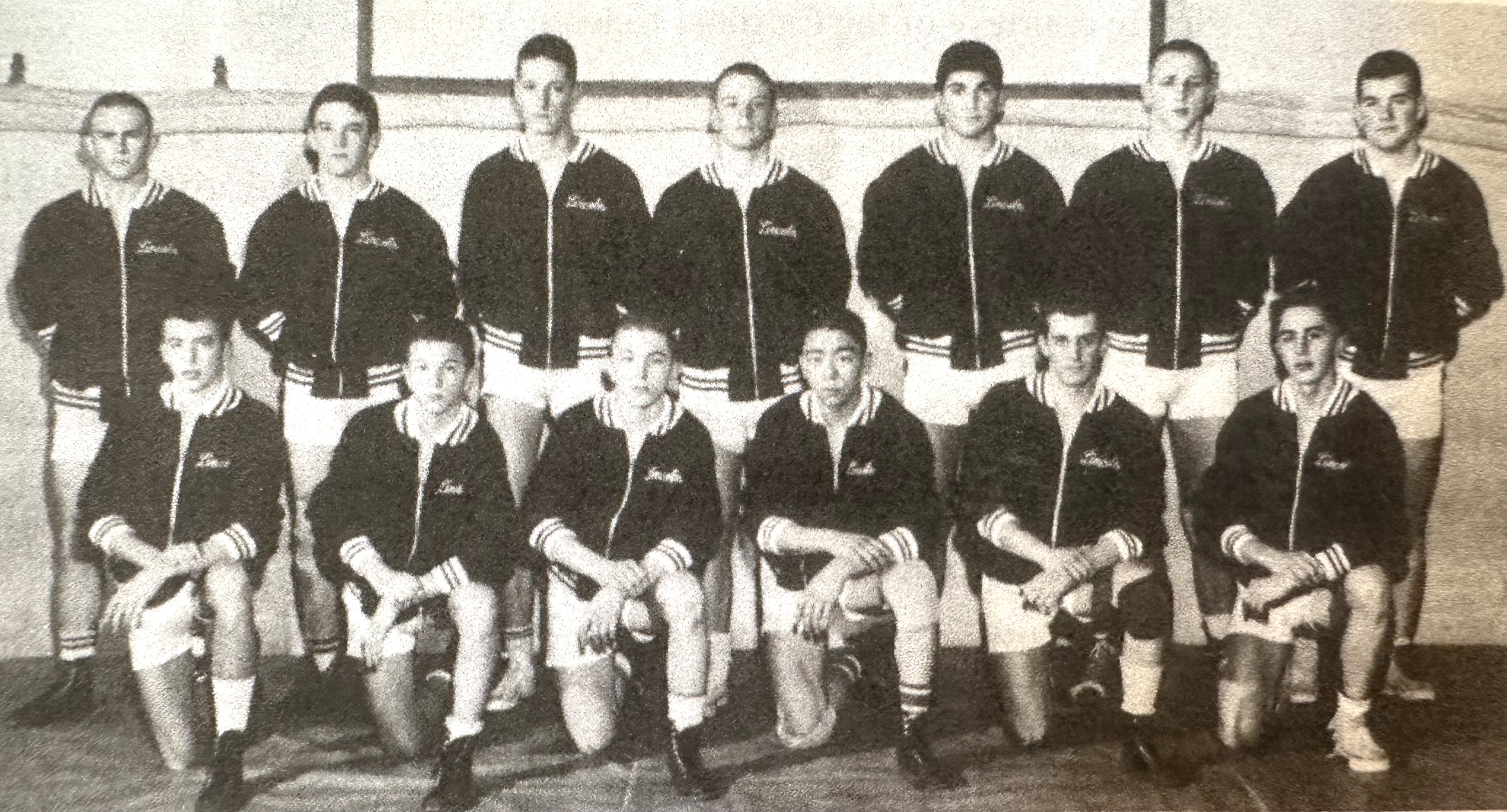
Sanders made the junior varsity team that first year. As a freshman he won the Portland Interscholastic League (PIL) wrestling championship at 98 pounds, although he weighed less at the time. And over the next three years of varsity competition, Sanders finished with a high school record of 80-1 and three consecutive Oregon state high school titles. He won titles at 98 pounds in 1961, 108 pounds in 1962, and 115 pounds in 1963.

In the spring of his senior year, a bottle of whiskey was discovered in Sanders’ Lincoln High School book locker and he was not allowed to graduate with his class. He was upset at not getting a diploma, but nonetheless he proceeded full steam into wrestling. Over that next summer Sanders trained for the US Olympic team at a camp that included wrestler entries such as legendary Iowa State wrestler, future Univ. of Iowa coach and US Olympic gold medalist, Dan Gable.[2]
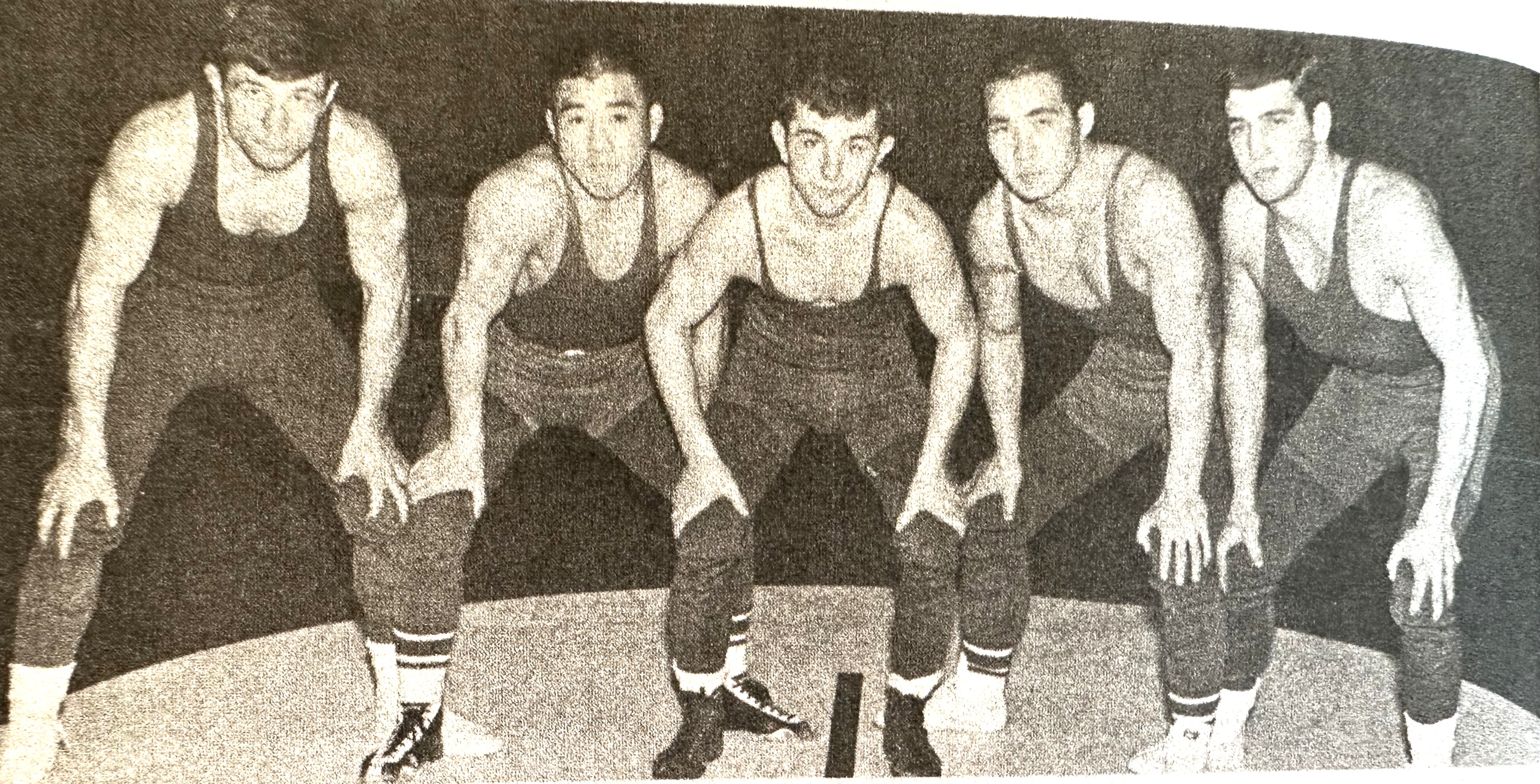
After the intensive training camp, Sanders earned some addition credits to get his GED. With the diploma in hand, he enrolled in school a few blocks from Lincoln — Portland State University. His wrestling success had just started. Sanders went on at PSU to win national wrestling titles at every level: the NAIA, NCAA Div. II and NCAA Div. I Championships. He finished his college wrestling career with a record of 103 wins and 2 losses, 49 wins by pins. Sanders was a true champion, earning the Outstanding Wrestler award at each level of collegiate competition.
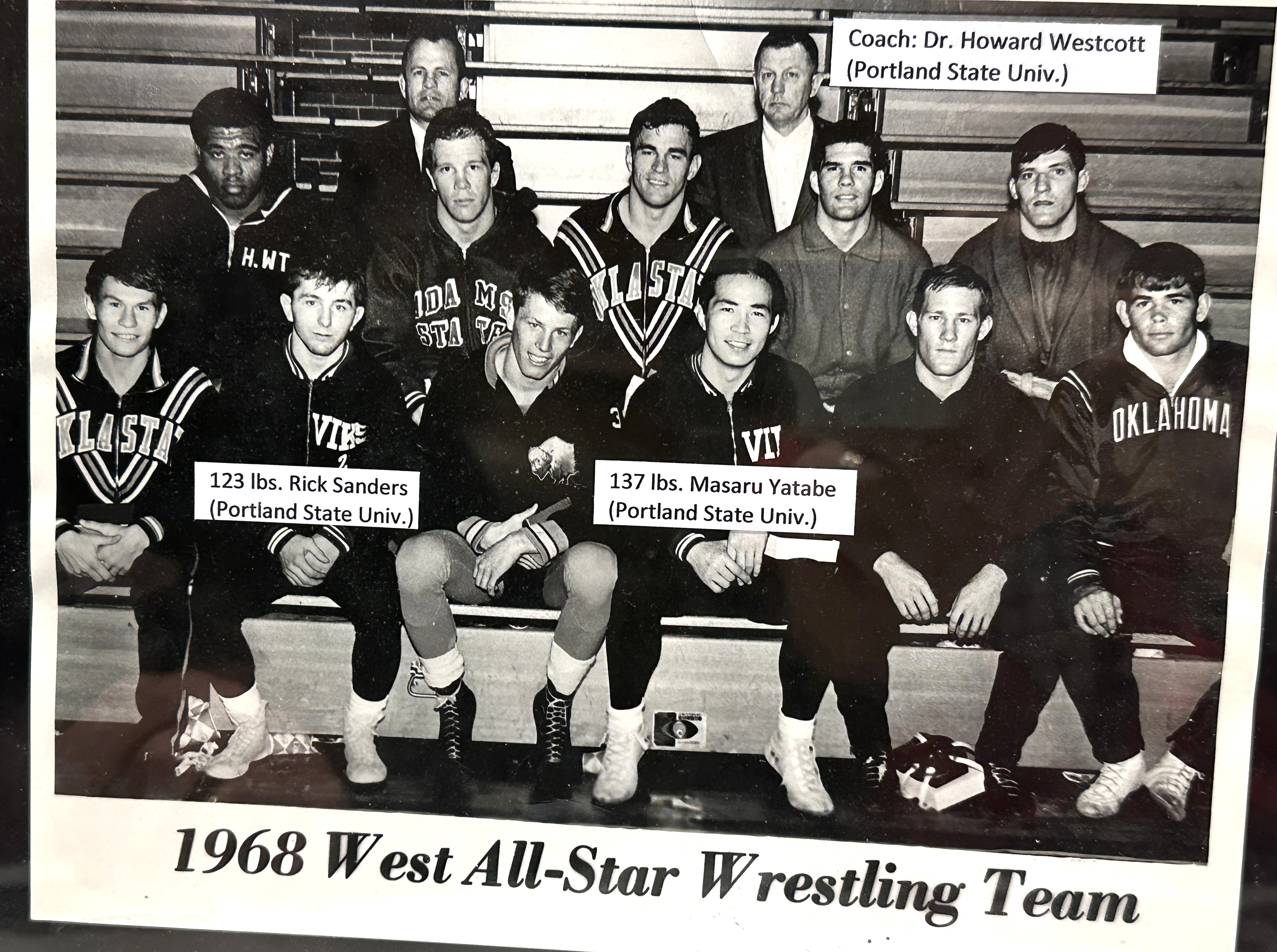
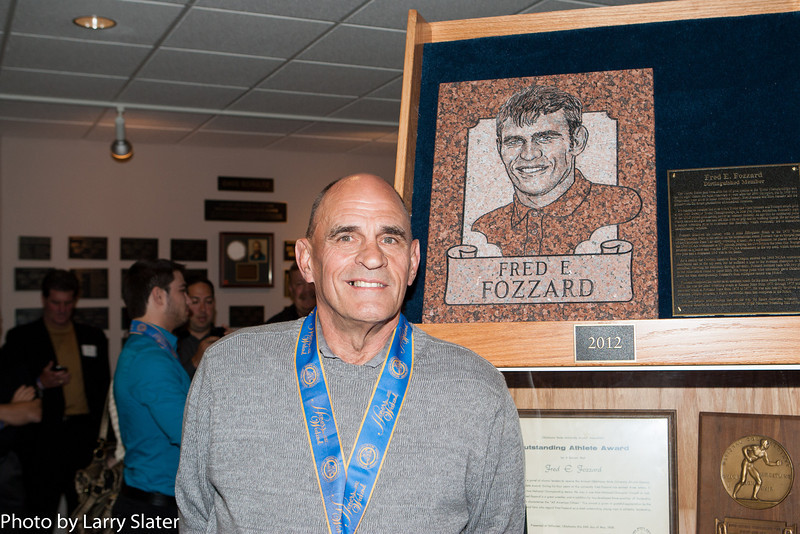
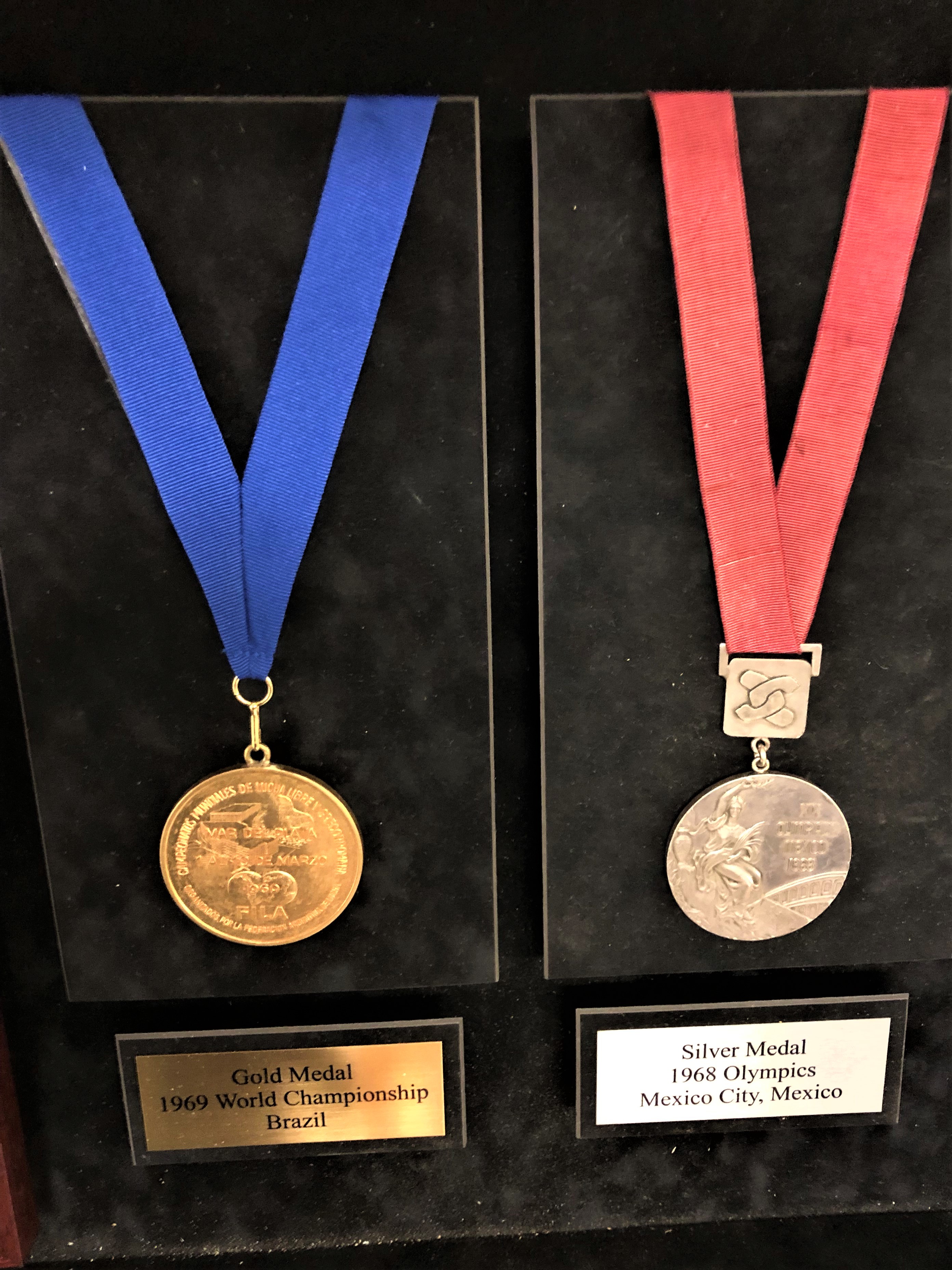
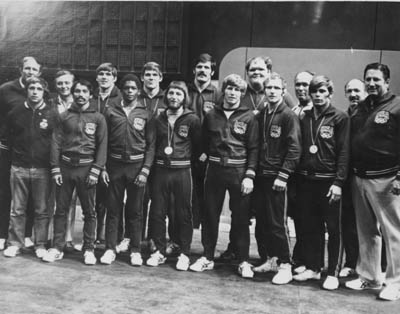
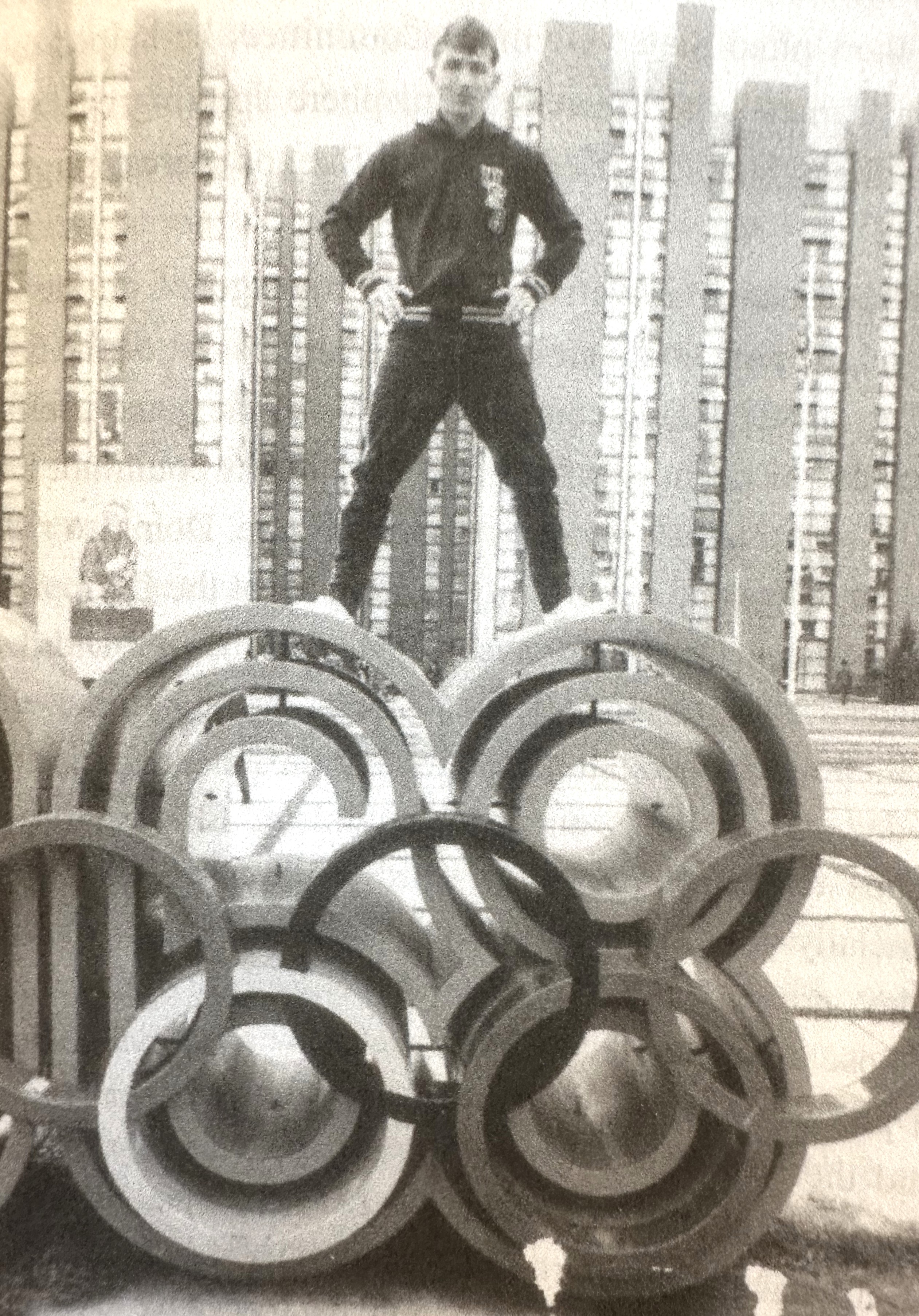
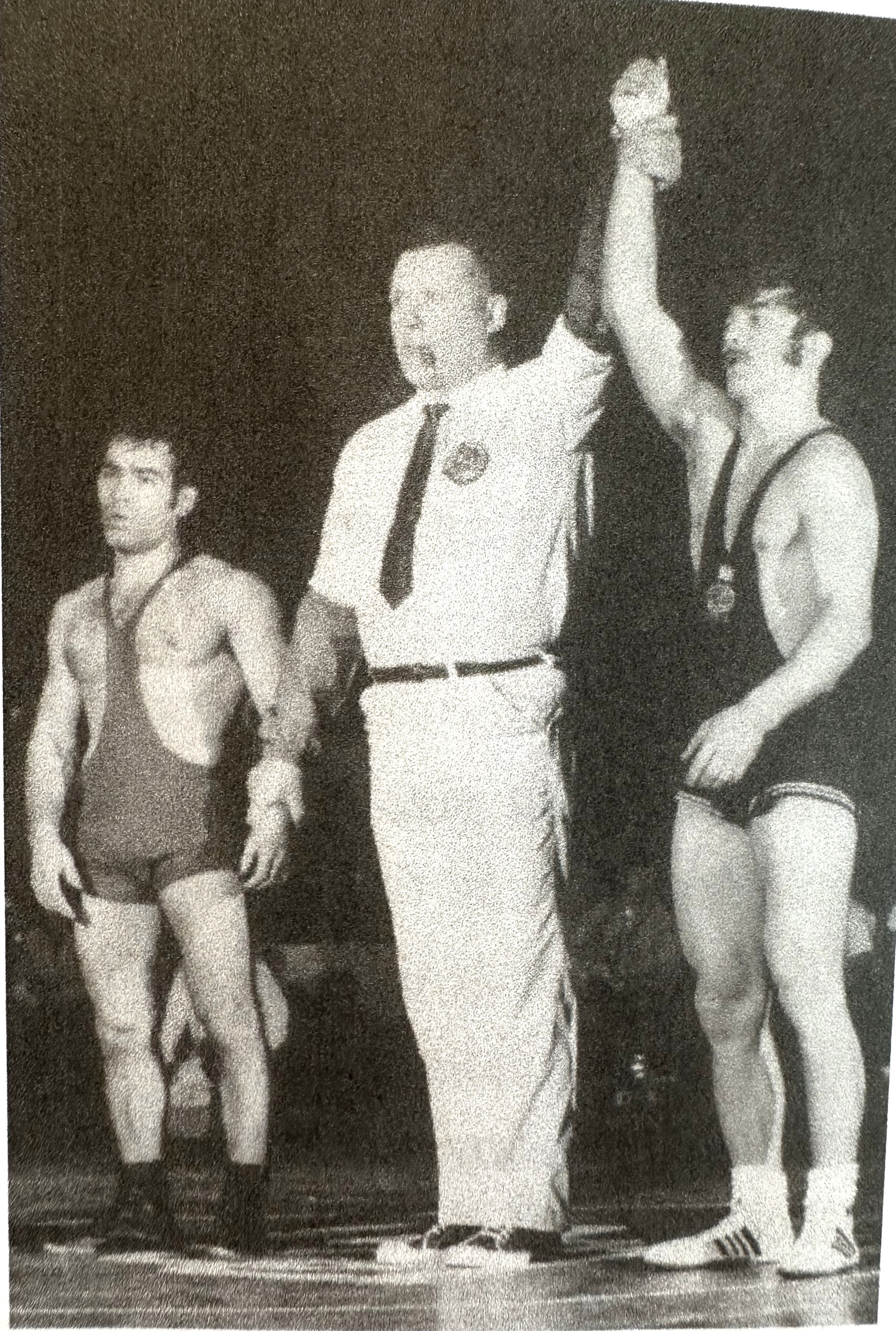
Sanders qualified for the US Olympic teams in 1968 and 1972 and won silver medals in each. In between those Olympics, Sanders became the first American to win a wrestling title at the world championships, taking the 52kg title in Argentina in 1969. This feat was accomplished just hours before another Oregonian, Fred Fozzard, won the US’s second world championship medal; the award to Fozzard was for his victory at the 82kg weight class.
Over the course of his wrestling career Sanders won five US freestyle titles and six international medals.[3]
Following the 1972 Olympic games in Munich, Germany, Sanders was tragically killed in an auto accident in Yugoslavia. [1]
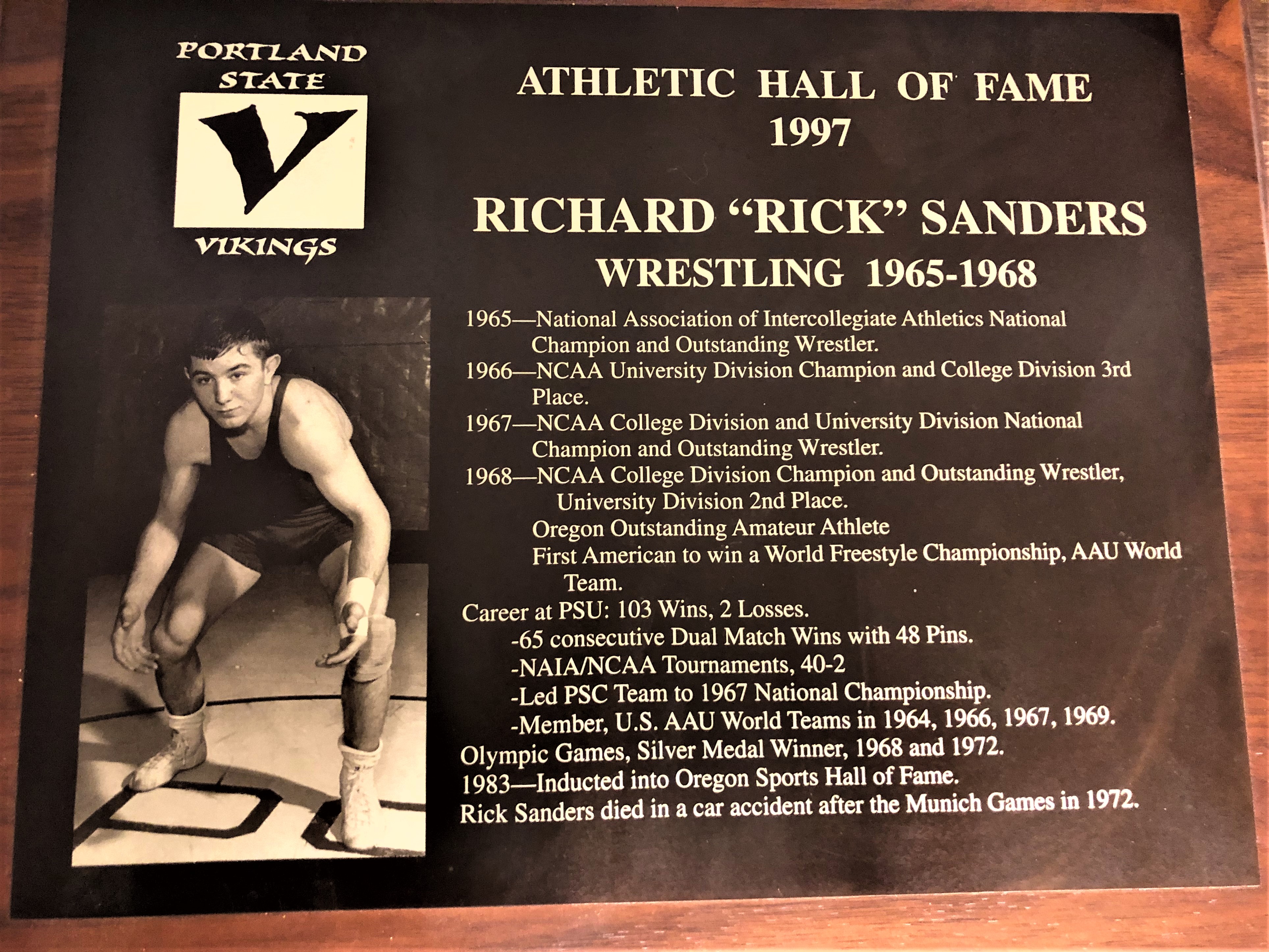
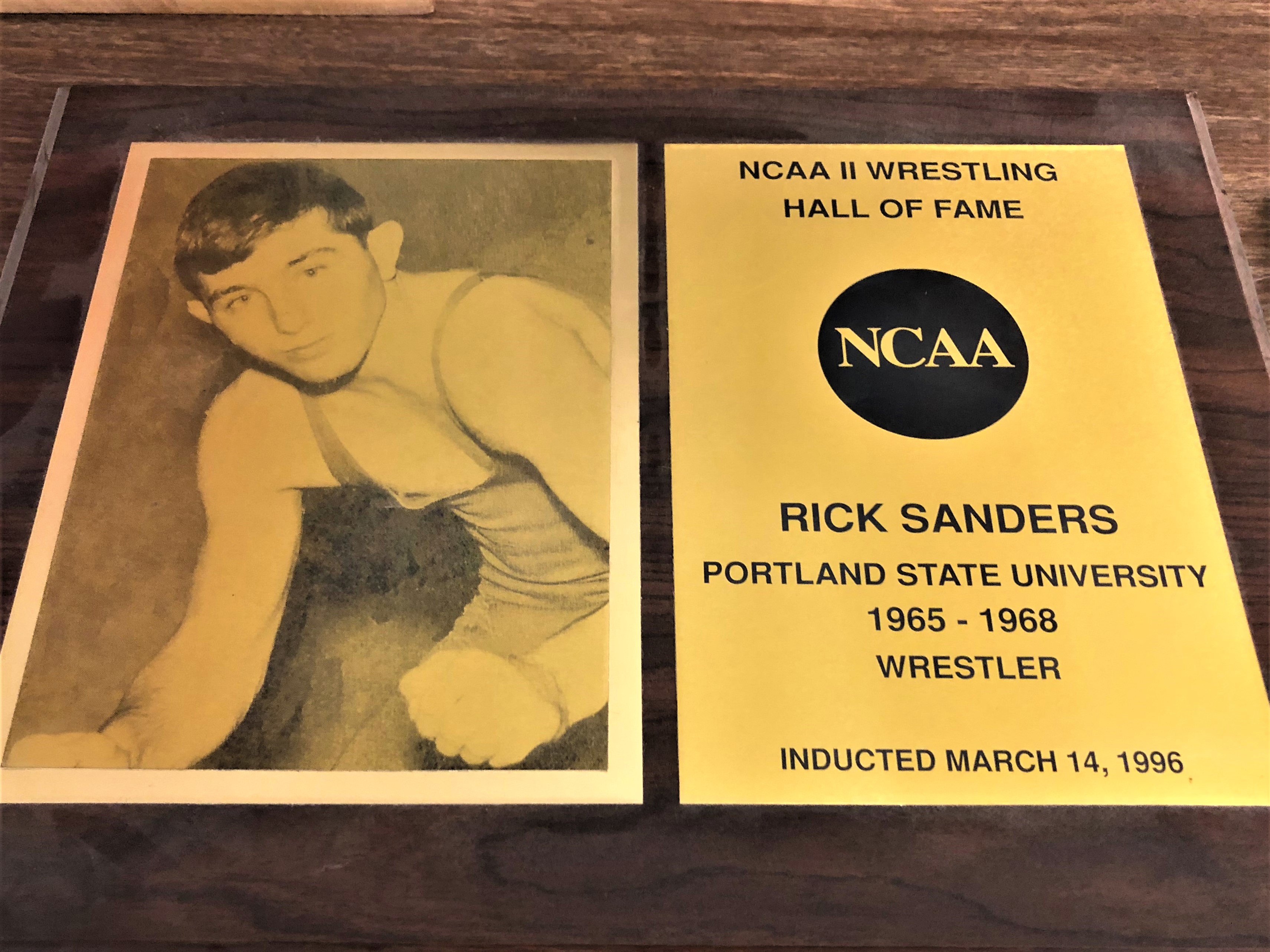
Posthumously Sanders was inducted into the Oregon Sports Hall of Fame, class of 1983, and into the Portland State Athletic Hall of Fame as part of its inaugural class of 1997 – along with the 1967 national championship team. Sanders is a distinguished member of the National Wrestling Hall of Fame, class of 1987.[4]
Wait. What Weight?
Anyone who has wrestled knows the challenges of making weight, and it is not just for the little guys. Even the big guys have to watch their weight. Fellow Yale wrestler, Neal Brendel, tipped the scales at 220 lbs at the start of both his junior and senior years, yet each of those years he sucked down to wrestle 190 lbs. That is a tortuous thirty pounds or 13.6% of his body weight; not a feat for the faint of heart.
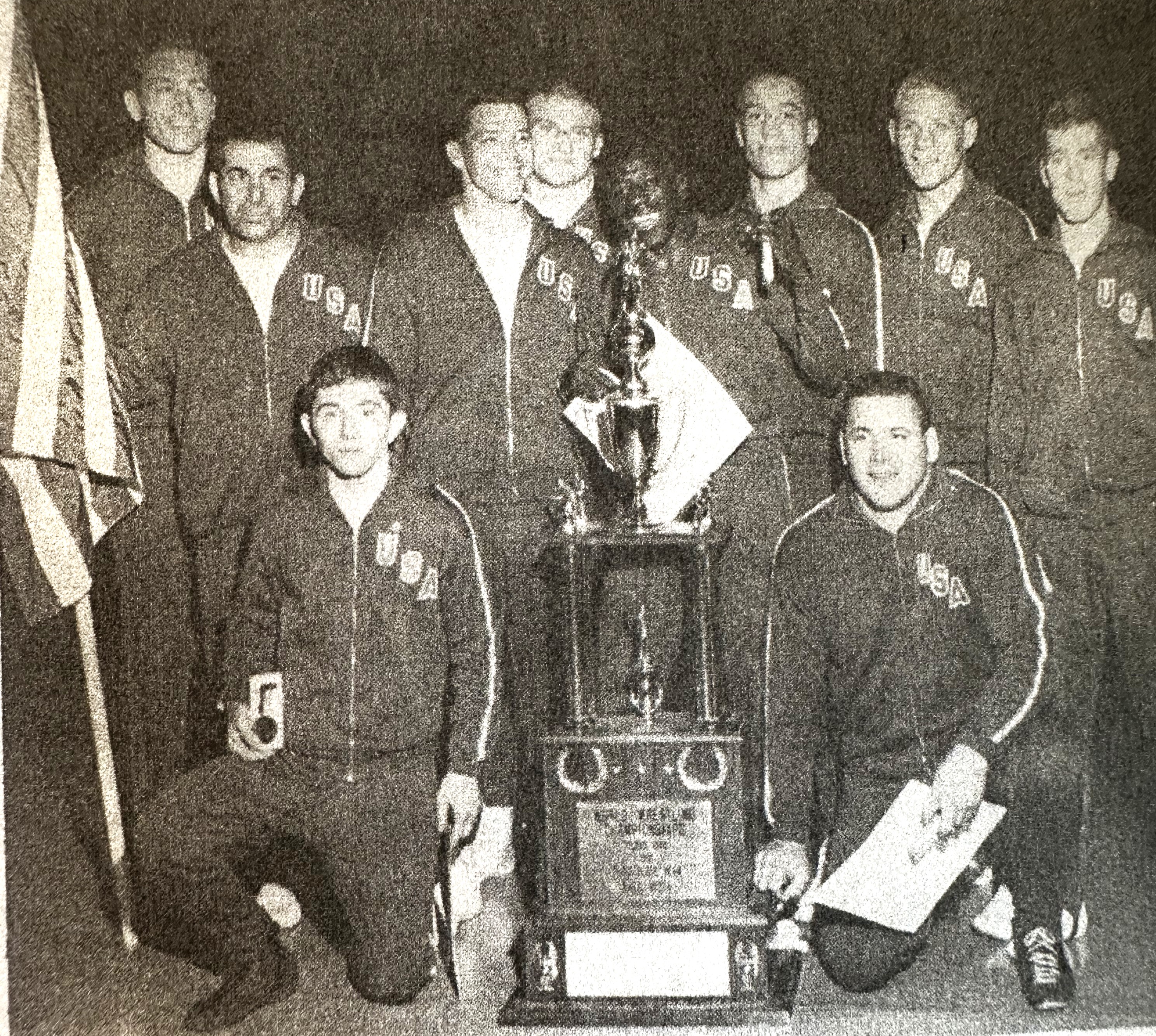
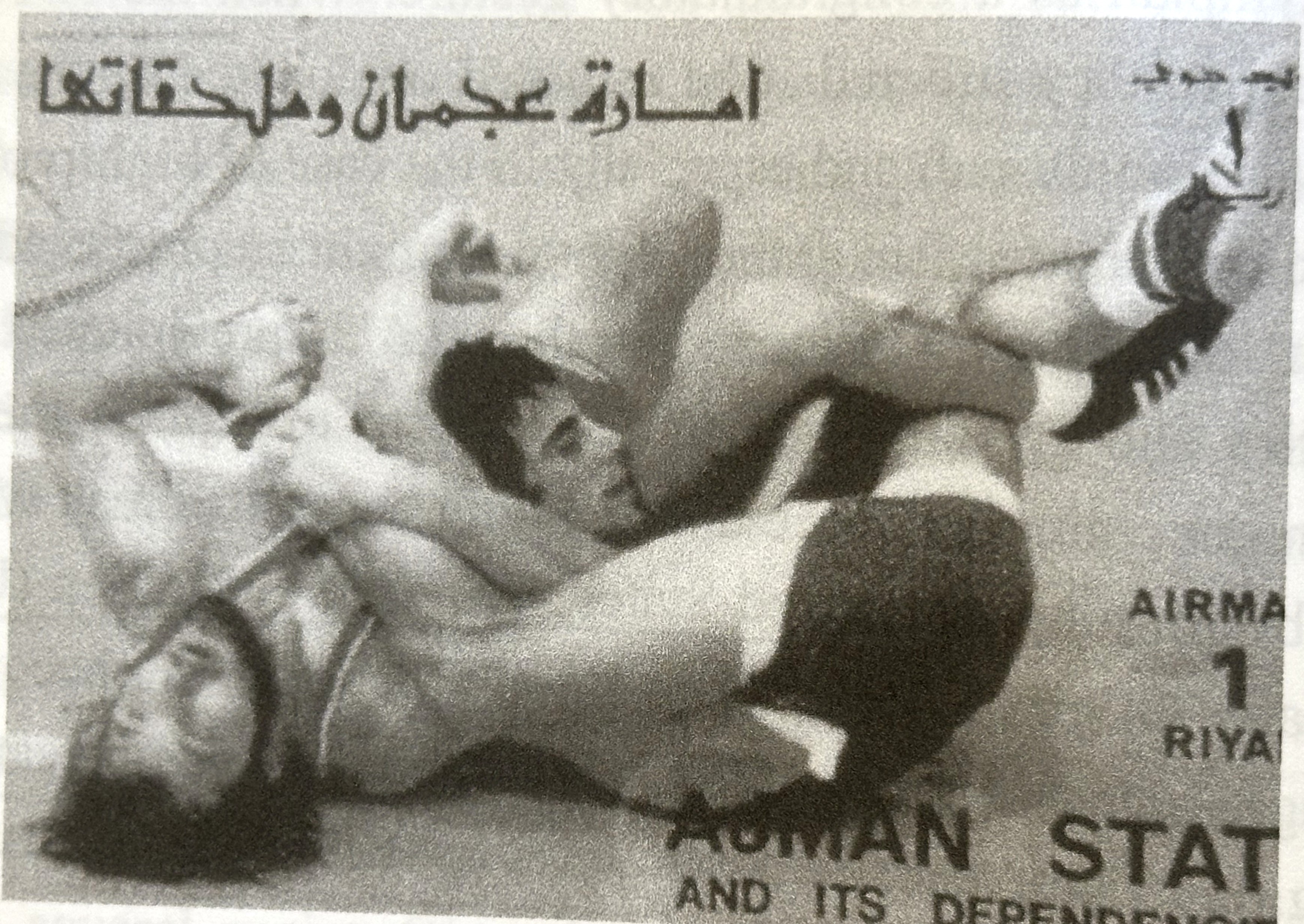
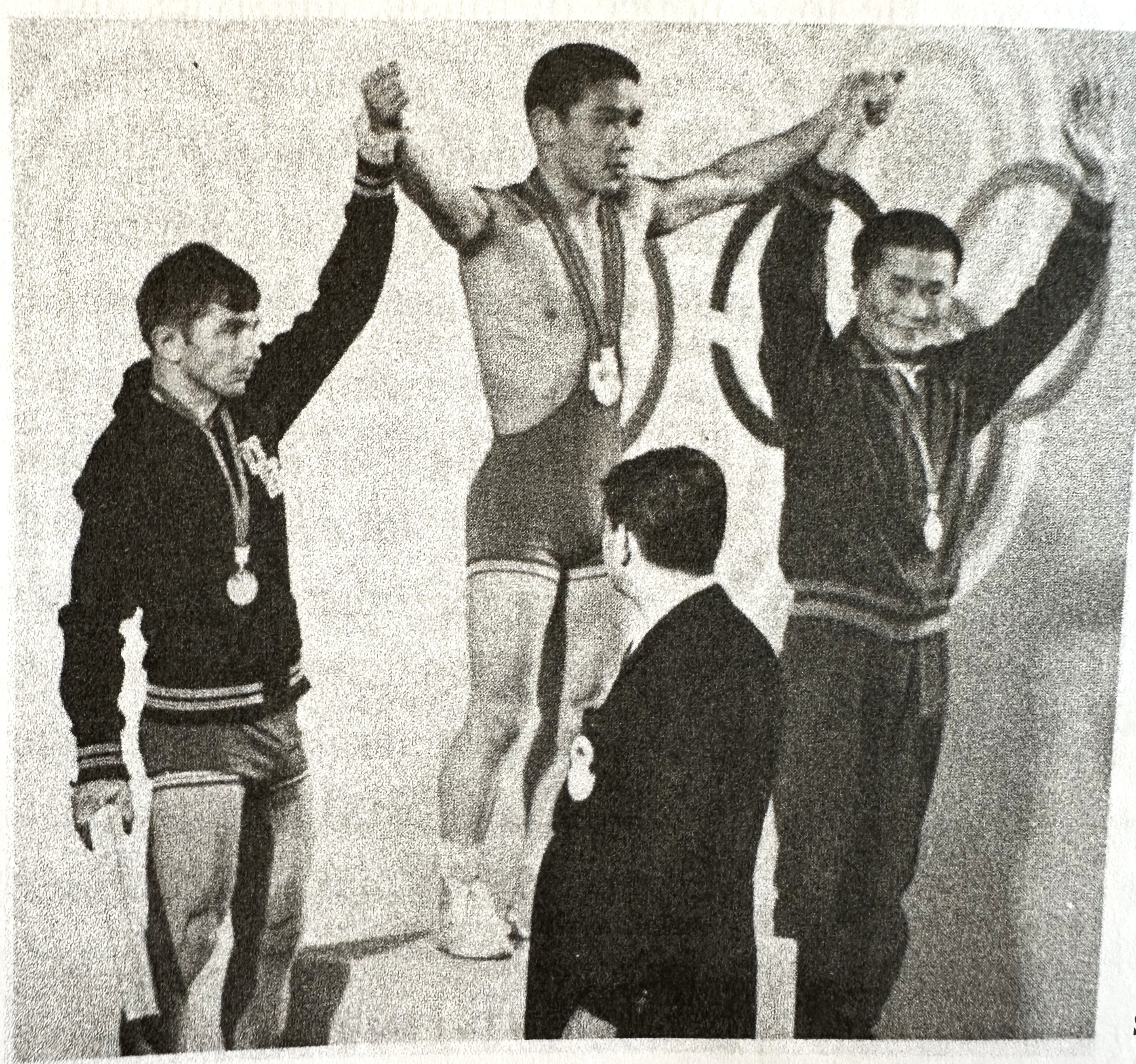
An interesting wrinkle in international matches is that in the case of a tie, the lightest wrestler wins. In 1966, at the World Championships, pictured above, there was a three-way tie for first place in Sanders’ weight class. The wrestlers and judges went to the scales to determine the outcome. Sanders, strictly on the basis of his weight, was given third place. The scales don’t lie.
Tommy Evans, the coach of the US wrestling team at the 1968 Olympics in Mexico City, tells two stories about Rick Sanders:
- On the flight from the U.S. to Mexico City, through Cincinnati, Sanders, in his ever-frantic manner, ran up and down the aisle of the aircraft with his sweats on to lose weight for the upcoming competition. One of the stewardesses from the extra long flight, asked Sanders to stop his running. Not pleased Sanders sarcastically replied, ‘So what are you going to do? Throw me out?‘
- At the end of one of his matches in the Olympics, Sanders was declared the loser. Sanders told Coach Evans, “I won this match and I am not leaving the mat until they change the call.” Sanders said he didn’t care if he had to sit there ‘until hell froze over,’ or words that effect. After about 30 minutes of discussions the referees changed the call and Sanders was declared the winner. That summer he wound up with his first silver medal.
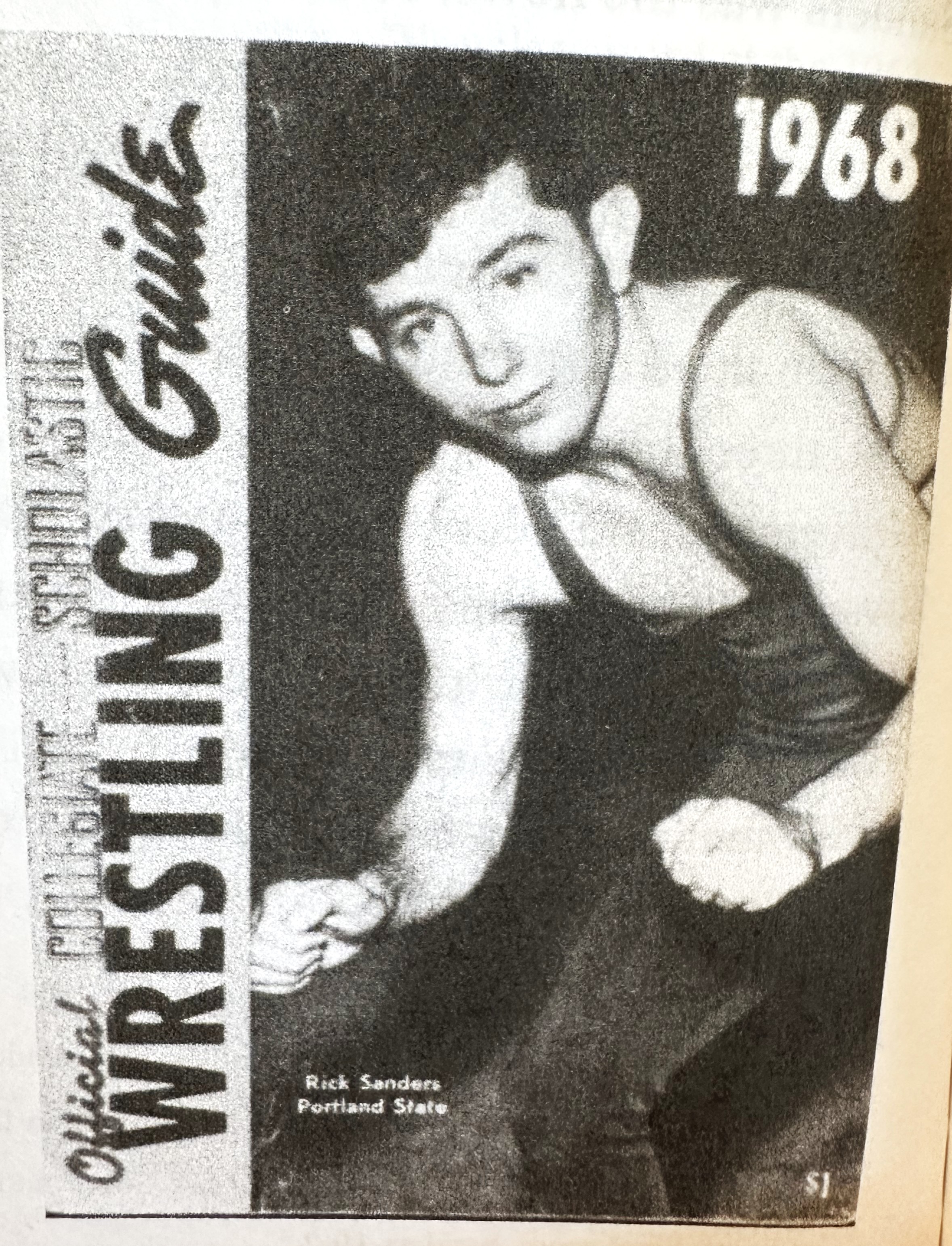
Olympic wrestler, Stan Dziedzic tells an interesting story about Rick Sanders and his constant battles to make weight.[5]
In 1969, when Sanders was having a tough time making weight down to 114.5 lbs., Larry Kristoff, the Olympic wrestler at 236 lbs (107kg), locked Sanders in the steaming sauna, using a screwdriver to jam the door shut. Kristoff forgot about Sanders and went to the movies. Coming out of the theatre Kristoff finally remembered that Sanders was still in the sauna and he went to rescue him. Sanders was not amused; he had just enough energy to start to chase after Kristoff with the screwdriver, but not enough to catch him.
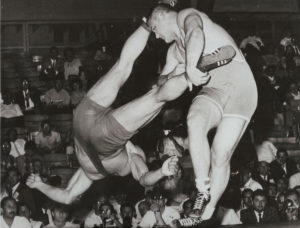
As he had in high school, Sanders wrestled at various weights: for awhile he competed at 114.5 lbs and then, losing at the next weight up, he competed at 136.5. Sanders moved back down to 125.5 for the 1972 Olympics and won his second silver medal at that weight class.
More Sanders Stories
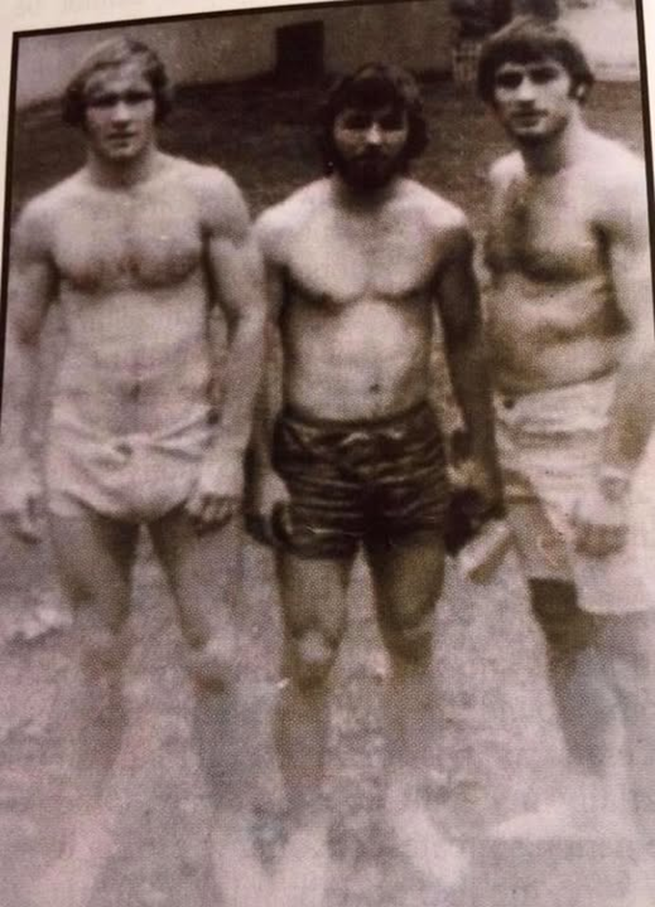
Several wrestling teammates have a treasure trove of Sanders’ Stories. Morris Johnson’s favorite Rick Sanders story came from his college coach, Buck Deadrich. Apparently Sanders was wrestling in the finals of the AAU nationals, which were being held in Oklahoma. Deadrich said that back then, Oklahoma was “the last and tightest notch in the bible belt” and people who looked like Sanders with their long hair, shaggy beard, peace buttons on his jacket, etc, were not “fully appreciated” in the Sooner State. Rick Sanders’ opponent in the finals match was Gene Davis, who was both an OK State alumnus, as well as a clean-cut member of Athletes-in-Action’s Campus Crusade for Christ wrestling club. From the raucous crowd reaction, Davis was clearly coming in to the finals as the fan favorite.

When it was time for their match, Davis walked out into the spot-light, and the PA announcer said something to the effect of “Now competing in the 136 lb final and wrestling for the Lord … Mr. Gene Davis!” The crowd cheered long and loudly. As the noise died down a bit, but before the PA announcer could say anything else, Sanders ran out onto the mat, slid onto his knees in the spotlight and shouted as loud as he could “…AND WRESTLING FOR THE DEVIL … RICK SANDERS!” Buck Deadrich said there was a slight, stunned pause, before the crowd rained booo’s down on Sanders. Not wasting time on the mat, when the whistle sounded, Sanders promptly took down Davis and pinned him in the 1st period!

Another Sanders story comes from Keith Lowrance, the former Granby High School, Virginia, and Michigan State great. “At the Federation Nationals, I was in the same weight class with Gene Davis and Rick Sanders, and the 3 of us made it to the last round robin. In those days we wrestled under the ‘blackmark system.’ If you collected 6 blackmarks, you were out of the tournament. When Rick and I met, I had 4 blackmarks, 3 from an earlier 7-4 loss to Davis. Sanders also had 3. Ties were allowed, but cost you 2 blackmarks. There were no stalling calls in freestyle, so Sanders’ strategy was to wrestle for a tie, knocking me out and wrestling Davis in the finals. It worked, except at the end I made a desperation shot and Rick scored on a counter, breaking the tie and winning. Rick was by no means a little guy. He had to cut weight to make 136.5. Gene, however, was a very big 136.5 pounder. I do not recall the announcing, but I do recall that Sanders wrestled well and beat Davis in the finals.“
Another Keith Lowrance remembrance recalls Sanders’ legendary weight-cutting practices. “At the trials for the Pan American team in Minnesota, a couple of us were running, when we came across Sanders. He was hiding something in the bushes. I asked him what he was doing and he said, ‘Keith, you always need a plan for weight-cutting.’ He went on to say that he was driving around his running route hiding cans of beer every 2 miles. He said that those beers could keep him going for 10 to 12 miles, and at that distance he could lose the 10 plus pounds he needed to make weight the next day. Sanders jumped in his car and went on to his next hiding spot.“
Driving to the Moon … maybe
Another Rick Sanders story come from an odd couple: Oregon native, Larry Nugent, and Pennsylvania native, Tom Canavan, Jr. According to this west-east duo, Rick Sanders was a guest demonstator, attending a regional wrestling clinic in Erie, PA. The clinic was held just prior to the World Team trials for all wrestlers who wanted to members of the American roster. One night Sanders was hitch-hiking through Erie County when a local sheriff stopped his car to question Sanders. The story goes that Sanders quickly grabbed the sheriff, wrestled him to the ground, disarmed him, left him at the side of the road and drove off in the police car.

Canavan said that another member of the Erie police force spotted Sanders driving the police car “very, very slowly down the middle of the road” and pulled him over, without further incident. Sanders was taken to the Erie County jail. According to the booking officer, Sanders explained that he was a famous amateur wrestler and that he had taken the patrol car so he could “drive to the moon.”[6] The police called Canavan that night and asked him to personally drive Mr. Sanders out of Erie County and as far from the state of Pennsylvania as possible, which he did the next day.

Despite Nugent & Canavan’s apparent credibility, others have said the story about the police car incident is exaggerated and inaccurate. Don Behm and Gene Gibbons, two other guest wrestling camp clinicians, offered another version: Sanders was spotted by the police with an open bottle of wine or alcohol in his hand. He appeared to be intoxicated so the police officer pulled over. The officer proceeded to question him. Sanders told the officer that someone had spiked his coffee with LSD. The patrol officer put him in the back of the police car. And, while the officer had stopped at another crime scene, Rick climbed into the driver’s seat of the squad car and drove a short distance. He very quickly ended the stunt with no harm done. The officer promptly drove him to the police station.
Having been caught with a bag of marijuana in his luggage, while crossing the border into Canada a few months earlier, this second “run-in with the law” made the US coaches wary and distrustful of this long haired, bearded boy-wonder from Portland, Oregon. The relationship with the AAU and Olympic coaches remained tense for years to come.


References:
[1] Notes taken from the Oregon Athletic Hall of Fame in the induction class of 1983. And reflections from the definitive book on the legendary PSU star, Rick Sanders!
- Bahnson, Bahne, Rick Sanders In the Moment: Biography of an Olympian, Spark publishing, 2022.
He was an ill-fated member of the 27 club. Others in this unwanted club include: Jimi Hendrix, Janis Joplin, Jim Morrison, Kurt Cobain, and Amy Winehouse.
What actually happened to Rick Sanders, at the age of 27, after his second Olympic silver medal?
After his medal ceremony and completion of the 1972 Olympics, Rick Sanders traveled with Helen Antoinette “Toni” Torre, who was the girlfriend of his Greco-Roman wrestling friend, Buck Deadrick. Sanders and Torre were hitch-hiking to meet Deadrick in Greece for a brief vacation, before heading back to the states. A driver of a Land Rover picked up the duo in Yugoslavia. Enroute they were traveling on a rainy, wet and slick road near Skopje, Yugoslavia. The driver was on a curvy mountain road, when his Land Rover collided head-on with a passenger bus. The driver and two Land Rover passengers died instantly.
[2] Undefeated in high school, Gable credits Rick Sanders with teaching him specific wrestling moves that helped Gable finish his college career at Iowa State of 117-1. That one loss was to another Sanders-style wrestler and another Oregonian, Larry Owings, then a sophomore from Univ. of Washington.

[3] Back to Dan Gable, Rick Sanders is credited with having beaten Dan Gable 6-0 at an international tournament. That loss stands as the lone shutout that Gable suffered in his entire wrestling career.
[4] A scrapbook of Rick Sanders wrestling memorabilia was collected by Rick’s older half-brother, David Stockner. A link to the story of the Sanders collection is in the attached website:
http://www.flowrestling.org/video/148626-rick-sanders-scrap-book
[5] Stan Dziedzic, Slippery Rock wrestler and Olympian, calls this weight loss plan — the Randy Lewis School of “losing it all in the last few hours.”
[6] Hey, remember this was Rick Sanders. He is from Portland, Oregon. They are always trying to “Keep It Weird” there, right?
 Henry E. Hooper