
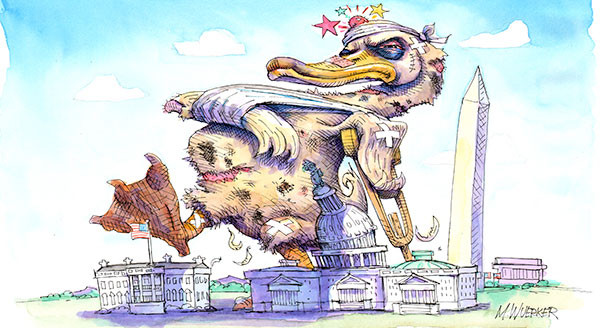
Word Smith: Lame Duck
We will be hearing this expression “Lame Duck” a lot over the next two years; so, as we witness the behaviour of the Trump administration, let’s determine the origin and outcomes: 1) where it came from 2) what it meant in yesteryear and 3) what it means today.
The term “lame duck”originated in 18th-century London (over 260 years ago). The expression was slang. It’s meaning was derived from stockbrokers on the London Stock Exchange (LSE) who wanted to describe a fellow broker who had defaulted on his debts and could not pay his losses.
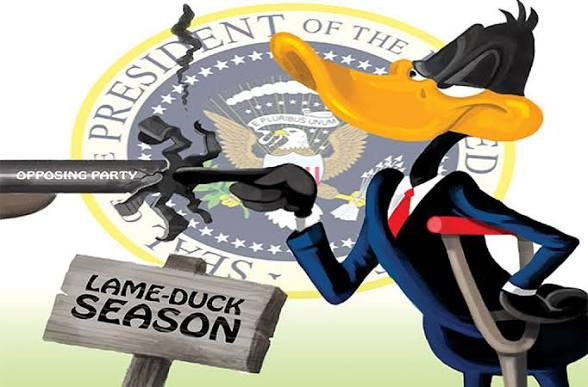
Financial Origins (1760s)
- First recorded mention: Horace Walpole used the term in a letter to Sir Horace Mann in 1761, writing: “Do you know what a Bull and a Bear and Lame Duck are?”
- Meaning: It compared a financially ruined stockbroker to a real alive but wounded duck left behind by its flock—injured, waddling and vulnerable. By 1791, public records showed individuals who had lost heavy sums in stocks were “posted up as a lame duck.”
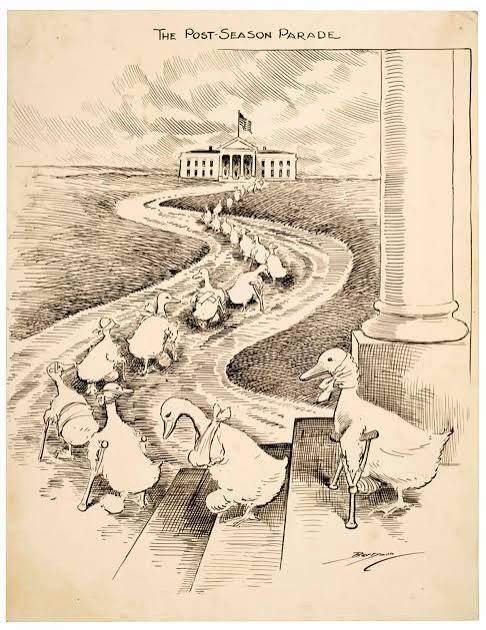
Shift to Politics (19th Century)
- First political use: The phrase “lame duck” crossed over into U.S. politics around the 1830s to describe defeated or departing politicians.
- Official Congressional record: The term first appeared in the Congressional Globe on January 14, 1863, when a lawmaker criticized the U.S. Court of Claims as a potential “receptacle of ‘lame ducks’ or broken down politicians.”
- Modern meaning: Today, the term “lame duck” describes any elected official (such as a U.S. president or member of Congress…House or Senate) serving out the remainder of their term after an election has chosen their successor or after they have decided not to seek re-election.
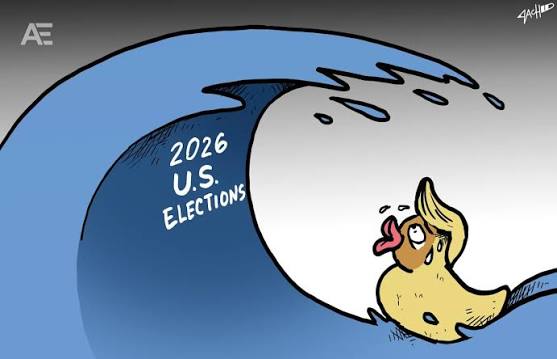
Conversely, in politics a lame duck is free to make decisions that exercise the standard powers with little fear of retribution or backlash. Their decisions can be reckless such as issuing midnight regulations, executive orders, pardons, or other controversial edicts. Lame duck politicians result from term limits, planned retirement, or electoral losses, and are especially noticeable where political systems build in a delay between the announcement of results and the taking of office by election winners. Even at the local level, politicians who do not seek re-election can lose credibility and influence. Uncompleted projects may fall to the wayside as their influence diminishes.
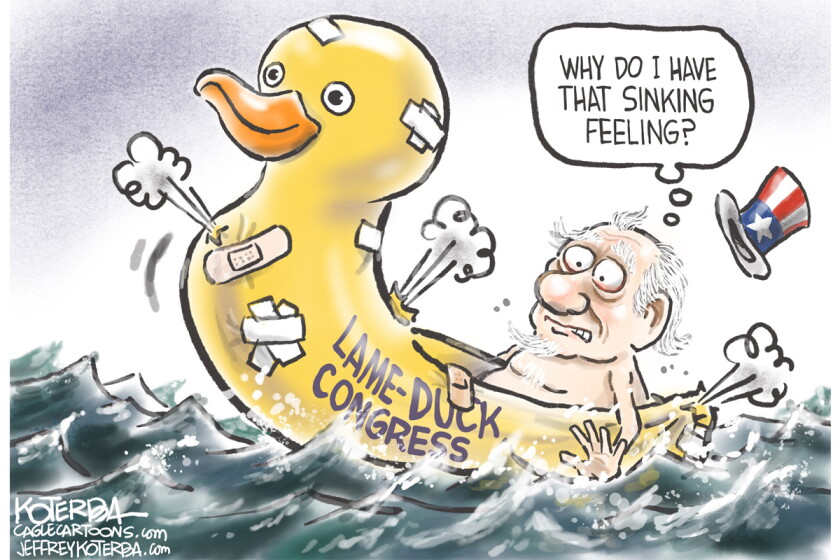
The term is also used for prime ministers who do not have a majority in parliament or presidents with congress and, therefore, find it difficult to implement their political goals.
Description
The status as a “lame duck” can be due to:
- having lost a re-election bid
- choosing not to seek another term, which would start at the expiration of the current term
- a term limit which prevents the official from running for that particular office again
- the abolition of the office, which must nonetheless be served out until the end of the official’s term.
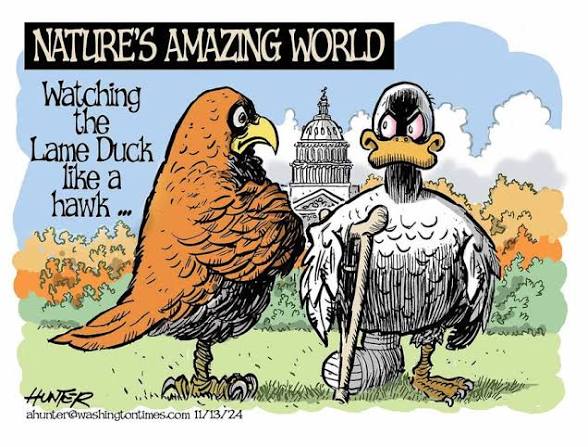
O
Into the 21st century US President Bill Clinton was widely criticized for issuing 140 pardons and other acts of executive clemency on his last day in office, including two former close colleagues, donors, fellow Democratic members, and his own half-brother.
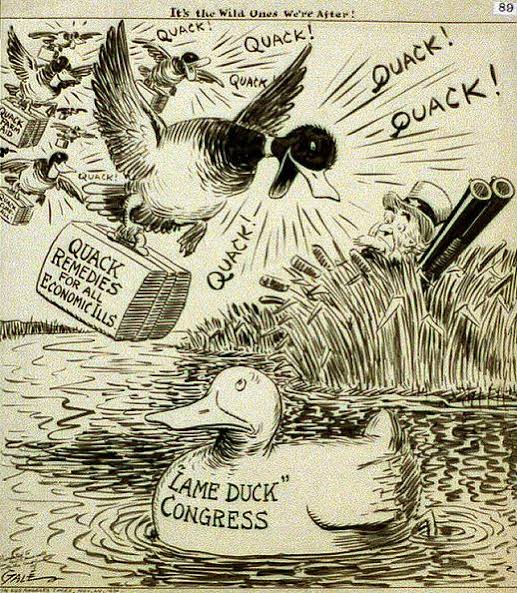
Over the next two years, look out below: ducks may be wounded but not dead yet!

