

Witness Post: Shockley Meets Cancel Culture
In 1955, William Shockley left Bell Labs and founded his eponimous Shockley Semiconductor Labs. Funded through grants and loans by Beckman Instruments, the laboratories were centered in Mountain View, CA. Shockley’s plan was to develop a new type of “4-layer diode” that would work faster and have more uses than then-current transistors. At first he attempted to hire some of his former colleagues from Bell Labs in Murray Hill, New Jersey, but none was willing to move to the West Coast or work with Shockley again at that time. Shockley then founded his new company with what he considered to be the best and brightest graduates coming out of American engineering schools.
One year later in 1956 Shockley won the Nobel Prize in Physics for his co-development of the transistor, with John Bardeen and Walter Brattain.
While Shockley was effective as an electrical scientist and recruiter, he was ineffective as a manager. A core group of Shockley early employees at his laboratories, later known as the traitorous eight, became unhappy with his management style and threatened to leave the company.
Looking for funding on their own project, the eight scientists turned to Sherman Fairchild for support. His company, Fairchild Camera and Instrument, was an Eastern U.S. company with considerable military contracts. In 1957 the Fairchild Semiconductor division was started with plans to make silicon transistors. At the time germanium was the preferred and most common material used for semiconductor construction.[1]
Seventeen years later in New Haven …
Yale Daily, NEW HAVEN, April 15, 1974 — A chanting, stomping, hand‐clapping demonstration at Yale University tonight by about 150 members of an audience of 400 prevented Dr. William B. Shockley, professor of physics at Stanford University, from debating his theories on the hereditary basis of intelligence.
About 400 persons staged another protest outside the hall during the time that Dr. Shockley was scheduled to debate William Rusher, publisher of the National Review magazine. Their loud protests could be heard on stage and by the audience in the hall.
As Dr. Shockley rose to speak on the topic “Resolved, that society has a moral obligation to diagnose and treat tragic racial I.Q. inferiority,” he was met with cacophony of loud applause, hisses, and about 25 signs reading “Nobel Prize for Genocide.” Campus police stood by quietly as about one‐third of the audience rose to its feet and jeered.
The sign apparently alluded to Dr. Shockley’s having received a Nobel Prize for Physics in 1956 for his co-development of the transistor. An esteemed Stanford professor, Shockley was arguably the single person most responsible for ushering in the computer age. He was also an ardent eugenicist whose theories of black racial inferiority eventually made him an academic pariah. At Yale that night, he was not allowed to speak a word.
A few minutes later, Henry “Sam” Chauncey Jr., the university secretary, addressed the crowd. “Disruption is not a valid part of the university,” he said. “You will all be subject to academic suspension.” And with that statement the crowd was dismissed and the stage vacated.
=============================
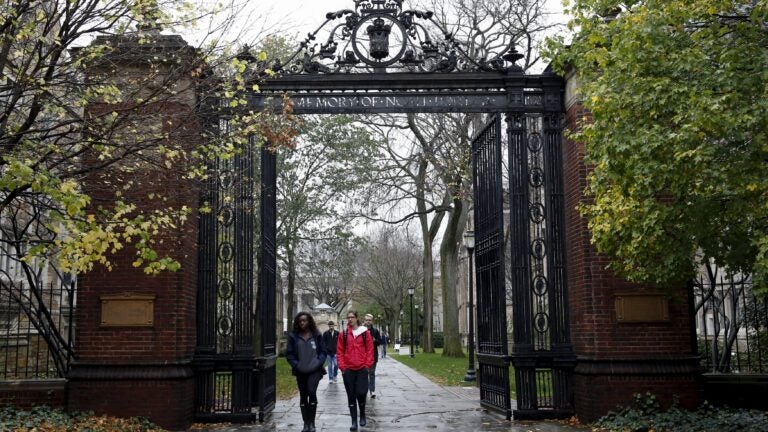
The Yale Daily
Article by Allison Pohle, December 6, 2015
Even though Yale University is one of the nation’s oldest colleges, freedom of speech didn’t become an explicit value on campus until the 1970s.
A debate over free speech has been raging at Yale ever since a professor sent an email defending students’ rights to wear potentially offensive Halloween costumes as an expression of free speech. After backlash from students, she recently announced that she will no longer teach at the college. But, before that announcement, more than 60 faculty members signed an open letter in her defense, emphasizing that of all the university’s values, “none is more central than the value of free expression of ideas.’’
It hasn’t always been that way. Freedom of speech wasn’t protected at Yale until 1974, when the university created a document called the Woodward Report. The report’s central premise was that intellectual growth and discovery “clearly demonstrates the need for unfettered freedom, the right to think the unthinkable, discuss the unmentionable, and challenge the unchallengeable.’’
That idea was a long time coming. The Ivy League school, which was founded in 1701, opposed freedom of expression from its very beginnings. Early faculty members swore allegiance to the strict, religious Connecticut “colony creed,’’ and the college itself was founded to promote the power of the Puritan Church. Both students and faculty were required to attend Sabbath services, and were fined twenty shillings if they didn’t attend, according to The Beginnings of Yale. The only university president ever fired was Timothy Cutler, who used an Anglican phrase during a commencement service in 1722.[2]
Centuries later, the university’s president from 1921 to 1937, James Rowland Angell, said he believed there were “social values of greater consequence than the license of every lunatic to mount a soapbox and froth at the mouth.’’ As a consequence, he wouldn’t allow speakers who held what he considered to be offensive views a podium, according to an article in Yale Alumni Magazine.
George Wallace and Free Speech at Yale
There was a Free Speech shake-up in 1963. In the midst of the national debate on civil rights and racial equality, the Yale Political Union invited George Wallace, the governor of Alabama, who was a vocal white supremacist, to speak. Not long after he accepted, four black girls were killed in the Birmingham Church bombing.

Yale University
Kingman Brewster Jr., the university’s president at the time, asked the union to withdraw its invitation to Gov. Wallace. Brewster worried that Wallace’s visit could incite New Haven residents to violence and inflame tensions with the city’s black community. He was widely criticized by faculty members for his attempted censorship, including by a professor named C. Vann Woodward, who was a known expert on the history of the American South.
“The University is in danger of sacrificing principle to expediency,’’ C. Vann Woodward said at the time. “If the South can afford the risk of violence for the principle of Negro rights, New Haven can, too, for the principle of freedom of speech.’’
The political union did end up retracting its invitation. But because of all of the criticism, Brewster vowed not to interfere with speaker invitations again.
A decade later, in April 1974, a group of Yale students invited William Shockley, a physicist who believed black people were genetically unable to meet the demands of every day life, to a debate. It never happened because student protesters drowned out the speakers by clapping, stomping, and chanting.
Shocked by the response, Brewster appointed his former critic, C. Vann Woodward, to lead a Committee on Freedom of Expression at Yale. The committee submitted the Report of the Committee on Free Expression at Yale, more commonly known as the Woodward Report, in December 1974.

Flyers are seen posted on a college noticeboard on campus at Yale University in New Haven.
But there was a notable omission from the report: It didn’t address freedom of expression regarding student interactions.
In 1986, a student named Wade Dick was put on probation after distributing fliers that mocked gay and lesbian people. Dick argued that his fliers were protected under the Woodward Report. The committee that placed him on probation eventually reinstated him at the university and expunged the incident from his record.
The Woodward Report has been referenced in other free speech issues on campus in recent years, including when members of the Delta Kappa Epsilon fraternity publicly chanted jokes making light of rape. The DKE fraternity was suspended because the chants were seen as threats, which aren’t protected under free speech. The recent race-based protests have brought the Woodward Report into the spotlight again. When he responded to a list of demands from a group of Yale students, Salovey said, “Yale’s long history, even in these past two weeks, has shown a steadfast devotion to full freedom of expression.’’ He added that the college also needs to stop believing its commitment to diversity “conflicts with our commitment to free speech, which is unshakeable.’’
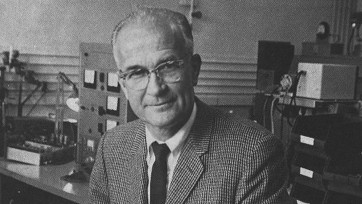
Back to William Shockley and his Views
Despite having no training whatsoever in genetics, biology or psychology, Shockley devoted the last few decades of his life to a quixotic struggle to prove that black Americans were suffering from “dysgenesis,” or “retrogressive evolution,” and advocated replacing the welfare system with a “Voluntary Sterilization Bonus Plan,” which, as its name suggests, would pay low-IQ women to undergo sterilization. Although his theories were universally condemned by biologists as racist pseudoscience, Shockley partly succeeded in rehabilitating eugenics as an ideology by providing the foundations for a new, more politically savvy generation of academic racists, including Arthur Jensen, Richard Lynn and Charles Murray.
Four statements by Shockley: In his own words: [3]
“Babies too often get an unfair shake from a badly-loaded parental genetic dice cup. At the acme of unfairness are features of racial differences that my own research inescapably leads me to conclude exist: Nature has color-coded groups of individuals so that statistically reliable predictions of their adaptability to intellectually rewarding and effective lives can easily be made and profitably be used by the pragmatic man-in-the-street.”
— “Models, Mathematics, and the Moral Obligation to Diagnose the Origin of Negro IQ Deficits,” Review of Educational Research, 1971.
“Preliminary research suggested that an increase of 1% in Caucasian ancestry raises Negro IQ an average of one point for low IQ populations. It should be kept in mind, however, that no conclusive evidence has been presented. In responding to a recent questionnaire, the majority of 23 presidents of predominantly Negro colleges indicated that black students at their schools are academically advantaged by attitudes towards racial differences; consequently, comparing racial mix differences with achievement differences might refine or reject the preliminary estimate that a one point increase in average “genetic” IQ occurs for each 1% of Caucasian ancestry, with diminishing returns approaching 100 IQ. To fail to use this method of diagnosis for fear of being called a racist is irresponsible. It may also be a great injustice to black Americans. If those Negroes with the fewest Caucasian genes are in fact the most prolific and also the least intelligent, then genetic enslavement will be the destiny of their next generation. The consequences may be extremes of racism and agony for both blacks and whites. … If what I fear is true, our society is being profoundly irresponsible. Our nobly intended welfare programs may be encouraging dysgenics—retrogressive evolution through disproportionate reproduction of the genetically disadvantaged.”
—“Negro IQ Deficit: Failure of a ‘Malicious Coincidence’ Model Warrants New Research Proposals,” Review of Educational Research, 1971
“The view that the US negro is inherently less intelligent than the US white came from my concern for the welfare of humanity. My initial concern was not with the racial aspects, as these dysgenic effects occur for whites as well as blacks. If this is going on, it will harm both. I would like to stress that the failure of the intellectual community to deal with these matters is one of the cruelest irresponsibilities to a minority group that has ever occurred. If, in the US, our nobly-intended welfare programs are indeed encouraging the least effective elements of the blacks to have the most children, then a destiny of genetic enslavement for the next generation of blacks may well ensue. It is my considered opinion and evaluation that, at the present time, I am less likely to do damage by exacerbating a situation, and am currently the intellectual in America most likely to reduce Negro agony in the next generation.”
—Interview with New Scientist, 1973
“Prejudice that is not supported by strong facts is both illogical and not in accordance with truth. The general principle that truth is a good thing applies here. Some things that are called prejudice, which are based on sound statistics, really shouldn’t be called prejudice. … It might be easier to think in terms of breeds of dogs. There are some breeds that are temperamental, unreliable, and so on. One might then regard such a breed in a somewhat less favorable light than other dogs. Now some of the business prejudices against blacks, the pragmatic man-in-the-street prejudices, are not incorrect. The man in the street has had experience and knows what to expect from blacks in business. If one were to randomly pick ten blacks and ten whites and try to employ them in the same kinds of things, the whites would consistently perform better than the blacks.”
—Interview with Playboy, 1980
Shockley’s Obsession with Genetics:
William Shockley’s importance in the development of modern electronics cannot be overstated. While working at Bell Labs during the 1940s and 50s, Shockley led the team that invented the transistor, for which he and his collaborators won numerous awards, including the Nobel Prize.
NOTE: The account below is a collection of statements and analysis by the Southern Poverty Law Center:
In 1965, however, Shockley’s career took an abrupt turn from internationally famous physicist to racist crank, when he gave an address at a Nobel conference on “Genetics and the Future of Man.” In his lecture, Shockley warned of the threat of “genetic deterioration” and “evolution in reverse,” problems exacerbated, he claimed, by the Johnson Administrations’ Great Society welfare programs that allowed the less genetically fit to reproduce at will, free from the constraints of natural selection.[4]
By his own account, Shockley’s obsession with the genetic inferiority of the black population was sparked by an article published two years previously in the Los Angeles Times detailing an acid attack on a delicatessen owner by a black teenager with a reported I.Q. of 65. According to the Times article, the attacker was the son of a woman with an I.Q. of 55 who had 17 children, only nine of whose names she could remember. In response to this story, Shockley said: “I asked myself what people I knew who had families that large. I could think of none. Apparently, these large families were those of people who were not making it in our society, so that those with the least intelligence were having the most children. The more I talked to people about this, the more alarmed I became. No one was willing to look at this subject objectively, dispassionately. This is what drew me into the whole question of dysgenics, or retrogressive evolution.”
For Shockley, this anecdote about a black, low-I.Q. acid-thrower and his dysfunctional family provided adequate proof that “the major cause of the US negro’s intellectual and social deficits are hereditary and racially genetic in origin and thus not remediable to a major degree by any practical improvements in environment.” Inspired by this revelation, Shockley began a tireless campaign to raise awareness of the dysgenic threat. His efforts brought him to the attention of Harry Weyher, then president of the notorious Pioneer Fund. Between 1969 and 1976, the Pioneer Fund provided Shockley with almost $2.4 million (in inflation-adjusted 2025 dollars), both through grants to Stanford University to fund “research into the factors which affect genetic potential” and directly to Shockley’s nonprofit Foundation for Research and Education on Eugenics and Dysgenics (FREED).
In addition to providing Shockley with funds, Weyher put him in contact with a cadre of white supremacist and segregationist scientists and public intellectuals. This group, which included psychologists Henry Garrett and Travis Osborne, biologist Robert E. Kuttner, and businessman Carleton Putnam, welcomed Shockley, and the legitimacy and prestige that came with the Nobel Prize winner, into their ranks. Putnam in particular embraced Shockley as an ally, although his segregationist rhetoric was so extreme. In his book Race and Reality, Putnam referred to integration as a Jewish “equalitarian conspiracy” and said of universal suffrage that “to apply it to states or communities with high percentages of a retarded race is suicidal.” Other segregationists, including Kuttner, who was himself a neo-Nazi, warned Shockley against associating with Carlton Putnam too publicly for fear of harming his reputation.
Despite these warnings, Shockley became a vocal supporter of Putnam, even providing an endorsement of Race and Reality, a jacket blurb with Shockley stating that “Putnam penetratingly analyzes how liberal dogmatism has paralyzed the ability to doubt popular views even in academic cloisters with resultant prevention of publication of research on racial questions. My personal investigations verify some specifics and the general tenor of Putnam’s extensive reporting of such effective suppression. … I urge thoughtful citizens to read Putnam’s analyses and, in keeping with constitutional principles of freedom of speech and press, to provoke public debate between the unpopular ideas he presents and those currently popular. I urge this action in the interest of replacing prejudice, prejudgment and bias with scientific method and objectivity even though I by no means accept all of his conclusions. I have also learned by both spoken and written communication that several members of the National Academy of Sciences share Putnam’s conclusion that there do exist significant genetic differences in distribution of potential intelligence between races.”
This comment exposed the other half of Shockley’s obsession with race and genetics: a supposed conspiracy of “liberal dogmatism” standing in the way of research on “racial questions.” Despite Shockley’s total lack of training or expertise in biology, or his resounding condemnation by biologists nationwide, he was convinced that he was being persecuted because “the mere fact that I had mentioned both Negroes and I.Q. in one and the same paragraph led my critics to label me a racist.” When he first aired his concerns about race an I.Q. in 1965, his Stanford colleagues in the genetics department condemned him in a letter to the editor. Shockley took great delight in mocking that letter to his friends and the media for years after the fact.
In retaliation against his critics’ accusations of racism and sympathy for Nazi ideology, Shockley tried to turn the tables, claiming that those opposing his agenda were the real Nazi analogues, and arguing that “eugenics is a shunned word because it was a feature of Hitlerism. But the lesson of Nazi Germany is not that eugenics is intolerable … . The real lesson of Nazi history was anticipated 140 years before Hitler when the Bill of Rights incorporated into our Constitution the First Amendment guaranteeing freedom of speech and the freedom of the press. Only the most anti-Teutonic racist can believe the German people to be such an evil breed that they would have tolerated the concentration camps and gas chambers if a working First Amendment had permitted exposure and discussion of Hitler’s final solution … . I suggest that there is a significant parallel between the attitude of German intellectuals in Hitler’s day and our intellectuals’ unwillingness to face the dysgenic threat.”
Not only did Shockley consider his opponents to be modern-day Nazis, he was also adamant that his own work was actually intended to benefit all of humanity, regardless of race. In his now-infamous Playboy interview, Shockley defended his work, claiming, “I would say that the responsibility [to research ideas about black genetic inferiority] rests primarily with those who are most intellectually capable of it. In terms of race, a disproportionate fraction of the white population can do this compared with the black population. So the white population is most responsible … . The smack of racism attributed to ‘my rhetoric’ lies in the ears of the listeners. It is not present in my written or spoken words. The word racism carries with it a connotation of belief in the superiority of one’s own race, plus fear and hatred of other races, and lacks any hint of humanitarianism. What I am intending to do is to promote raceology, the study of racial problems and trends from a scientific point of view, and this approach is quite different from racism.”
Despite Shockley’s claims of suppression and persecution, he made very little in the way of actual efforts to prove his theories scientifically. As psychologist and historian William Tucker has pointed out, Shockley “conducted little to no research” with the money he obtained from the Pioneer Fund; rather, he used the funds to make FREED into “a publicist for Shockley, producing a newsletter with descriptions of his public appearances, his press releases, and copies of articles written by and about him.” Tucker has documented that Shockley did offer some suggestions for potential research projects, which included “hiring Pinkerton agents to carry out surreptitious investigations of the backgrounds of both randomly selected students and students who had been active in campus demonstrations to learn whether any had been adopted,” blood testing on “prominent black intellectuals to investigate whether the most capable ‘Negroes obtain their intelligence from white ancestors,’” blood testing on “teenage negro mothers, whose children are illegitimate and who are on welfare” to determine if they had any Caucasian ancestry, and “research on the intelligence of black children adopted into white families, and the use of physiological measures to assess reasoning ability.” However, none of these studies were actually further promoted nor conducted.
Although Shockley failed to provide any evidence for his theories, and despite near-universal acknowledgement that his work was that of a racist crank, he successfully used his high profile as a scientist and love of controversy to resurrect eugenics as a topic of discussion. He paved the way for subsequent eugenicists, segregationists, and scientific racists to move their agendas forward. Through FREED, Shockley popularized his idea for a “Voluntary Sterilization Bonus Plan” which would pay poor women to undergo sterilization, a idea that has subsequently been taken up in various forms by Garrett Hardin, Richard Lynn and Charles Murray, among others. He also succeeded in popularizing the work of racist educational psychologist Arthur Jensen who, until his death in 2012, was the leading opponent of educational interventions to help underachieving black students because of their supposedly genetic limitations.
Shockley’s successes in this vein have led to his being revered within the white nationalist community. A search for his name at white supremacist websites will turn up articles like The Occidental Quarterly’s “Shockley Vindicated,” numerous stories at VDARE.com, and authors and commenters at Stormfront.org, a white nationalist Web forum run by a former Alabama Klan leader. One forus referred to Shockley as “one of the smartest men who ever lived” and called for a “William Shockley Day” to coincide with Martin Luther King Jr. Day.
Free Speech: Is it Alive & Well?
The question remains: who should have a spot on the podium and who should be silenced? Anyone with a thought? Are there, as Yale President Angell espoused, “social values of greater consequence than the license of every lunatic to mount a soapbox and froth at the mouth?“
We have seen the consequences of letting any wild-idea crank on stage: it is happening today on X and Truth Social, so I guess the answer is YES. Freedom of Speech is alive and well.
Are the consequences of Free Speech good for society at large? We’ll have to wait and see.
———————————————————-
References:
[1] The “traitorous eight” male scientists who left Shockley’s Lab were Julius Blank, Victor Grinich, Jean Hoerni, Eugene Kleiner, Jay Last, Gordon Moore, Robert Noyce, and Sheldon Roberts. Famously Robert Noyes and Gordon Moore went off to found Intel, a powerhouse in transistors for a time. Noyce had co-invented the integrated circuit — one of the most important devices of the century — and Moore had articulated Moore’s Law, a defining principle of technology development
[2] Timothy Cutler, an Anglican clergyman and famous convert from Congregationalism, was born in Charlestown, Massachusetts, and graduated from Harvard College in 1701. He served as a Congregational minister at Stratford, Connecticut from 1710 until 1719, when he was chosen to lead Yale College. As the head of Yale he read books by a wide range of thinkers, including several 17th century Anglican diviners, about the theologican foundation of both Presbyternian ordination and Congregational policy. After studying these texts, Cutler became convinced that his ministerial orders were invalid and that it was necessary to seek ordination by a bishop in apostalic succession. In September 13, 1722 Cutler and several other Congregational ministers who were on the Yale faculty met with members of the college and informed them of their doubts regarding the validity of their orders. This announcement became known in Congregationalism as “the Yale aposticy” or “the Dark Day” of Yale 1722. After being relieved from his duties by the Yale trustees, Cutler and two colleagues, Samuel Johnson and Daniel Brown, journeyed to Great Britain to seek episcopal ordination. The subsequently returned to New England and served out their lives in Boston as ministers of the Society for the Propogation of the Gospel in Foreign Parts (SPG). Yale acted to prevent future defections by requiring all prospective rectors and tutors to subscribe to the Saybrook Platfrom, which denounced “Arminian and prelatical corruptions.” — Article By David Hein in The Episcopalians, Church Publishing Inc.
[3] Shockley’s shocking statements are some of the most racist that have come across my reading lists. It is truly sad how deep his animosity became and how many people he found as followers of his cruel thoughts, writing, speeches and actions.
[4] Shockley’s extremist statements are archived and the quotations were selected from library of the Southern Poverty Law Center.
 Henry E. Hooper