

John Desmond Corcoran (1935-2010)
Witness Post: Desmond Corcoran
September 10, 2010
Dear Kathie and Corcoran family,
It was with great sadness and shock that I received word today of Des’ death. I have had such high regard for him: always have, always will. Please know that all of you are in my thoughts and prayers as you work through your emotions to make sense of it all.
I first met you, Kathie, when we were on the Middle School faculty together. Your warm and gentle manner was so refreshing and calming. As a new teacher, who was often running by your house on Farm Road, I needed those reassurances, especially as Denny O’Brien, or Doug Cooper, or Val Curran would stridently rail on and on in faculty meetings about this rabble-rouser or that trouble-maker needed to be “stuck on” for some meaningless infractions, which seemed to me to be beside the point. Q.D. Thompson would try to step into the fray, but we were often off-to-the-races with no halt in sight. As things calmed down, Doug Cooper would get Toni Favazza going on her soap box of “gifted students” and we would careen to the left discussing elite students, and gifted and talented kids, and the discussion would drone on and on. You, Helen Hurst and Jon Aaron seemed to be among the serene ones who were not ruffled by it all. I wanted to have some of your detachment from the tit-for-tat behavior among the faculty at the time. Thanks for being there, when I needed you.

Since you and I were faculty in the Middle School, I did not get a chance to see Des in action, while he was teaching Upper School students; however, I should mention that my sister, Mary Hooper Klaff, and my brother-in-law, Harry Klaff, had Des as their teacher and both felt he was one of the most demanding they had. Whether he were teaching poetry or stories by Yeats and Joyce, Des seemed to have that particular Irish point of view – so different from the view of the typical Baltimorean. To this day both Harry and Mary are excellent writers and critical thinkers. They give the highest marks to Des Corcoran, Bob Seigman, Ceil Millar, Mina Wender, Jon Aaron, Marty McKibben and the other greats who tutored, taught and mentored them so well.
I did, however, get a chance to see Des as a coach. My wrestlers were always glad that they were not on his track and field teams, because of the stories of tremendous rigor the teams would spread among the other students. With the stop watch around his neck and clip board in hand, he looked the part, and I have to say that his runners were wonderfully prolific. And at those season-ending banquets, I always wish I were as well prepared to give my awards as Des. There always seemed to be a runner with the Irish name of Anderson, or Corcoran on the team, who was the State Champion, so I knew he had a stacked ethnic deck. I was envious of his accomplishments season after season, despite graduations and injuries and lots of hills and javelins along the way; Des created a wonderful camaraderie among his athletes and students that was tough to match.
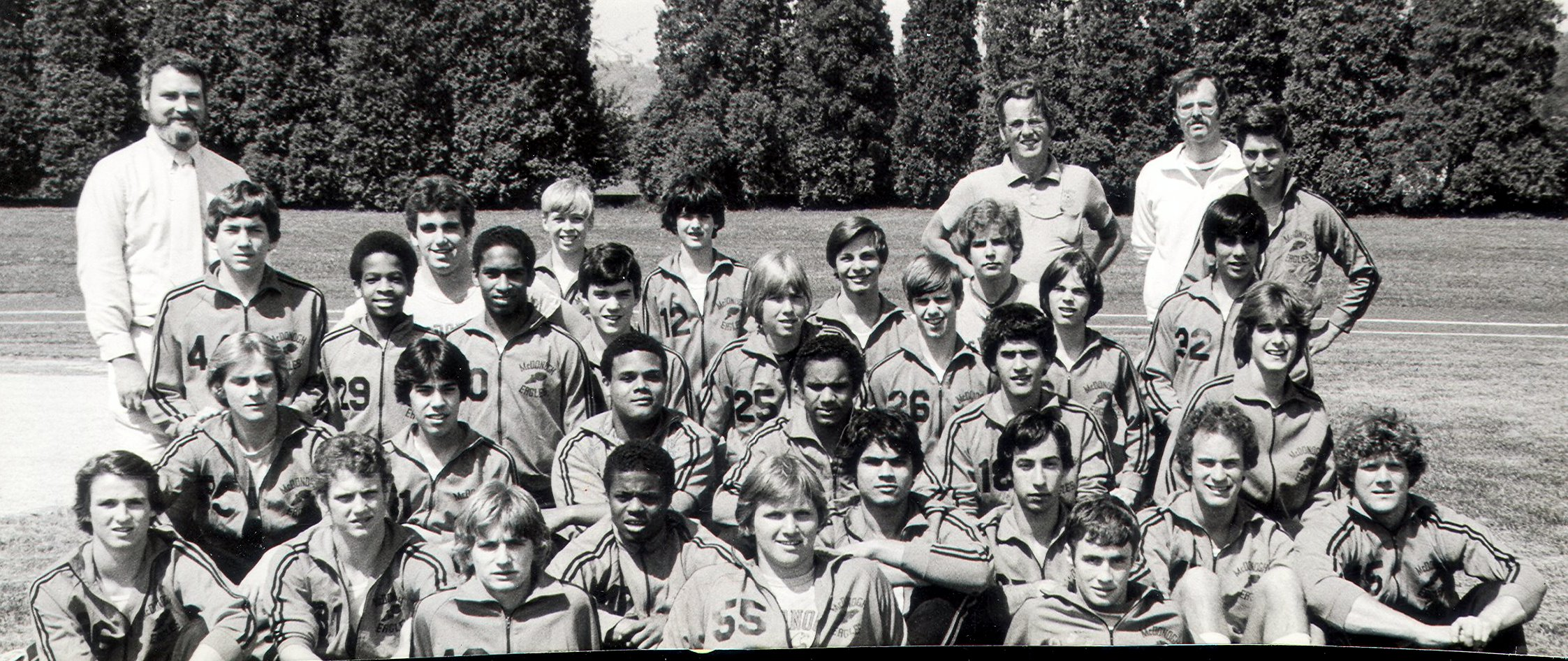
One of my all-time favorite students was Brendan, of course. He always had one of the keenest minds, sharpest writing skills, and most creative flairs of the young men I had the opportunity to teach. The imagery in his poems, or enthusiasm of his oratory contests, or the ease of his class presentations were all extraordinary. All I had to do was sit back and watch. And it has been my pleasure to watch Brendan in several different locals — at McDonogh in the classroom and in the wrestling room, at Church during his confirmation, at Yale during his collegiate years, and at TESSCO in the working world. I hope that he is thriving in his current endeavors. He certainly had an auspicious start.
I need to thank you and Des for giving me the honor of serving as a “stand-in sponsor” for Brendan’s Catholic confirmation at St. Charles Borromeo in Pikesville. I take it as a high complement that you would want me to be there, when at the last minute your relative could not attend. Brendan is a wonderful reflection of you and Des, Kathie. I feel blessed to be invited into the inner circle, even for a moment in time.

Jeff Sindler, McDonogh grad, Headmaster St. Ignatius Academy (and other schools)
Another of my students, who actually wrestled for me, was Jeff Sindler. When he became the headmaster at St. Ignatius Academy in downtown Baltimore, I met with him for lunch one day and tried to encourage him in his new mission. He had applied to teach at McDonogh, but the spot he felt he wanted most went to someone else. How the son of a Jewish doctor came to be at St. Ignatius was not a topic of conversation; instead, Jeff wanted to tell me proudly of his work with these inner city boys, who were making such sacrifices to even attend school, much less THAT school. Jeff proudly exclaimed that one of his greatest accomplishments was attracting Des Corcoran to “come out of retirement” from McDonogh to join him on the faculty at the new school. He said that Des was the perfect match of the Jesuit model: truely a man for others. Des, in Jeff’s view, would do anything that was within his powers for his students. What a marvelous role model. When Des’ contemporaries were going out to pasture, Des was still laboring in the field gathering the sheep. He was living the example of Christian servant that others talked about. I would love to model those best demonstrated practices in my own life.
I miss Des. And I miss not being there to share in your stories, and sadness, and joy.
God bless you all,
— H
Henry E. Hooper
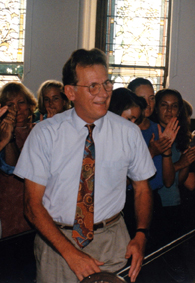
A colleague once described the beloved Irishman this way: “In the eyes of Des Corcoran, one sees the soul of a great teacher–twinkle, tears, unflinching, caring–it’s there in those eyes–that tell his students of his understanding and his compassion and his faith. They are the eyes that have seen hardship and misery and that know well the strength of the human spirit.”
John Desmond Corcoran was born on October 3, 1935, in “the original Dundalk,” Ireland. He attended University College in Dublin, majoring in English/Irish literature and minoring in math and Latin. Des taught in Northern Ireland before traveling to Nigeria, where he met his beloved wife, Kathie. She was serving in the Peace Corps, and he was volunteering with Catholic Charities. Des volunteered and traveled in Africa for five years.
Emigrating to the U.S. in June 1966, Des followed Kathie to her native West Virginia. That fall, the newlyweds arrived at McDonogh, where Des had been hired to teach English and coach varsity soccer and track.

McDonogh was the beneficiary of a state law that prevented public schools from hiring an immigrant like Des Corcoran. Students came to treasure him. In addition to his delightful brogue, Des had a way about him that made his “lads” feel valued.
And the school community valued him in return. Des Corcoran received every major honor there was to be given. The alumni association bestowed its Alumni Service Award on Des in 1992 and made him an honorary alumnus in 2001. In 1998, he became the first recipient of the Howard C. “Dutch” Eyth Endowed Teaching Chair.
“My first priority in teaching is to make each student feel that he is an individual with dignity and self-worth,” Des once reflected. “I still believe that the school exists for the child and strive to create in my classroom a friendly, tolerant, if at times demanding, atmosphere.”
Before McDonogh had learning specialists, the school had Des. He subscribed to poet Yeats’s view of education as “not the filling of a pail, but the lighting of a fire.” While he taught McDonogh’s top students with passion, he favored those who struggled. “This group of students is very special to me,” he wrote. As a member of the Orton Dyslexia Society, he tried to be sensitive to their persistent frustrations and sought to help them learn in different ways, giving them plenty of encouragement in the process.
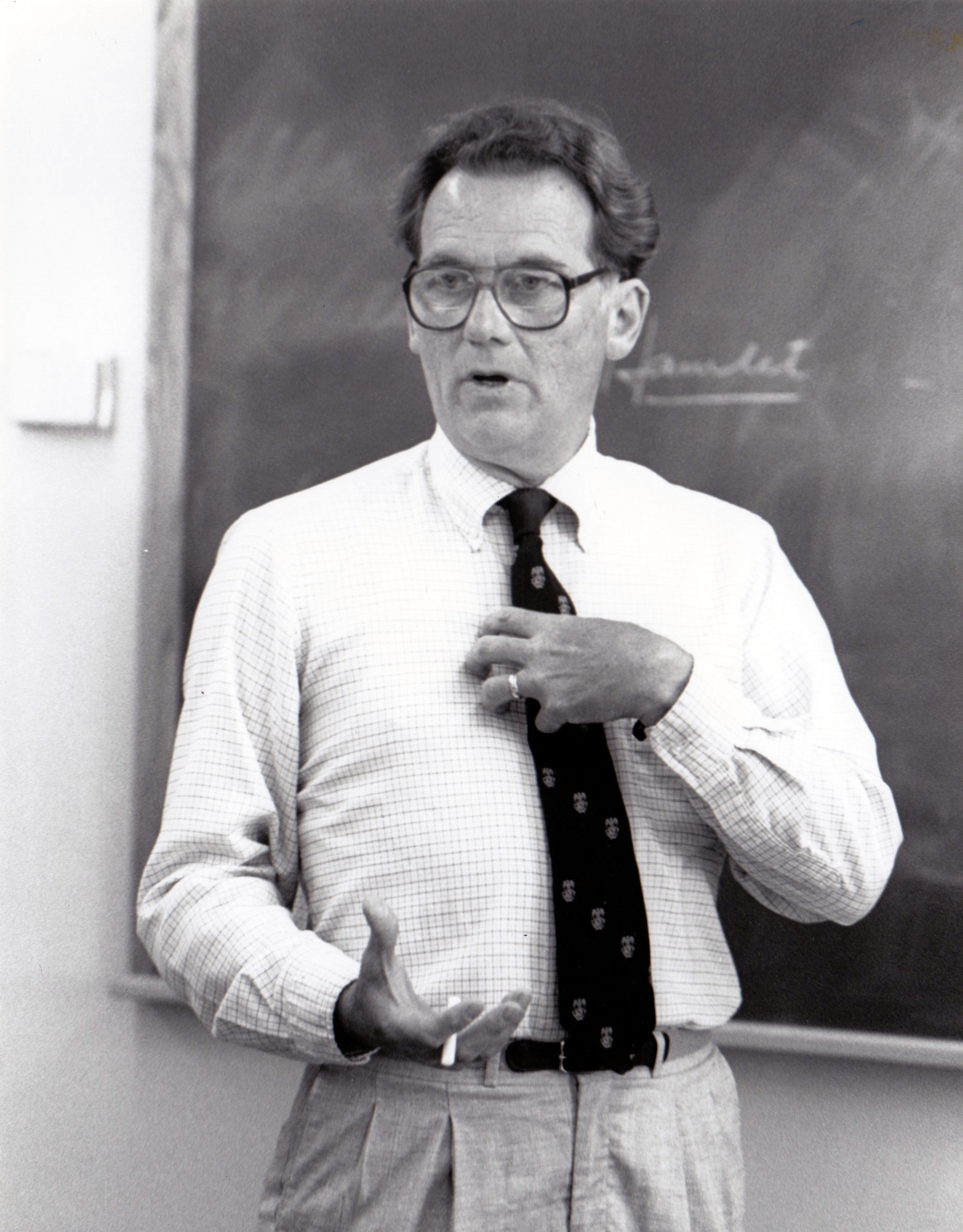
A colleague once called Des Corcoran “a human appliance repairman, sharing with his wife Kathie an abiding faith in basic human goodness and searching to affirm that belief through their direct, sensitive, common-sense guidance.”
Des appreciated his colleagues as much as he loved his students. “Working on a dedicated, demanding, and self-sacrificing faculty is inspirational and has prevented me from becoming blase. Over the years I have seen how my three children have benefited from the efforts of this faculty wearing its many hats of teacher, adviser, coach, counselor, mentor, and friend.”
His best friend was wife and colleague Kathie, and theirs was a partnership for the ages. A former staff member described the couple as “the perfect example of the sum being greater than its parts.” Their personal and professional lives often blended, particularly when Des sought ways to enliven inherently boring material. He wrote, “Kathie has such stimulating ideas that I found myself singing an 18th century Dublin ballad to my AP students recently–and in a Dublin accent!”
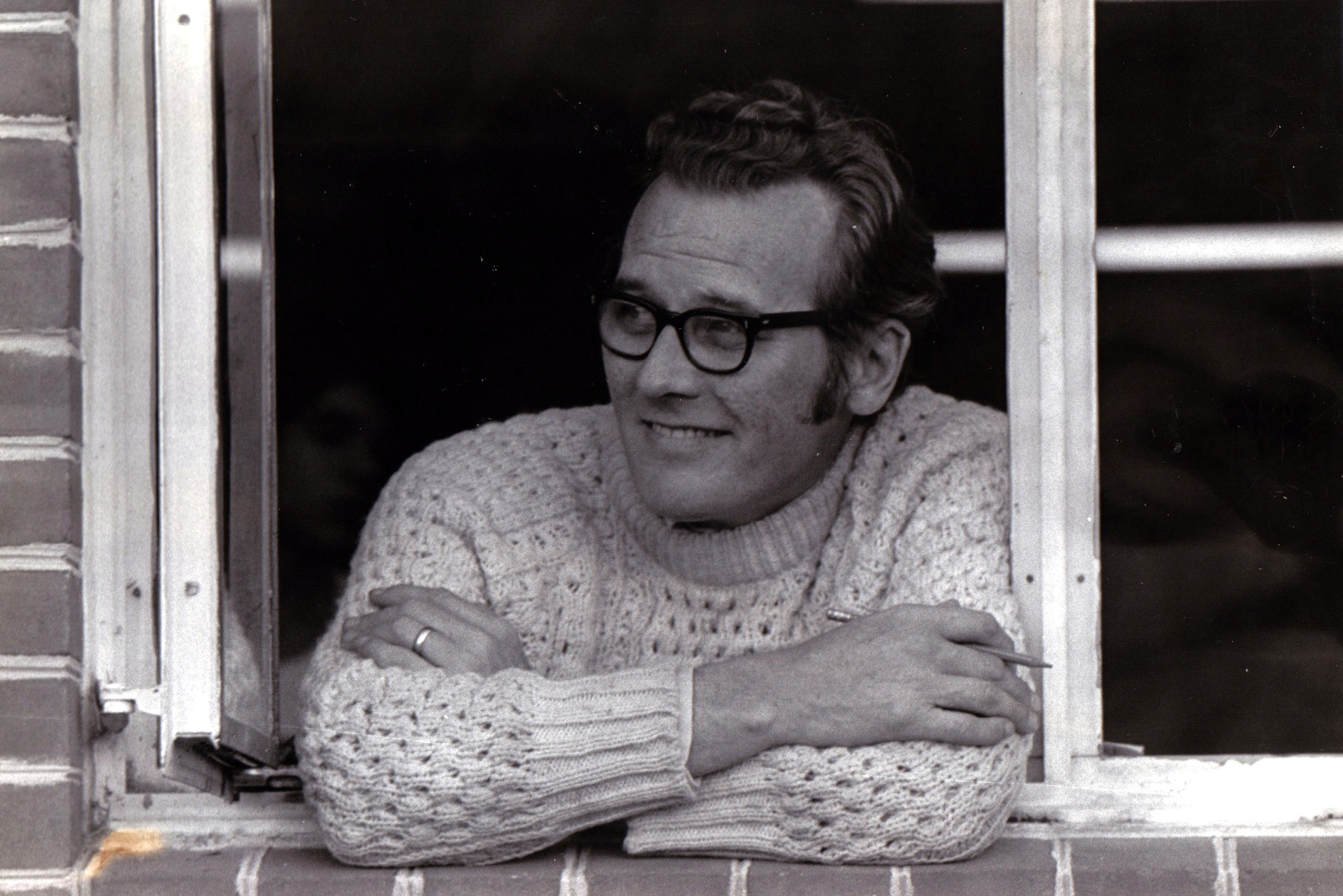
The Corcorans loved to travel and both specialized in literature from other cultures. Des, of course, loved the work of Joyce, Yeats, Heaney, and others from his native country. Like any true scholar, however, he found joy in uncovering new literary treasures, particularly if they revealed an unfamiliar way of life or a pivotal time in a country’s history.
One of his pet peeves was having to assign grades. “I have never been comfortable with the fact that the grades I give students’ work will have some bearing on the students’ college prospects. I prefer the British system where student and teacher are on the same side, and some anonymous, back-room ogre sits in final judgment.”
Coaching gave Des freedom from the subjective evaluations he so loathed. For 25 years, he oversaw the track and field program, keeping detailed records of performances. “By dangling these marks before the student athletes,” Des wrote, “I have always promoted the ideal of achieving a personal best in each competition. …I have never sought victory at the expense of individual commitment, team spirit, or sportsmanship.”
Before he retired, Des delighted in the opportunity to teach students in the Foundations Program and to ready them for the rigors of upper school. “Now with my Foundations students,” he wrote, “I feel like a coach again–teaching, encouraging, preparing, even mentoring, but not grading!”
Des and Kathie Corcoran also forged relationships with students in the boarding community, which deepened when they became parents to Brendan ’85, Sean ’91, and Niamh ’93. The family moved into the yellow farmhouse at #1 Farm Road in 1977 and lived there until 1999.
“Visitors described the yellow farmhouse as ‘quaint’ and ‘charming,’ but I always felt its magic and knew that its front walk had to be made into a yellow brick road. I found the yellow bricks dumped down at the dam and laid my new walkway … Kathie and I shelled peas together on the front porch and visited with alumni, who, driving past, would stop and sit. But on campus parents’ nights or on snow days, the kitchen bulged with energy and happy laughter,” Des wrote in McDonogh magazine, after the house was demolished in 2000.

Des retired in 2001, but he remained close to the place where he spent most of his life. He and Kathie nurtured a plot in the Roots garden in 2009 and 2010, even though Des had to leave the more vigorous chores to others.
In the 2009 “Roots” issue of the school magazine, Des revealed in print his incomparable ability for storytelling one last time. His tales of the competitive, pre-Roots faculty gardens left readers chuckling.
Des’s knowledge of gardening and literature was legendary, but he was a self-proclaimed “dodo bird” when it came to laptop technology. He cheerfully admitted that he flunked the laptop instruction class for faculty and had to attend tutoring sessions. He feared he might have to learn to email his attendance and did not want to incur the secretary’s wrath.
Des Corcoran remained a grateful member of the McDonogh commmunity. “Over the years McDonogh School has been very good to me and to my family. I have never been cynical about the concept of the McDonogh Family and am proud to be a member of it.”
 Henry E. Hooper