

The Lederberg Yale Dinner
“Dr. Lederberg, please interrupt your really busy schedule, discovering life on Mars, and come speak with our West Coast Yale alumni!”
Hearing that declarative sentence ringing in our ears, we were worried. How could the Yale Alumni Office in New Haven cajole Dr. Joshua Lederberg, the esteemed Nobel Prize Laureate, to leave his laboratory for a trip to California? Plus, this was not a pleasure trip to Disneyland; we were in the middle of an historic Capital Campaign, the largest in history at the time, and Yale would fly Dr. Lederberg on a fundraising mission. We had asked the university to send us a “heavy-weight” to help us gather the Bulldogs, who lived 3,000+ miles west of their alma mater, to a dinner in Palo Alto.
The Campaign for Yale (TCFY) headquarters in New Haven had agreed to find a scientist to help us influence attendees among the successful doctors (PhD and MD) in our region. These west coasters, with a few notable exceptions, were a prickly and parsimonious group. We waited for a reply from New Haven.
Our first choice for speaker was James Tobin, the Nobel Prize winning economist. Milton Friedman’s brother, Meyer Friedman, was a Yale grad (BA ’31) living in San Francisco. Meyer was on our alumni committees. When the topic of important “scientific speakers” came up at one meeting, Meyer had sarcastically said, “Jim Tobin would be pretty good … for an economist … though not as good as my brother! It’s a shame Milt went to Rutgers and Columbia and not Yale!”
About a week later we got the call from Yale Alumni Office: Dr. Lederberg had said, “YES!” We were ecstatic. We had landed a Nobel laureate to speak at our dinner and his name recognition was the perfect draw for our invitees.
Our next worry was whether Lederberg were a good speaker or not. Bill Draper, our super-volunteer, suggested: “Henry, call Lederberg and ask him what he is going to say.” Really? Bill wanted me to call this Nobel winner? “Sure,” said Bill, “feel him out about his message to the alums.” Beyond his credentials, Draper insisted we tell Lederberg wh:at we wanted. “Tell him to remind the alumni about all of the great research happening in New Haven these days!” Draper said he wanted our speaker to be enthusiastic about Yale, reminding alumni what a national treasure it was. The bottom line? “We need alumni to show up to our dinner, open their checkbooks, and write some big fat checks to Mother Yale.”
We definitely needed a boost. Sarah Muyskens and I were novice Yale fundraisers in the San Francisco office and spirits were low. Why? Our Executive Director was in the hospital recovering from a nervous breakdown; our Office Manager was leaving her husband; and our Leadership Gifts colleague spent more time buying gardenias for his jacket lapel and resting his head on his desk than making phone calls. The Office was being run by Bill Draper, an alumni volunteer. His Eli enthusiasm and encouragement were exactly what we needed for a great Bay Area reception.
We busied ourselves getting Chairpersons, a good local restaurant, and alumni support. Barbara Ayers, who ran the Yale Office in Palo Alto, and her husband, Doug, who was a professor at Stanford, both helped us pull together the alumni we needed to make for a solid Yale crowd.
Draper: The Super Volunteer
Bill Draper was the Alumni Chairman of TCFY in the West and he ran the show. For context, Bill drove to our office weekly and held many conference calls with us. He put in more hours with us than we could have imagined. He reorganized the alumni we needed for our committees in San Francisco, Portland, Seattle, Los Angeles, and San Diego. As the Chairman of Sutter Hill Ventures in Palo Alto, he relied on his colleagues Len Baker (Yale ’63), Wythes (Princeton ’55) and Bill Younger (Michigan ’72) to come to the rescue. “Anything to help our good friend, Bill Draper,” said Wythes. “What goes around, comes around,” Bill replied, hinting that he had more than once been their ally in fundraising circles. He was an extraordinary alumni volunteer.
What’s Bill Draper’s Story?
William Henry Draper III, known to all as “Bill,” was born Jan. 1, 1928, and grew up in Scarsdale, NY. His father, William, Jr., was an investment banker at Dillon Read & Co. and reserve Army officer. William, Jr. later helped run the Marshall Plan in Europe after World War II, serving as US Ambassador to France, and he was Undersecretary of the Army. His mother, Katharine (Baum) Draper, oversaw the home.
In 1929, shortly before the stock-market crash and the onset of the Great Depression, Draper’s father put most of the family savings in a German maker of automated coffee machines. Those dollars vanished in a star-crossed investment that collapsed under the weight of international debt. One would think that a tech debacle like that would put a less-optimistic clan off venture capital for the rest of his life.
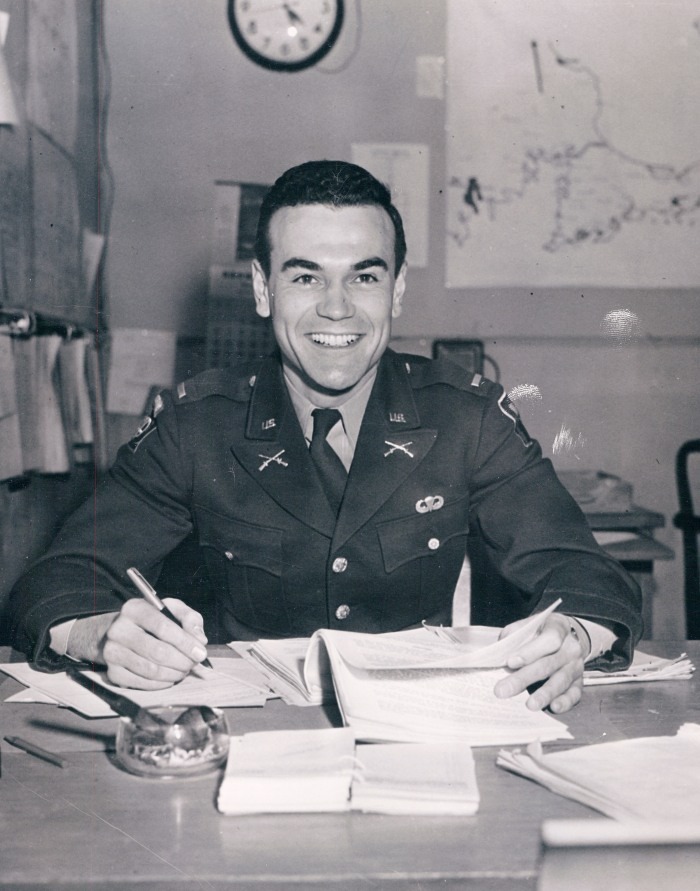
When it was time to choose a college, Draper said, he thought “Harvard was a little too intellectual for me, and Princeton was a little too social for me. So Yale sounded right in the middle.” He chose Yale and majored in history. His good friends included William F. Buckley, Jr., and they graduated in the class of 1950. Draper enrolled at Harvard Business School (HBS); however, those years were interrupted by the outbreak of conflict in Korea. He enlisted and served as an Army patrol leader.
Home Life Away from Work and Service
In the summer of 1952, while sailing on an ocean liner to Europe, Draper met Phyllis Culbertson, a college student. Though Culbertson was wearing another man’s engagement ring, Draper proposed marriage three days later—and was encouraged when “She didn’t say no.” One year later in June 1953, Draper & Culbertson married.
A graduate of Smith College, Phyllis Culbertson was a daughter of Mrs. Richard H. Ullman of Buffalo, New York, and William Howard Culbertson of Bronxville, New York, chairman of the international division of Merrill Lynch.
After Draper’s time in the army, he and Phyllis returned to Boston, while he received his Harvard MBA degree in 1954. General Electric rejected his job application. Next up, Draper found a management training position at Chicago’s Inland Steel Company.
Phyllis, an author of two published books of essays and poetry, served on the boards of Save the Children, the Charles Armstrong School, the Corcoran Gallery of Art, and the Kennedy Center in Washington, D.C. Together, they are the parents of three children:
- Rebecca Starr “Becky” Draper (b. 1954), who graduated from Smith College and received an MBA from Stanford University and married Geoffrey Hill Mulligan.
- Polly Draper (b. 1955), an accomplished actress on the show “Thirtysomething” and a Yale grad.
- Timothy C. Draper (b. 1958), founder of Draper Associates, which became the venture capital firm Draper Fisher Jurvetson.
Early Venture Capital
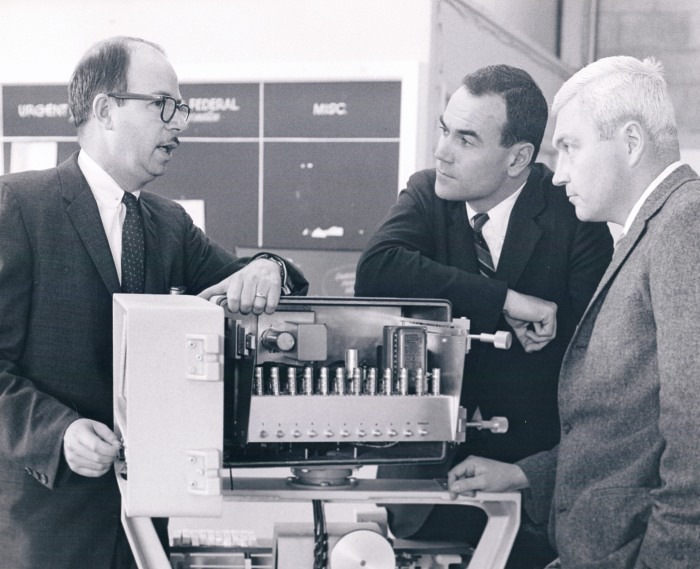
In 1959, Draper left Chicago to work as an associate at his father’s newly formed firm, Draper, Gaither & Anderson, the first venture capital company on the West Coast. In 1962, Draper left Draper, Gaither & Anderson to co-found the venture capital firm Draper & Johnson Investment Company with his good friend, Franklin Pitcher “Pitch” Johnson, whom he had met while working at Inland Steel. In 1965, Draper and Johnson founded Sutter Hill Ventures, which to this day remains one of the top venture capital firms in the country. During his twenty years as the senior partner of Sutter Hill, Draper helped to organize and finance several hundred high-technology manufacturing companies.
Back to The Yale Lederberg Dinner
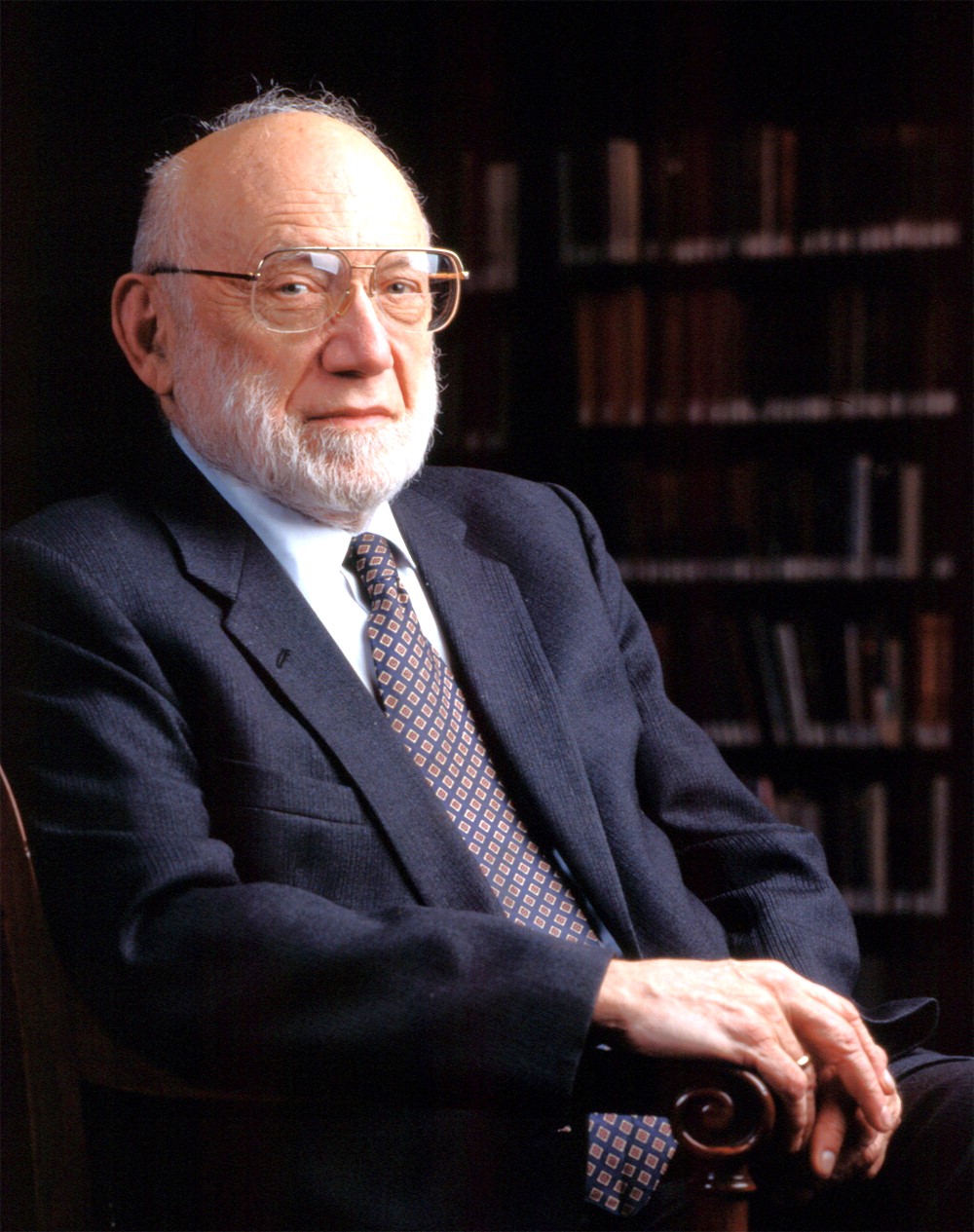
When I called Dr. Lederberg asking him about his message, he said, “I was the chairman of the Genetics Department at Stanford, so I know my way around Palo Alto. I will admit, however that I am not particularly good at arm twisting!” I said that our alumni chairman, Bill Draper, had agreed to “make the fundraising pitch” at the dinner, and Dr. Lederberg gave a sigh of relief. He went on to explain the science he was working on in the labs at Yale: “I have dedicated my life to studying the chromosomes of bacteria in the human gut, called Escherichia coli or E. coli for short. I have worked with the government on projects over the years. A few years ago NASA asked me to help come up with some simple tests. They wanted the latest unmanned capsule scheduled to land on Mars to get material samples, put them in a dish and determine if there is any life, as we know it, on the Red Planet.” In that last sentence Dr. Lederberg had said about a half a dozen things I knew nothing about – rocket to Mars, unmanned flight, test conditions, soil sampling, data collection, life on Mars and sending results back to earth.
With more questions bubbling up I asked him if he could unpack that statement for me.“That is a good question; it’s what I asked the scientists at NASA to do for me.” He elaborated, “The biology of life on earth starts with cells and chromosomes and genes. As basic building blocks, they are simple. It gets complicated as cells are infected by viruses and contaminated by bacteria, combined and endlessly recombined; but to keep it simple, I like to start with the basics.”
Questioning Dr. Lederberg, “So, do you think we will find life on Mars?” He laughed and said he was sure that we would find no Martian aliens, if that’s what I meant, but we would need further testing. “It is not quite that easy to know if the conditions on Mars were suitable to biology, as we know it on Earth.”
TCFY Dinner on the West Coast
At the end of his explanation, Dr. Lederberg apologized for his small contribution to the NASA program: “You should be talking to the scientists who designed the launch vehicle and calculated the trajectory. They are doing the heavy lifting. I am only putting in a few simple ideas to test some soil when they get there … it is not really a big deal.” After our discussion, I felt Lederberg would be the perfect speaker: he was familiar with Stanford, his topic was Mars and he loved Yale. With Bill Draper chairing the dinner and Dr. Lederberg presenting, we had a great combination of charismatic forces.
The fall of 1976 dinner was a success in terms of attendance and interest, but it was not a big fundraiser. We had a lot more organizing to do to raise those $16MM from our region. As West Coast alumni, Yale was not part of the typical everyday conversation the way CAL or Stanford were. Only a few of the alumni knew the others in the room, because many of them had moved west to get away from “Boola, Boola” and “Your Daddy is a Yale Man” crowd. But it was definitively a step in the right direction.
Dr. Lederberg was humble and precise. He did not ramble on and on, as some microphone happy professors do. Instead he was focused on telling the story of helping NASA see if there were life on Mars. Hearing it a second time around, it made sense. After the dinner, Bill Draper congratulated Sarah Muyskens and me, saying, “We should be pleased with the Yale turn-out. Dr. Lederberg was a good guest speaker and I am confident the checks will start to arrive in New Haven from the dinner.”
Draper International Public Service
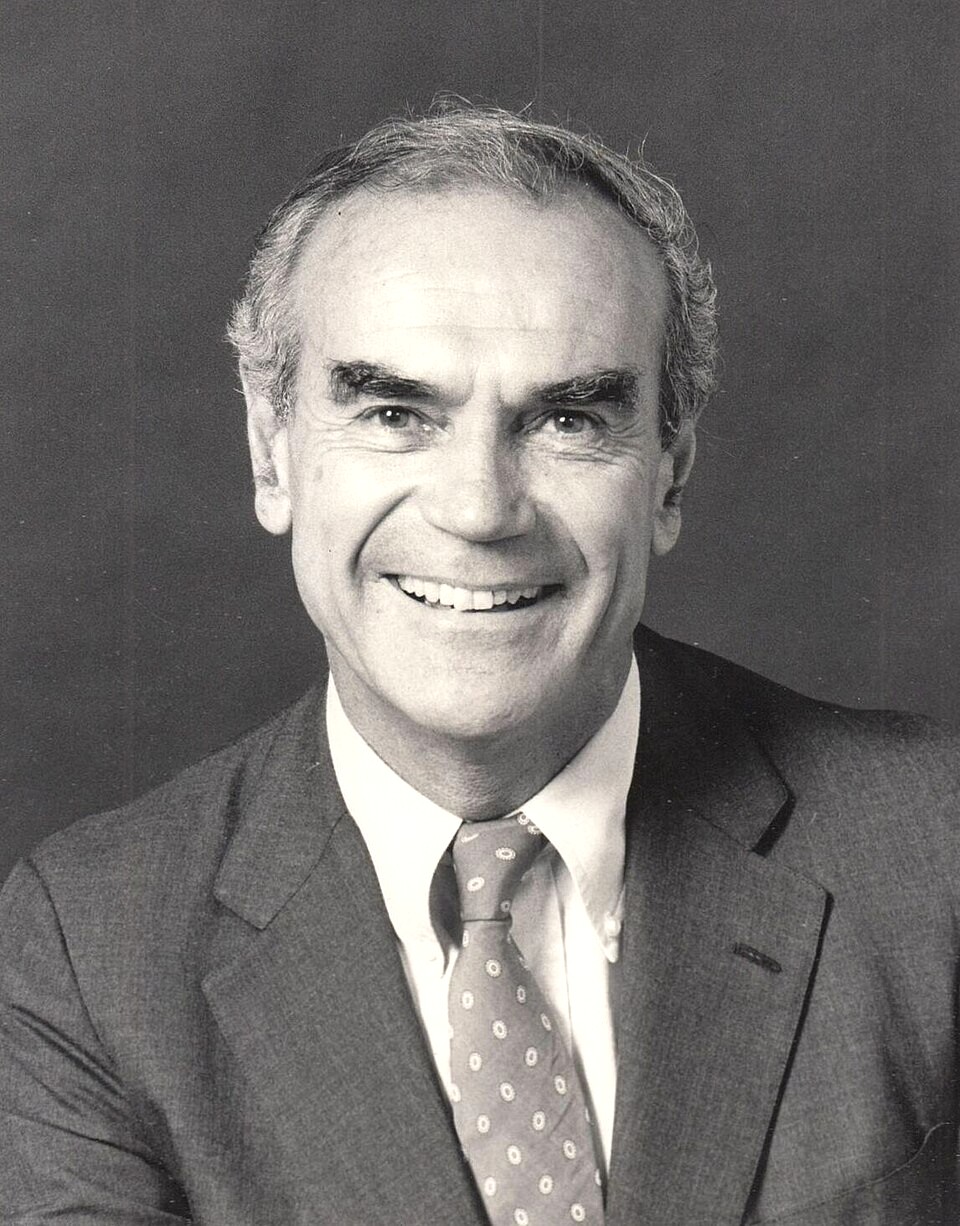
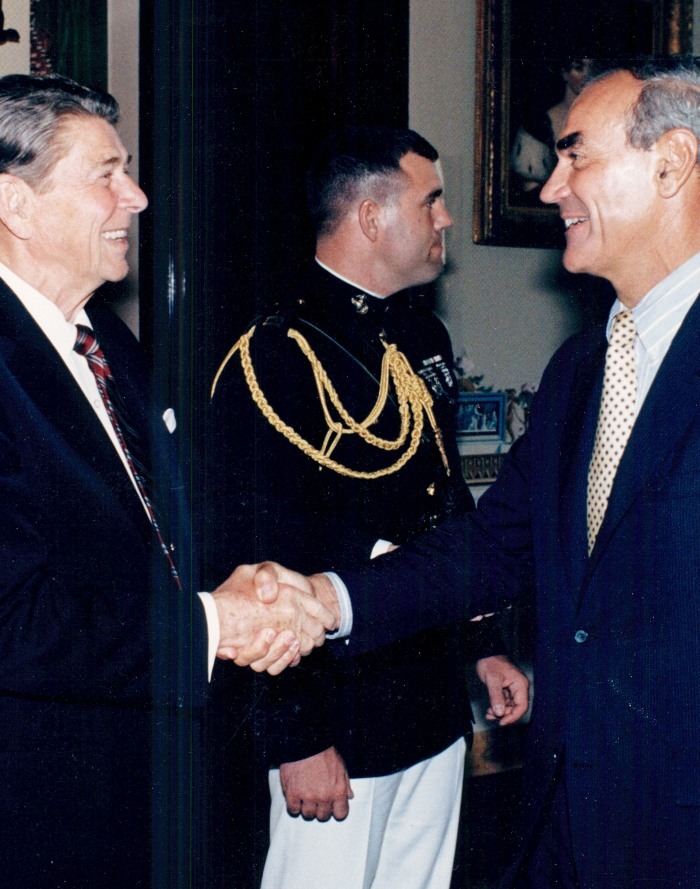
In the years after his volunteer service to Yale, Bill Draper played a key role in international leadership by expanding the world economy and addressing the global wealth gap. In 1981 Draper was appointed by President Ronald Reagan to serve as President and Chairman of the Export–Import Bank of the US, a position he held for five years. In this post, Draper assumed a leadership role in US efforts to sustain world trade in the face of major liquidity problems among the developing countries.
In 1986, Bill Draper became the head of the world’s largest source of multilateral development grant assistance, the United Nations Development Programme (UNDP), where he oversaw nearly 10,000 international aid projects. In this capacity he was instrumental in the leadership of several global initiatives, such as the international Education for All movement (beginning formally with the 1990 UNESCO Conference in Thailand), the 1995 Beijing Women’s Conference, and the 1995 Social Summit in Copenhagen, Denmark. During his time at the UN and the Export-Import Bank, Draper traveled to 101 developing countries and met with over 50 heads of state. Under Draper, according to the New York Times, the UNDP’s “programs grew in value from $890 million in 1985 to $1.5 billion in 1992.” He was perceived as prioritizing economic development over environmental concerns, a criticism he and his supporters contested.
Return to Venture Capital and Philanthropy
In 1994, Draper and Robin Richards Donohoe founded Draper International, the first U.S. venture capital fund to focus on investing in private companies with operations in India. In 2002, he co-founded Draper Richards LP, a venture capital fund that invests in early-stage technology companies in the U.S., and he also founded Draper Investment Company, which concentrates on seed investments in Europe and Asia.
In 2002, along with Robin Richards Donohoe, Draper co-founded the Draper Richards Foundation. Robert S. Kaplan, formerly vice-chairman of Goldman Sachs and the thirteenth president and CEO of the Federal Reserve Bank of Dallas, joined as co-chair in 2010. In 2006, Draper donated $1 million, in honor of Donohoe, to the Stanford Graduate School of Business to support the school’s Stanford Social Innovation Review. The Draper Richards Kaplan Foundation (DRK) is a global venture philanthropy firm that supports early-stage, high impact social enterprises.
The current DRK portfolio includes organizations working both domestically in the United States and internationally helping to provide critical access to healthcare, education, legal resources, economic empowerment, food security, social justice, water and sanitation, transparency and accountability, and shelter.
Community and Civic Leadership
As a civic leader, Draper has been involved in many community service programs. He was on the boards of The Draper Richards Kaplan Foundation, Freeman Spogli Institute of International Studies at Stanford University, and the Harvard Business School California Research Center Advisory Board. He was a member of the Council on Foreign Relations and the President’s Council on International Activities at Yale University.
Draper served as the Chairman of the World Affairs Council of Northern California, Chairman of the Institute of International Education, as a Trustee of Yale University and as Chairman of the American Conservatory Theater in San Francisco; he was a Board member of Population Action International, the United Nations Association of the United States of America, Hoover Institution, Atlantic Council, George Bush Library Foundation, the Advisory Council of the Stanford Graduate School of Business, and the World Rehabilitation Fund in New York.
In the oral history, Draper discussed his philanthropic strategy. “I think my philosophy is: Do your best to be helpful to other people and it will come back in spades,” he said.
Awards and Honors
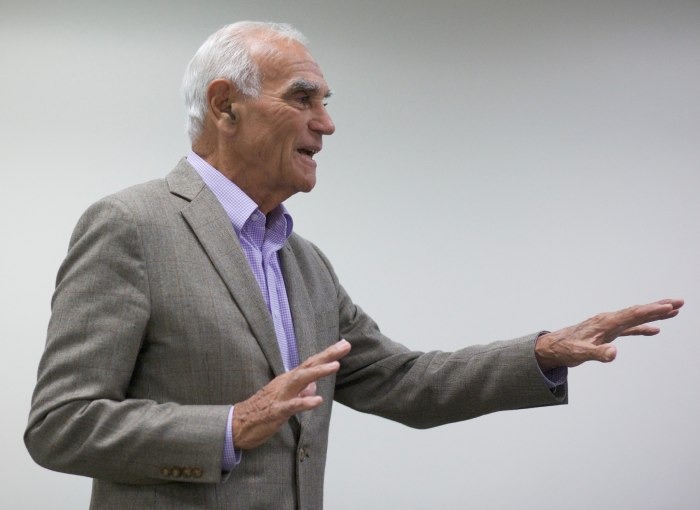
In 1982, Harvard Business School honored Draper with its Alumni Achievement Award, and in 1992 he was awarded the Ellis Island Medal of Honor. In 1996, he received the Citizen Diplomacy Award from the International Diplomacy Council, and in 2002 he received the Woodrow Wilson Award for Public Service from the Woodrow Wilson International Center for Scholars. In 2005, Draper received the Vision Award from SD Forum and was inducted into the Dow Jones Venture Capital Hall of Fame. In 2006, he received the Silicon Valley Fast 50 Lifetime Achievement Award and the Distinguished Service Award from the Institute of International Education. In 2009, William and Phyllis Draper were honored as Global Citizens of the Year by International House Berkeley. Also in 2009, Draper received the Lifetime Achievement Award from the Commonwealth Club, the Lifetime Achievement Award from the International Business Forum, and the Philanthropic Leadership Award from the American India Foundation. In 2017, Draper received the Lifetime Achievement Award from the National Venture Capital Association and was awarded a medal from the Foreign Policy Association. In addition, he has received honorary decorations from Bolivia, Morocco, and Samoa. In 2020, Draper received the Arthur C. Clarke Lifetime Achievement Award and the United Nations Association Film Festival Visionary Award 2016.
=-=-=-=-=-=-=-=-=-=-=-=-=-=-=-=-=-=-=-=-=-=-=-=
References:
[1] William Weidersheim, III (Yale BS 1941) was the TCFY West Coast Campaign Director until he was sidelined. He later wrote a pamphlet entitled “Uncle Sid at Yale” (published in 1981). “Uncle Sid” was Rev. Sidney Lovett (Yale BA 1913), Yale’s university chaplain from 1932 to 1958. Yale’s chaplaincy notes Lovett was affectionately known as “Uncle Sid,” and the nickname went back to his earlier pastorate in Boston. There, Lovett and his wife were called “Uncle Sid” and “Aunt Esther.” yaleldsgenealogy
[2] For the complete obituary of William H. Draper III, see the following article from the Wall Street Journal: https://www.wsj.com/business/entrepreneurship/william-draper-silicon-valley-vc-dead-634e413e

