
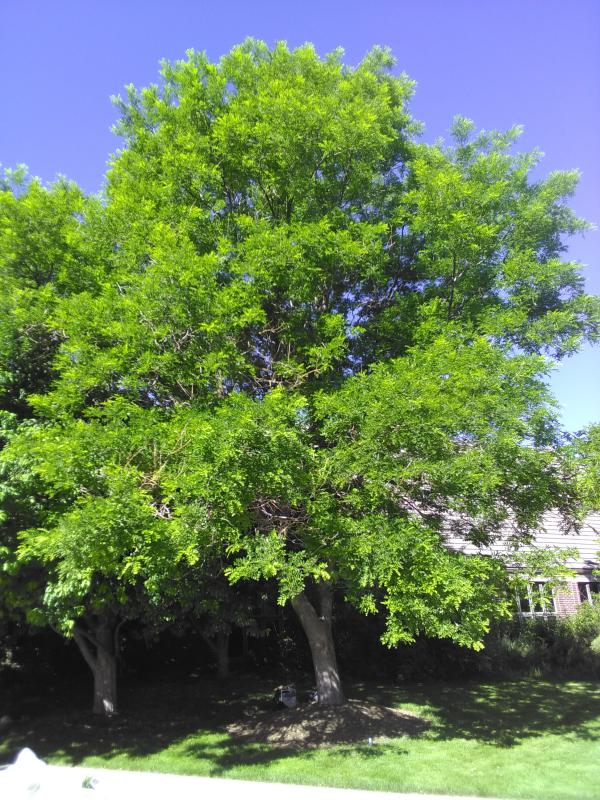
Trees: Japanese Pagoda
In May, 1985, my wife and I spent our first anniversary on Martha’s Vineyard at a charming hotel in Edgartown, known at the time as Fourways Inn. It has since changed hands, and the quintessential New England whaling town has remained the same, except for the larger crowds and the fewer fishermen. The town is still full of 1820s white clapboard homes with green shutters and 18th century Congregationalist churches.
Fast forward to 2023 and we were back again, this time the guests of our niece’s husband’s mother. The ferry ride was beautiful as we glided into Vineyard Haven and borrowed our host’s car.
Finding a place to park, even with my wife’s exceptional “parking karma,” was a chore. Eventually we motored into the neighborhoods along Water Street and found a place. On the walk back into town we spotted an enormous tree that looked like a Black Locust, but I was mistaken. A sign identified it as the oldest Japanese Pagoda Tree (Styphnolobium japonicum) in the United States. According to oral history the tree was brought to the U.S. from China as a seedling in 1837 by whaling captain Thomas Milton. He wanted it to grow in the front yard of his new home, then being built in Edgartown. It has been growing on the island ever since.

186 years later, and counting, after being planted by Capt. Milton, Martha’s Vineyard has America’s largest pagoda tree. The original voyage was to China, but the real treasure was dug up in Japan.
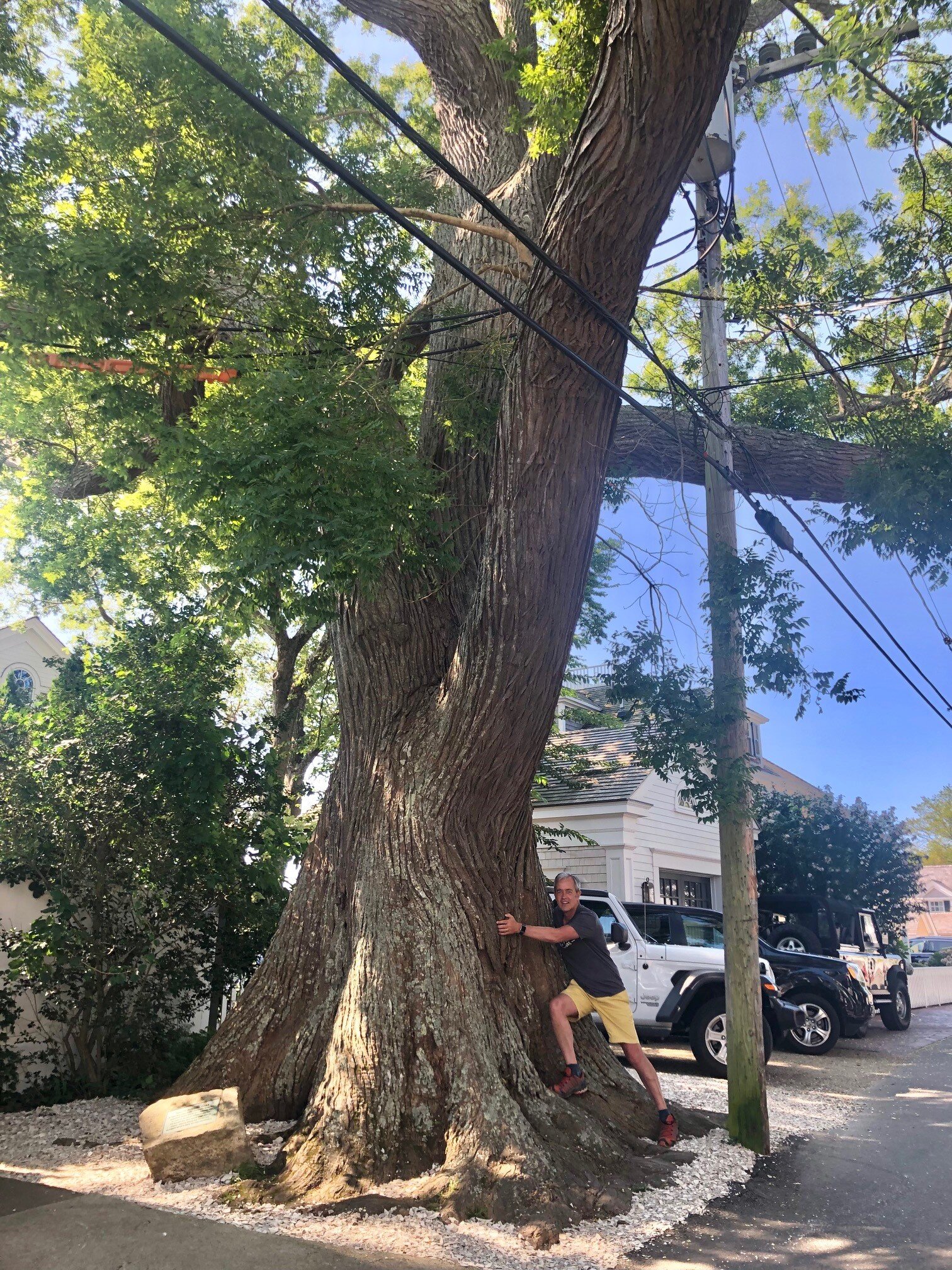
Today the branches tangle with the telephone/electric wires and the trunk and roots take over the sidewalk. Yet, it survives and seems to thrive. What a magnificent specimen it is!
During the summer of 2025, we went to England and visited the Kew Royal Botanical Gardens, outside of London. There we spotted a few of these trees, this one which has fallen over and is supported by a lattice work of wood and steel. It is still a magnificent tree, despite its tendancy to lean.


 Henry E. Hooper