

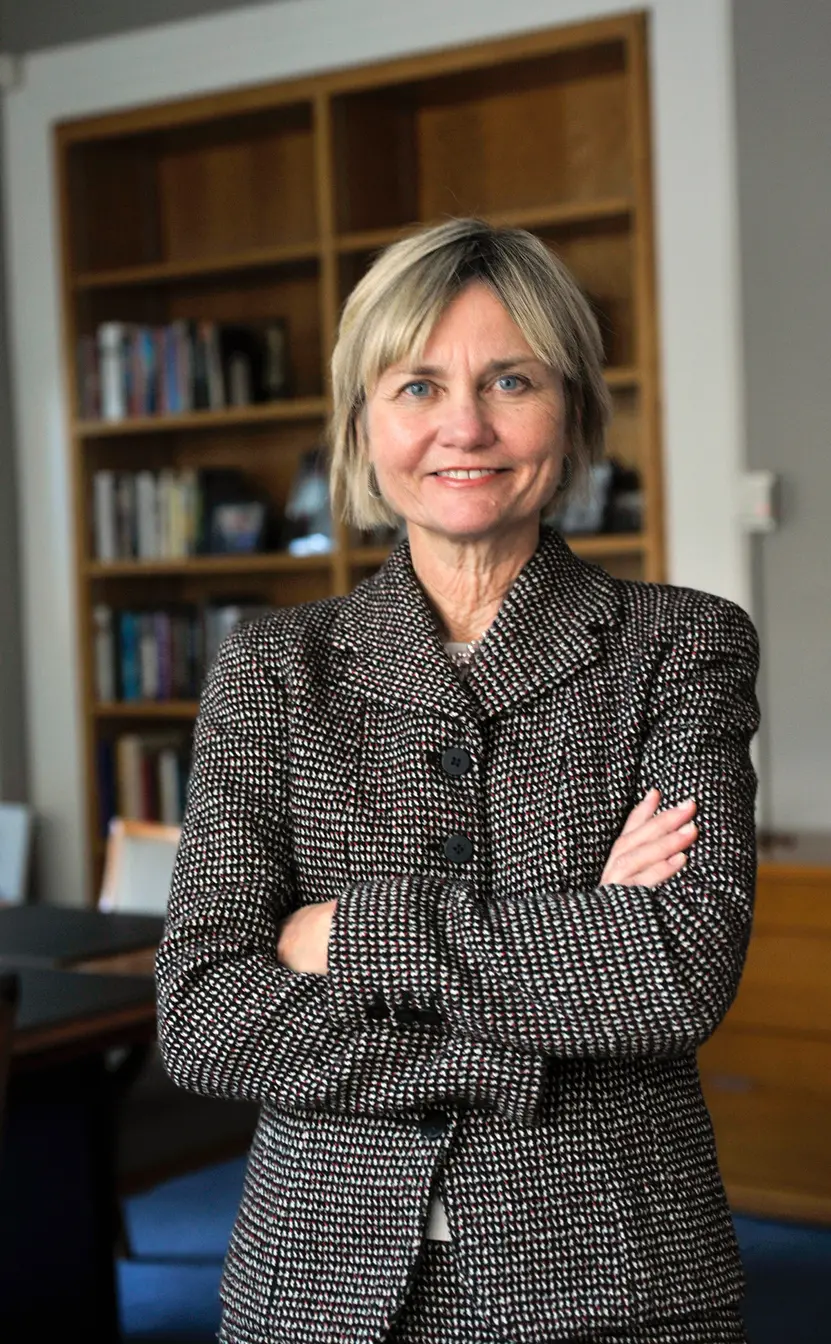
Sharon Oster (1948-2022)
SOM Revisited: Sharon Oster
April 29, 2011
Dear Sharon,
I have many reasons to thank you for your service to Yale and to praise you for your life-lessons for me. The service to Yale piece is easy, because you stepped in as Dean of SOM during the most contentious time in the markets in our lifetimes. My recollection is that Joel Podolny had abruptly left his post heading to Apple, and Stan Gartska wanted someone else to take the baton this time around. You stepped up, took the handoff and have been marvelous. You were masterful at keeping donors, faculty, staff, architects, and students at bay, while you kept the conversations going, refined SOM’s mission, and brought sanity back to education.
Look where things are today: SOM applications are booming, the finances are strong, the campus is growing, and the programs are on far surer footing than when you inherited them as Dean. I believe the school is at the pinnacle of its short 35 year life, just as you prepare to turn it over to Dean Snyder. The new Evans campus renderings appear spectacular. Congratulations for being an excellent steward of SOM these past few years. Thank you.
Although the initial request was for comments about your brilliance at shaping our minds on micro-economic theory, I have some very different recollections for which to thank you: one from 26 years ago (written in third person) and another from two years ago.
As a student at SOM, I took a class on public speaking and client presentations. The “final exam” for the class was a group presentation to a stand-in President and CEO. I was in a group of three, along with Philip Chou (whose English was hard to understand) and Jim Pendry (who was a profuse sweater). The three of us were presenting a new set of paint sealants to our CEO Persona [who was you Sharon], who was the chief executive and owner of a chemical company. The three of us had to “sell our concept of paint sealants” to YOU. CEO Oster started the conversation by asking us to repeat why we were there and then she said she had some specific issues which were more important to her than our presentation.
Not to be dashed by the chance to show this president how much we had learned about our product versus the competition or how much money we could save the company over time, we plowed straight ahead with our glib presentation, charts and graphs and sealant descriptions. With my dark curly hair and fact-filled charts, I was invincible Sherman McCoy in The Bonfire of the Vanities. And even if we could not totally understand what sealant qualities Philip was explaining (he could not pronounce words with L’s in them), nor totally ignore the dark blue stains at the under arms of Jim’s baby blue shirt, we kept the charge going, gaining momentum, unyielding … for what could go wrong?
When we stopped talking, President Oster said, “That is a terrific presentation, you obviously know your product, but you know nothing about my business, nor what I really wanted.” And she proceeded to tell us what the real problems were in her company. I felt like we had had a cold shower, my hair unraveled. At that moment I realized that we should have scrapped the planned presentation and sought to understand the company and CEO Oster’s needs FIRST! In the following discussion I learned one of the most valuable business lessons of my life: no one can sell without first listening to the customer. Every consultant who is worth his or her salt proscribes to that important customer-first lesson.
The other lesson I received from you, Sharon, arrived in a conversation during dinner a couple of years ago at an Indian restaurant in Vancouver, Washington. My business partners, Yalies David Nierenberg, Cara Denver, and I, were talking with you about passing down inheritances to children. As one of eight children, my parents offered to pay for half of our college education, and the rest of our education was on their dime. Post college I had continued to make withdrawals from the “bank of mom and dad” for emergency needs, home deposits, and similar financial wants. At 55 years old, I was then deciding what legacy I wanted to leave our three high school and college aged children.
You proceeded to tell us about your mother and the sacrifices she made as a waitress on Long Island to allow you and your family to attend the college of your choice. And you went on to tell how Ray Fair and you had made a pact to pay for all of the education your children wanted, all the way through graduate programs, wherever they wanted to go. Then you asked, “What is more important than the education of your children?” There is no “bank of mom and dad” in the Oster Fair family: Ray and you are consistent and resolute.
Your comments made a huge impression on me, so I shared them with my wife. As a result of our additional thinking and reflecting on what I call “the Oster / Fair Method,” we rewrote parts of our will, which would cover our children’s education, should we get sick or die. What else can we give as a gift to the next generation, except a superior education, for as long as they have a thirst for knowledge? I cannot think of anything more important.
Thank you, Sharon, for these life lessons and for being a great SOM economics instructor. Your classes were well worth the opportunity costs of leaving my job in Maryland to spend two years in New Haven and coming to know you and the rest of the Yale SOM community.
Many, many thanks,
— Henry
Henry E. Hooper
Obituary of Sharon Oster by her colleagues at Yale: https://som.yale.edu/story/2022/sharon-oster-1948-2022
 Henry E. Hooper