

The University of Virginia Rotunda, designed by Thomas Jefferson
O. Henry: Why not UVA?

John F. Shettle, Jr. (1954-2020)
Fellow Don: John Shettle
My Loyola Blakefield high school buddy, John Shettle, had a red MG convertible. Need I say more? It was a very cool car. John and I each had private and state colleges in Virginia who were interested in us as potential students in their incoming class of 1976. One of the colleges was the University of Virginia, another was Washington & Lee. I was pleased to accompany John on that college tour; we stopped in Charlottesville (UVA) and Lexington (W&L and VMI) to complete the central Virginia triumvarite. John and I had both been recruited by UVA’s Varsity Men’s Lacrosse coach, Glenn Theil, and I wanted to visit Lexington, so we decided to make the trip together.

The ride in that MG was faster and lower to the ground than I had ever driven before. It felt like we were inches above the roads. John easily handled the traffic around DC and the narrow roads in central Virginia. He drove like a champ. Our first stop was Charlottesville. We made the 138 mile trip in under 3 hours.
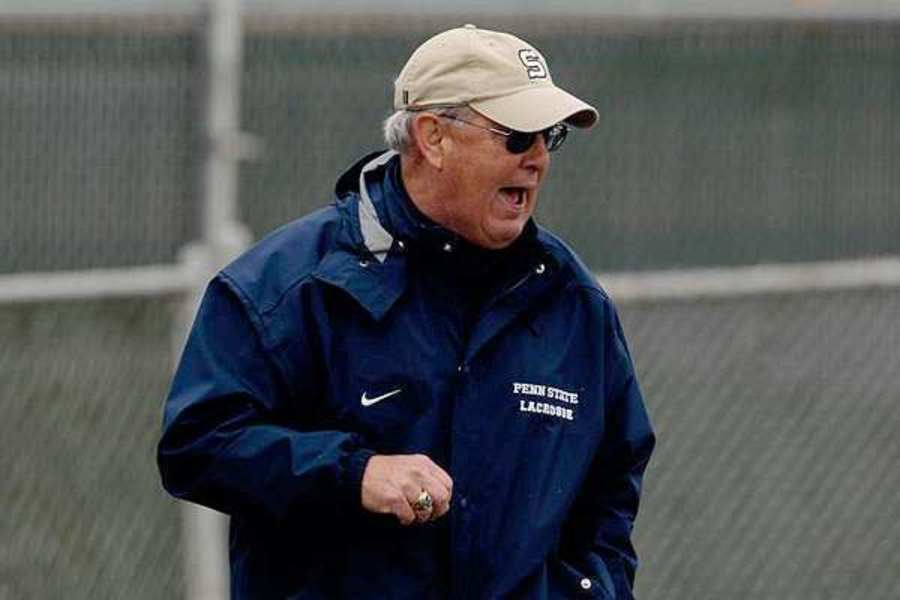
Lacrosse Coach: Glenn Theil
Coach Theil greeted us, and a few other recruits, outside the University Hall athletic gymnasium. He was tall and trim and full of energy. “This will be a great weekend, boys. Are you ready for it?” Not sure exactly what Coach meant, we looked to left as a group of lacrosse players walked up and stood at his side. He introduced us to our hosts for the weekend. Our host was Al Sadtler. I knew Al from Baltimore. We had played lacrosse against each other for many seasons. “There is a celebration of you at the game tonight, so until then, your lacrosse host will take care of you and show you the ropes.” And with that Coach Theil was off and we were in Sadtler’s hands.

Lacrosse Player: Al Sadtler
“Is there anything you wanted to see in particular?” asked Sadtler. In my English class, we had just finished readying the famous novel The Sound and the Fury by William Faulkner. I had been fascinated by it, particularly his use of “stream of consciousness” prose. One of my sister’s had done her college English thesis on Faulkner’s fictitious Yoknapatawpha County in Mississippi. Plus Mr. Brune, our English teacher, told us that the UVA library had one of the largest private collection of Faulkner’s books, letters and papers.[1] So I asked Al if he would show us the University Library. I thought the collection, which had Faulkner’s personal notations on many of the pages, would be a great place to explore.

Al Sadtler gave me a very quizical look and stated emphatically, “Henry, no one goes to the library. I’ve never been inside! Today is Friday, and I have planned for us to go to a great party at our frat house. Lots of lacrosse players and sorority sisters will be there. After that we can go to the game.” Apparently there was a basketball game that night. Al and his frat brothers all did some serious pre-gaming, with their concoction of “Purple Jesus.” When I asked what was in it, Al replied, “Well there is a lot of grain alcohol and some grape juice, and we pour it into a trash can.” I thought he was joking, but he continued: “We fill it about half way to the brim with that dark purple elixer. Red cups, lots of them, are on the shelf nearby. You just dip and drink. It’ll last half the night!”
After too many purple jesus red cups, John and I grabbed some slices of pizza and wandered off to the University Center for the basketball game. At halftime the basketball announcer instructed all high school recruits from the class of 1972 to assemble. We were marched to the center of the court. There, in the middle of a packed field house crowd, we were called out by name and offered thundrous applause. There are few thrills like the sound of 8,500 students shouting for you to come to their university for the next four years. It was quite a trip!
And that basketball game? It was one for the record books.

Barry Parkhill, UVA Legend
Other than center Ralph Sampson, few basketball players ever received as much attention as the 6’4″ point guard, Barry Parkhill.[2] And for good reason. That night the Cavaliers were paired with Baldwin-Wallace, a small college in Ohio. Parkhill scored 51 points in a lights-out performance. He floated shots, kissed them off the glass, and drove past B-W players all game long. He put on a one-man show, as almost every shot he put up, went in. When the game ended, he had scored 19 field goals and 13 free throws. The game finished with UVA winning a lop-sided 117-83.
Remember, this was in the days of the two-point field goals. Of those 19 field goals, approximately half of them would have been 3-pointers today, which gives you a notion of his physical dominance that night. Put into 2025 terms, if his total points included those at the three point line, Parkhill would have had approximatly 60 points that night. He set a UVA scoring record in Charlottesville and was twice the ACC player of the year. And that half-century+ record of 51 points in a game has not been broken, even with the high calibre players who have come through UVA and the 3-pointers counted today.
Here is a YouTube video about the record setting night.
Post Script
After high school graduation, John Shettle went to Washington & Lee and I went to Yale. We both played lacrosse in college, yet we never saw each other, after we graduated from high school. John earned an MBA at Loyola University in Baltimore, and he went on to have a successful investing career with Stone Point Capital in St. Petersburg, Florida. John has now died. He passed away in 2020 after a distinguished 40 year career in insurance.[3]
I will never forget our trip together in 1972 trying to answer the question: Why not UVA?
-=-=-=-=-=-=-=-=-=-=-=-=-=-=-=-=-=-=-=-=-=-=-=-
References:
[1] The manuscripts of most of Faulkner’s works, correspondence, personal papers, and over 300 books from his working library reside at the Albert and Shirley Small Special Collections Library at the University of Virginia, where he spent much of his time in his final years. The library also houses some of the writer’s personal effects and the papers of major Faulkner associates and scholars, such as his biographer Joseph Blotner, bibliographer Linton Massey, and Random House editor Albert Erskine. In total there are 847 documents from Faulkner in the Albert and Shirley Small Special Collection at UVA.
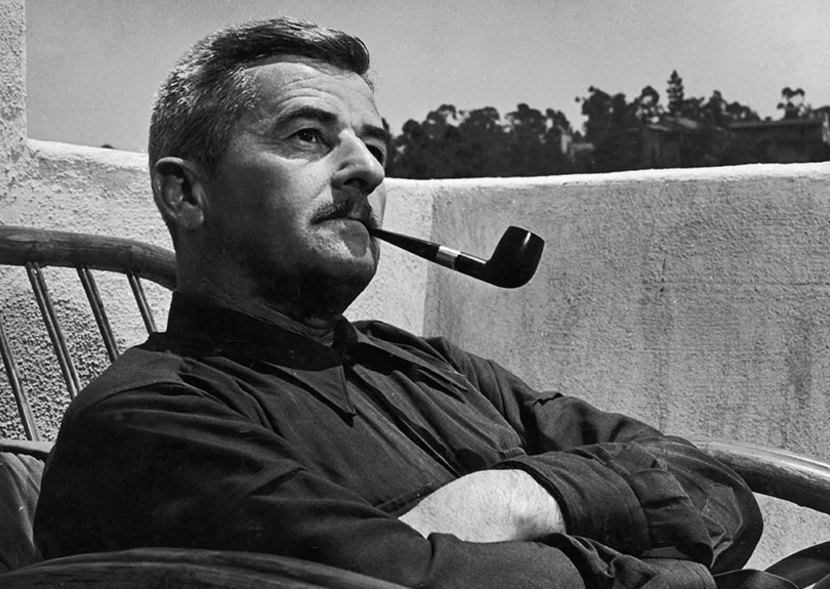
Faulkner, William (1897-1962)
Faulkner served as the first Writer-in-Residence at the University of Virginia at Charlottesville from February to June 1957 and again in 1958.

Flannery O’Connor wrote that “the presence alone of Faulkner in our midst makes a great difference in what the writer can and cannot permit himself to do. Nobody wants his mule and wagon stalled on the same track the Dixie Limited is roaring down.”
Cormac McCarthy has been described as a “disciple of Faulkner”
In The Elements of Style, E. B. White cites Faulkner: “If the experiences of Walter Mitty, of Dick Diver, of Rabbit Angstrom have seemed for the moment real to countless readers, if in reading Faulkner we have almost the sense of inhabiting Yoknapatawpha County during the decline of the South, it is because the details used are definite, the terms concrete.”
[2] Basketball Star: Barry Parkhill
| Personal information | |
|---|---|
| Born | May 10, 1951 (age 73) Philadelphia, Pennsylvania, U.S. |
| Listed height | 6 ft 4 in (1.93 m) |
| Listed weight | 185 lb (84 kg) |
| Career information | |
| High school | State College (State College, Pennsylvania) |
| College | Virginia (1970–1973) |
| NBA draft | 1973: 1st round, 15th overall pick |
| Selected by the Portland Trail Blazers | |
| Playing career | 1973–1976 |
| Position | Shooting guard |
| Number | 40 |
| Coaching career | 1977–1992 |
| Career history | |
| As player: | |
| 1973–1975 | Virginia Squires |
| 1975–1976 | Spirits of St. Louis |
| As coach: | |
| 1977–1978 | Virginia (grad. assistant) |
| 1978–1983 | William & Mary (assistant) |
| 1983–1987 | William & Mary |
| 1989–1990 | Saint Michael’s |
| 1990–1992 | Navy (assistant) |
| Career highlights and awards | |
| Consensus second-team All-American (1972) Third-team All-American – NABC (1973) ACC Player of the Year (1972) ACC Athlete of the Year (1972) First-team All-ACC (1972) 2× Second-team All-ACC (1971, 1973) No. 40 retired by Virginia Cavaliers | |
[3] https://www.stonepoint.com/private-equity/2020-year-in-review/
 Henry E. Hooper