O. Henry: Albatross About My Neck
So, you have heard the expression about the giant dead bird and can guess what it means, but where did it come from and what is the actual meaning?
The expression comes from some important lines in the poem known as The Rime of the Ancient Mariner, which was a lyrical poem by Samuel Coleridge between 1797 and 1798. Coleridge was a famous English poet who wrote many tall tales and romatic poems in his lifetime.
The creation and inspiration for the Riming poem originated in November, 1797. The poem was supposed to be a collaboration among three people: Samuel Coleridge, William Wordsworth, and Wordsworth’s sister, Dorothy. The trio was on a walking tour through the Quantock Hills in Somerset, England. And they needed money to pay for their trip, so they planned to write a joint poem to submit to a magazine and split the earnings. While the plan for a co-written piece faded, Coleridge took charge of the story. He began drawing inspiration from a dream reported to him by his friend, John Cruikshank, which featured a skeleton ship and a doomed crew and an albatross of course.
The Crime
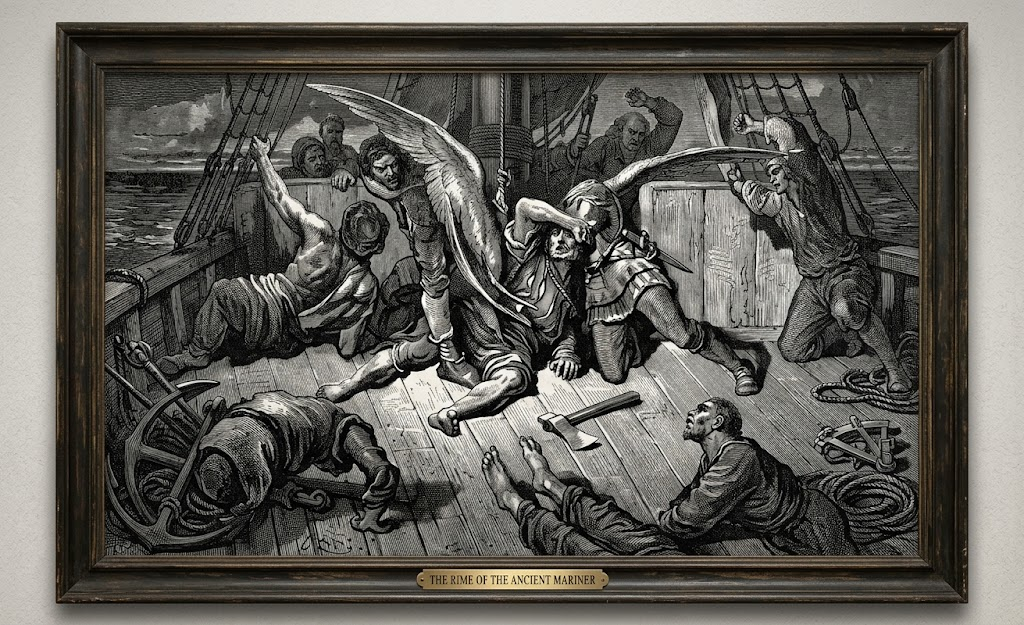
The story gets rolling when the young mariner commits The Crime! He is watching the flocks of sea birds following their ship and he pulls out his crossbow and loads an arrow. In a senseless and impulsive action, the mariner shoots and kills a friendly albatross. The crew is outraged. Each member feels the death of the bird brings a wretched curse upon their entire ship.
The line in the poem that is most emblematic of the expression says:
“Ah! well a-day! what evil looks
Had I from old and young!
Instead of the cross, the Albatross
About my neck was hung.”
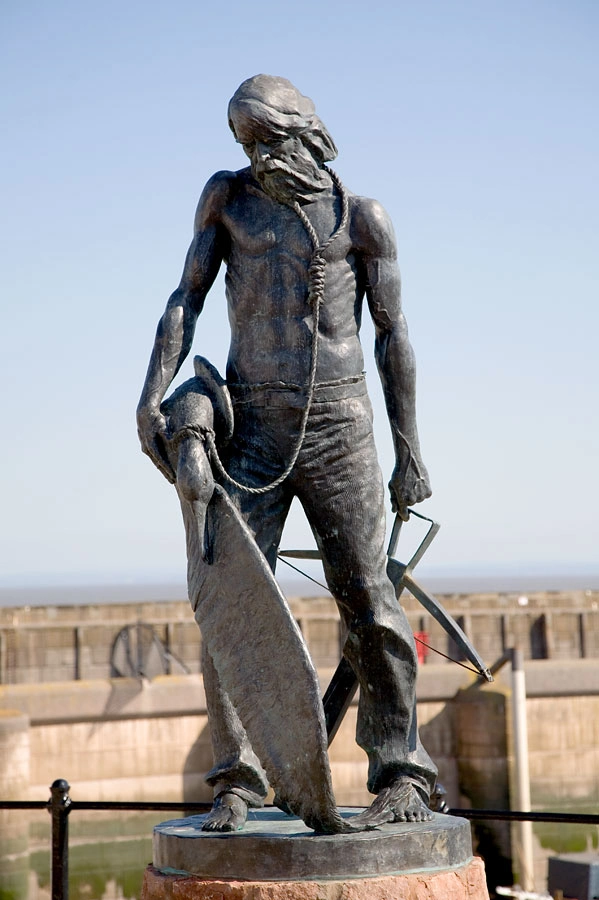
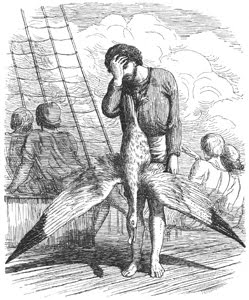
Soon after the killing, the ship becomes stranded and the crew begins dying of thirst. The crew is certain that the loss of drinkable water is a direct result of the crossbow shooting. As punishment for the Crime, the angry crew forces the mariner to wear the dead bird’s carcass around his neck as a symbol of his guilt and burden.
- The Metaphor: This imagery created the popular idiom “an albatross around your neck,” which means an inescapable burden, curse, or a heavy load of guilt.
- The Main Idea: The Rime of the Ancient Mariner is an allegory about all living creatures. Coleridge believes that all things are sacred, and humanity must love and respect every part of God’s creation. As the poet states: “He prayeth best, who loveth best / All things both great and small.”
Key Summarized Takeaways from this Rime:
- Believe in the Sanctity of Life: Hurting any creature, large or small, symbolized by the senseless killing of the albatross—brings severe spiritual and physical suffering to those who participated in the “crime” against nature.
- Redemption through Love: True forgiveness and inner peace only come when a person learns to appreciate and love the natural world.
- The Power of Storytelling: The Mariner, for his transgression, is doomed to tell and retell his tale of the voyage and the albatross forever. The other lesson is to warn those who do not believe in the sanctity of life to beware of the wrath of the almighty. Teach those around you to have empathy and reverence for life.