
Lessons from the Home Office: Invest and Cook
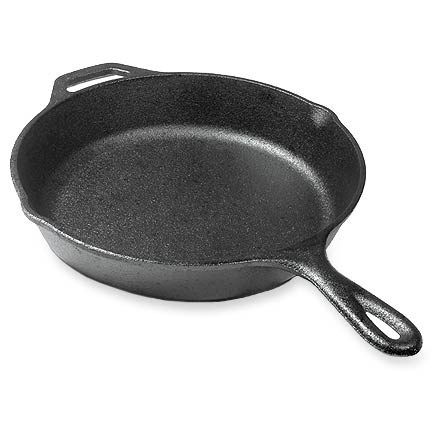
Cooking with a cast iron skillet is my favorite way to prepare most any hot meal. The pan cures over time, it has a uniformly hot surface, it never cracks, it takes constant attention not to burn the ingredients and it cleans up in a snap. To emphasize the investing angle, if you are a nervous chef (or investor), who gets a queasy stomach when the chili sizzles (or the stock drops 25%, or heaven forbid 60%), then the main course (or hedge fund investing) are not for you. Find someone else to cook (and manage your portfolio).
If you want outsized returns, be ready for outsized risks. Many with high risk tolerance give your assets over to a professional they trust and assign them discretionary power to buy, when everyone else is throwing it away, and to sell when the momentum players show up. Otherwise, you will end up as a long-term loser or day trader with a short time horizon, lots of commission dollars, and little to show for it.
What to Risk?
Holding true to the advice of diversity in a portfolio, our investors were cautioned never to have more than 20% of their “exposure to the market” in any one investment vehicle, including ours. That diverse portfolio, assuming the assets move in different directions in market corrections, will help stabilize the long-term returns.
Buy Right
So, when should someone buy? Should they wait, as Baron Rothschild urged, “When blood is running in the streets …” or are there other times? Buying at the right price is one of the trickiest parts to smart investing. Investors must have insight to see when an asset is undervalued, and they have to be particularly interested in buying large quantities, when others are panicking and throwing it away. Sure you can buy wrong and still make a profit, but to torture a metaphor, stock bargains come to light with handheld flashlights in near darkness, and not with the klieg lights of the roadshow, nor the spotlights of center stage.
Take Profits When You Can
Selling opportunistically is a smart thing to do.
No one ever went broke, selling early after making a small profit. What an important lesson in investing that little number is! More than likely people will double down on losers and wait too long and lose out on larger gains from winners. There are several expressions about this tendency: one is “people water their weeds and pick their flowers.” Another is that “pigs get fat and hogs get slaughtered.”
Greed gets in our head and clouds our judgment. It is important to have a range of possible outcomes and with each a target price: for buying, holding, and taking profits. And it is best to take profits starting below the target exit price, in case the estimates for success are too high.
Be Patient, and Don’t Let Pride Get in the Way
It takes a long time of study before anyone can claim to be a good investor. Some of my biggest successes, with full admission, were when I did not know what I was doing. Having invested in technology stocks, primarily wireless telecom stocks in the 1990’s, I thought I was a wunderkind at investing. In fact, my “winners” had nothing to do with the fundamental soundness of the companies nor their managerial talent. It all had to do with investing in an over-heated market and irrational exuberance. As my Uncle Jim often quoted, “A rising tide lifts all boats.”
When I first told David Nierenberg about my investing prowess, he asked for the names of my “great stock picks,” which were all among the hottest wireless telecom darlings of the day: Qualcomm, Nokia, Andrew, NexTel, Sprint, PageNet, Motorola, Trident, and my employer at the time, TESSCO Technologies. His urgent advice was, “Sell them, sell them ALL, and FAST.” His reasoning was that these telecom companies were part of a classic market bubble, and it would soon be pricked and deflate badly for me. David was calling out my stock darlings as ugly. Thinking I was right, I was slow to come around. I took his advice, reluctantly at first, in 2000. It hurt my pride to sell them off their 1999 highs; but, if I had not sold at the turn of the century, I would have lost 75% of the value of those investments within 6 months. The ride up was longer than most rational minds would have predicted, and the downward slope was steeper and more catastrophic than fathomable.
“Look Out Below”
Whitney Tilson, the self-promoting value investing hedge fund manager, wrote a book about the lessons he had learned in real estate investing during the Great Recession. He called it More Mortgage Meltdown, 6 Ways to Profit in These Bad Times. In it he catalogues all that went wrong with the mortgage market bubble and ways he felt that it would continue to be bad. Attending the “Value Investing Congress,” featuring Tilson and his colleague, Glenn Tongue, the duo gave a lecture about the fundamental problems with houses already in foreclosure, soon to be underwater, and sooner to be delinquent. With each new seriously bad revelation, Whitney would echo to the audience: “Look Out Below.” We all need to … and so I have for the past forty years.

Whitney Tilson, Investor, Writer, Risk-Taker
AND remember a key lesson in investing is to develop a cast iron stomach. For there will be market turbulence ahead and it is critical to have the constitution to withstand the upheaval.
 Henry E. Hooper