

Kachina: Shalako
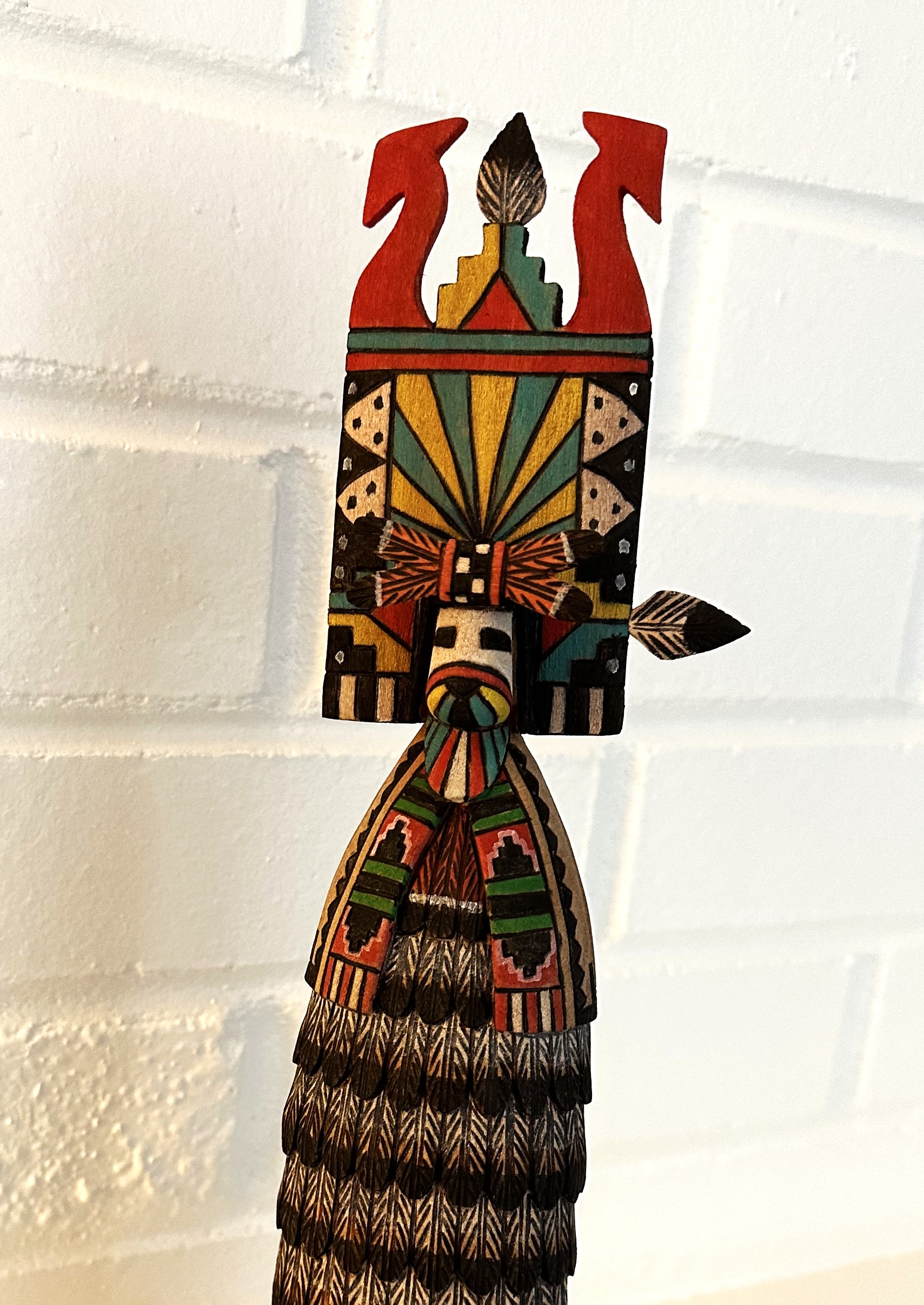
Above is the image of two Shalako Kachinas, representing the messengers of the gods for the Zuni Pueblo in NW New Mexico. The Zuni Indians perform the seasonal Shalako ceremony as a rite that assures the transformation of winter’s death into spring’s rebirth. The ritual is enacted to bless the Zuni people for another year. The tablita headdresses on top of the Shalako kachinas show clouds, lightning, arrows and sun beams shining down on a corn husks (on the kachina’s forehead), plants, and potatoes growing in soil. During the ceremony the Shalako have eyes that protrude and lips that clap together. The Shalako dancers are chosen among the Zuni tribe members and it is a great honor (and expense) to house the dancers (Mana – women and Taka – men).
The word, Shalako, refers both to the six dancers, who are among the ceremonial figures impersonating a Zuñi mythical being of extraordinary stature, and the Zuñi ceremony itself, in which Shalakos play a central role. The winter ceremony celebrates the departure of the tribe’s kachinas In darkness and the advent of good crops, rain and light in the seasons ahead.

Shalako Kachina [1]
=====================
According to Sue Ellen Thompson, an authority on Zuni legends, their ancestors emerged from the underworld to the earth’s surface and searched for their “center.”[2] The center is where they would find water and security. The Water Spider led them to an anthill, which he proclaimed was the center of the earth. The Water Spider instructed them to build their village there.
The Shalako, who are believed to have appeared first at Zuni around 1840, retrace the wanderings of the Zunis from the center earth to the modern pueblo. The Shalako are the God’s messengers. They are expected to run back and forth all year long carrying messages, as well as bringing moisture and rain when needed. When they leave for winter, they also carry the Zunis’ prayers for spring rain with them.
The timing of the Shalako Ceremony is crucial and it is tied to the Zuni calendar!
In former days, the Sun Priest’s duty was to ensure that the Shalako Ceremony coincided as closely as possible with both the Winter Solstice and the full moon. Eight days before the ceremony, the Sun Priest would pray and fast, making pilgrimages to the Sacred Thunder Mountain (also called Dowa Yalanne in Imlay, Nevada) to talk with the Sun Father. On the ninth morning he announced the approach of the solstice. This was done with a low, mournful call.

Today, everyone knows when the ceremony will be held. The Shalako Ceremony attracts more outside visitors than any other Zuni festival. Tribal preparations begin a year in advance.
Each of the Shalako must be housed and entertained during the festival. The cost of this can make such a financial burden on a family, it will take them years to recover. Other members of the village help each host bring in his crop and fix up his house. But, the brunt of the cost falls to the individual. In some cases, an entirely new home must be built to accommodate the Shalako dancers. At the very least, the existing house must be re-plastered.
Eight days before the ceremony the Mudheads (clown-like figures that wear mud-daubed masks that look like deformed human faces) announce the arrival of the Shalako. On the morning of the ceremony (very early) the “impersonators of the gods” and their assistants leave the village quietly. They hide their masks and other stuff under blankets as they go.
The Fire God (who is usually a young boy) has his body painted black and spotted with red, yellow, blue and white. Along with his ceremonial father, they visit each house that the Shalako will be staying at and leave two prayer-plumes in a box. These prayer-plumes symbolize the original man and woman.
The Council of the Gods arrive next, making the same rounds that the Fire God did. They pause in front of each house to dance and shake bunches of deer bones. The Council includes Sayatasha, the Rain God of the North. It also has Hu-tu-tu, the Rain God of the South. Both of them enter the house designated for Sayatasha through a hatchway in the roof and are greeted by the host and his family. The host families sprinkle the Gods with sacred corn meal. Food is then put out for the Council members and everyone eats.
By the time the Council of the Gods leave, it is sunset and time for the Shalako to appear and perform their dance. Spectators gather behind a barbed-wire fence set up in an open field. The Shalako appear just at dusk. Six huge figures (who tower above their assistants) wear headdresses with eagle feathers that fan out like the rays of the sun. They carry their masks on long poles that are hidden under blankets. The same man who carries the pole also manipulates the mask’s bulging eyes and clacks its wooden beak.
Each Shalako has two assistants: one manager and one male assistant who relieves the Shalako dancer, when he’s tired of dancing while maneuvering the heavy superstructure. The changing of dancers takes place behind the blankets so that the spectators can’t see what’s going on. And, the children will not know that their images are not really gods.
The dancers take a lot of pride in balancing their masks and never missing a step as they bend their knees, dip their heads and then straighten up. When the ceremony is near its end, each Shalako enters the house that has been prepared for him, and a welcoming ceremony is performed there.
More dancing starts at midnight in the Shalako houses. The men take turns handling the heavy, swaying masks. The departure of the gods takes place around noon. The Fire God goes first, followed by the Council of the Gods and then the Shalako leave with their swooping motion and clacking wooden beaks. Long lines of spectators watch them leave.
Because the Shalako are messengers to the gods, their departure is the final prayer for rain to fill the rivers, wells and springs before summer comes.
=============================================
References:
[1] The Shalako Kachina in our family’s collection is from a trading post in Albuquerque, called Palms Trading Company, which has a 30+ year history of honoring and selling Native American jewelry, baskets, rugs, pottery, fetishes, and kachinas.
 Henry E. Hooper