
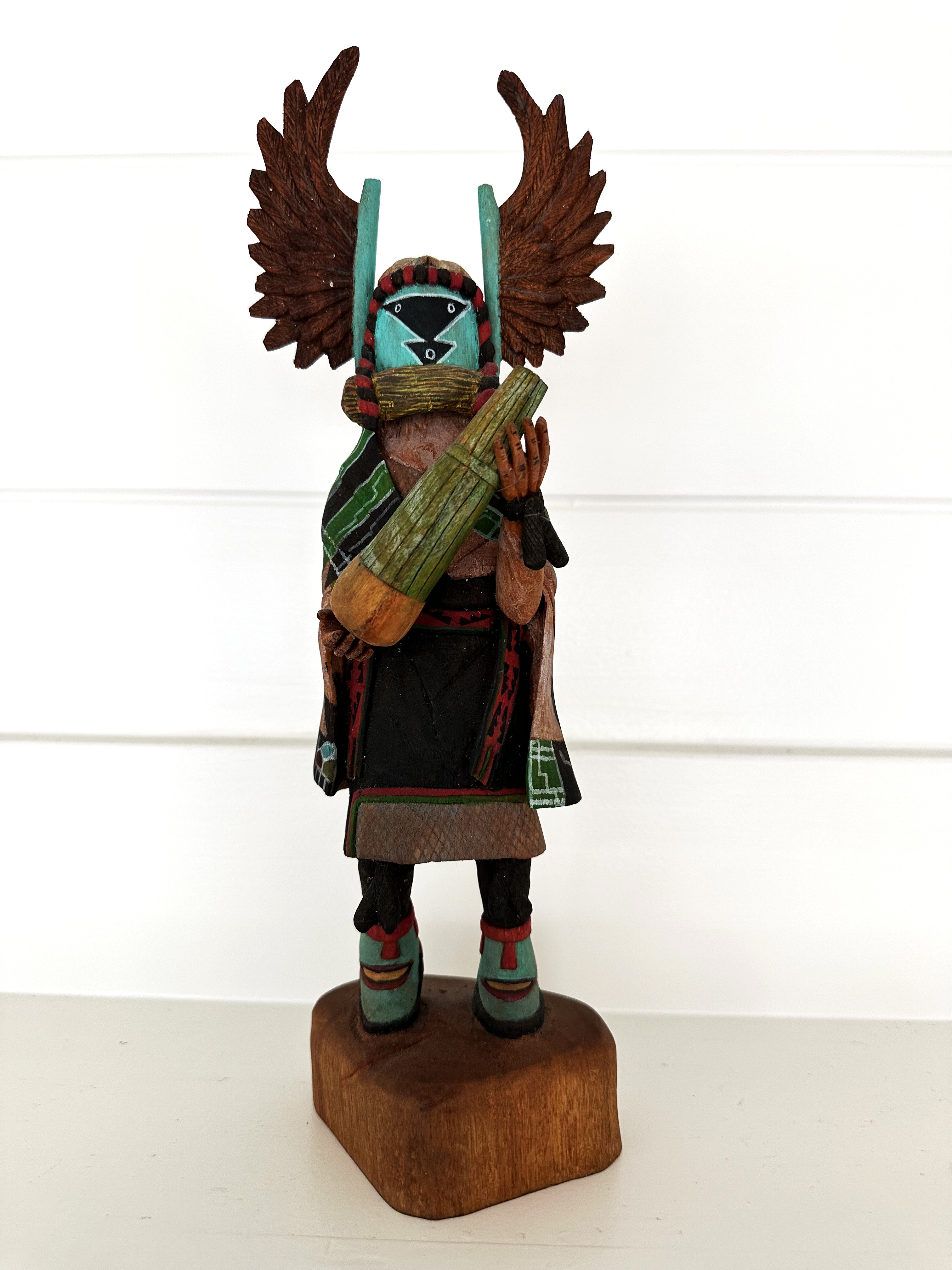
Kachina: Crow Mother
The Crow Mother (Angwusnasomtaka) is the maternal leader of the Whipper Kachinas. She is the Crow Bride (Angwushahai-i) on Third Mesa. The “bride” name coming from her talking and singing as she comes dressed all in white. On the other mesas she is simply known as the Crow Mother. Many Hopi people consider her to be the mother of all Kachinas and classify her as a Wuya kachina.
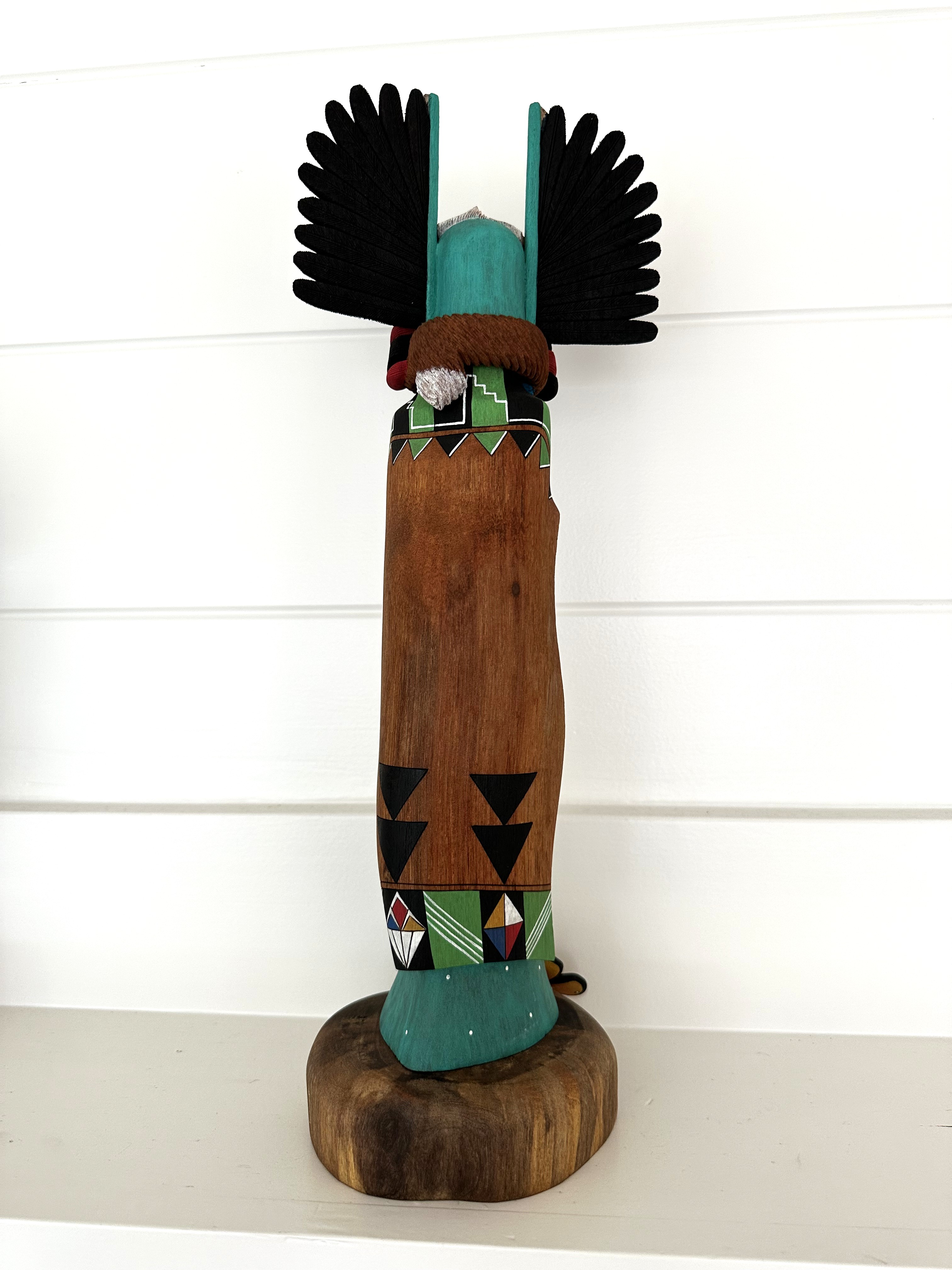
Crow Mother wears a dramatic tablita that is wider than her shoulders and is adorned with crow wings emerging from turquoise painted boards which are placed on the side of her mask. Her face is covered a turquoise panel with descending black triangles, where her eyes would be. Her neck is adorned with a fox hide or fir branches, attached to the bottom of the mask.

In the Hopi language Crow Mother is also referred to as Tümas, which designates her motherhood and guardianship over the children in the tribes. She supervises the initiation of the children into the Katsina Society and carries the yucca whips with which they are struck by the Hu Katsina, known as the Whipper Kachina. The children are lead through initiation rites between the ages of six and ten, and those rites are celebrated every four years. As part of the initiation, the designated children are taken to a place on the mesa where he or she makes an offering at a shrine and casts corn meal toward the sun for four consecutive mornings. For the first three days, the child in not allowed to eat salt or meat, but on the fourth day these dietary restricions are lifted.
Crow Mother leads other Kachinas into the village during the Bean Dance (Powamuya) bearing in her arms a basket of corn kernels and bean sprouts to symbolically start the new season properly. The Crow Mother appears during the Bean Dance on all three Hopi mesas.[1]
Other than the few feathers atop her head and the ties on the bundle of whips she is completely carved. This Crow Mother carries wooden or yucca whips (which were carried by the katinasm from Old Oraibi on Third Mesbs) or corn cobs laiden with corn as symbols of the upcoming harvest.
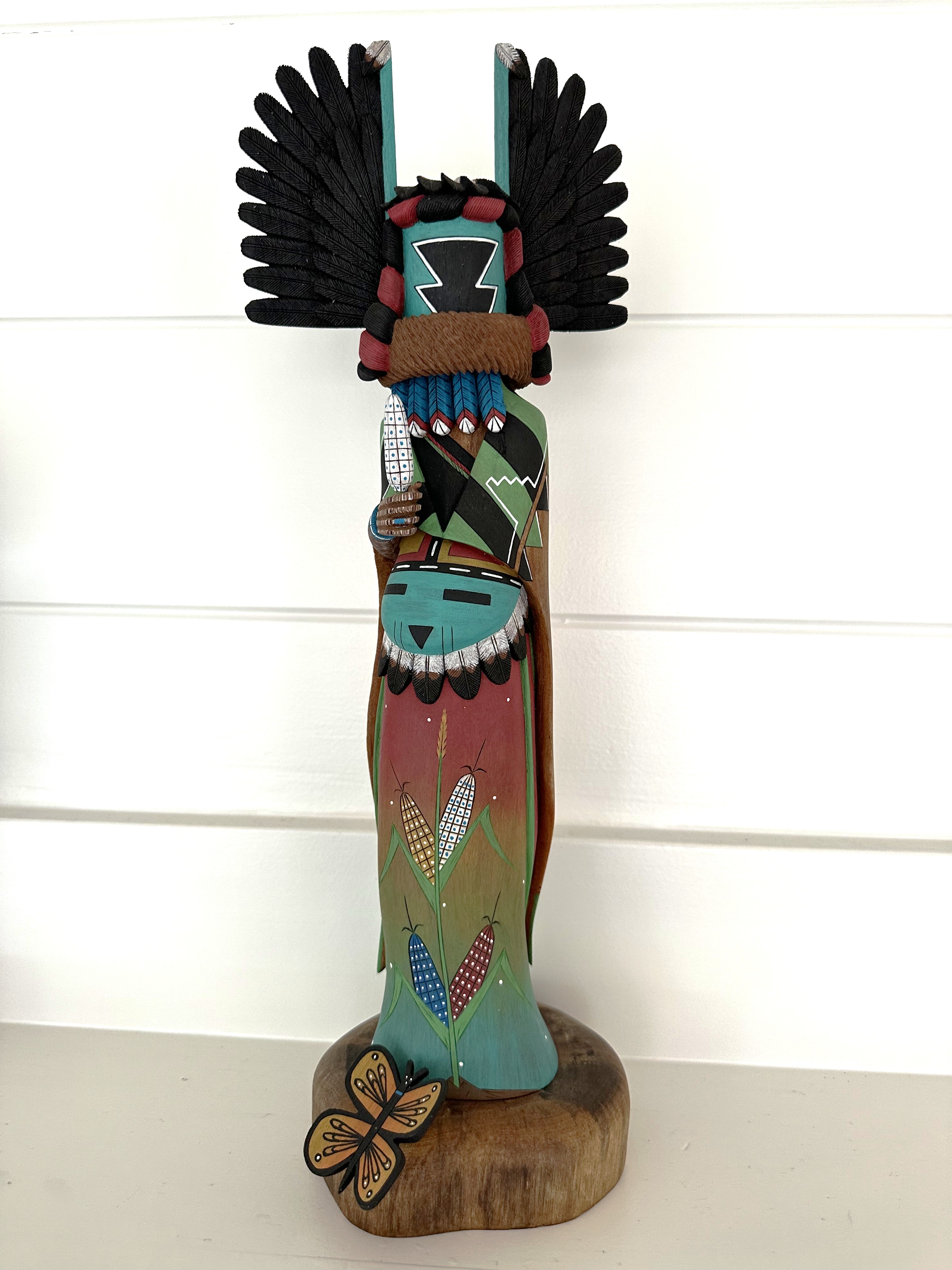
An interesting twisted added by Bryson Huma to the Crow Mother is the protruding Sunface on the belly of the sculpture. There is also a butterfly on the base of the Kachina. These images remind the viewer of a mother with child, who has symbolic and real benefits to the tribe for bountiful harvests and conception. The presence of children is vital to the tribe, as it is to all humanity. And Crow Mother is the guardian of those sacred blessings. The butterfly often symbolizes seasonal changes of spring, fertility, renewal and the coming beauty of summer. Butterflies are also associated with bringing rain and pollinating crops in the fields for a successful fall harvest.[2]
References:
[1] http://www.kachinahouse.com/crow-mother-katsina-doll
[2] The kachina curators at Garland’s Sedona, AZ record the history of the Native American carvers and the story of the Kachina they have carved. Much of the commentary above is from speaking with Nadeja Botticelli and the sales support staff at Garland’s.

