
Friday Finance: Mortgage
Eleven months ago (November, 2025), the White House wanted Americans’ gaze to be directed away from the Government Shutdown and the pending Jeffrey Epstein disclosures. Instead we heard President Trump touting that he was helping out the American public by offering an extended mortgage for the new buyers. In lieu of the traditional 15 year or 30 year mortgages, he was calling for a 50 YEAR MORTGAGE. While this is not a new idea, it is a financial tactic that is both alarming and deceiving.
By adding 20 years to the typical 30 year mortgage, the bank certainly lowers the monthly payments that a potential homeowner would pay. What is important to note that the amount of total interest paid by the homeowner will balloon and far exceed the original cost of the house! The new home buyer essentially becomes an indentured 50-year rent paying servant to the banks, who in fact own the house for over half a lifetime of the average citizen.

So, What is a Mortgage Anyway?
A mortgage is a loan on residential real estate, i.e. primary or secondary residence, that is paid for over time, typically 15 – 30 years, at prevailing interest rates. The Word MORTGAGE is interesting, if you want to read about it’s original and newer meanings see this LINK.
Help Me Understand the Mortgage Process and Costs
Assuming you are still ready to see what is out there in the new homeowner real estate world, here is a decision-checklist with your assumptions: purchase price = $1,000,000, 20% down payment ($200,000) → loan principal = $800,000.
This example assumes that you are buying a home directly from the speculating home builder. These include new builders such as D.R. Horton, Lennar Corp., Pulte Group, DVR Inc., and Meritage Homes among others. And it assumes that you are weighing the following home loan options: 1) current builder has a preferred prevailing interest rate, a 3.99% teaser rate (builder buydown), and you want to know 2) an historical mortgage rate from “few years ago” for context.
Below this builder checklist I have inserted payment/interest tables for the various mortgage term/interest-rate combinations so you can plug them in during your meeting with the builder.

Decision Checklist (for a $1MM home)
The assumption of a $1 million home is for easy conversion purposes. Use the $1 million figure as a bench mark: if the house is more than that sum or less, insert the percentages of the rates and payments in your calculations. The idea is to bring this check list with you to the builder’s sales rep and fill it out together with them.
1. Price & Market Reality (Questions to ask yourself and your realtor)
- Do you love the house? Can you see yourself living here for at least 7 years? If YES, proceed … If NO, stop and keep renting your current primary residence.
- “What are the most recent ‘closed sales’ of comparable homes in this community?”
- “Can I see an independent appraisal or other evidence that $1,000,000 is justified for this property?”
- “Is the $1,000,000 price tag before or after builder incentives?”
2. Mortgage Rate Details (Especially for Builder Buydowns)
- “You’re advertising a 3.99% rate — is that a permanent rate or a temporary buydown?”
- If it’s a buydown:
- “How many years is the buydown active?”
- “What is the rate after the buydown ends?”
- “Who pays the buydown cost (builder, lender)? How much in dollars is it?”
- “What will the monthly payment be after the buydown expires?”
- “If we cannot refinance, what’s the long-term cost of the loan at the full rate?”

3. Loan Term Comparison (15- / 30- / 50-year mortgages)
- “Can you show me monthly payments and total interest paid (called amortization tables) for 15-year, 30-year and 50-year terms on the $800,000 loan?”
- “How quickly will I build equity under each term?”
- “If there’s a 50-year term, is the loan fully amortized or is there some interest-only period?”
4. Down Payment Options (Including Less Than 20% options)
- “What are our down payment options? e.g., 10%, 15%, 20%?”
- “What would the monthly payment be at each down payment level (including private mortgage insurance – PMI, taxes, insurance, HOA, etc.)?”
- “How much cash do I need at closing for those costs? And how much will be needed for each option (down payment + closing costs + buydown/incentive costs)?”
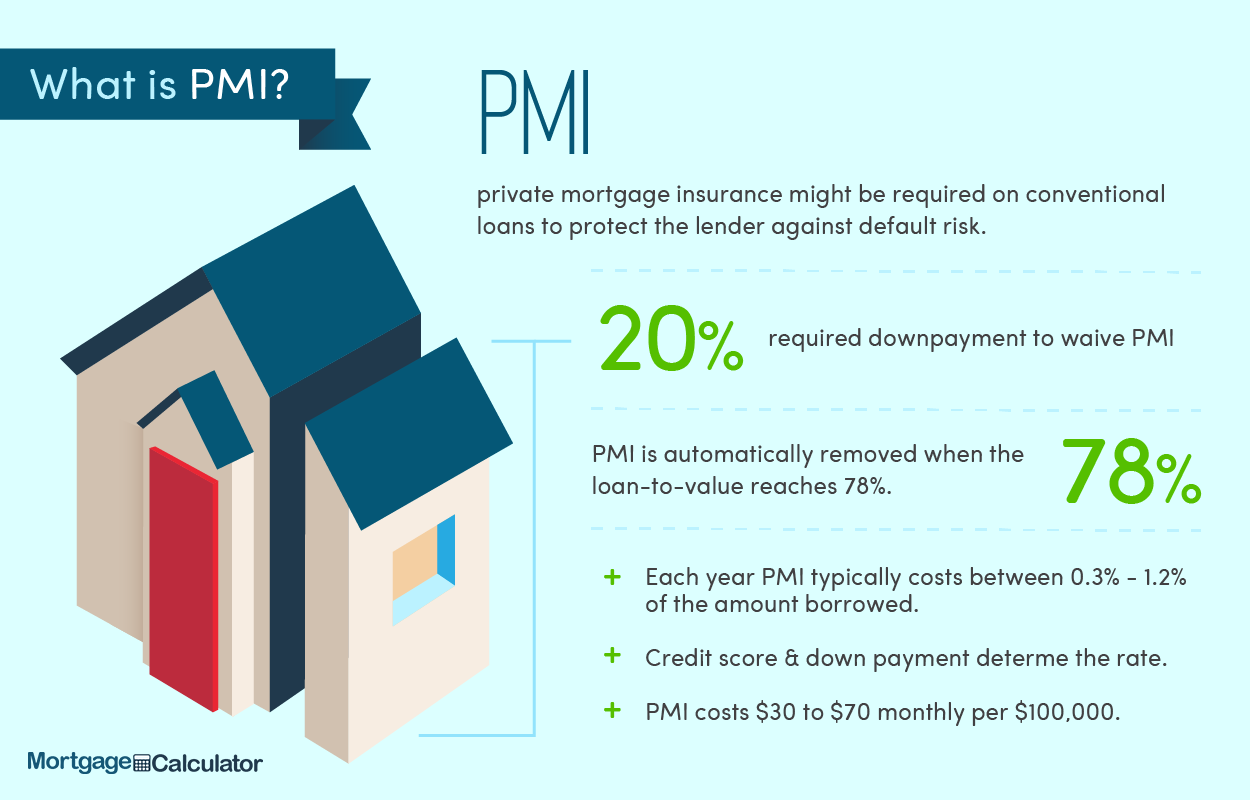
5. PMI (Private Mortgage Insurance) If Down Payment is <20%
- “If we invest less than 20% down payment at closing, how much will PMI cost us monthly?”
- “When and how can we get PMI removed (percentage of equity, appraisal, refinance)?”
- “Is there an upfront PMI fee or only monthly fees?
PMI: How Much Does it Cost? Private mortgage insurance premiums vary in amount, from a fraction of a percent to as much as 1.5% of the value of the original loan. (Please Note: @ 1.5% on an $800,000 loan, that is an additional $12,000/year.) PMI payments are paid monthly and the fees are collected each year, or until it is no longer required by the lender issuing your mortgage.
The Private Mortgage Insurance company collects from the borrower several key elements: A) state and federal taxes owed on the property at end of year, B) interest charges, 3) principal payments, and 4) PMI insurance fees. Each of the companies that is owed money for your house is paid out of that PMI Insurance, by the insurance company.
Beware: the mortgage company will not automatically remove the PMI payment, once your growing equity has lowered your mortgage to the 80% value level. The homeowner must make that request and prove to the mortgage holder that the current value of the house sustains the 80% figure (you will have re-appraisal your home for the mortgage company to remove the monthly PMI payments).
6. Total Monthly Payment Reality Check
Ask for a written breakdown of all of the monthly costs/charges that you as the buyer will incur, including:
- Principal & interest
- Property taxes
- PMI (if applicable)
- Homeowners insurance
- HOA or community fees (if applicable)
- Any special assessments on property made by the community on the horizon
7. Equity-Building & Resale Risk
You build the concept of home equity in two fundamental ways: 1) with your downpayment. Presumably you are paying market prices for your home and any money you put down, immediately counts toward your equity. 2) The second way to gain equity is through monthly payments of the mortgage. Each payment consists of two parts: interest and principal. Each principal portion of your payment adds to the value of your equity.
Some additional questions you will want to ask the mortgage broker before you sign on the dotted line include:
- “What are recent resale prices in this neighborhood for homes 2-5 years old?” If you have an independent realtor, she will be able to give you as many comparison sales as you need to see how the market is doing in your new neighborhood or the city as a whole. If the home builder has this information, they can be a source of recent prices. If not, you will have to do some investigation work on your own.
- “If home values flatten or drop, how much headroom do we have with this purchase?”
- “What equity might we expect after 5 years, under each loan term?”
8. Incentives vs. Lower Price
Here are two more questions you will want to ask your mortgage broker:
- “You’re offering incentives (rate buydown, upgrade credits) — what is the dollar value of those?
- “What if instead we negotiated a lower price by that same amount — how would that compare?”
9. Flexibility & Refinance Options
And there are always questions to ask as to your flexibility within the agreement you are about to sign:
- “Is there a prepayment penalty, if we pay extra toward principal or if we refinance early?”
- “If we refinance within a few years, will we lose builder incentives or have any restrictions?”
10. Walk-Away Conditions (Your Safeguards)
Don’t proceed with the purchase unless each of the following conditions is met (and you understand them) to your satisfaction:
- Monthly payment fits your budget (including all ancillary costs)
- You fully understand the buydown, full rate, and what happens when it ends
- The home’s price is justified by comps and you are comfortable with possible resale risk
- If down <20%, PMI cost is acceptable and you have a plan for paying for it until you have the basis to eliminate it
- You have emergency savings after closing (3–6 months minimum expenses)
- You are okay with the total interest costs and you know how fast you will be building equity in the transaction

Payment & Total Interest Table (Loan = $800,000, which is the $1,000,000 home price minus 20% down) for 15/30/50 year terms
Here are sample numbers for three interest-rates. The 50 year rates and payments are in BOLD below:
- 3.99% (builder buydown / promotional)
- 5.49% (close to recent 15-yr average) FRED+2Bankrate+2
- 6.24% (recent 30-yr average) FRED+1
| Term | Interest Rate | Monthly Payment Approx* | Total Paid Over Life | Approx Total Interest |
| 15 years | 3.99% | ≈ $5,915 | ≈ $1,066,700 | ≈ $266,700 |
| 30 years | 3.99% | ≈ $3,814 | ≈ $1,372,960 | ≈ $572,960 |
| 50 years | 3.99% | ≈ $3,078 | ≈ $1,846,800 | ≈ $1,046,800 |
| 15 years | 5.49% | ≈ $6,545 | ≈ $1,180,100 | ≈ $380,100 |
| 30 years | 5.49% | ≈ $4,542 | ≈ $1,635,120 | ≈ $835,120 |
| 50 years | 5.49% | ≈ $3,913 | ≈ $2,348,000 | ≈ $1,548,000 |
| 15 years | 6.24% | ≈ $6,728 | ≈ $1,211,040 | ≈ $411,040 |
| 30 years | 6.24% | ≈ $5,004 | ≈ $1,801,440 | ≈ $1,001,440 |
| 50 years | 6.24% | ≈ $4,430 | ≈ $2,657,800 | ≈ $1,857,800 |
* Rounded values; assume full amortizing loan, excludes taxes/insurance/PMI.
Interpretation:
- The 50-year loan dramatically lowers the monthly payment compared to a 15-year but huge extra interest payments come into the picture. NOTE: Under the 50 years 5.49% rate, your interest payments will 1.94 times MORE than the $800,000 original loan.
- Even the 30-year mortgage at current rates means you’ll pay over $1 million in interest on a $800k loan, if you keep the property and pay for it full term.
- The teaser 3.99% interest rate helps a lot to lower your monthly payments, but if it’s temporary and later adjusts higher or if you effectively refinance your mortgage later at a higher interage rate, the benefits may vanish or reverse.
The Mortgage Rate from “A Few Years Ago” for Context
If you go back a few years: in mid-2000s, average 30-year fixed was about 5.9% (2005) per historical data. Bankrate+1
At 5.9% on $800,000:
- 30-year monthly ~ $4,774 → total paid ~ $1,718,640 → interest ~ $918,640
This example shows how much worse even a small increase in your mortgage rate makes in your total interest payments over the long run.
How Can I Use This Information in Our Meeting with a Builder?
- Fill out the monthly payment & interest slots for the actual rate the builder offers (if different).
- Ask the builder to show you payment tables for each term under their rate plus the full (post-promo) rate.
- Compare: monthly payment vs. total interest cost vs. building equity
- Decide: Do you love the house and are you financially comfortable with the monthly payment plan and the total interest costs?
- Use the “walk-away” conditions: if you don’t understand the buydown, or the price seems high vs comps, or the payment after promo is stretching your budget, walk away or renegotiate.
How Can I be Smarter about My Mortgage Payments?
- Buy down the monthly interest rate by paying points up to the amount you can afford, when you establish your first mortgage. That lower rate, while painful for the cost of the “buy down,” may save you thousands of dollars in interest in the long run.
- Invest in your house. The homeowner rule of thumb is to invest approximately 1% – 2% of the value each year putting that investment back into the house. Do not wait for problems to bite you, like a leaky roof, it will never get better. Take the list of recommended repairs from your home inspector and break down the list into a plan for your house. Electrical, plumbing, roof, chimney, basement, kitchen, landscaping….there are all areas worthy of an annual upgrade to your house. Your largest consumer investment deserves an annual review of what you can do to keep it on an upward trajectory with the market in your area.
- Refinance your mortgage when the prevailing interest rates are “in your favor.” Another rule of thumb, when the interest rates drop by 1% or more, it is worth the closing costs of refinancing to secure a new, lower rate mortgage.
- Pay your mortgage payments “every other week,” in lieu of two times a month or once a month. Why? Please Note: If you pay your mortgage every other week, that makes for 26 payments a year, which matches how often most people are paid. Paying two times a month is 24 payments. The “every other week” regime gives you two extra payments per year. Designate those extra payments as going toward your PRINCIPAL ONLY. That payment plan speeds up your equity accumulation, and lowers the total amount of interest you pay in the long run. On one of our personal mortgages we saved seven years and nearly $100,000 in interest payments. Give the every other week payment scheme a try!

