
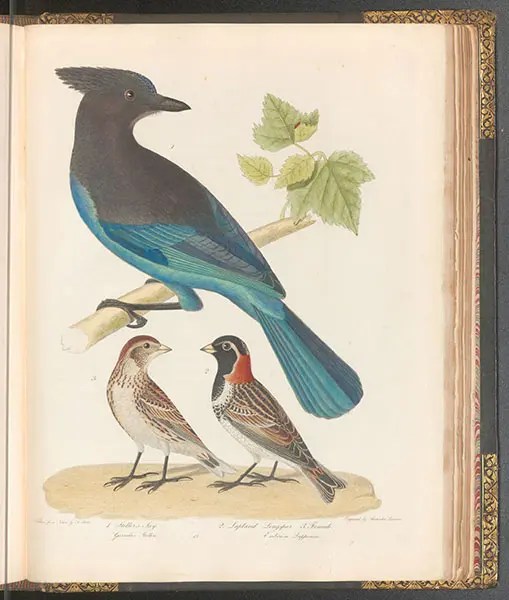
Birds of Steller
Time to scrub the bird name for jays?
Like James W. Abert and Darius N. Couch, Georg Steller hasn’t been singled out by the AOS. The Steller’s Jay and Steller’s Eider are on the English name deletion list only because of the blanket rule. Steller, during his 37-year lifespan, has one of the cleanest records of anyone in the gunsights of the AOS. If anything, Steller stands out for opposing the mistreatment of Indigenous Itelmens people during his time in Russia.
Who was Georg Wilhelm Steller?
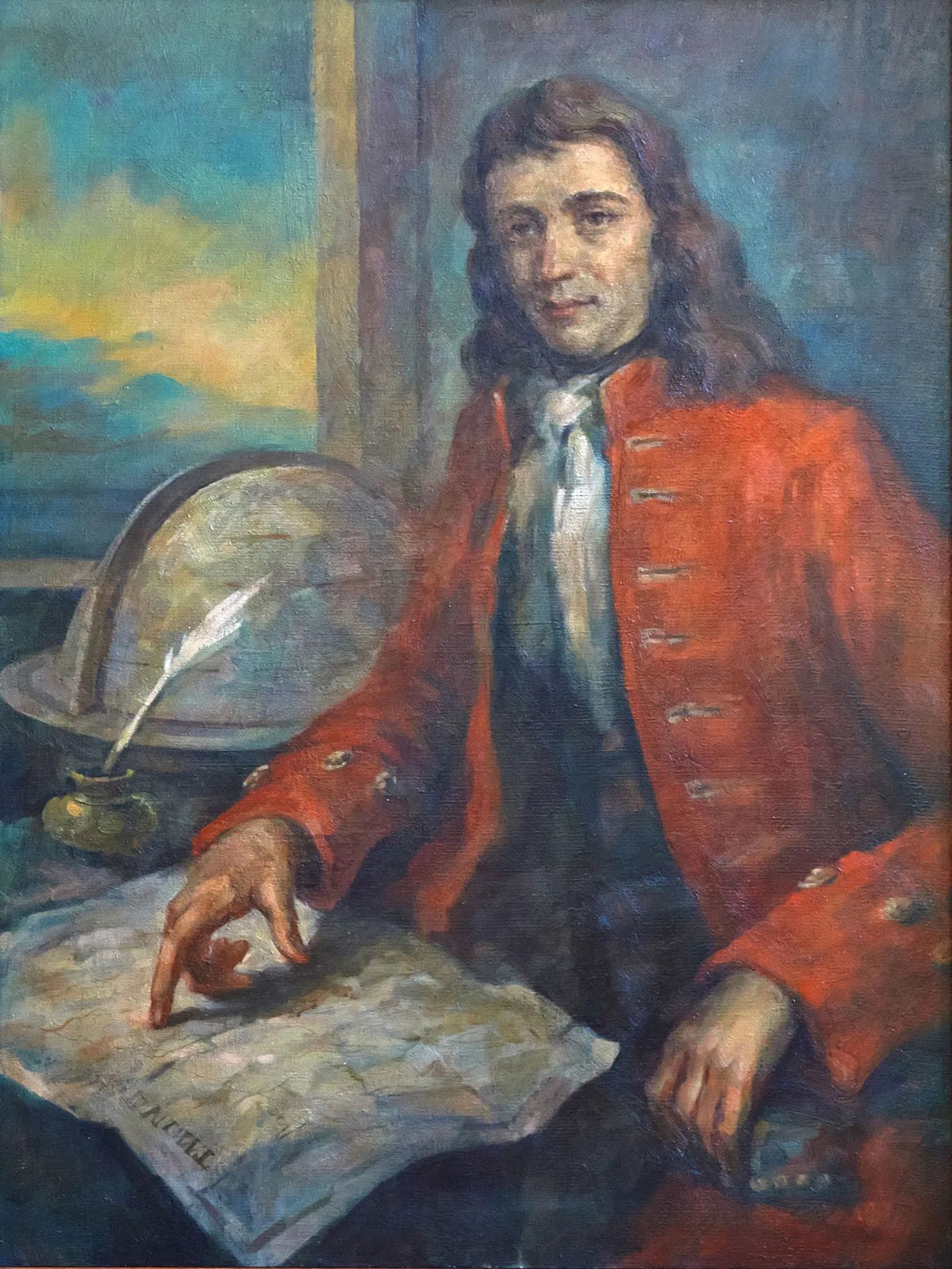
Born in Windsheim, Germany, in March 1709, Georg Wilhelm Stöhler was raised in a religious household. His father was a Lutheran cantor, Johann Jakob Stöhler. (Georg later changed his surname to “Steller” to shift from a German sounding name to a more Russian-appropriate pronunciation.) Georg studied Lutheran theology at Wittenberg University, then moved to the medical faculty at Halle in 1731 and took up botany. Although he never passed a formal medical exam, in 1734 the Russian army accepted Steller as a physician, and he went on to be stationed in St. Petersburg.[1]
Living in St. Petersburg, Georg Steller met the renowned naturalist, Daniel Gottlieb Messerschmidt. Steller learned what he could about Siberia from Messerschmidt in the three months before Messerschmidt died in March 1735. And while preparing to leave for Kamchatka on the Great Northern Expedition, he began courting Messerschmidt’s young widow, Brigitta Helena. They married in 1737. Through the marriage, Steller obtained Messerschmidt’s Siberian travel notes that had not been handed over to the Academy. The marriage, however, did not go well. They left St. Petersburg together in January 1738, but Brigitta chose to stay in Moscow, insisting that she would go no farther away from her home in St. Petersburg. (She kept claiming Steller’s salary until he died.) Whether they had children is uncertain. One Ancestry genealogy record lists a son, Johannes Nicolaus Steller (1736–1786), and although the dates match-up for a “surprise baby,” that record cannot be confirmed in any known biography.[2]
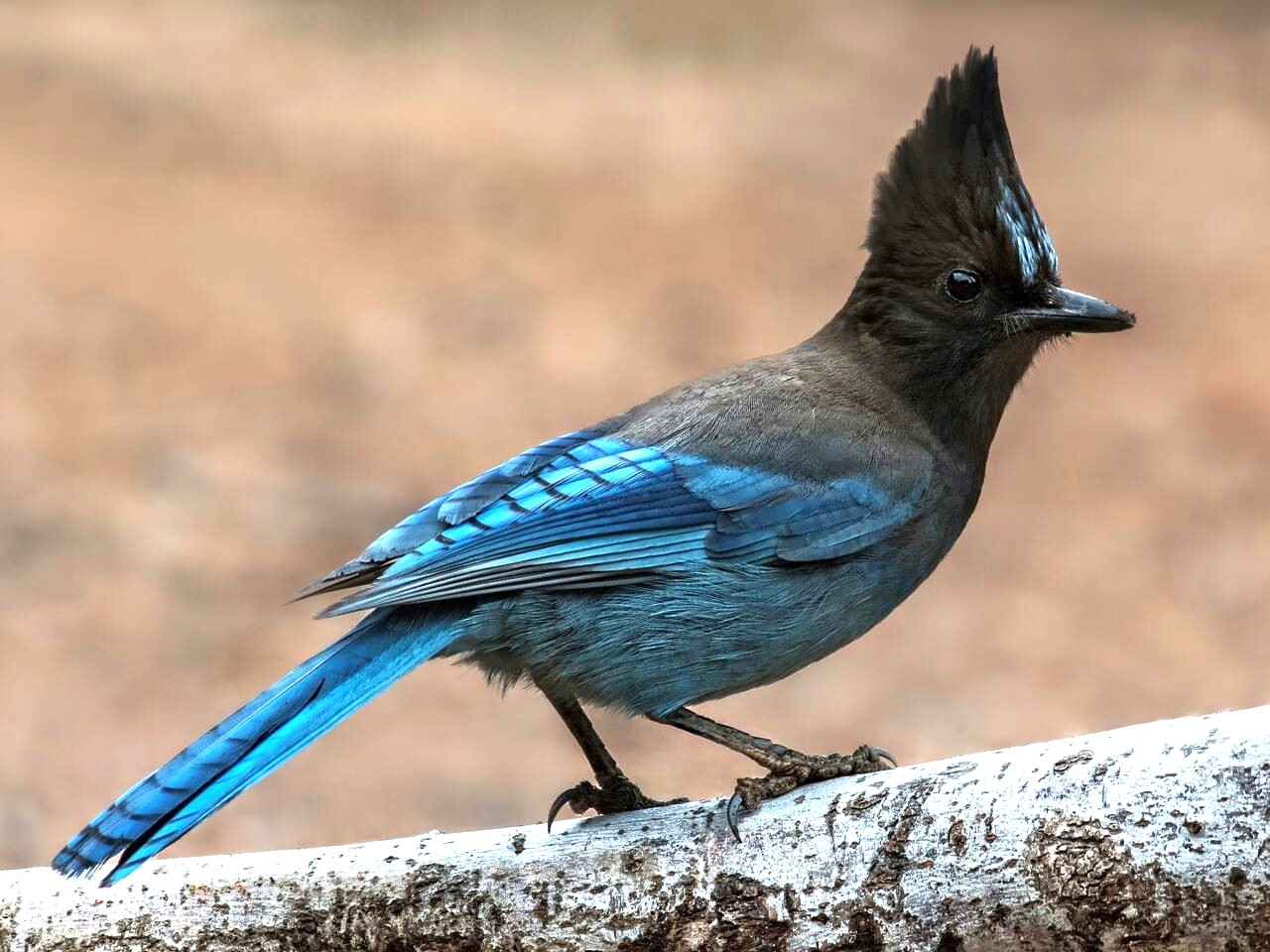
And THAT JAY: found by Steller, named by Someone Else
Steller went on the Great Northern Expedition (1733-1743) led by Capt. Vitus Bering. Bering was the Danish navigator and Captain in the Russian Navy, after whom the Bering Strait is named. The Expedition reached Alaska in July 1741.[3]
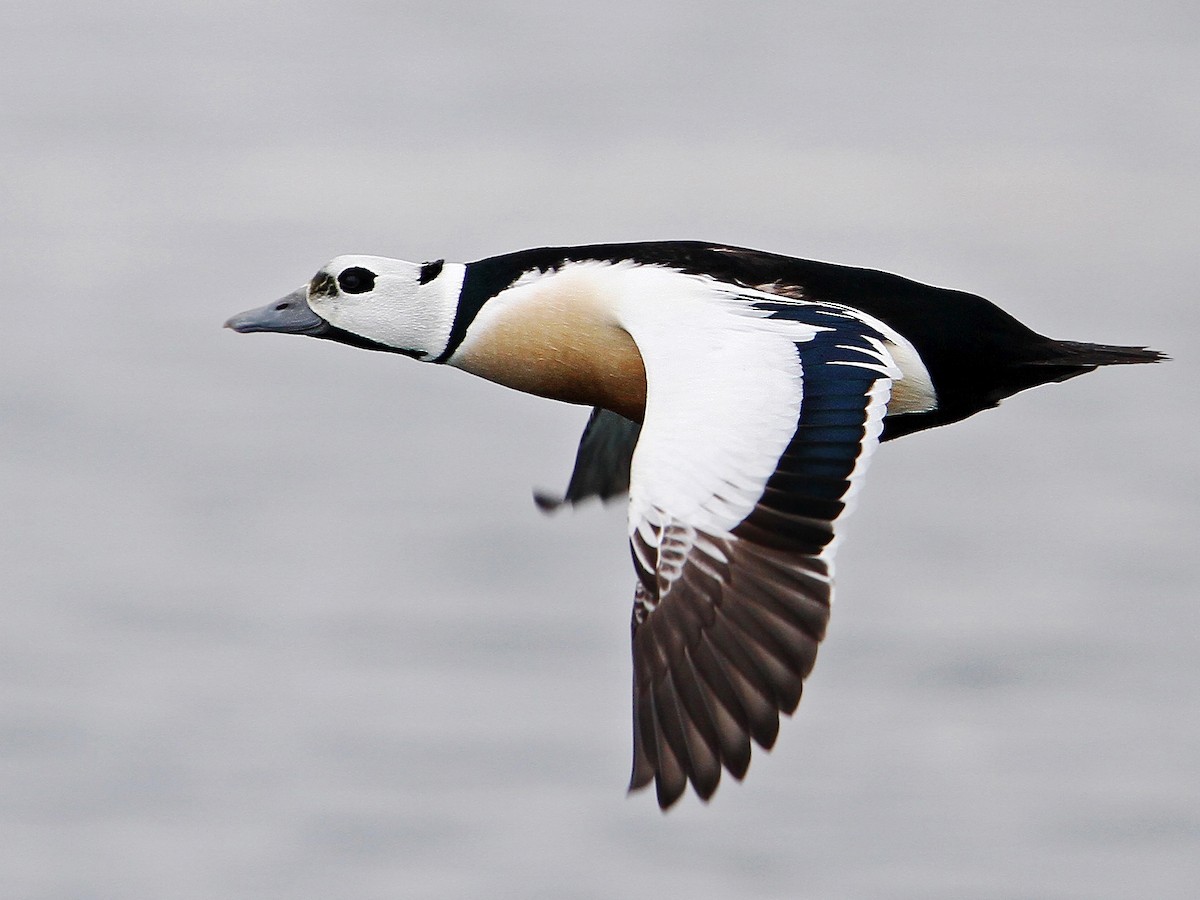
Steller persuaded Captain Bering to give him time ashore and Steller was granted just 10 hours to do so. Steller shook his head and remarked on the ratio of “ten years of preparation to ten hours of investigation” as unfair. On the island Steller was struck by a common black-crested blue jay that he didn’t recognize from Old World forests. Its resemblance to the Blue Jay painting in Mark Catesby’s 1731 Natural History of Carolina, Florida and the Bahama Islands. The image convinced Steller that the Expedition had reached North America. Steller did not name the bird, though. His specimen was lost when the Expedition was marooned on Bering Island, but his field notes describing the bird survived. In 1788 the German naturalist Johann Friedrich Gmelin formally described the species in his expanded edition of Linnaeus’s Systema Naturae, naming it Corvus stelleri. Gmelin based his account on “Steller’s Crow” as described by English ornithologist John Latham in 1781. So it was named in Steller’s honor, more than 40 years after his death. Steller’s Eider followed the same pattern: Peter Simon Pallas described and named it many years after Steller’s death.[4, 5]
Ship Wreck, Death and Near-Death Experiences
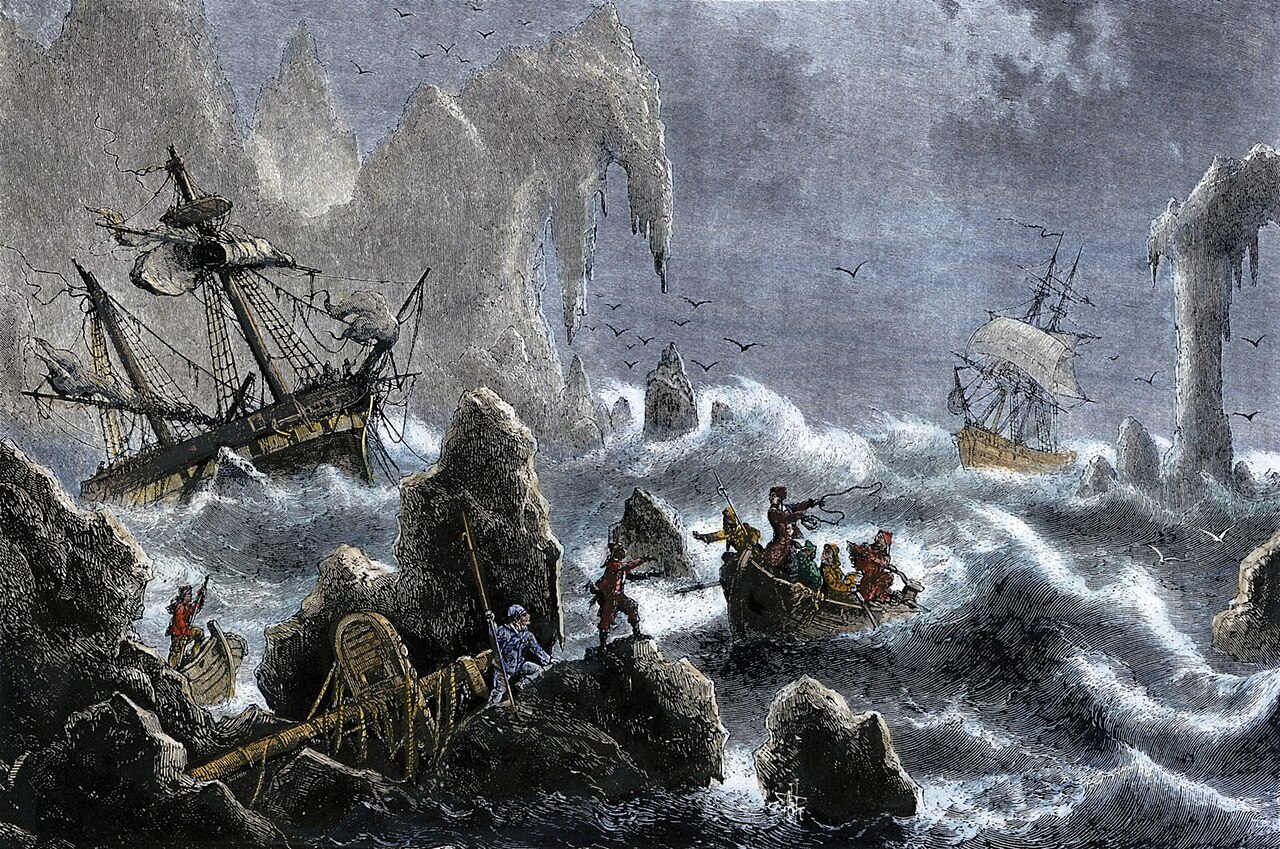
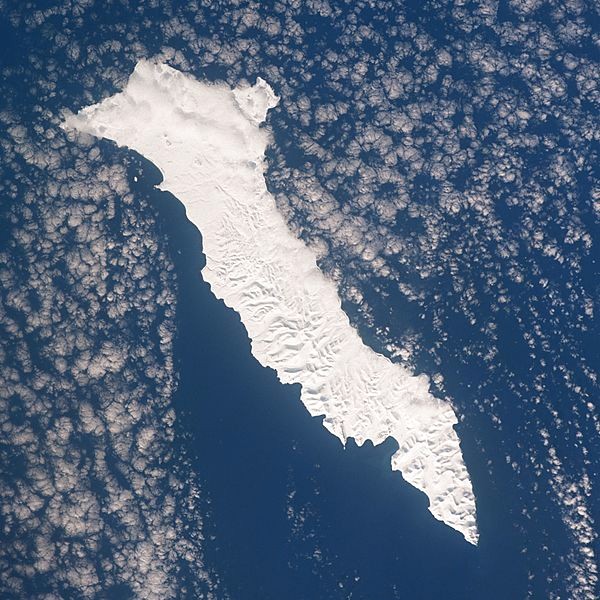
The Expedition ship St. Peter came within sight of land in November 1741. Their ship wrecked on the rough shoreline of the islands. Sadly, out of the 78 men aboard St. Peter, nearly half the crew (32 men) perished due to extreme hardship and scurvy. Steller had tried to treat the growing scurvy outbreak with leaves and berries he gathered ashore, but the ship’s officers scorned his advice. Steller nursed the survivors as best he could, including Bering, who could not be saved. Bering died in December 1741, less than one month after the first sight of land. The survivors suffered badly during the overwintering.
With the spring thaw, the remaining crew, including Georg Wilhelm Steller, managed to break apart the remains of the wrecked St. Peter. A skilled assistant carpenter led the crew in constructing a smaller, 40-foot vessel from the salvaged timbers. They departed what would later be called Bering Island, with barrels of salted sea cow meat aboard. In August 1742, the 46 survivors finally sailed away from the island in the smaller vessel and arrived safely back at the home port of Petropavlovsk in Kamchatka two weeks later.[5, 6] [For a deeper dive into the Great Northern Expedition, see the highligts in Footnote 5 below.]
His good deeds unpunished?
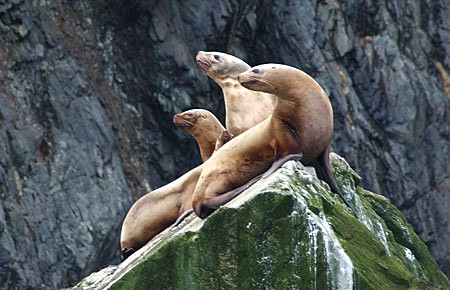
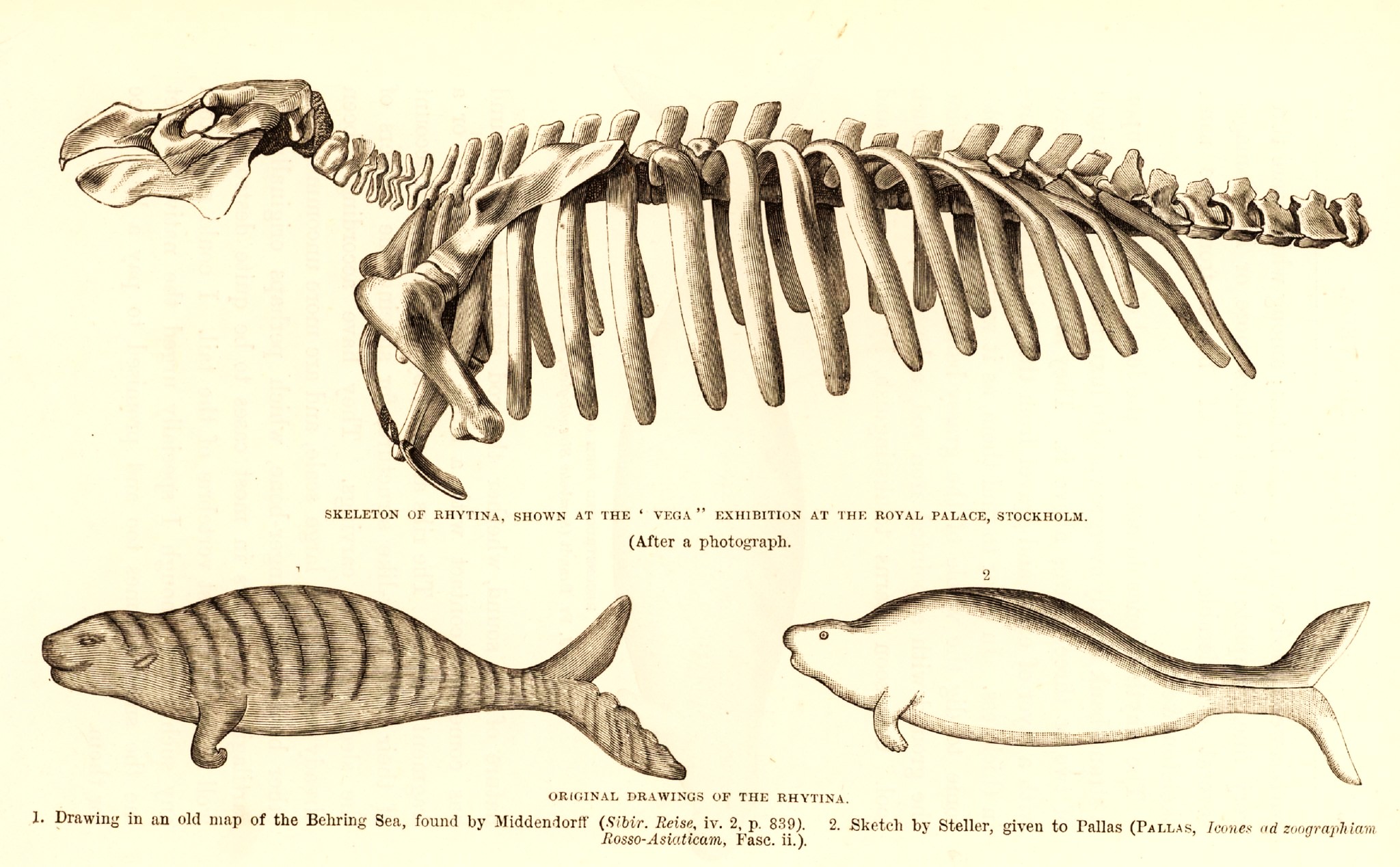
Steller’s scientific legacy is huge. His De bestiis marinis, published in Latin in 1751, contains the only scientific description from life of Steller’s sea cow, and the first scientific descriptions of the fur seal, Steller’s sea lion, and the sea otter.
In Kamchatka he worked on behalf of local people called Itelmens (historically referred to by Russians as Kamchadals), known as the indigenous ethnic group of the Kamchatka Peninsula in the Russian Far East. Steller wintered at the remote village of Bolsherechye, where he helped organize a local school and began exploring the peninsula. He collected and described a huge amount of natural-history and ethnographic data there. His work on the Itelmen is still valued today; a 1996 study of the Itelmen notes that they have come to regard Steller as “their historian.”[7]
What were Steller’s Bad Actions or Flaws?
If there were bad actions or personal flaws, they mostly have to do with his temperament rather than his cruelty. The Dictionary of Scientific Biography describes Steller as difficult and quarrelsome with a violent temper; however, as a field explorer he was described as rugged, enthusiastic and indomitable. His sympathy for local indigenous Itelmens people got him into legal trouble. A jealous rival falsely accused him of freeing Kamchadal rebels from prison. As a result Steller was recalled to St. Petersburg, and at one point he was arrested and sent back to Irkutsk for a public hearing. He was acquitted in Irkutsk, but in summer 1746 he was arrested again at Solikamsk, because news of the acquittal hadn’t yet reached the capital. The warrant was cancelled in October 1746. He learned of his freedom in Tara and headed for the capital, but got only as far as Tyumen, where he died that November. One early biography adds a personal decline: it says he was drinking heavily in the summer of 1746, which gradually ruined his health.[8]
There is also a tragic irony in this story, though it isn’t Steller’s fault. By 1754 a czarist envoy warned that sea cows were being killed so fast they would soon disappear, and by 1768, only 27 years after their discovery, Steller’s sea cow was declared extinct. Modeling shows they were hunted at more than seven times their sustainable limit.
Where the Steller name change stands today…
On November 1, 2023, the American Ornithological Society announced it would change the English common names of birds named after people, starting with a small pilot and then focusing on 70–80 species found primarily in the U.S. and Canada. The AOS deliberately chose not to judge names one by one, arguing that a case-by-case approach places the burden of petitioning for name changes on the people most affected by harmful names. That’s why Steller’s Jay is on the list despite his relatively clean record. It wasn’t in the first round. The pilot covers Inca Dove, Townsend’s Solitaire, Maui Parrotbill, Bachman’s Sparrow, Scott’s Oriole, and Townsend’s Warbler. The AOS described the pilot’s four eponyms as honoring individuals who engaged in what we think most people today would agree was reprehensible behavior. As far as I could find, Steller’s Jay still has its current name. Only the English name is affected: scientific names in Latin will not be changed as a part of the AOS English bird names initiative, so stelleri stays attached.[9]
In the Bird of NAME Posts I have written, Steller makes a striking contrast. He’s on the same renaming list as Scott, Bachman, Audubon, Townsend and Abert, yet Steller defended Indigenous people, and his humanitarian actions cost him his own freedom. If anyone want a single example of what the AOS’s blanket rule sweeps away, Steller is probably the best one.
==============================
=-=-=-=-=-=-=-=-=-=-=-=-=-=-=-=-=-=-=-=-=-=-=
Footnotes:
[2] Steller’s Sea eagle: Who was Georg Wilhelm Steller? – Hektoen International +4
[4] The Great Northern Expedition (1733-1743) was led by Capt. Vitus Bering, who was both a Danish navigator and a Captain in the Russian Navy. The Bering Strait is named after him for his safe navigation of the Strait to and from Russian soil. The Expedition reached Alaska in July 1741. Bering claimed Alaska and the Aleutian Islands for Russia.
[5] The Great Northern Expedition (also known as the Second Kamchatka Expedition), took place for roughly 10 years between 1733 and 1743. The Expedition is widely regarded as one of the largest and most ambitious scientific and exploratory undertakings in human history. Conceived by Tsar Peter the Great and executed under Empresses Anna and Elizabeth, it fundamentally altered the maps of Russia, Asia, and North America.
The goals of the expedition were organized into multiple different land and sea detachments, with a wide array of political, economic, and scientific objectives:
- Mapping the Unknown: Cartographically survey the massive Arctic coastline of northern and northeastern Siberia.
- Finding a Sea Route to America: Cross the North Pacific to find and document the western coast of North America (Alaska).
- Opening Asian Trade Routes: Chart the Kuril Islands and establish a direct sea route to Japan.
- Resource and Resource Extraction: Access and exploit the vast natural resources of Siberia.
- Sovereignty: Secure and firmly establish Russian sovereignty over eastern Asia.
Because the expedition involved thousands of people and stretched across an entire continent, it had land-based logistics hubs and multiple maritime departure points:
- The Trans-Siberian Overland Start: The expeditionary forces originally organized and began their multi-year, 8,000-kilometer overland trek from St. Petersburg on Russia’s western coast.
- The Pacific Jumping-Off Point: For the actual maritime voyage to North America, the primary construction and departure port was Okhotsk on Russia’s eastern Pacific coast, and later Petropavlovsk on the Kamchatka Peninsula (which Bering founded during the expedition).
- The Return / Ending Point: The voyage famously ended in tragedy and survival. Bering’s ship was wrecked on what is now Bering Island (where Bering died). The surviving crew eventually built a smaller vessel from the wreckage and sailed back to Petropavlovsk and Okhotsk in 1742.
The Great Northern Expedition is celebrated for its unmatched scale, its tragic hardships, and its massive geographical contributions:
- The European Discovery of Alaska: It successfully achieved the European discovery of Alaska, the Aleutian Islands, and the Commander Islands.
- Mapping the Arctic Coastline: The expedition produced over 60 high-quality charts and soundings, mapping thousands of miles of Russia’s northern coast.
- Scientific Breakthroughs: The Academic Detachment (including Dr. Georg Steller) conducted groundbreaking ethnographic, historical, and biological research. Steller famously cataloged entirely new species, such as the now-extinct Steller’s sea cow.
- Ending the Myth of the Northeast Passage: The extreme arctic ice encountered during the mapping project forced the Russian government to conclude that an economically viable commercial “Northeast Passage” through the Arctic was impracticable at the time
[6] The Living Edens KAMCHATKA Purchase Video +2
[9] FAQ: Changes to Eponymous Bird Names +4
=-=-=-=-=-=-=-=-=-=-=-=-=-=-=-=
Appendices
Birds connected to Georg Steller
Steller didn’t give formal scientific names to anything. Instead, he wrote descriptions, and later sent stuffed birds to naturalists, mostly Gmelin and Pallas, who used them to name species after Steller. The scientific names and dates below are from the internet.
- Steller’s Jay (Cyanocitta stelleri). He was the first European to record it, in 1741; Gmelin named it in 1788.
- Steller’s Eider (Polysticta stelleri). Named by Pallas in 1769.
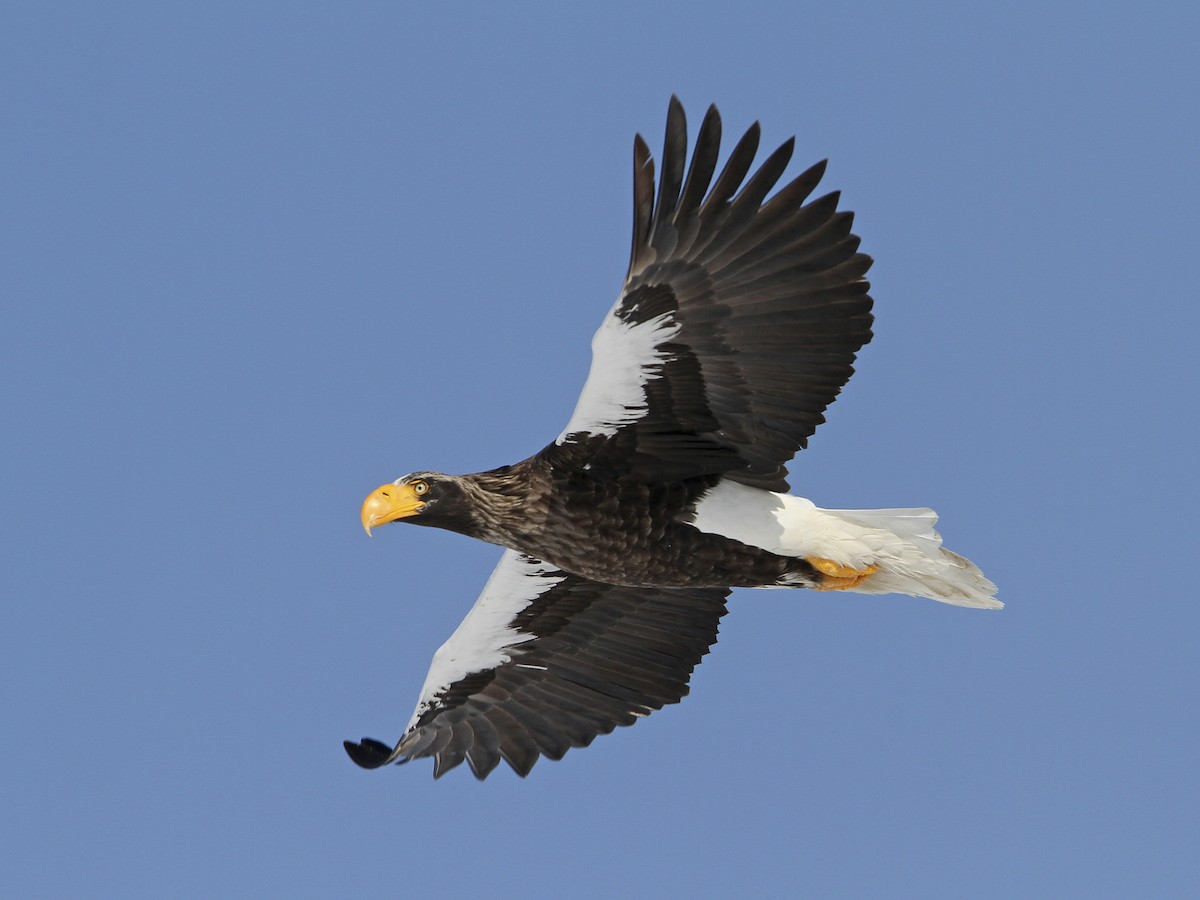
- Steller’s Sea-Eagle (Haliaeetus pelagicus). Steller described it; Pallas gave its scientific name in 1811, and the English name honors Steller.
- Spectacled Cormorant (Urile perspicillatus). Steller discovered it on Bering Island, and his description is the only firsthand account of it alive. With no other existing birds were seen; it was declared extinct by about 1850.
Mammals and other animals
- Steller’s Sea Cow (Hydrodamalis gigas). Steller’s description is the only scientific account from life; it was extinct by 1768.
- Steller Sea Lion (Eumetopias jubatus).
- Northern Fur Seal (Callorhinus ursinus). Steller wrote the first scientific descriptions of both the seal and the otter (below), though they carry other scientific names.
- Sea Otter (Enhydra lutris).
- Gumboot Chiton (Cryptochiton stelleri). Named for Steller by Middendorff in 1847.
Plants
- The plant genus Stellera, was named by Linnaeus in his honor.
- The Beach Wormwood (Artemisia stelleriana) is also named in his honor.
Written Works by Steller
- Steller, Georg Wilhelm. Beschreibung von dem Lande Kamtschatka. Frankfurt and Leipzig, 1774.
- —. “The Beasts of the Sea.” Translated by Walter Miller and Jennie Emerson Miller. The Fur Seals and Fur-Seal Islands of the North Pacific Ocean, by David Starr Jordan, pt. 3, Washington, DC, 1899, pp. 179–218.
- —. “De bestiis marinis.” Novi Commentarii Academiae Scientiarum Imperialis Petropolitanae, vol. 2, 1751, pp. 289–398. De bestiis marinis was published in Latin in 1751, Stanford University Press publishes the Journal of a Voyage with Bering, and the University of Nebraska offers a free English translation of De bestiis marinis.
- —. Journal of a Voyage with Bering, 1741–1742. Edited by O. W. Frost, translated by Margritt A. Engel and O. W. Frost, Stanford Univ. Press, 1988.
- —. Reise von Kamtschatka nach Amerika mit dem Commandeur-Capitän Bering. St. Petersburg, 1793.
- —. Steller’s History of Kamchatka. Edited by Marvin W. Falk, translated by Margritt Engel and Karen Willmore, Univ. of Alaska P, 2003.
- The University of Nebraska offers a free English translation of De bestiis marinis.
- Stanford University Press publishes Steller’s own Journal of a Voyage with Bering, 1741–1742.
Written Works about Steller
- Ford, Corey. Where the Sea Breaks Its Back: The Epic Story of Early Naturalist Georg Steller and the Russian Exploration of Alaska. Little, Brown, 1966. This book is perhaps the most readable narrative of Georg Steller’s life.
- Frost, Orcutt. Bering: The Russian Discovery of America. Yale Univ. Press, 2003.
- Golder, F. A. Bering’s Voyages: An Account of the Efforts of the Russians to Determine the Relation of Asia and America. Vol. 2, American Geographical Society, 1925. Volume 2 of Golder’s work includes an English translation of Steller’s journal, which was the standard version before the Stanford edition (listed above).
- Littlepage, Dean. Steller’s Island: Adventures of a Pioneer Naturalist in Alaska. Mountaineers Books, 2006.
- Stejneger, Leonhard. Georg Wilhelm Steller: The Pioneer of Alaskan Natural History. Harvard Univ. Press, 1936. This biography by Stejneger is about the classic scholarly life of Steller.

