

Kachina: Butterfly Maiden
Polik-mana or Butterfly Maiden is a kachina, or spirit being, in Hopi mythology. Every spring she dances from flower to flower, pollinating the fields and flowers and bringing life-giving rain to the first, second and third mesa in the Arizona desert. She is represented by a woman dancer at the yearly Butterfly Dance, a traditional initiation rite for Hopi girls. The rite takes place in late summer, before the harvest, to give thanks to Polik-mana for her spring dance. Hopi girls participating in the Butterfly Dance wear ornate headdresses called kopatsoki.
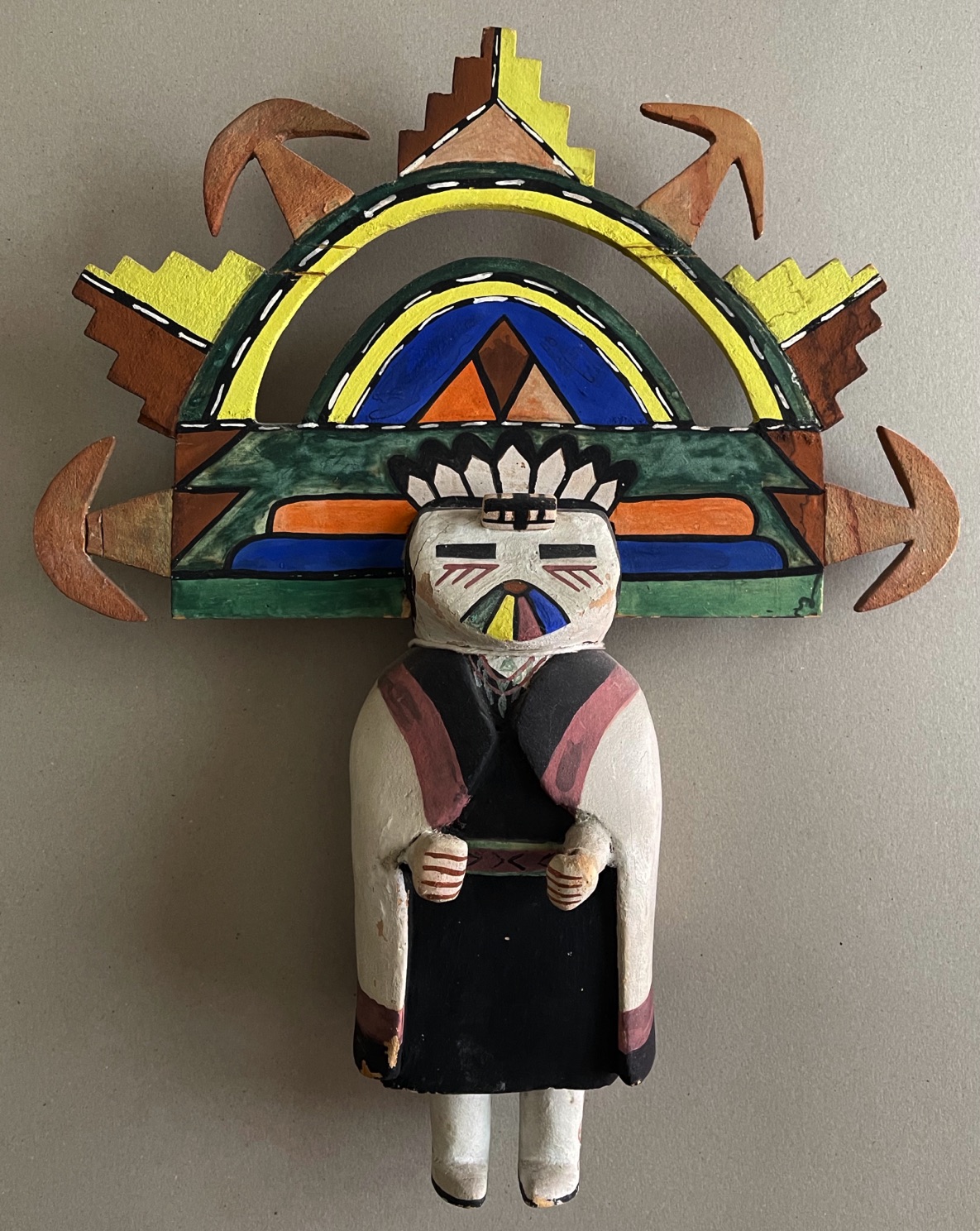
The Polik-mana Mons, a mountain on the planet Venus, is named for the Butterfly Maiden. The Butterfly Maiden Kachina in our private collection was carved by the Navajo/Leguna artist, I. Jojola.
The artist of this particular kachina decided to place the Butterfly katsina on top of the pueblos of the Anasazi ancestors. Jojola also decided to carve and paint a bowl of corn with the painted image of a lizard with its tongue extended. The stylistic choices by Jojola make for an interesting rendition of this beautiful female katsina. The Butterfly Maiden is realistic with the insect wings and matching blue and black face mask.
Hopi Legend of the Butterfly
According to Hopi Folklore and Legend: If anyone wants a wish to come true, they must first capture a butterfly and hold it gently is their hands. Then they must whisper that specific wish to it. Since a butterfly can make no sound, the butterfly can not reveal the wish to anyone but the Great Spirit, who sees all, knows all and hears all. Then they must release the butterfly to fly freely and continue on its journey.
In gratitude for giving the beautiful butterfly its freedom, the Great Spirit always grants the wish.

Put another way, according to legend, by making a wish and giving the butterfly its freedom, the wish will be taken to the heavens and be granted for the wishers. The following ceremonial words are often added at a Hopi wedding, when the Butterfly Legend is read aloud by witnesses at the blessing, prior to releasing mature butterflies:
“We have gathered here today to grant this couple all our best wishes
and we are about to set these butterflies free
in trust that all these wishes will be granted.”

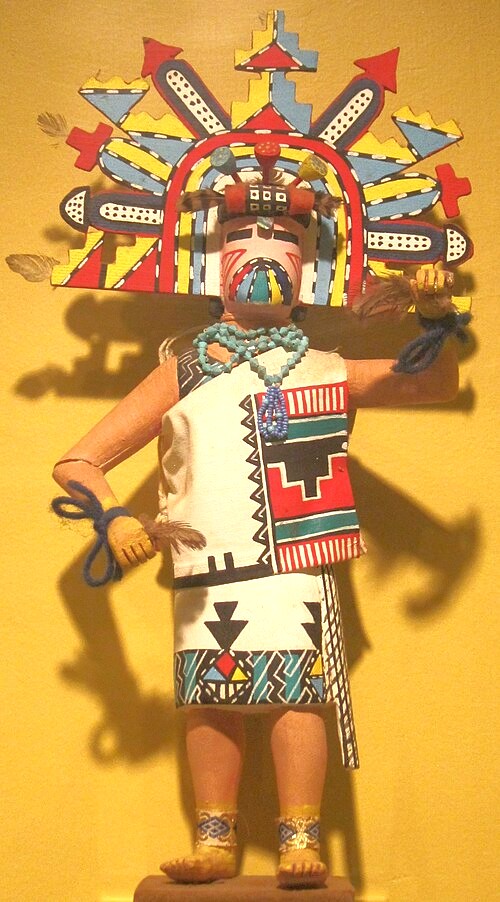
The Polikmana or “Butterfly Maiden” kachina is one of the most striking and dramatic of all Hopi kachina depictions and this very large-scale doll is one magnificent big butterfly indeed, with a particularly powerful presence.
“Polikmana or Butterfly Maiden is a kachina or spirit being, in Hopi mythology. Every spring she dances from flower to flower, pollinating the fields and flowers and bringing life-giving rain to the Arizona desert. She is represented by a woman dancer at the yearly Butterfly Dance, a traditional initiation rite for Hopi girls. The rite takes place in late summer, before the harvest, to give thanks to Polik-mana for her spring dance. Hopi girls participating in the Butterfly Dance wear ornate headdresses called kopatsoki.”
Given their extreme importance in Hopi mythology and ritual it is not surprising that Polikmana kachina imagery appears across many forms of Hopi art from kachina dolls to pottery to basketry plaques to painting. To see a large historic Hopi pottery canteen by Nampeyo with an image of Polikmana available on our website, please click here.
The doll’s scale, stance and the proportions and positioning of her head, arms, legs and body and the dynamic, powerful painting style and sheer physical precense of the piece all strongly resemble the distinctive work of the famed Hopi kachina carver, James Kewanytewa (1889-1966) who was more commonly known as “Jimmy K” and this doll might quite possibly be an unsigned piece of his work. Kewanytewa first began signing some of his dolls (and then only very reluctantly as signing Hopi kachina dolls was considered a controversial practice at the time) at the urging of some Southwestern museum curators in the late 1940’s and from then on until his death in 1966, he still made a great many unsigned pieces both for use at Hopi and for sale elsewhere.


