
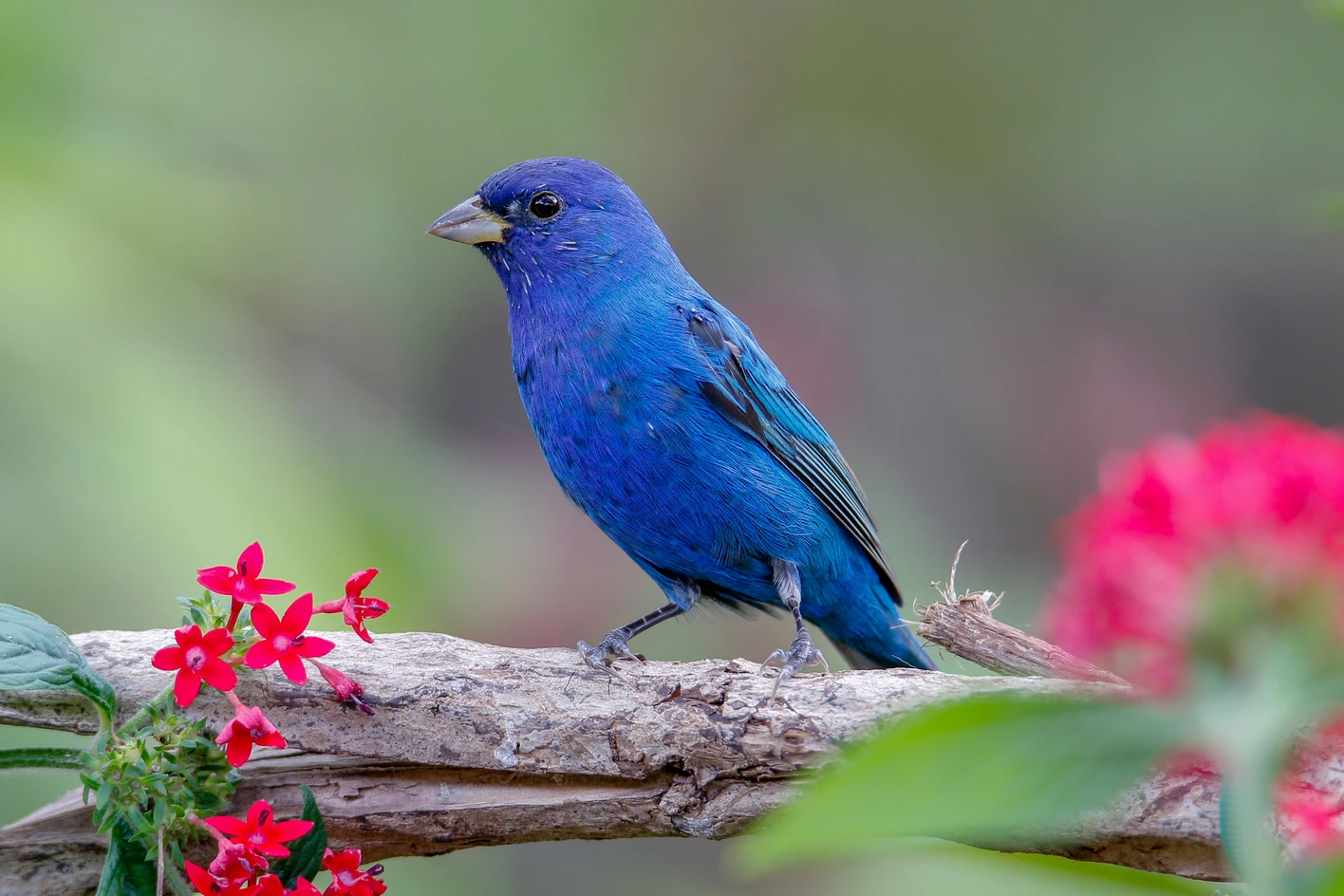
Birds: Indigo Bunting
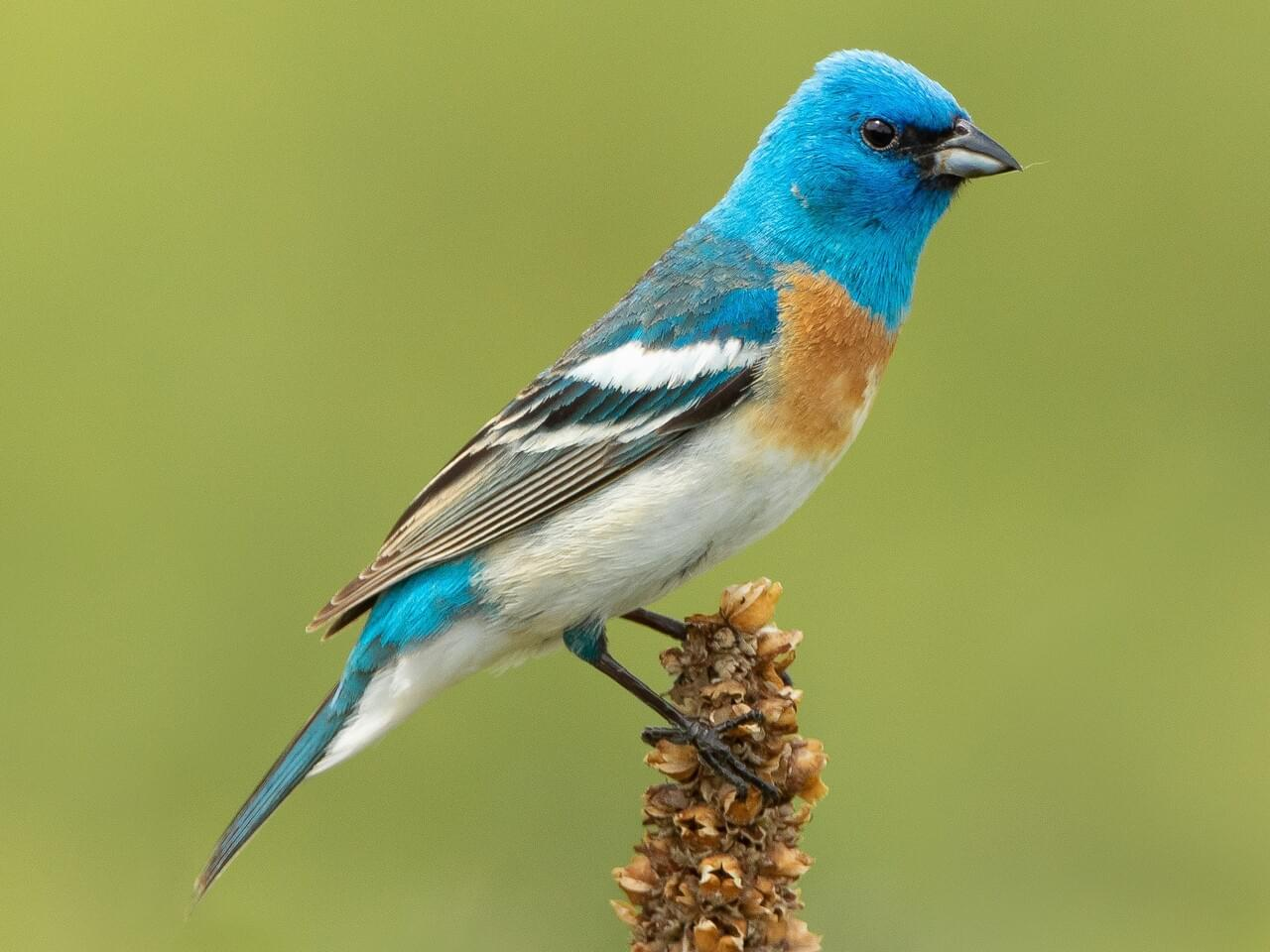
It was Memorial Day weekend (2026) and we were on our way from Baltimore to Charlottesville, to attend the NCAA men’s lacrosse championships. We stopped at a stop light. In the median strip was a cluster of bushes. Out hopped a Bunting and I asked my brother to take a look. He immediately knew this one, which I had incorrectly identified as a Lazuli Bunting (from my native Oregon). He corrected me, saying, “That one is definitely an Indigo Bunting.” And we talked for the next half hour of the trip about Eastern BlueBirds and Cardinals, House Finches and Ruby Throat Hummingbirds … the species that come to his bird feeder on a regular basis. The species are different in different parts of the country.
There is something dazzling about a bird with the color BLUE. Indigo Buntings have that dazzle down pat. They are small, stocky birds with short tails and short, thick, conical bills. In flight, the birds appear plump blue blobs with short, rounded tails.


A breeding male Indigo Bunting is blue all over, with slightly richer blue on his head and a shiny, silver-gray bill. Females are basically brown, with faint streaking on the breast, a whitish throat, and sometimes a touch of blue on the wings, tail, or rump. Immature males are patchy blue and brown. [1]

The male Indigo Buntings sing from treetops, shrubs, and telephone lines all summer. Not afraid of being in full view. They eat insects, seeds, and berries, and can be attracted to backyard feeders with thistle or nyjer seeds. While perching, they often swish their tails from side to side. Fairly solitary during breeding season, Indigo Buntings form large flocks during migration and on their wintering grounds.
We found it best to look for Indigo Buntings in weedy and brushy areas, especially where fields meet forests. They love edges, hedgerows, overgrown patches, and brushy roadsides. When not singing from the tallest perches in the area, they can often be seen foraging among seed-laden shrubs and grasses.
References:
[1] https://www.allaboutbirds.org/guide/Indigo_Bunting/overview

