Birds: Gambel & Other Quail
This Witness Post is about birds: quail in particular. That said, it is also about famous people who either discovered, identified or where honored with a bird species including their name in the common name. In this case the famous person is William Gambel.
The Gambel name was placed on trees, birds, reptiles and other discoveries by Thomas Nuttall, the English botanist and zoologist. Nuttall worked in the U.S. from 1808 to 1841 and he placed the Latin name “Gambelii” on several species (oaks and quail) in honor of one of his students, the American explorer and ornithologist, William Gambel.
Who was William Gambel?
In the later years of Thomas Nuttall’s American research, he met the teenager William Gambel, who was an enthusiastic, young naturalist from Philadelphia. Born to a poor Irish family, Gambel’s father died when William was nine. The young Gambel followed his personal interests in the study of nature. Nuttall hired Gambel as a research assistant, taking him on trips from the Carolinas to Maine. Before returning to England, Nuttall encouraged Gambel to explore the U.S. following in his footsteps – heading WEST – in search of new species. Taking his mentor’s advice, Gambel set out with a wagon train with a collection of traders and trappers in search of new flora and fauna.
For three years Gambel explored from Santa Fe to Los Angeles and carefully documented all of the species he could specifically identify. He took detailed notes on those species with unusual characteristics. Among the many new species of birds he noted was the first description of a “handsome species” of quail that “conspicuously display the long crest.” Gambel sent a complete descriptions to his mentor, Thomas Nuttall, who named the bird in Gambel ́s honor.[1]

Gambel discovered this appealing ground-dweller and he could hardly have asked for a more exciting and beautiful avian namesake. In spring, the male Gambel’s Quail often perches atop a stump, cactus or some other prominent lookout, his black topknot or plume whiffling in the breeze. He tilts his head back, and with closed eyes, repeatedly sings his lovely song. With his calls, he is seeking a mate. He is also declaring his territory and warning off other males.[2]
Returning east to Philadelphia in 1845, Gambel failed to gain a desired position as curator at the Academy of Natural Sciences. Undaunted, he graduated from medical school and laid plans for his upcoming practice. Excited about an upcoming trip west, Gambel preceded his bride on a trip to California. Gambel had intended to set up his medical practice in San Francisco, before sending word to his wife to make the trip. Ultimately Gambel wanted to further pursue his interests in both medicine and natural history. This particular Gold Rush era cross-country journey was not without tragedy.
Gambel had a difficult crossing of the Sierra Nevada Mountains. Landing in a mining camp with some sick gold miners, he tried to help the miners with his medical talents; however, the sanitation conditions at the miners camp were deplorable. Among the ill miners Gambel contracted typhoid fever and soon fell sick with fever and delirium. He died in 1849 at the age of twenty-six.[3]

Gambel’s widow sent her husband’s field notes to Thomas Nuttall. Three and a half decades after Gambel’s death, his prolific field notes and writings were still revered by researchers of the West. He studied trees, rocks, rodents and birds with keen insights. The American ornithologist Robert Ridgway posthumously named the mountain chickadee (Poecile gambelii) in Dr. William Gambel’s honor.

Gambel Quail and the tree, Gambel Oak, are both uniquely southwest. Additionally, Gambel is the first American ornithologist to identify the roadrunner (previously recognized by Spanish explorers).


Oak has the unfortunate common name “scrub oak,” as if it were an inferior runt of the quercus species. Oaks are deciduous and Gambel Oaks are commonly found in the Southwest with and without many leaves. It thrives in the understory among forests of ponderosa pines at elevations between 5,000 to 8,000 feet. The rough terrain and aridity at their trunks often leaves them stunted and gnarly, which may account for the “scrub” nickname.
And to add to the talents of the aforementioned good doctor, Gambel also discovered unique species of goose, sparrow, and woodpecker (which he named after Thomas Nuttall) among other wildlife (lizards and plants) on anyone’s life lists. William Gambel’s short life was full of adventure and heartbreak, and should not be lost in either the name blame or name game of the past few decades.

In June, 2025, I had spotted a family of quail the day before, while I was scaling Camelback Mountain at sunrise. They scurried about in the underbrush and I counted two adults and about ten chicks.

We were in Arizona for a conference and we had some nice views of the city and the wildlife from our room. The next day, my wife, Tracy, saw three adult quail. She followed the three adults from the balcony of our room at the Phoenician. Two males seemed particularly interested in the one female, cutting in and out of proximity to her walking path. Suddenly, one of males jumped to the back of the female and gave a quick flutter. As soon as he was on top of the female, he was off. That was it, seconds of pleasure for the urge of propagation.
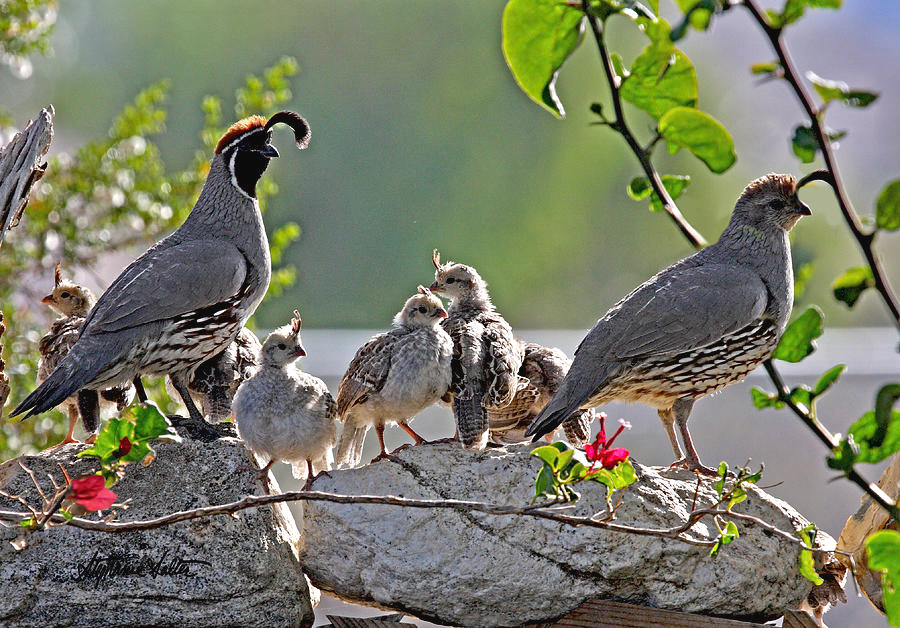
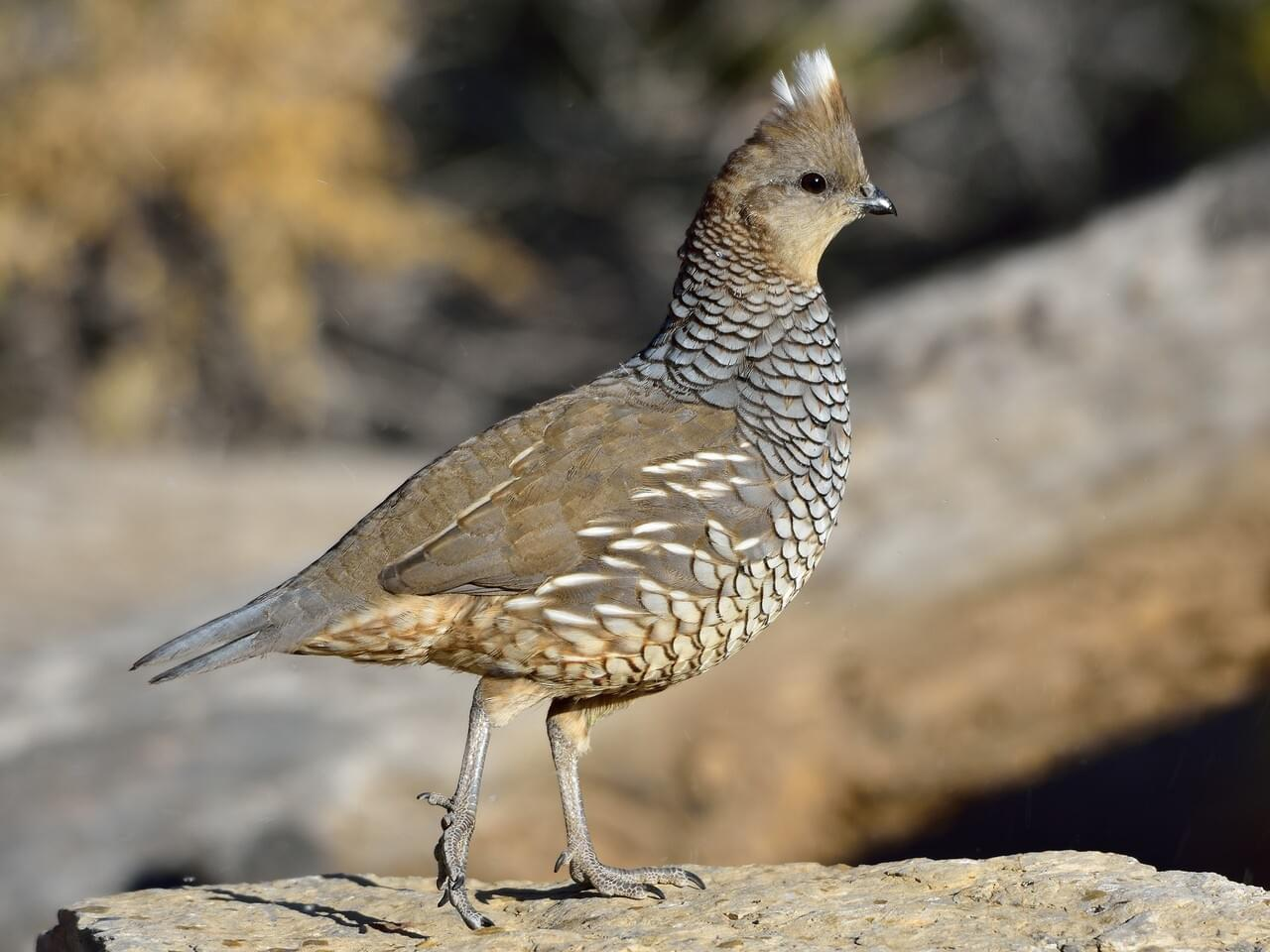
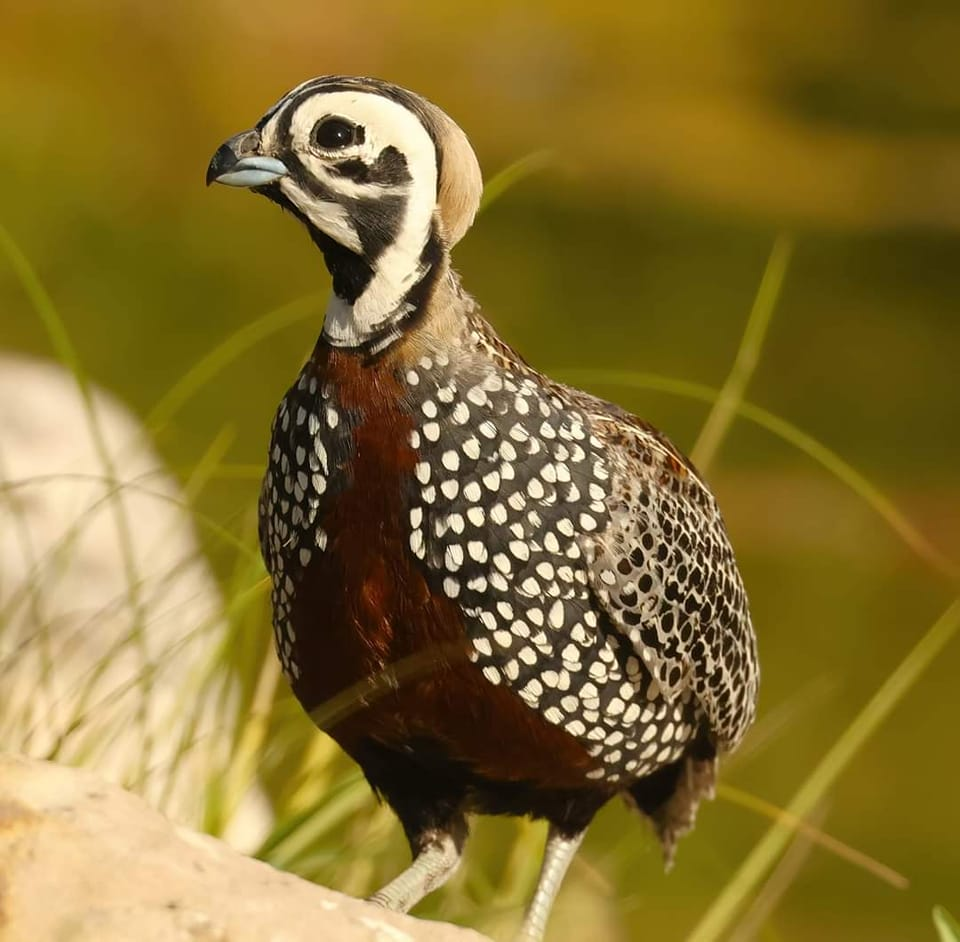
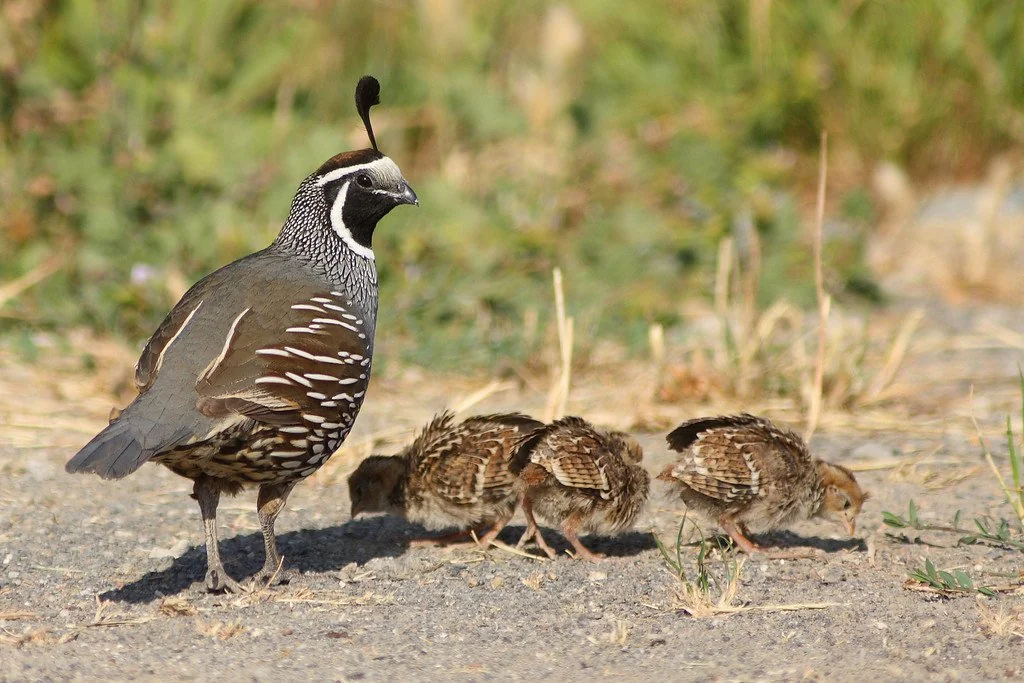
And as to Quail that have nothing to do with Gambel, there are some remarkable species out there. Many of these species are in the chaparral of the American Southwest: Scaled Quail, Montezuma Quail, and the California Quail come vividly to mind.