
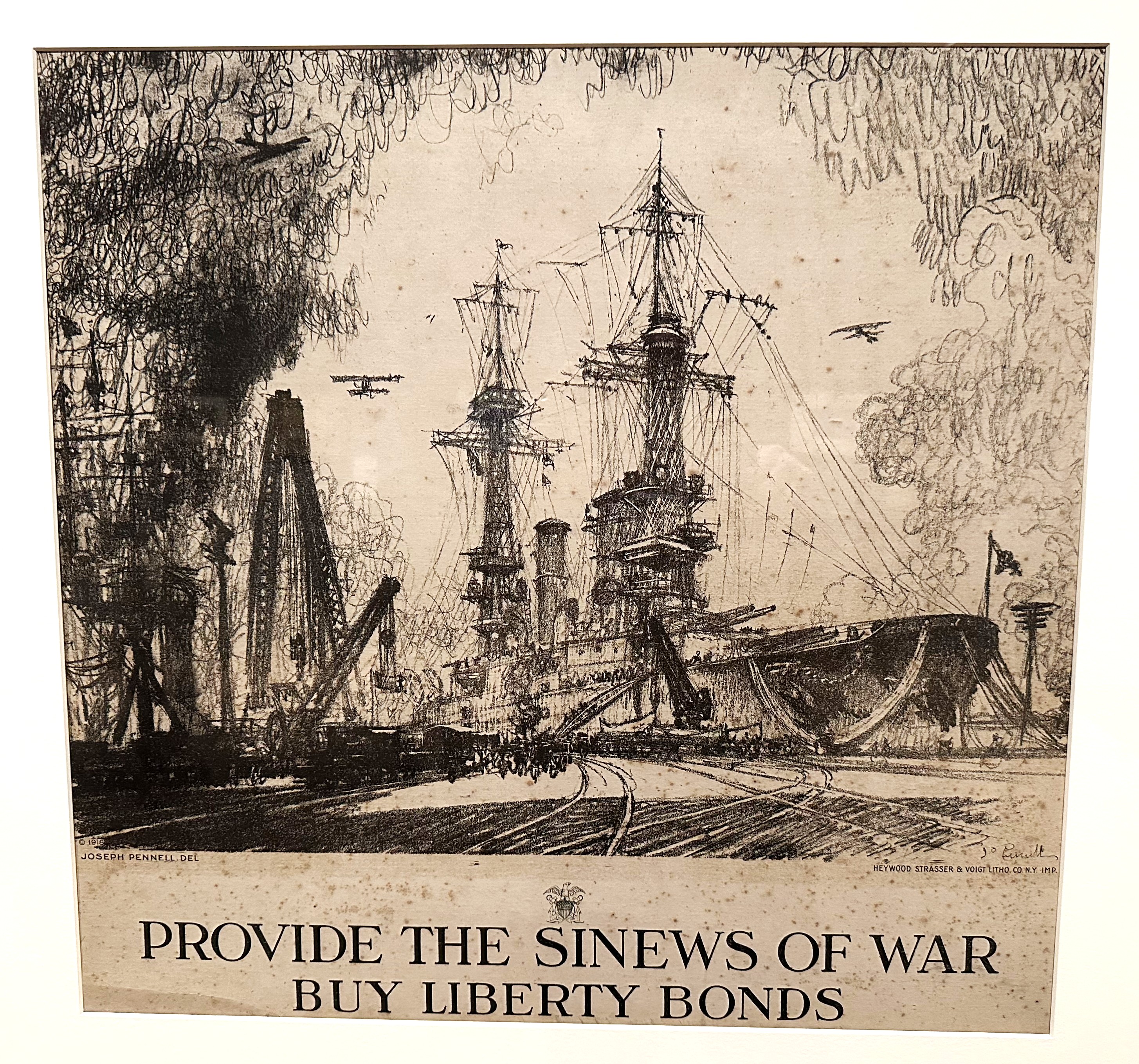
Advertising: Marketing or Propaganda?

Images of war worker Naomi Parker (later Naomi P. Fraley) stylized by a photo taken at Alameda Naval Air Station in California. The original “We Can Do It!” poster was displayed only to Westinghouse employees in the Midwest during a two-week period in February 1943; then it disappeared for nearly four decades. During World War II, the name “Rosie” was not associated with the image, and the purpose of the poster was not to recruit women workers but to be motivational propaganda aimed at workers of both sexes already employed at Westinghouse. It was only later, in the early 1980s, that the Miller poster was rediscovered and became famous, associated with feminism, and often mistakenly called “Rosie the Riveter“.

To reduce import dependency and promote local produce during WW2, allied governments advocated for “Victory Gardens” on available land, including urban spaces in parks and vacant lots, like New York City. This British poster inspired many complementary versions utilized in campaigns across the United States, Canada, Australia and Germany.
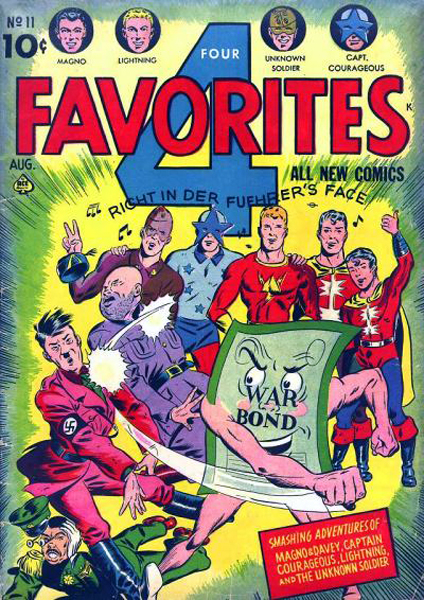
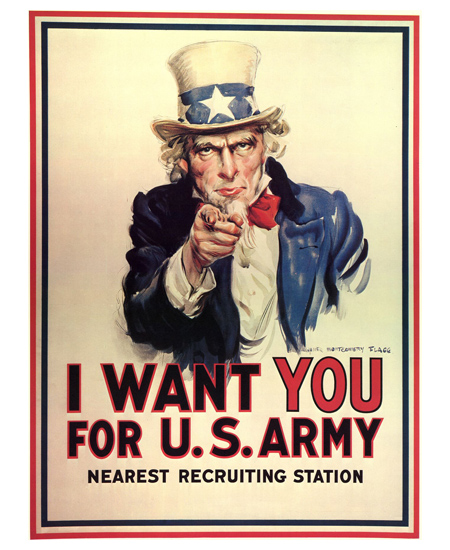
During both World Wars, posters were meant to instill people with a positive and patriotic outlook on the conflict. Posters were encouraging not just men to join the army, such as images of Uncle Sam pointing into your eyes. However, every citizen of the United States was encouraged to contribute to the war effort and do their part, whether at home or abroad. As we can see in the above example, red, white and blue are the colors which dominate the poster.
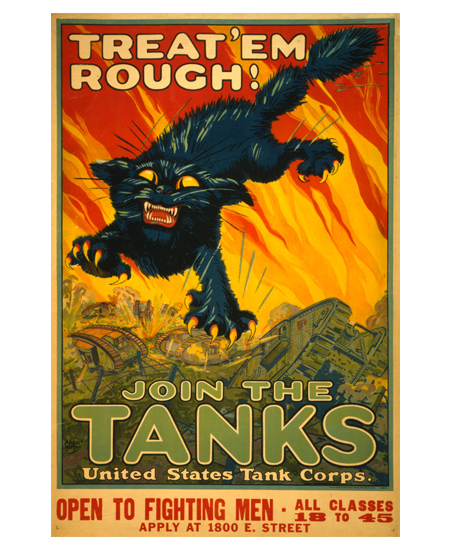
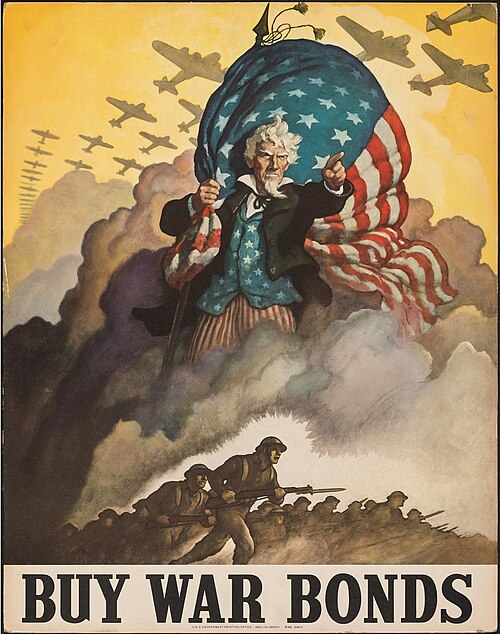
Patriotism became the central theme of advertising throughout the war, as large scale campaigns were launched to sell war bonds, promote efficiency in factories, reduce ugly rumors, and maintain civilian morale. The war consolidated the advertising industry’s role in American society, deflecting earlier criticism. The leaders of the Axis powers were portrayed as cartoon caricatures, in order to make them appear foolish and idiotic. The American government produced posters, films, and radio programs as much as it produced ammunition and weapons of war. In fact, posters, films, books, and animations were weapons to capture the hearts and minds of American citizens. This was all designed as propaganda to create a society that financially supported the war.

