
Word Smith: Trouble
Trou·ble /ˈtrəb(ə)l/ [1]
noun
- 1. Difficulty or problems:”I had trouble finding somewhere to park.” Similar words: problems, or difficulty, issues that bother
- 2. Public unrest or disorder: “the cops are preparing for trouble by bringing in tear gas.” Similar words: disturbance, disorder, unrest, bother. Opposite words: order, or peace.
verb
- 1. Cause distress or anxiety towards an action: “he was not troubled by doubts.” Similar words: worry, bother, a cause for concern; to be concerned.
Trouble:
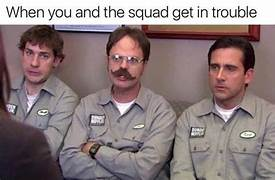
Although misery loves company, it is particularly hard at work, where you are with your buddies and you and the squad get in trouble together. Then the manager is likely to lower the boom and bum you all out for your bonehead decision making and subsequent behavior.
the Troubles:

The Wall with Murals in Northern Ireland separating the rivals from each other
“the Troubles” is an expression explaining the violent sectarian conflict from about 1968 to 1998 in Northern Ireland between the overwhelming Protestant unionists (loyalists), who desired the province to remain part of the United Kingdom and the overwhelming Roman Catholic nationalists (republicans), who wanted Northern Ireland to become part of the republic of Ireland. The other major players in the conflict were the British army, Royal Ulster Constabulary (RUC), and Ulster Defence Regiment (UDR; from 1992 called the Royal Irish Regiment), and their avowed purpose was to play a peacekeeping role, most prominently between the nationalist Irish Republican Army (IRA), which viewed the conflict as a guerrilla war for national independence, and the unionist paramilitary forces, which characterized the IRA’s aggression as terrorism. Marked by street fighting, sensational bombings, sniper attacks, roadblocks, and internment without trial, the confrontation had the characteristics of a civil war, notwithstanding its textbook categorization as a “low-intensity conflict.” Some 3,600 people were killed and more than 30,000 more were wounded before a peaceful solution, which involved the governments of both the United Kingdom and Ireland, was effectively reached in 1998, leading to a power-sharing arrangement in the Northern Ireland Assembly at Stormont. [2]
Deep origins
The story of the Troubles is inextricably entwined with the history of Ireland as whole and, as such, can be seen as stemming from the first British incursion on the island, the Anglo-Norman invasion of the late 12th century, which left a wave of settlers whose descendants became known as the “Old English.” Thereafter, for nearly eight centuries, England and then Great Britain as a whole would dominate affairs in Ireland. Colonizing British landlords widely displaced Irish landholders. The most successful of these “plantations” began taking hold in the early 17th century in Ulster, the northernmost of Ireland’s four traditional provinces, previously a centre of rebellion, where the planters included English and Scottish tenants as well as British landlords. Because of the plantation of Ulster, as Irish history unfolded—with the struggle for the emancipation of the island’s Catholic majority under the supremacy of the Protestant ascendancy, along with the Irish nationalist pursuit of Home Rule and then independence after the island’s formal union with Great Britain in 1801—Ulster developed as a region where the Protestant settlers outnumbered the indigenous Irish. Unlike earlier English settlers, most of the 17th-century English and Scottish settlers and their descendants did not assimilate with the Irish. Instead, they held on tightly to British identity and remained steadfastly loyal to the British crown.[2]
The story of the Troubles goes on even today, though at a lower decibel level; however, the story since 1801 speaks for itself. Self-determination and subjugation are mutually exclusive, even to death.

Good Trouble:
John Lewis, D-Ga., served in the House of Representatives from 1987 – 2020, after decades of work as an organizer and activist – serving as a founding member of the Student Nonviolent Coordinating Committee, organizing the March on Washington in lockstep with Martin Luther King Jr. and serving in the Atlanta City Council. He was an orator unlike many others, his words galvanizing action for multiple generations of Americans.[3]
Lewis once said:
“Do not get lost in a sea of despair. Be hopeful, be optimistic. Our struggle is not the struggle of a day, a week, a month, or a year. It is the struggle of a lifetime. Never, ever be afraid to make some noise and get in good trouble, necessary trouble.” – A tweet from June, 2018
References:
[2] Northern Ireland Troubles (Britannica)
[3] John Lewis and Good Trouble, Necessary Trouble
 Henry E. Hooper
Thanks, Henry, for this very thoughtful and Informative post! Well done.
Henry, this is masterful! Thank you for sharing it! As always, your words are informative and your topic wide-ranging. Having followed our current political troubles way too closely since retiring, I feel the current administration it reeling into deep trouble.