
Word Smith: Tule
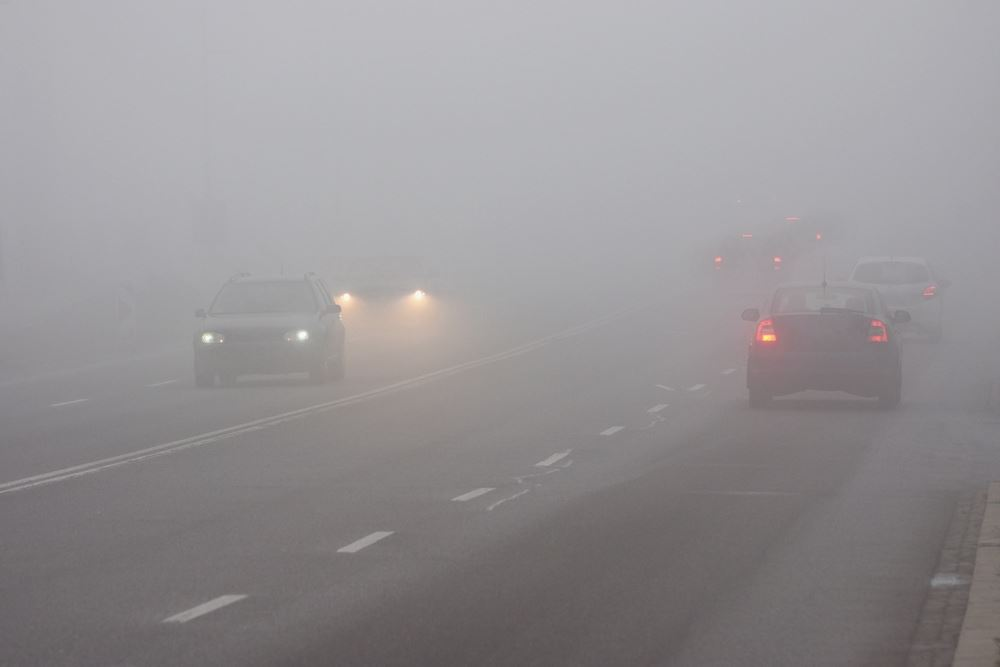
I was with a hiking buddy in 1976 when we came upon a fog so thick, I thought for sure we would crash. The pea soup cloud cover was outside of Fresno, California. We were returning from Yosemite, via the Central Valley, when we were enveloped in the white out. Fortunately for us a long haul truck was in the distance andhe was headed in our direction. We creeped ever-so-close to his brake lights and rear bumper, and made sure he never got too far in front of us. Otherwise, we would have to pull off to the side of the road and wait for the clouds to dissipate. We followed that truck for about 100 miles and it was a weekend life saver.
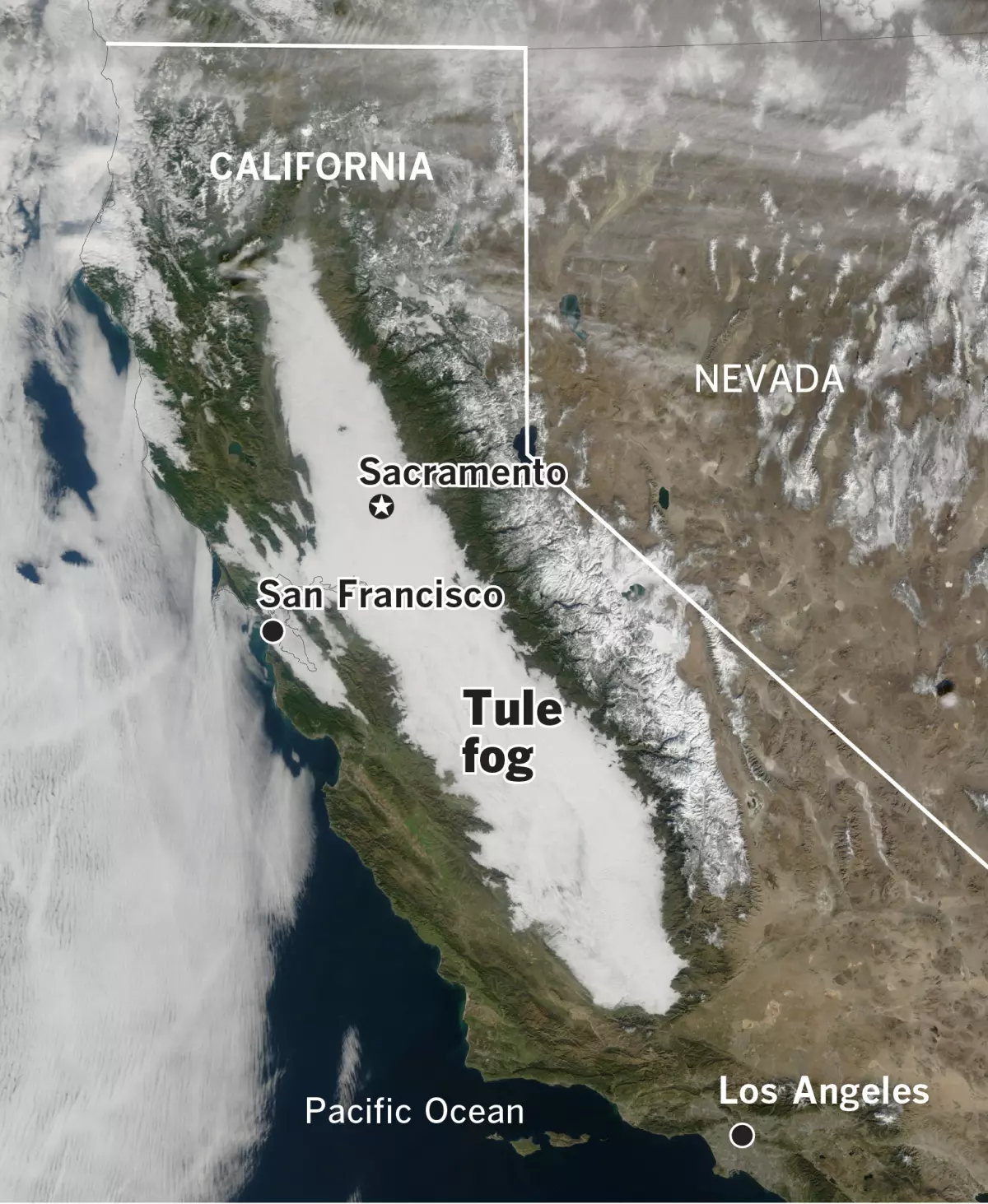
Tule fog—a dense, low-lying mist named for a reedlike plant that grows in the region’s marshes—can settle over California’s vast agricultural heartland, typically from November through March. Over the past 20 years the occurrance of tule fog episodes have been declining. This season (2025-2026), however, it returned with a force not seen in more than two decades.
Following an autumn so wet that no part of California remained in drought for the first time in 25 years, a stubborn high-pressure system is being credited with producing the longest continuous stretch of the tule-fog phenomenon this century: more than three straight weeks of fog from late November to mid-December.
It persisted. Across the valley this winter, the National Weather Service recorded more days of dense fog, which occurs when visibility drops to a quarter-mile or less, than in any winter in more than two decades.
Fog has been the talk of the town from Redding to Bakersfield. Internet threads attracted hundreds of comments lamenting “foggageddon.”
Tule fog is an extremely dense for of radiation for that develops in the Central Valley during the late autumn and winter. It occurs when moist, calm air cools overnight under high pressure, often reducing visibility to nearly zero. This creates severe driving hazards and can trap pollutants, causing air quality issues. Heavy tule fog white-outs were once as common as the harvest itself in the Golden State’s Central Valley, a 450-mile long trough of fertile land that is home to more than six million people and produces nearly a third of the country’s vegetables and three-quarters of its fruits and nuts.
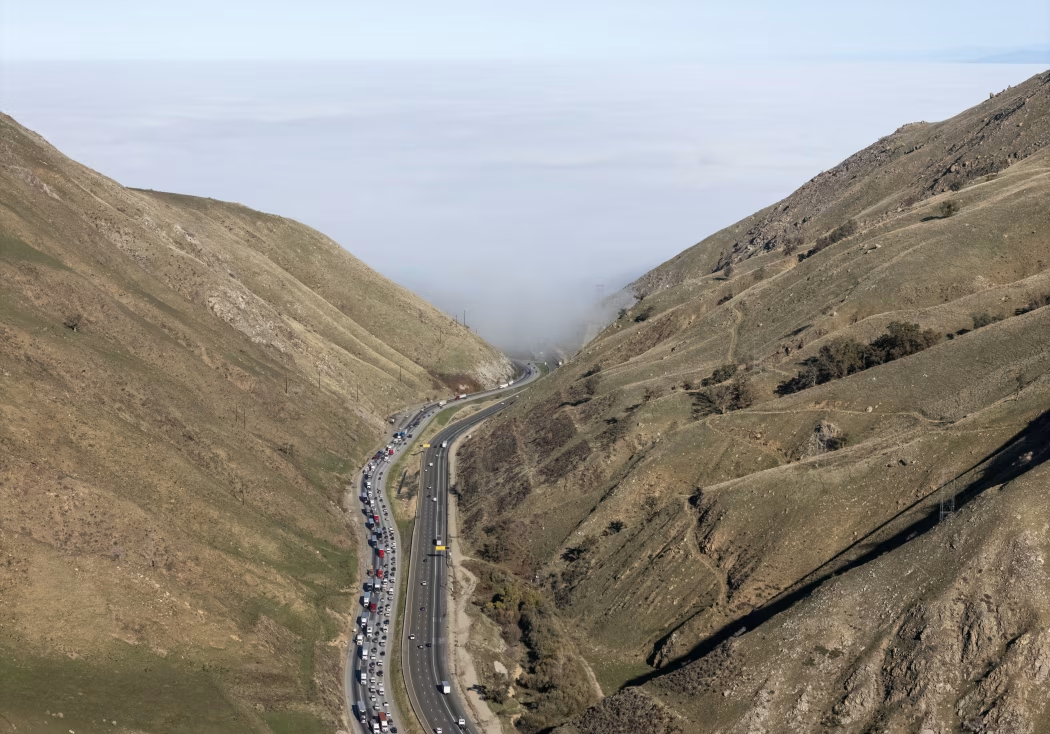
The millions of deciduous fruit and nut trees—including almonds, pistachios, cherries and peaches—growing in the valley require hundreds of hours of temperatures between 32 and 45 degrees Fahrenheit each winter to enter dormancy and set their buds properly for spring. The fog acts as a canopy, blocking winter sun from warming the buds prematurely and keeping valley temperatures in that critical range.
According to leaders of the Fresno County Farm Bureau, “Tule fog is terrific. It just completely suppresses temperatures and does wonders” for the plants.
Fruit and nut growers (almond and raisin grape) have tracked the chill hours carefully all winter. “You would just see what looked like an ocean of fog.” By growers personal count, it was the best year in this region in recent memory.
[1] Tule Fog
 Henry E. Hooper