

Word Smith: Scullery
The word scullery refers to an extension to the traditional kitchen. It is often associated with a wash area, or somewhere cooks can keep their dirty dishes out of sight and out of mind. The dishes that are held there do not clutter the main kitchen, where the chef is creating the main meals of the day. The area in traditional homes usually has a large double chamber sink that can be used to wash fruits, vegetable, fish and other game, as each piece is prepared for the meal. Sometimes the space is called the butler’s pantry or larder.[1]

That said, the word scullery has had a very different meaning in my mind. The roots of the word for me go back to large group camping, where a wooden crate would be filled with tools to better cooking: stainless steel cups, plates, knives, forks, spoons, pots, pans, bowls, scissors, and cooking utensils for meals. The crate would be carefully packed and placed in the Commissary Vehicle (the COM) for each new camping location. Together with the crate was a group table, a tarpoline, tent poles and ropes, to designate and protect the food area from rain.
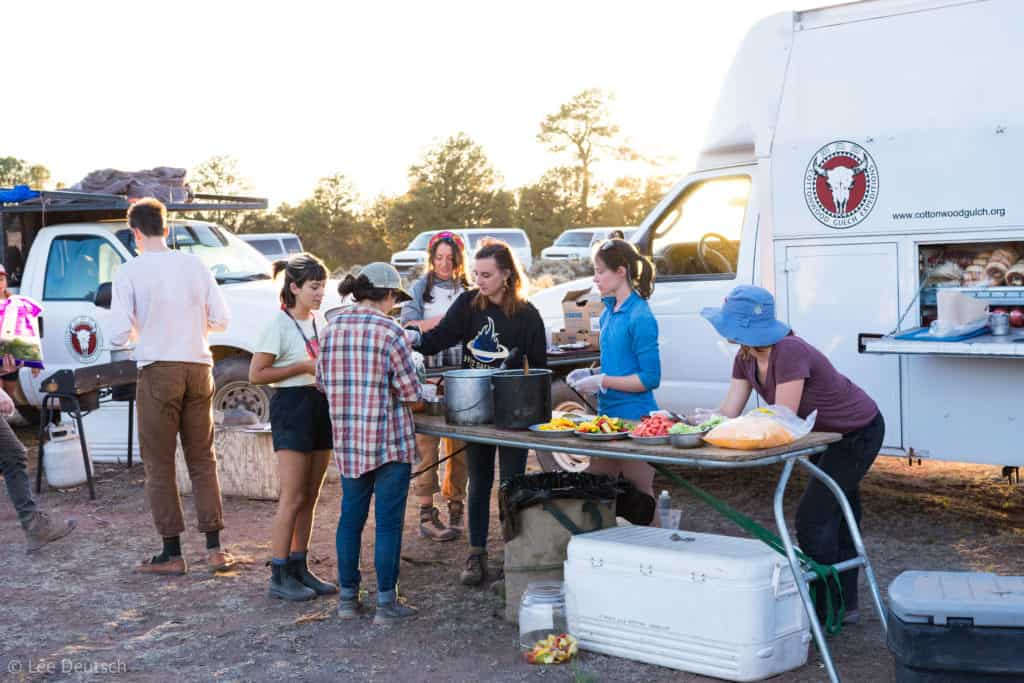
Picture of the food line-up on the road in New Mexico, by Lee Deutsch
The road scullery was carefully designed by the camp founder, Hillis Howie (pictured below). The crate systematised a way for food order: it allowed for the separation of the food preparation and serving area. It cordoned off the meal space, away from tents, and latrines. The ultimate goal for the ideal cooking area is to maintain the highest level of sanitation needed for healthy and quality camping. At the same time the food was curated with the dietary meal plans for the campers and counselors. As you can imagine, the largest part of any group daily budget was dedicated to food — fresh, tasty and nutritious.

Hillis Howie cooking breakfast over the fire-iron sagebrush flames near Ship Rock, NM
Group Leaders all know that the happiness of their group, campers and counselors alike lies on the satisfied stomachs of the group members. Good food and plenty of it are critical to fueling the campers. The cooking area, therefore, is one of the key ingredients to a successful day.
As in good “Trek-speak:” everyone (that means everyone), except the cook (chef) and CA (commissary assistant), are relegated to an area outside of the scullery and dining area (called the KP area). The limited people exposure minimizes the dust, dirt, finger fiddling, and exposure to any nasty particles that might be hitchhiking on the campers. The meals themselves are fit for royalty, and they are served in a stainless steel cup, plate and eaten with a spoon.
The cleaning area on the road, like the base camp scullery room, is a way for the entire group to help clean-up after a satisfying multicourse meal, ending with a sweet-tooth treat.
========================================
[1] Lots of folk tales start, as does Cinderella, with a beautiful woman living unjustly as a scullery-maid, only to be rescued by the prince and returned to a rightful life of luxury. Others end with a tale of a princess marrying a self-important prince and ending up being his chief cook and bottle washer, responding to his every wish and whim. The chastising expression “get thee to the scullery” seems like a cruel curse, but to some food and savory epicureans it is a blessing.
 Henry E. Hooper