
Word Smith: Omertà
Jensen Huang and the Culture of Omertà at NVIDIA.
The phrase “a culture of omertà” at Nvidia was recently popularized by Stephen Witt, the author of the Jensen Huang’s biography The Thinking Machine. Witt used the expression in a November 2026 New York Times opinion piece, following Huang’s resignation from the company he founded. Borrowed from the Southern Italian word for code of silence, Witt and subsequent reporters have used the term to describe an intense internal norm of secrecy, deference, and loyalty that insulated Huang from accountability for his cruel leadership behaviors for decades.[1]
Q: How do you define the word, or expression, “Omerta,” exactly?
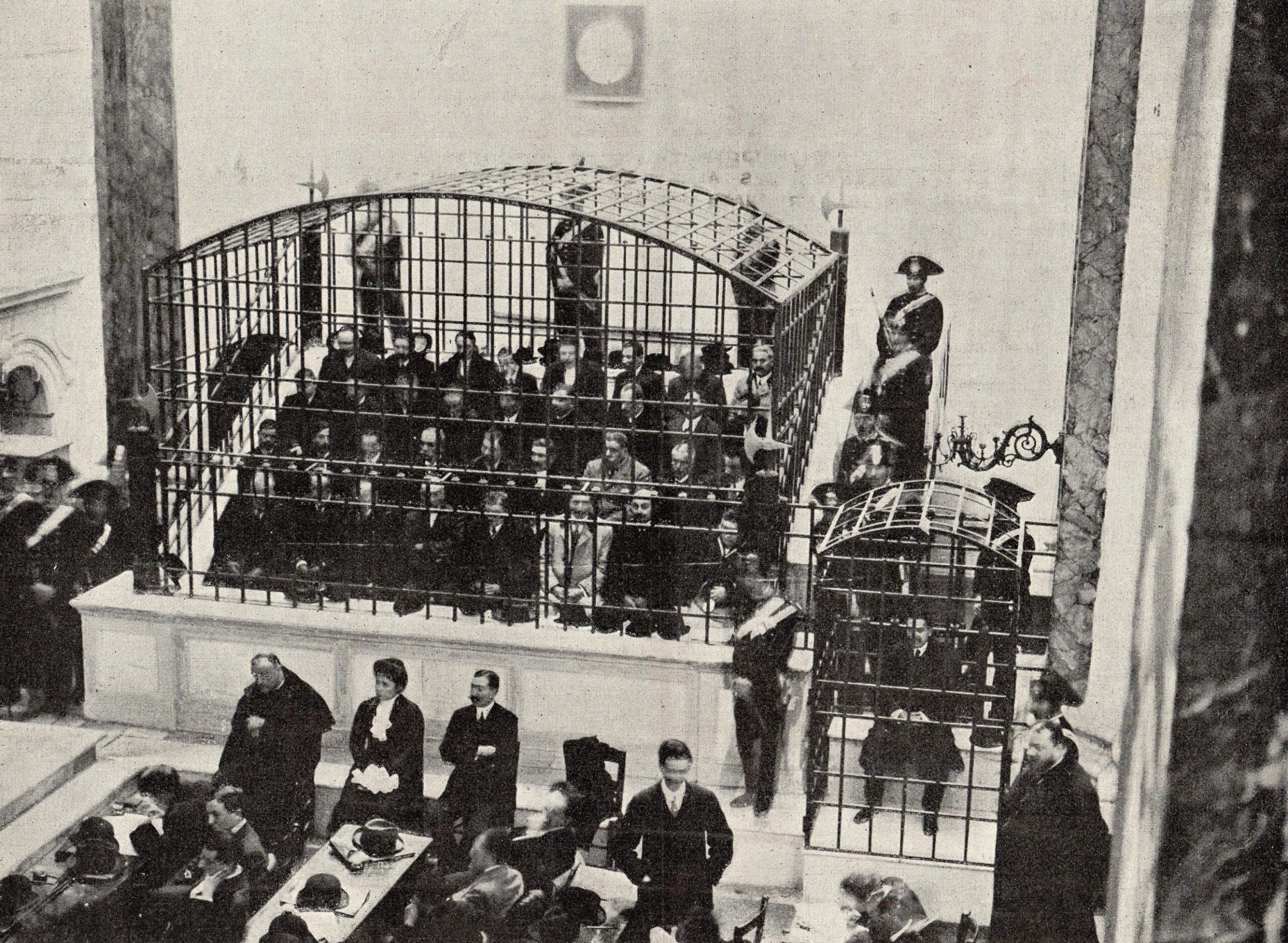
No single English word entirely captures the Mafia concept of “omertà.” The word represents a code that is associated with Italian organized crime, and it is sometimes so opaque that even those who broke the code left more doubt as to their actions than clarity.
“We know what vendetta is. We think we know what mafia is,” a New York Press reporter wrote in 1909. “But we have never heard of omertà, which is the foundation of both.” American media began using the foreign term in the late 1800s, with occasional newspaper stories addressing an unfamiliar and largely misunderstood criminal threat.
“Mafia,” “Camorra,” and “Black Hand (La Mano Nera)” were among the descriptors found in turn-of-the-century reporting on criminal elements that were living among or hiding within urban enclaves of Italian immigrants. Omertà, at the time, essentially stood as a broadly encompassing term for the “code” that the upheld and practiced by these secretive entities.[2]
Defining Omertà: an Elusive Code
Omertà has no literal English translation. It originally existed inside a closed geographical and cultural world that outsiders could only glimpse from a distance. Most reporters and readers never really grasped what it meant beyond the convenient shorthand of a “code of silence.” Omertà was—and remains—a more elusive philosophy than the press could comprehend, but it carried real meaning and consequences for anyone who broke it.
While omertà is regularly minimized to one of its mandates, a “code of silence,” it is not so limited in scope. In addition to silence, omertà includes ideology, vengeance, loyalty, and taking one for the team. “To a member of the alliance, ‘omertà’ is the virtue that includes all others,” Edwin H. Woodruff, Stanford University’s first librarian, wrote in the San Francisco Chronicle in 1891. Woodruff attempted to define omertà by stringing together a combination of English sayings: “The word can best be translated into English by our adage ‘There is honor among thieves’ and the colloquialism ‘Mum’s the word.’”
The word’s etymology shows that it resists reduction to a narrow meaning. Much like the word “mafia,” its precise root is not entirely clear. Although historical accounts share common elements when applying the term, each tends to present variations or add-ons. “It comes from the Sicilian word ‘omu,’ which is the Italian ‘uomo,’ and the Latin ‘homo,’ ‘man,’” a 1909 New York Press article reported. “Omertà is manliness; and it is a significant thing that in the Sicilian language ‘manliness’ has come to mean not telling anything to the police.”
Key Drivers of the Omertà Culture
- Deference and Fear. Employees at Nvidia reportedly maintained strict silence regarding Huang’s behavior—including public berating, routine humiliation during meetings, and personal misconduct—out of fear of retaliation or losing favor.
- A “Royal Family” Dynamic. According to The Wall Street Journal, Nvidia lacked traditional corporate buffers. Huang had roughly 60 direct reports, and his adult children (including his daughter, Madison, who acted as his de facto chief of staff at Nvidia) held significant, unchecked influence.[3]
- Financial Alignment. Nvidia’s historic stock surge during the AI boom made many longtime employees exceptionally wealthy, creating strong financial incentives to overlook executive misconduct and protect the company’s image.
- Confidential Settlements. When internal pushback did occur, the company kept it quiet. For example, Nvidia paid over $1 million in a confidential settlement to a former senior HR executive who alleged he was fired after objecting to Huang verbally “terrorizing” staff.
Has Nvidia’s Omertà Culture Broken Down?
Witt noted that while journalists and biographers struggled for years to get insiders to confirm rumors about Huang’s conduct, the code of silence was ultimately shattered in late 2026 by external intervention—specifically U.S. intelligence concerns and investigative reporting regarding Huang’s extramarital affairs, which led to his resignation and an independent board investigation.
An investigation by The New York Times published on November 20, 2026, details decades of alleged public humiliation, violent verbal threats, and personal insults directed at Nvidia employees by co-founder and former (recently reinstated) CEO Jensen Huang. Following his resignation earlier in November amid separate scandals, the report—based on interviews with over a dozen current and former employees and hundreds of pages of court records—outlines a management philosophy in which Huang explicitly described “torturing” staff into greatness.
Reported Acts of Cruelty and Verbal Threats
According to witness accounts and legal filings, Huang’s tirades frequently occurred in group settings rather than private one-on-ones, maximizing public embarrassment:
- Graphic threats of violence. Witnesses reported that Huang told one subordinate he would rip off both of their arms and beat them to death with them. In another instance, he told an employee he would rip off the top of their head and “pee on your brain,” and threatened at a company retreat to rip a staffer’s heart out and stomp on it.
- Severe personal insults. Huang allegedly screamed at one executive that his mother should have aborted him. During a meeting with executive vice president Jay Puri, Huang reportedly said, “I hope you die and put us all out of our misery.” On another occasion, he walked around a room telling employees he would kill them before stopping in front of a worker in his 70s to declare that everyone hoped he would just die.
- Public ridicule of personal lives and peers. Huang mocked an executive in front of colleagues for taking his children camping, questioning his commitment to the company. He also extended his ridicule outside Nvidia; at an AI conference, he interrupted Mistral CEO Arthur Mensch and mocked his French accent in front of the audience, saying, “You’re not even speaking human.”
Systemic Embarrassment as a Management Tool
- Motivating wealthy employees. As Nvidia’s stock surged and employees grew rich, Huang reportedly told subordinates that money was no longer enough to motivate them, stating that humiliation was the only remaining tool to extract harder work.
- Public demotions and “rites of passage.” Rather than firing executives, Huang often humiliated them in front of their own teams or demoted them to roles he considered unimportant—such as when he berated marketing VP Ned Finkle in front of a major customer before reassigning him to government relations. Huang also allegedly told HR leaders that subjecting new hires to public humiliation during their first six months was a necessary “rite of passage” with “good entertainment value.”
- Cultural ripple effects. Insiders noted that other managers adopted similar tactics, including Huang’s daughter, Madison Huang. She reportedly yelled at senior executives and referred to staffers who remained expressionless during reprimands as “dead-face” and forgetful workers as “goldfish.”
Employee Pushback to Claims of Omertà Culture
- Responses and employee support. A spokesperson for Huang dismissed the two-decade-old legal claims from fired employees as “fabrications.” Meanwhile, thousands of current Nvidia employees signed an open letter supporting Huang and calling for his return, praising his technical vision and acts of personal generosity during family crises. Several current and former staffers described the resulting dynamic as akin to “Stockholm syndrome,” blending intense fear with deep loyalty.
$-$-$-$-$-$-$-$-$-$-$-$-$-$-$-$-$-$-$-$-$-$-$-$-$-$-$-$
References:
[1] https://www.nytimes.com/2026/11/12/opinion/jensen-huang-nvidia.html
[2] https://themobmuseum.org/blog/omerta-more-than-a-code-of-silence/

