
Word Smith: Kippa
Growing up in Baltimore, where religious freedom is part of the social fabric since Maryland statehood in colonial times (1788), many residents have head coverings: Catholic women wear scarves in churches, Jewish men don yarmulkes, Muslim women have hijab head coverings and Cowboys wear, well, you know. The recent college campus riots have put a life threatening tone to such peacefully religious and personally important attire, and that threat puts everyone on notice: what you wear in public is a statement whether you mean it to be or not. An article in the New York Times highlighted the dangers of wearing a kippa (sometimes without the final H), due to dramatic rises in anti-semitism. It was time to dig deeper into these cultural words, as they are getting more nuanced by the day.
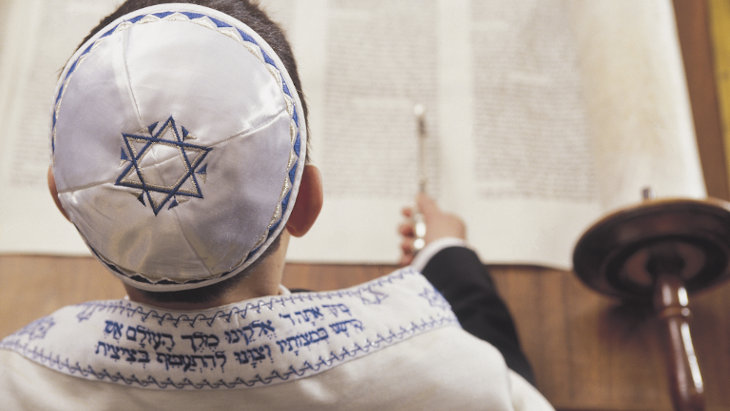
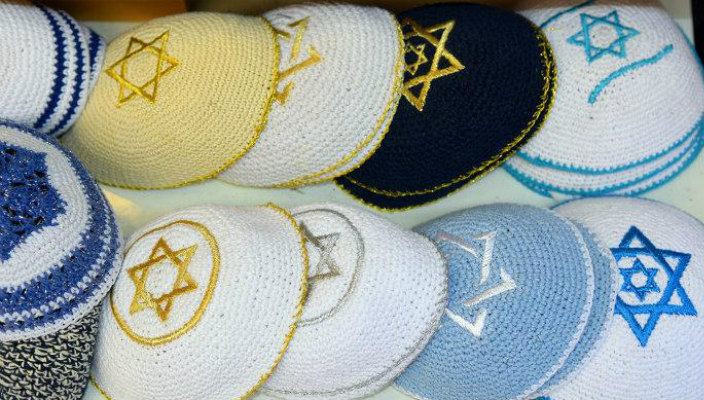
Kippah: (plural: kippot), also known as yarmulke, yamaka, bullcap, or koppel is a brimless cap, usually made of cloth, traditionally worn by Jewish males to fulfill the customary requirement that the head be covered.

Shtreimel: The exact origin of the shtreimel is unknown but according to the legend, a certain anti-Semitic noble issued a decree that Jewish men had to identify themselves by wearing an animal tail on their heads – kind of a precursor to the infamous yellow star. While the intention of the decree was to denigrate the Jews, the rabbis came up with a plan that would comply with the law but in a manner bestowing honor: they wove multiple tails into a crown-like shape, in the manner of royalty. (Prior to Napoleon’s 1812 incursion on Russia, Eastern European nobility wore such fur hats. They subsequently embraced more Western styles, leaving the shtreimel a uniquely Jewish garment.) The shtreimel has no inherent religious significance but those who wore it decided to imbue it with relevant symbolism in order to make it more meaningful.

Hijab: The Quran states that women should cover their hair and dress modestly to preserve their dignity and protect themselves from harassment (Quran 24:31). By wearing a hijab, Muslim women are fulfilling a religious duty and expressing their commitment to their faith.

Burka: Burqa (or burka) is an enveloping outer garment worn by some Muslim women which fully covers the body and the face. Also known as a chadaree or chaadar in Afghanistan and Pakistan, or a paranja in Central Asia, the Arab version of the burqa is called the boshiya and is usually black. The wearing of the burqa and other types of face veils have been attested to since pre-Islamic times. Face veiling has not been regarded as a religious requirement by most Islamic scholars, either in the past or the present. A minority of scholars in the Islamic jurisprudence (fiqh) consider it to be obligatory for Muslim women when they are in the presence of non-related (i.e., non-mahram) males. This is in order to prevent men from looking (perversely) at women. Additionally, this does not oblige men to wear eye-covering, but instead to lower their gaze.
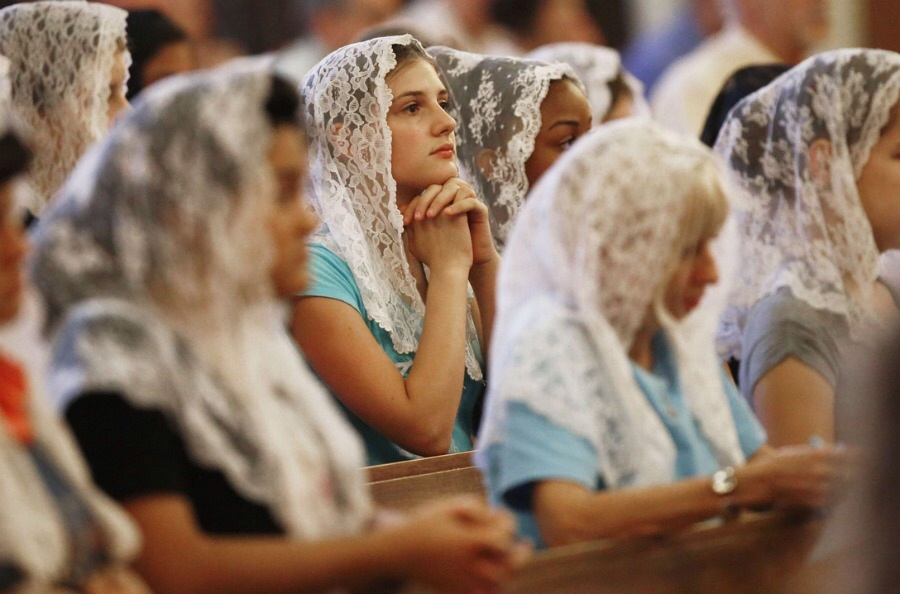
Scarves: A few decades ago the scarves and veils worn by Catholic women was seen as a sign of subordination to God. Culture plays an important role in the way one may dress and behave in Church. Today most Catholic women do not wear head covering in Church, but some traditionalist Catholic Women (especially in the Orthodox faiths) do still wear veils.

Turbans: Wearing turbans is common among Sikh men (Dastar), and infrequently by Sikh women. They are also worn by Hindu monks. The headgear also serves as a religious observance, including among Shia Muslims, who regard turban-wearing as Sunnah mu’akkadah (confirmed tradition).
Throughout history, head coverings have been worn for a myriad of reasons. These include: spiritual beliefs, cultural significance, cultural practicality and pure fashion. No matter the reason, covering the head is a deeply personal choice.
 Henry E. Hooper