
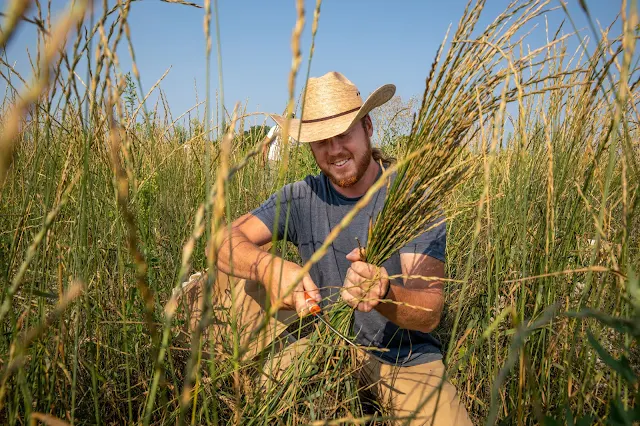
Word Smith: Kernza
Over the years we have been hearing about breakthrough grains from around the world. The picture, however, has become more nuanced and complicated. Grains these days need to include gluten-free versions, and must have an extraordinary list of other qualities: good taste, rich nutrition, drought tolerance, and consumer affordablilty. Some of the grain and bean contenders for the highest ranking in this list are names like fava, amaranth, kasha, sorghum, millet, quinoa, garbonzo, flax, coconut and teff. With all of these choices, why do we need to bother with another contender? The answer is that scientists are still looking to replace wheatgrass with other grains for baking bread and crackers and brewing beer and developing elixers. The latest grain that scientists are bragging about is Kernza.
Scientists believe that Kernza has the potential to dramatically change our wheat/corn dependant food system. And the company, Patagonia, is at the head of the pack on trying to promote Kernza.
The Amazing Root System [1]
The following images and ideas are drawn directly from an article in the New York Times about the company, Patagonia and how its Provisions division is trying to change the world of food sustainability for the better.
Standing at the bottom of a trench cut into a field of farmland, the farmer traced his fingers along the exposed roots, which stretched more than 10 feet down into the soil, much farther than traditional wheat.
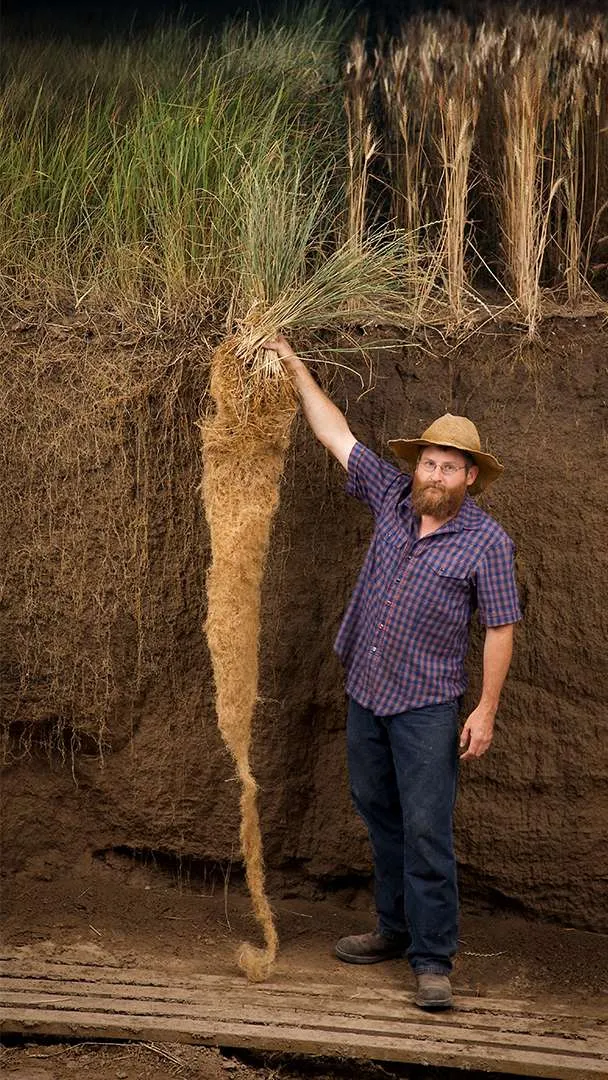
Those roots are what makes Kernza so unusual, allowing it to absorb more carbon dioxide than many crops, and turning it into a theoretical ally in the fight against climate change. And because Kernza is a perennial grain and doesn’t need to be replanted each year, it requires less water and fertilizer than traditional wheat, making it a boon for cost-conscious farmers.
Current production of Kernza is minuscule, with fewer than 4,000 acres planted in the United States, compared with more than 47 million acres of wheat. Just a handful of other companies are making products with the grain. Hardly anyone knows about Kernza.
But Patagonia Provisions is trying to change that. In addition to its main business of selling tinned sardines, mackerel and mussels, it is selling crackers made with Kernza. It has partnered with Deschutes Brewery in Bend, Oregon, to make a series of Kernza-based beers. And by enlisting one farm and one grocery store at a time, researchers are trying to create a market for his eco-friendly wheat alternative, driven by the belief that when done well, running a food business can actually be good for the planet.
Instead, Mr. Lightfoot, at Patagonia Provisions is focused on tinned seafood and crackers made with Kernza. Seafood is the biggest part of the business, and in some ways, the easiest. Tinned fish is enjoying a renaissance among consumers. And Patagonia Provisions had developed a reliable stable of fish farmers.
What’s more, the sardines, anchovies, mackerel, and mussels it sells all have a good environmental story to tell. Mussels actually clean the ocean, filtering out algae and silt. (Provisions now sells hundreds of thousands of tins of mussels a year, and claims more than 60 percent of the American market.) Sardines, anchovies and mackerel are small fish that are quick to repopulate and in less danger of overfishing, as is the case with larger species like tuna.
More difficult is Mr. Chouinard’s attempt to turn Kernza, the little-known grain with a nutty, earthy flavor and a feel-good environmental story, into a mass-market crop. At this early stage, Patagonia regards Kernza more as an experiment that might help chart a more sustainable future, rather then a cure-all for factory farming. And there are signs that consumers are warming to these kinds of products.
More than 70 farms across 15 states now grow Kernza. A group called Perennial Promise Growers Cooperative matches farmers who grow Kernza with companies that want the grain, a list that includes breweries, like Sierra Nevada, and the food giant General Mills, which is using Kernza in some of its cereals.
Still, Patagonia Provisions is the biggest customer. Its crackers and beers are now in thousands of stores, including Kroger, Whole Foods and Sprouts. And one of its beers, the Non-Alcoholic Kernza Golden Brew, made by Patagonia Provisions and Deschutes Brewery, won a gold medal at the Great American Beer Festival.
Kernza is no panacea for the climate crisis. Whatever gains it might produce in terms of carbon sequestration and reduced water and fertilizer usage are minuscule compared with the colossal volumes of planet-warming gasses being pumped into the atmosphere by the relentless burning of fossil fuels. And the yield from an acre of Kernza is still just a fraction of the yield from an acre of wheat.
“The problem with Kernza is that it makes one-third as much grain per acre as wheat, and that means it needs three times as much land to make the same amount of grain,” said Michael Grunwald, author of “We Are Eating the Earth,” a new book that is critical of regenerative agriculture. “That’s environmentally disastrous.”

Sales of regenerative agricultural products, which include Kernza, are growing 30 percent annually, according to Circana, which expects the market for the category to reach $11 billion to $16 billion annually by 2032. Big food companies, including PepsiCo, Hormel, Nestle and McDonald’s, have all begun dabbling in regenerative practices.
References:
[1] Article from the New York Times on Patagonia and regenerative farming: https://www.nytimes.com/2025/09/09/climate/patagonias-regenerative-farming-kernza.html
 Henry E. Hooper