
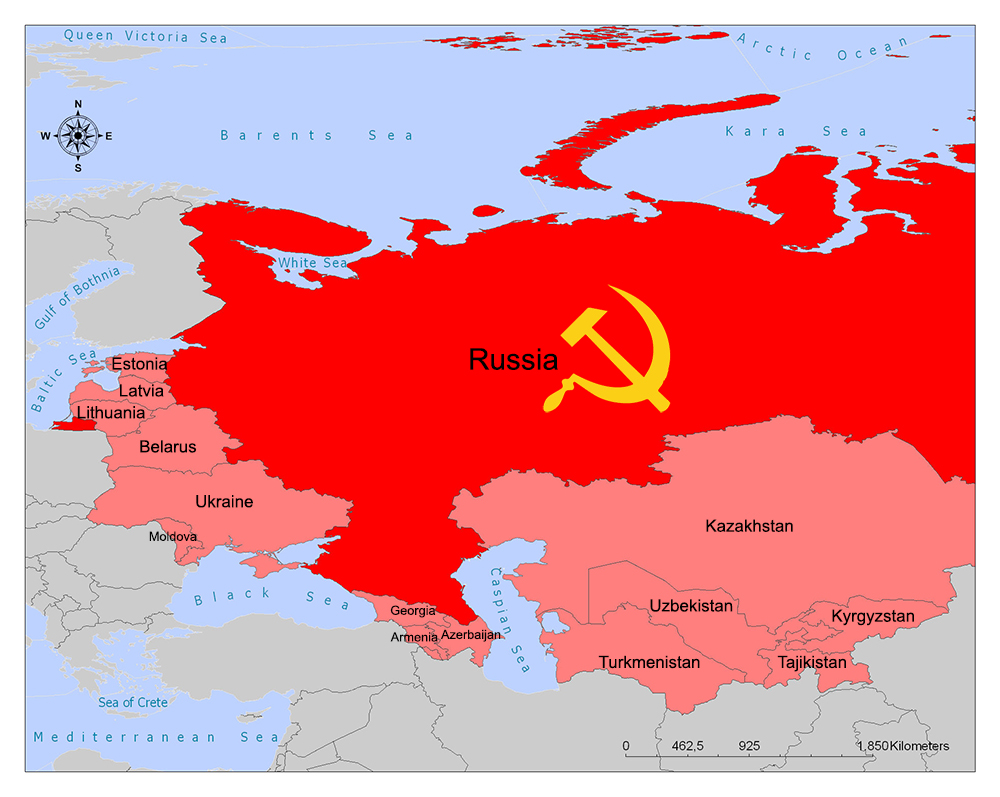
Irredentist
An article in the New York Times called the Kremlin interview by Tucker Carlson of Vladimir Putin on February 8, 2024 “a grand soliloquy on Russian history.” For years now Mr. Putin has expounded on topics like “the Grand Duchy of Lithuania” and “the arrival of Christianity in Eastern Europe” to try to justify his territorial claims on all land in Ukraine.
“He didn’t say anything new,” said Nina L. Khrushcheva, a professor of international affairs at the New School in New York and the great-granddaughter of the Soviet leader Nikita S. Khrushchev. Russians are used to his history lessons, she went on, but American viewers “must be going nuts with all this historical verbosity.”
In the article the author said Putin’s diatribe was about Irredentist views of the historic world order. Understanding that from context the word had nothing to do with oral hygiene, I did not know the reference. Digging deeper into the word, I found the following:
Irredentist refers to someone whose beliefs lie in the concept of irredentism, which, according to Merriam-Webster, is a political principle or policy directed toward the incorporation of irredentas within the boundaries of their historically or ethnically related political unit. [1]
According to recent public posts the best modern example of irredentism is: “Russia and it’s claim that the eastern Ukrainian territories that border Russia are actually ethnically Russian and rightfully part of Russia.” Therefore, according to Putin, these areas should reabsorbed as part of Russian territory.
Irredentism is the perfect word for this global over-reach by Putin of a separate and sovereign nation.
 Henry E. Hooper