

Witness Post: Lady Bugs
According to Owen Tucker-Smith at the Wall Street Journal, the ladybug was once a treasured member of the animal family, and it is now six-feet deep in a publicity crisis. The harlequin lady beetle is both an invasive species and the bug infamous for its habit of burrowing in homes, each fall. This species has proliferated in the US over the past few decades, and it is quickly becoming the most populous ladybug in the world.
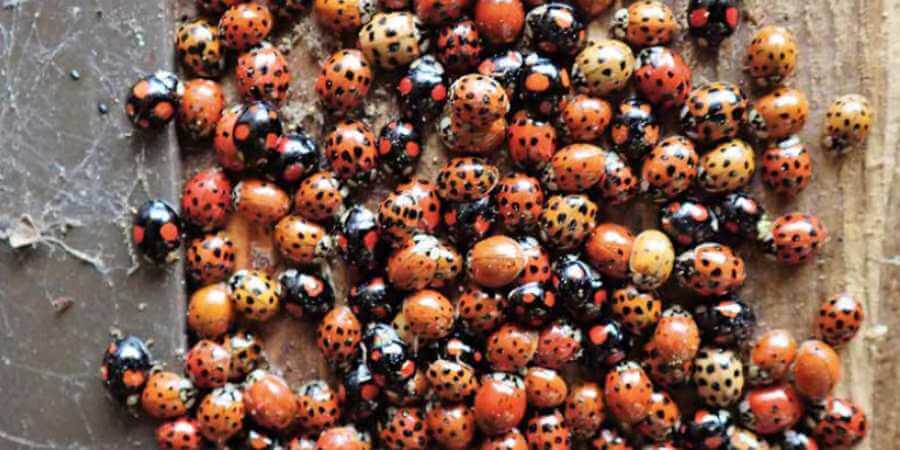
The harlequin lady bug has helped farmers and gardeners control plant-eating pests and defenders of the beetle argue it is basically harmless. But its tendancy to crawl into available cracks and crevices — and to emit an unpleasant yellow fluid when bothered — has tarnished the reputation of an insect that many cultures once celebrated as a symbol of prosperity.
Harmonia axyridis, pictured in various colorful displays above, is a lady beetle or ladybird species that is most commonly known as the harlequin lady beetle. It is also known as Asian Ladybug, or Multicolored Asian Lady Beetle. This is one of the most variable lady beetle species in the world, with an exceptionally wide range of colour forms.
Humans have adored ladybugs for centuries. In the Middle Ages, European farmers noticed the critters were devouring pests, saving their crops in the process. Convinced the bugs were sent as a blessing from the Virgin Mary, the farmers are said to have nicknamed them Our Lady’s Beetle, a moniker that has since been simplified to “ladybug” or in some cases ladybird or lady beetle.
The spotted bug, despite its detractors, has clung on to its cachet over the millenia. It has become a popular Halloween costume and a character in a Pixar movie. A cluster of the insects is even known by the collective expression: a loveliness of ladybugs.
These convergent lady bugs are a different species of beetles (Hippodamia convergens). They are known to cover trees, rocks and other plants, in their mass gatherings. No one is quite sure why they have these convergences, but entomologists believe it’s usually in the heat of summer and in the warmest days of winter, when there may be a shortage of food or conditions that are poor for breeding.
In Colorado, it is always a good time to converge! See the convergent bug images and LVDY merch below:

Then, of course, there are those who are extraordinarily youthful and want to be avid LVDY supports, known as LVDYBUGS and LVDYBirds.


 Henry E. Hooper