

Witness Post: Chautauqua
In the summer of 1874, a Methodist minister by the name of John Heyl Vincent organized a special camp meeting by the shores of New York’s Lake Chautauqua. His goal was to train Sunday school teachers at his camp meetings. The first Chautauqua Assembly was held in the western most county of New York, known as the “Chautauqua-Alleghany” region. The Assembly included lectures, Bible classes, and recreational activities. The soon-to-be annual summer event caught fire in other parts of New England, becoming a full blown “religious movement” over the next decade. Before the turn of the century, the movement added various chapters across the country.
The Chautauqua events and lectures found roots in the rural areas of the South, Mid-West, and Mid-Atlantic, eventually securing deep reservoirs of believers in such places as Wytheville, Virginia, Worthington, Ohio, Madison, Wisconsin, and Lincoln, Nebraska, among others. The towns had their own Chautauqua chapters that were filled to the brim for the short summer seasons.

Lake Chautauqua
A popular summer destination for many urban residents from the metropolitan areas of Buffalo, Cleveland, and Toronto, Lake Chautauqua became the mecca for several movements in the country. Chautauqua’s were a popular educational and self-improvement trend that flourished during the late 19th and early 20th centuries and had roots in camp meetings, annual summer gatherings held by evangelical Christian sects.
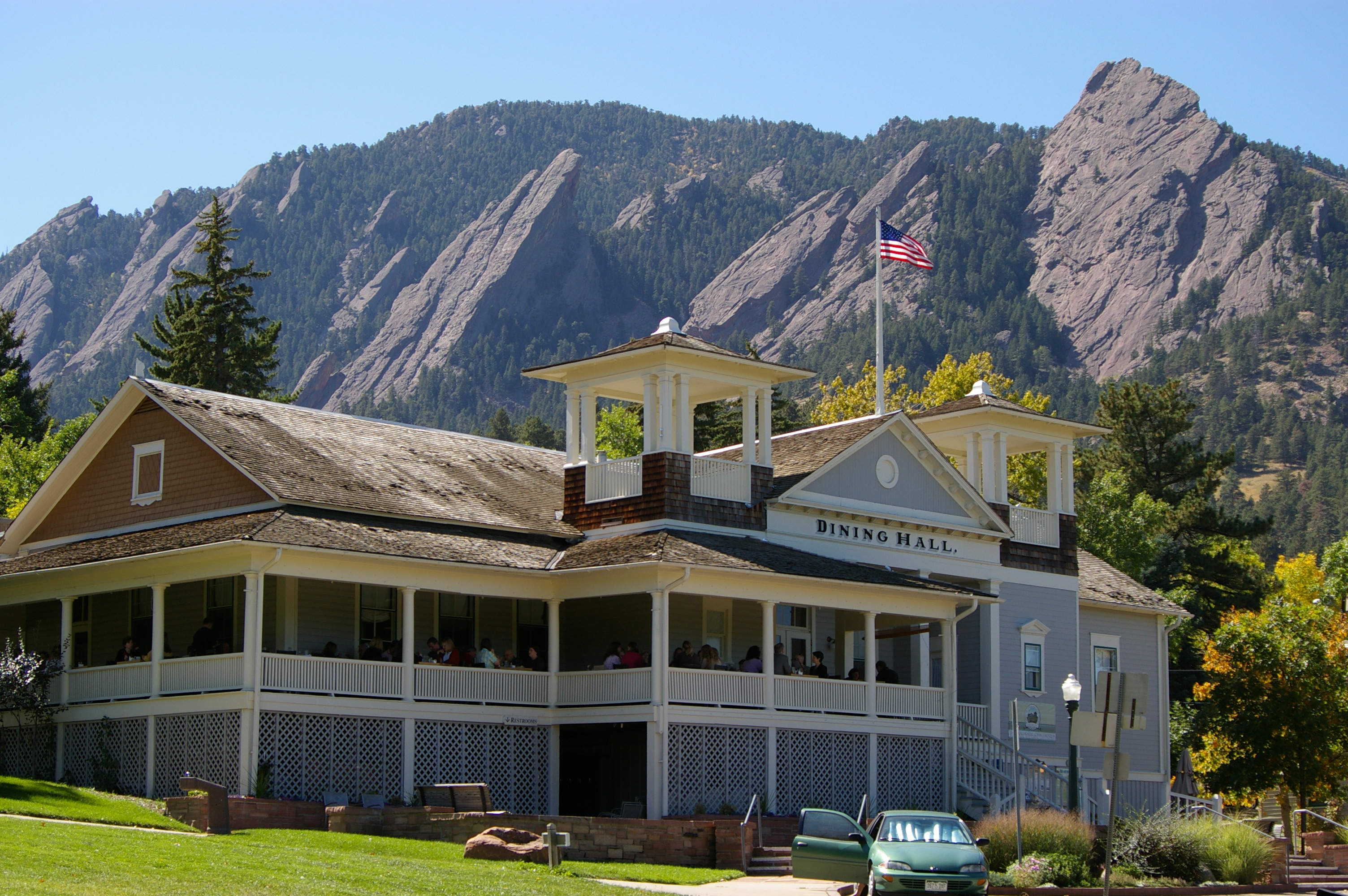
Going West: All the way to Oregon
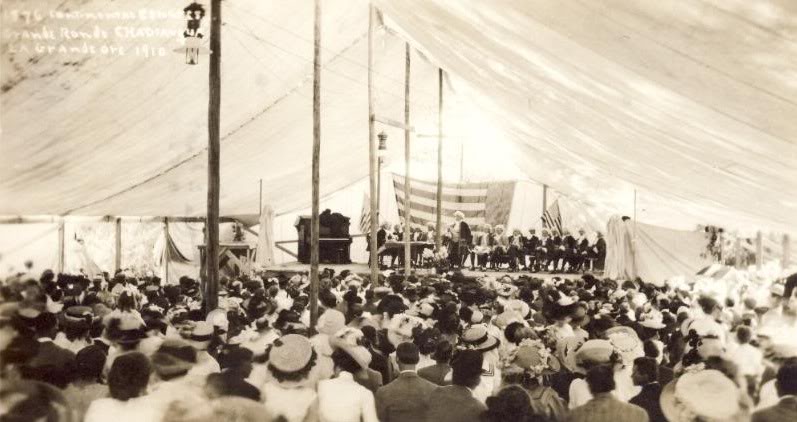
Within 20 years there were 150 Chautauqua chapters that criss-crossed the Midwest, Rockies and even reached the West Coast. In Oregon chapters sprung up in Ashland, Canby, Monmouth, Gearhart and Gladstone. Due to questionable early summer weather in the Pacific Northwest, many of the first Oregon Chautauqua Assemblies were held in the town parks under large tents. Later, when the movement became established, permanent structures were built and became the centers of culture in the towns.
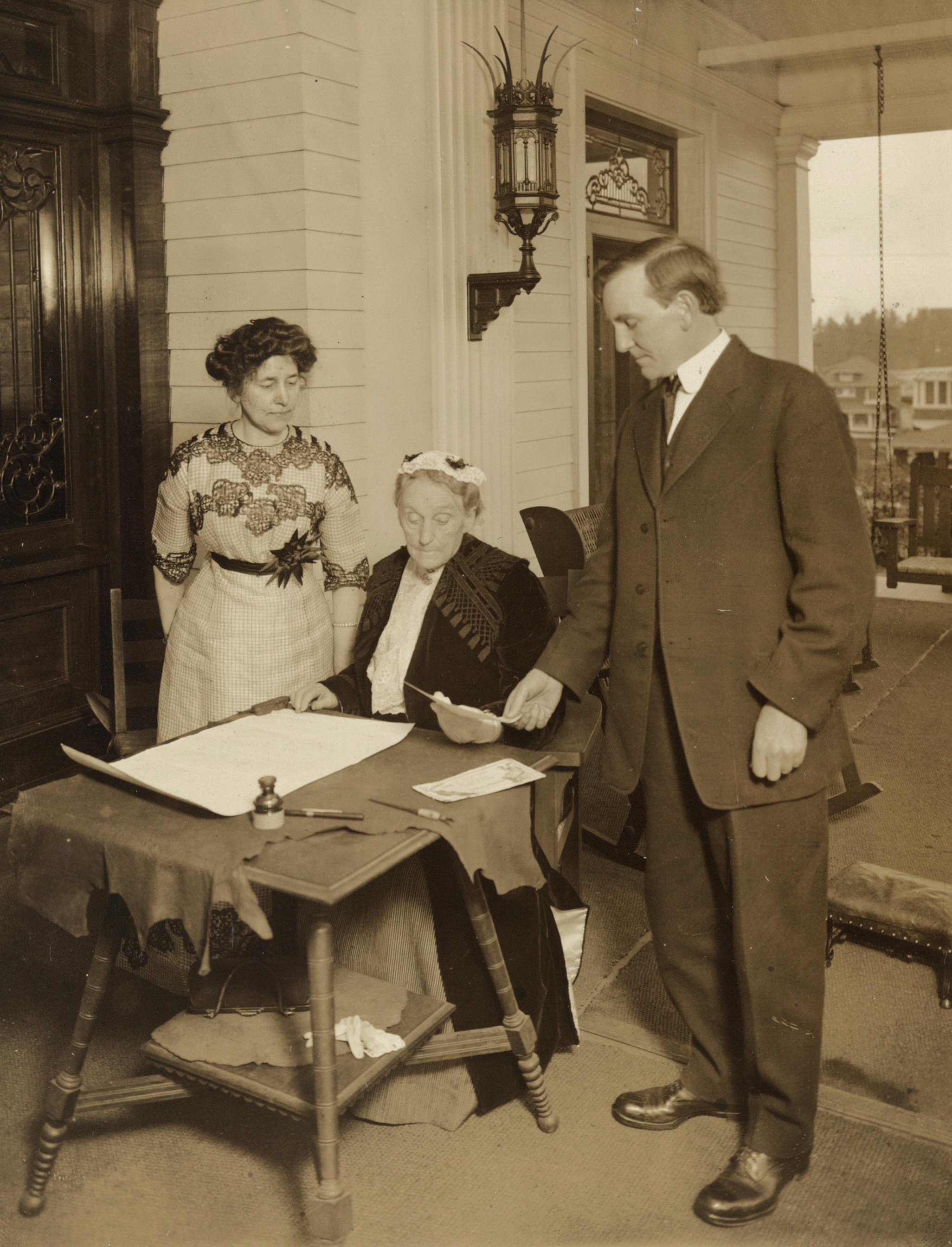
Many local politicians were eager to be a part of the movement and volunteered to speak at local Chautauqua events.
But by the time the movement reached the West and the state of Oregon, the Chautauqua meetings had mellowed from their strict religious fervor and became non-denominational and secularized affairs.


Gearhart, Oregon’s Chautauqua Chapter
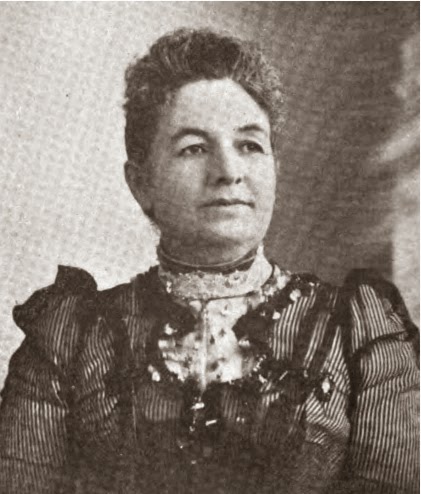
In the early 1900’s the intellectual set in Gearhart, Oregon, joined the Chautauqua movement. Gearhart’s Chautauqua chapter, like others in the state, was open to all comers. Gearhart’s intellectual leaders wanted to be part of the Chautauqua movement and, led by the town matriarch, Narcissa Kinney, the chapter was a flourishing social enterprise for several years. Under Kinney’s leadership and direction the Chautauqua took root: the tents was replaced with a permanent pavilion, the events were organized, speakers and musicians were invited and the town’s residents and summer guests were encouraged to bring their friends and family and attend the events, free of charge.
According to one local newspaper, the Chautauqua societies of Oregon were the “promoters of moral as well as intellectual culture.” The popular ten-day events featured concerts, group prayers, lectures by noted orators, baseball games, and classes on everything from geology to physical fitness. Gearhart held events for prominent figures such as John Philip Sousa and his world famous band, and politician/ lawyer William Jennings Bryan – known as the “silver-tongued orator.”

Narcissa Kinney invited Governor Oswald West to be a guest lecturer, and she spiced up the offering with musical interludes before coming down hard with an array of temperance lecturers. Those less enthusiast about the political/religious movement slunk off to private residences in Gin Ridge or Beer Alley for their parties, choosing their preferred beverage of dereliction.
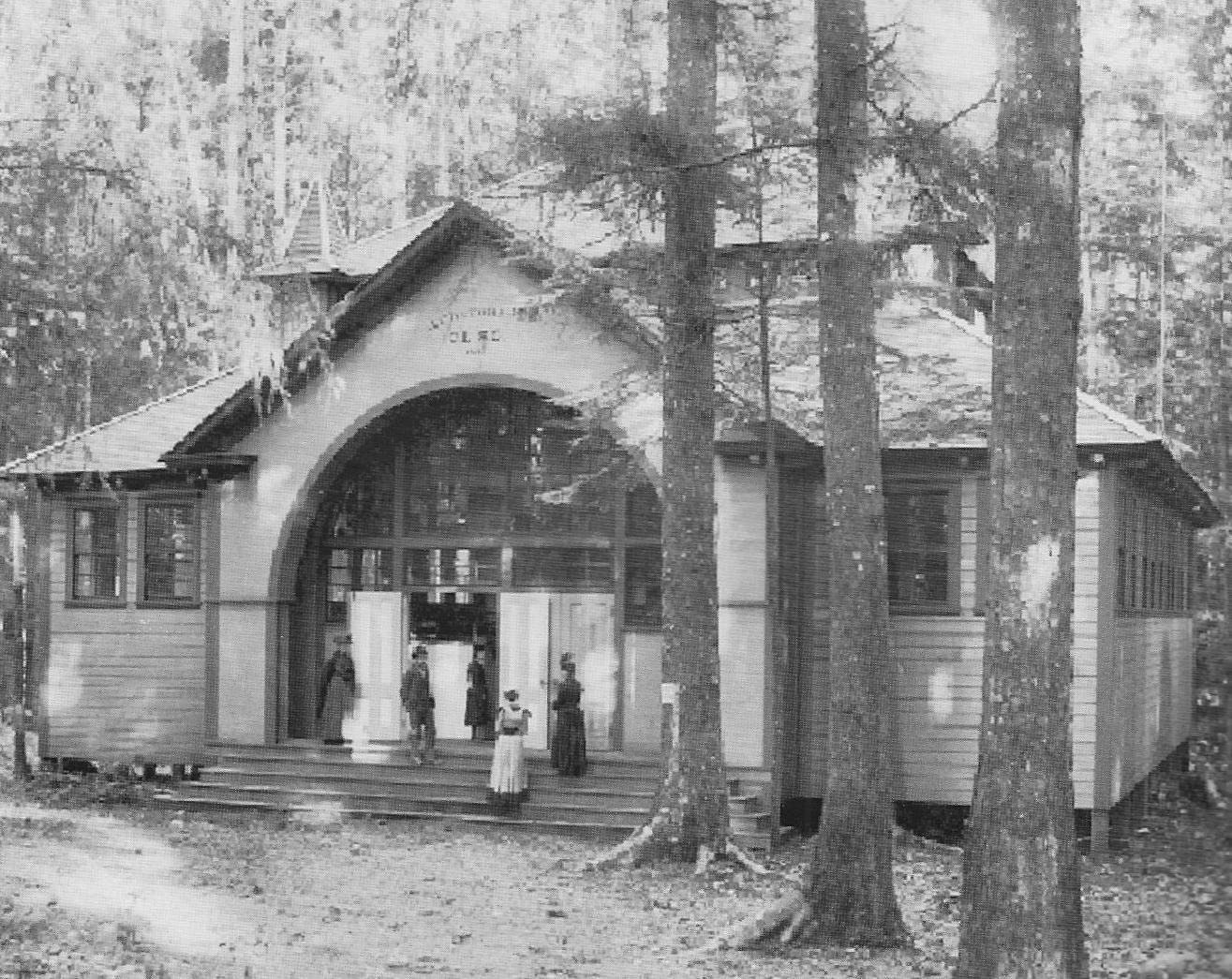
The handsome pavilion was built especially for the Chautauqua society with funds offered by the town leadership. The building served as a community center during the other months of the year and was actively used into the 1920’s. The original Gearhart Chautauqua Pavilion, though, burned to the ground in the early ’20’s and it was not rebuilt. Efforts to revive the Chautauqua movement in Gearhart took flame in 2007, but the embers went dormant in the Great Recession of the following few years.
Chautauqua in Ashland, Oregon, Roots of the OSF
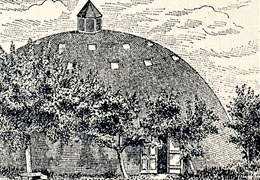
Ashland’s original Chautauqua building, a beehive-shaped structure built in 1893, seated up to 1,000 people, but sometimes hundreds more possible spectators and paying guests were turned away from the most popular lectures. When William Jennings Bryan came to Ashland in 1897, for example, he attracted so many people that the Ashland Chautauqua Committee was forced to set up thousands of chairs for Bryan to give his lecture outside. Apparently the weather cooperated.
The Chautauqua circuit slowly faded away in the 1920’s. Many historians believe that the Chautauqua wave receded with the advent of other distractions for free-time and recreation. The rise in popularity of radio programs brought the stories and lectures into the privacy of one’s home, and the prominence of movie theaters and motion pictures led to the decline of the movement.
Coda
The once popular Chautauqua events have not completely disappear, however. The original meetings at Lake Chautauqua are still held annually, gaining some momentum from the grandchildren and great-grandchildren of the original attendees. And many state humanities councils have recently revived the Chautauqua Assemblies as a way to attract people to their rural areas.
As signs of creative expression, other areas in the country have transformed their former summer Chautauqua sites into entirely new venues with great success. (The Oregon Shakespeare Festival, as an example, is an annual event first organized in 1935, that takes place at the site of the old Ashland “Bee-hive” Chautauqua. The use of the place is still cultural, but more secular. The OSF lasts nearly year-round.)
Chautauqua Events, which still have a strong following in Western New York, are having a resurgence in states such as Virginia, Ohio, Nebraska, Wisconsin, and Colorado, where they have had intermittent and continuous summer Assemblies for many decades. The movement may have new life in the years ahead, as these rural locations attract people who, even in this information rich society, are missing the connection of intellectual thought in a safe environment for deep learning.
 Henry E. Hooper
Please check your photo showing the Gladstone Chautauqua with a tent. Gladstone held its 1st Chautauqua in 1894, and built its first auditorium in 1895…long before automobiles. They never used a big tent. http://www.gladstonehistoricalsociety.org
Kim Huey, I will have to dig deeper. The tents may have been for Chautauqua celebrations in LaGrande and not Gladstone. Thank you for your detection. The post will be edited and corrected when the tent location is discovered.