

Finn McCool, the Northern Irish Giant
O. Henry: Devils & Giants
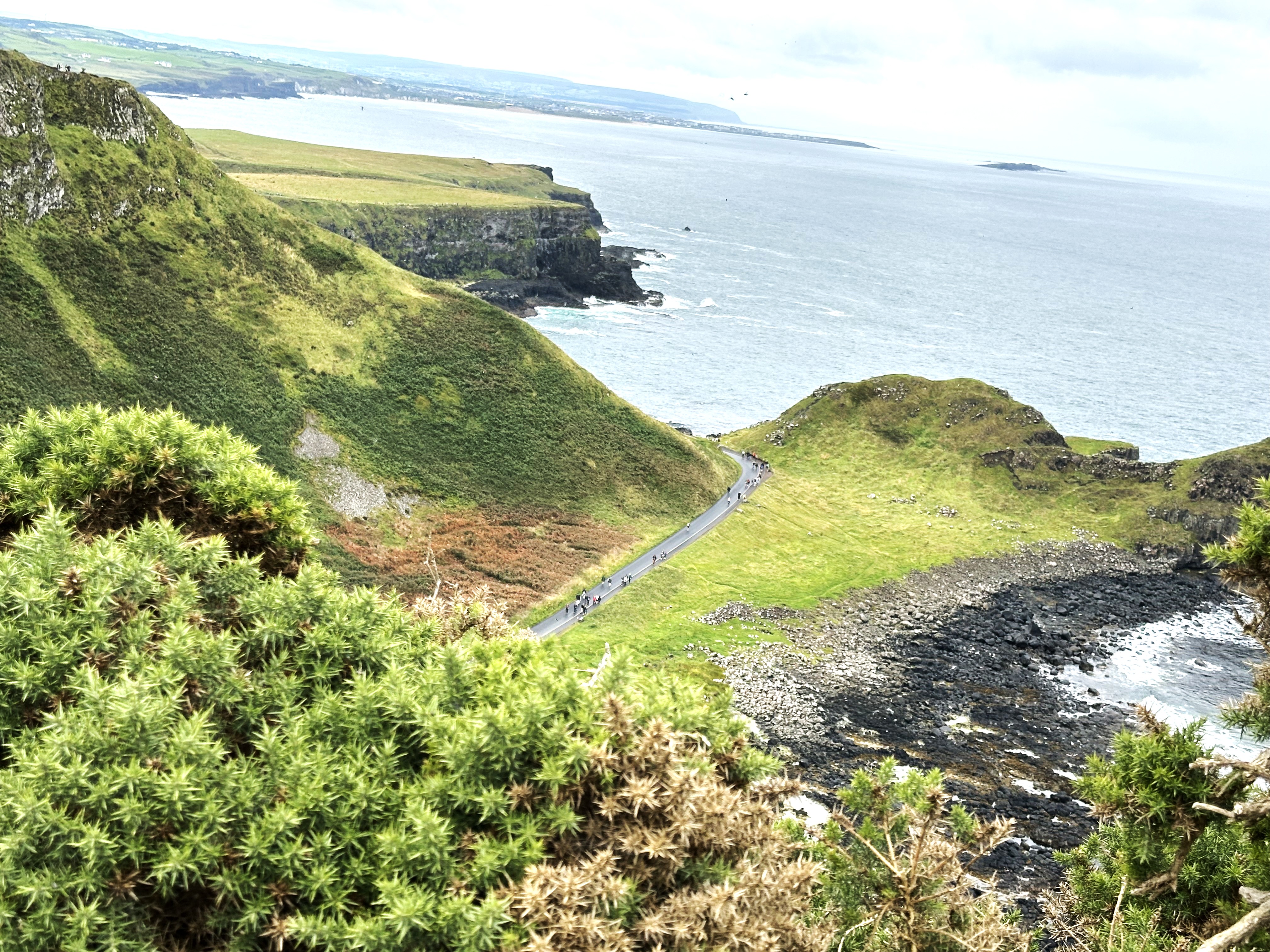
Our family went to a wedding in Ireland in August 2025 and decided to take some time to explore the Antrim Coast in Northern Ireland. What a wonderful way to explore this beautiful part of the Emerald Isle! We made our way to the Titanic Museum in Belfast and then up the road to Bushmills. There we found the majestic Giant’s Causeway. What a surprise! Quickly, the similarity of the rock formations resonated in my memory bank. Where else had I seen these dramatic basalt columns? In Wyoming and California for two spots, yet there are so many more …
When people try to make sense of the most unusual geologic formations in nature, many try to add human characteristics to them. Around the globe, there are volcanic uplifts of lava that appear to be perfectly carved into geometric hexagons and octogons. They also have sections that look like ancient roads, or paths with distinctive signs. Were there once devils or giants at work? Such tall tales try to bring order to the chaos of basalt columns. The rock formations are reminiscent of cobble stone streets or pathways that must be man-made or monster inspired out of ether, right?
Or Was It The Devil?
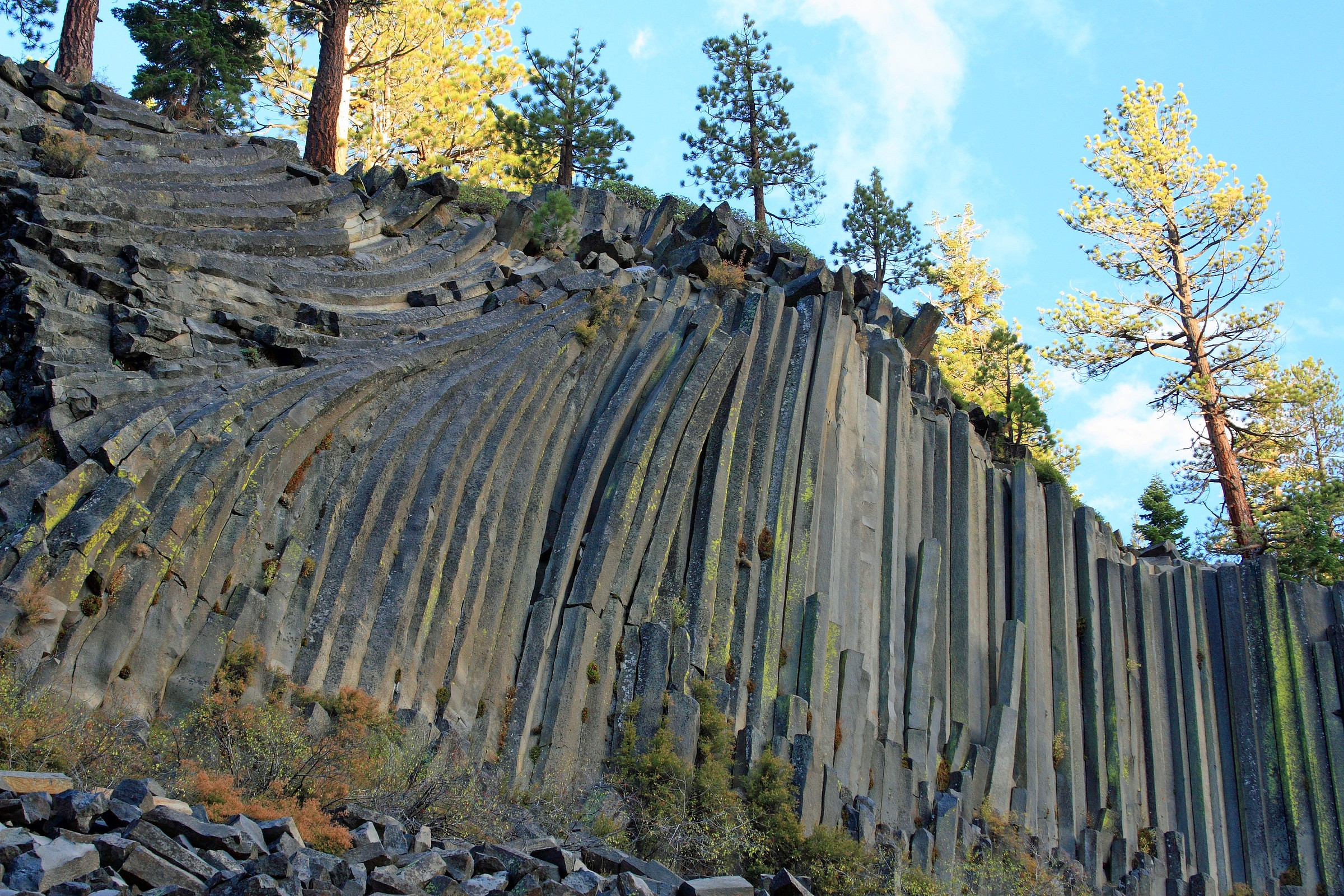
Devil’s Postpile National Monument, California
The most prominent basalt formations in the US include Devil’s Tower National Monument in Montana, Devil’s Postpile National Monument in California, Yellowstone National Park (Sheepeater Cliff and Calcite Springs) in Wyoming, and various columnar basalt formations along the Columbia River Gorge in Oregon and Washington.
These formations are characterized by their distinctive hexagonal or polygonal columns, which can resemble towers or pillars.

Lava and Legend
Devils Postpile National Monument in California is known for its impressive columnar basalt formation; however, there are no specific legends associated with it. The name itself, Devil’s Postpile, hints at a sense of awe and the occult, which could be interpreted in various mysterious ways. The name reflects the unusual and somewhat imposing appearance of the basalt columns, suggesting a place of wonder or even a bit of devilish intrigue, rather than a specific narrative. The monument’s unique geological structure, formed by cooling lava, is the main tourist attraction.
Where Did It Come From?
Geological Formation: Approximately 100,000 years ago, a lava flow filled the valley, and as it cooled, it contracted and fractured, forming the distinctive hexagonal columns.
Absence of Specific Legend: Unlike some other natural formations with rich folklore, Devils Postpile does not have a widely known or documented Native American legend associated with its creation.
Cultural Significance: While not tied to a particular legend, the monument is located on traditional Indigenous lands and holds cultural significance for local tribes, though specific legends related to the formation itself are less prominent.

Comparison with Devil’s Tower: Devil’s Tower National Monument in Wyoming, also a columnar basalt formation, is associated with more well-known Native American legends, including stories of “Bear Lodge.” The name “Devils Postpile” might be seen as a less explicitly narrative-driven name compared to the legends connected to Devil’s Tower.
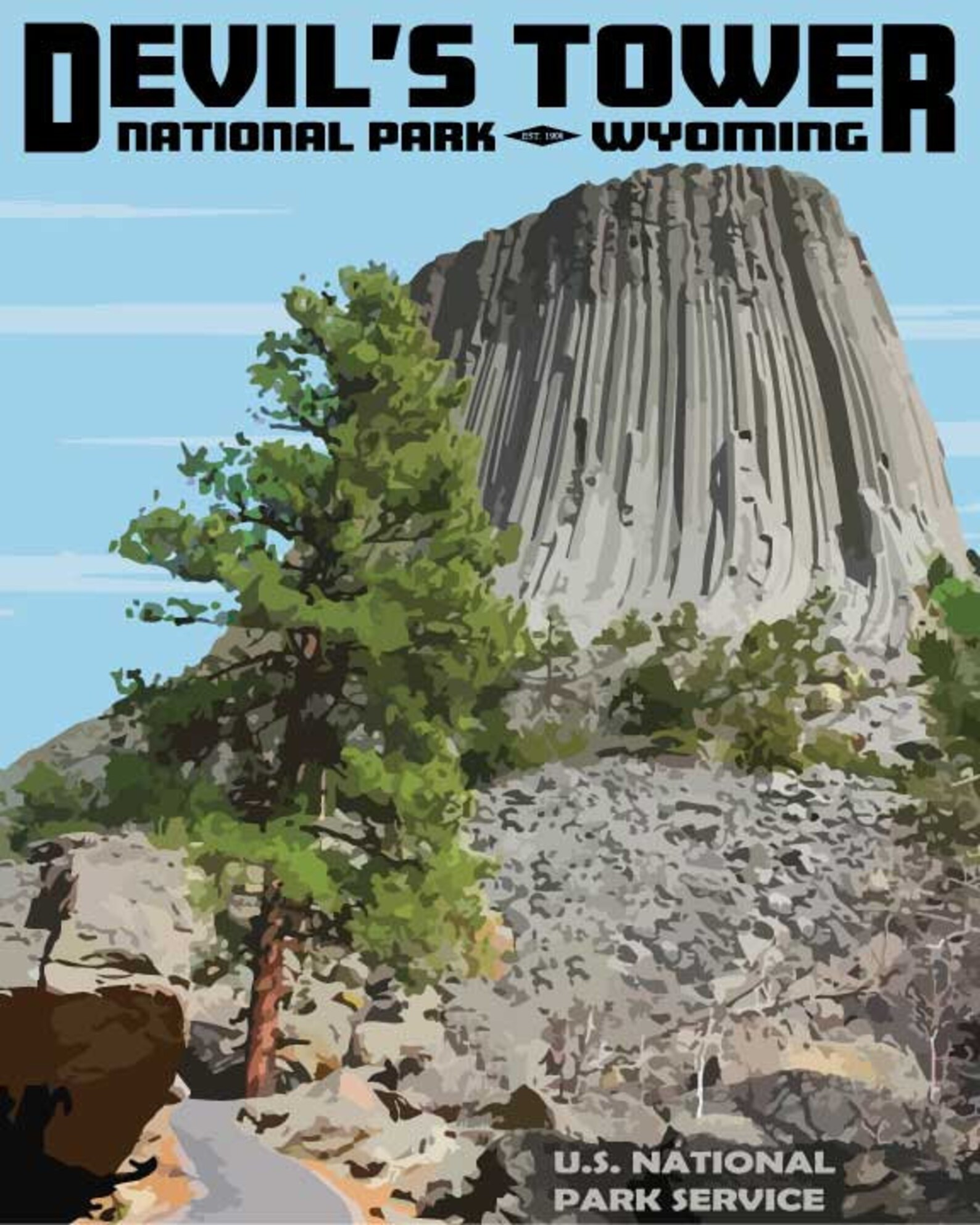
Devil’s Tower is a volcanic butte steeped in sacred narratives. It is also the focal point of a 1977 movie directed by Steven Spielberg called Close Encounters of the Third Kind.
The relevant Indian cultural legends around Devil’s Tower are preserved through the tradition of American Indian story tellers. The legends include tales of children being chased by bears and the Great Spirit intervening to save them, creating the tower’s unique grooves. Other stories involve young boys who were lost on the prairie and the Great Spirit’s intervention to save them. The tower’s name, “Devil’s Tower” is a translation mistake from the Lakota name “Mato Tipila” or “Bear Lodge,” reflecting its bear legend. These legends continue to be passed down via oral tradition through the generations, connection the tower to the spiritual and cultural heritage of the tribes that have long considered the butte a sacred site.
And Now Ireland and The Giants!
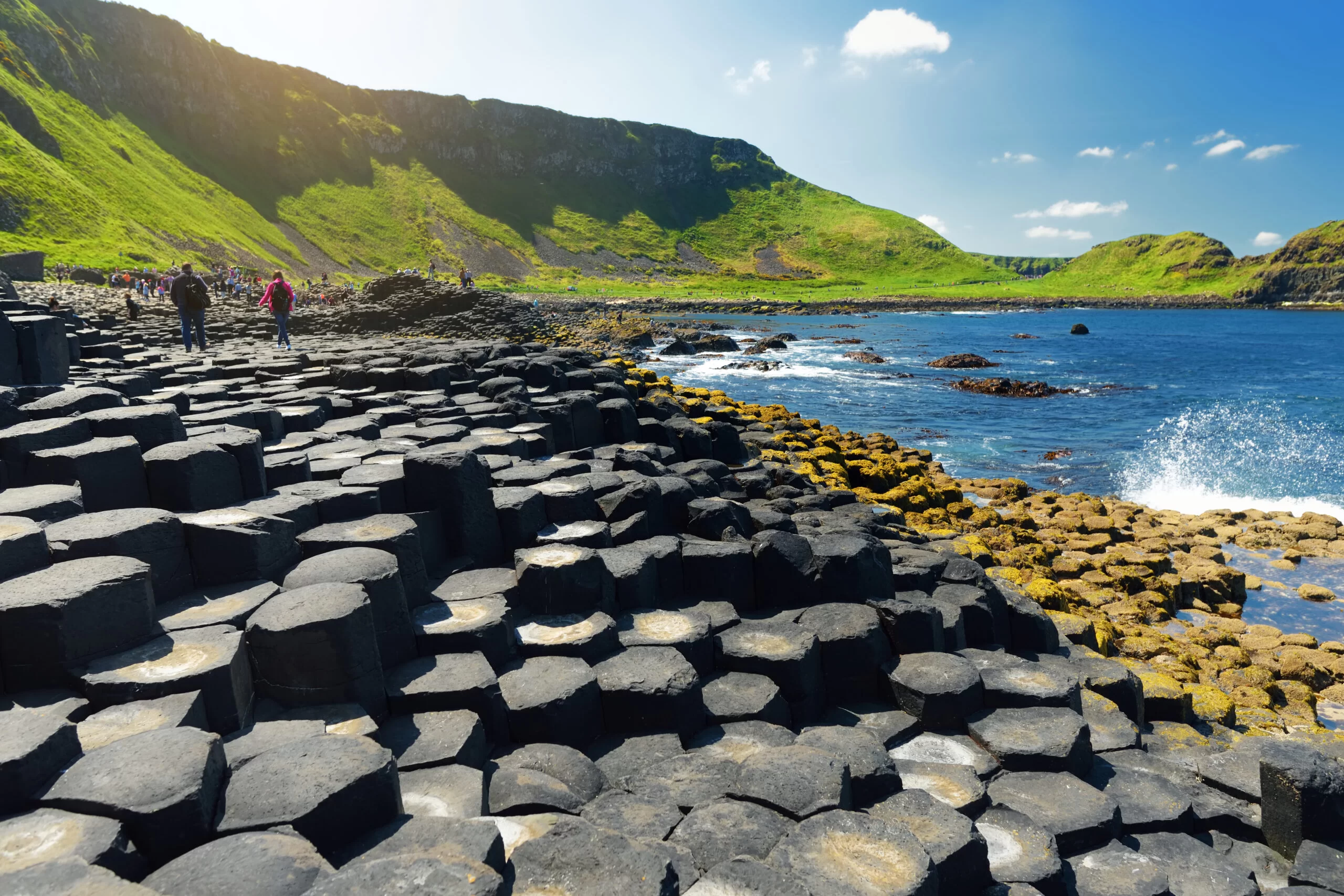
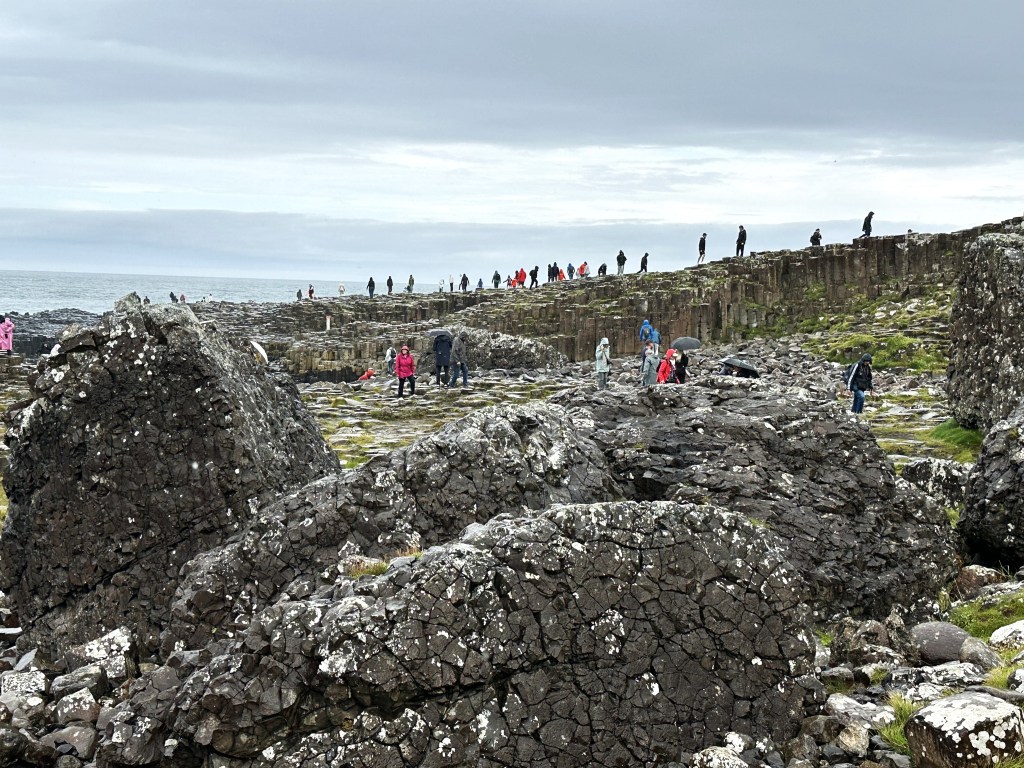
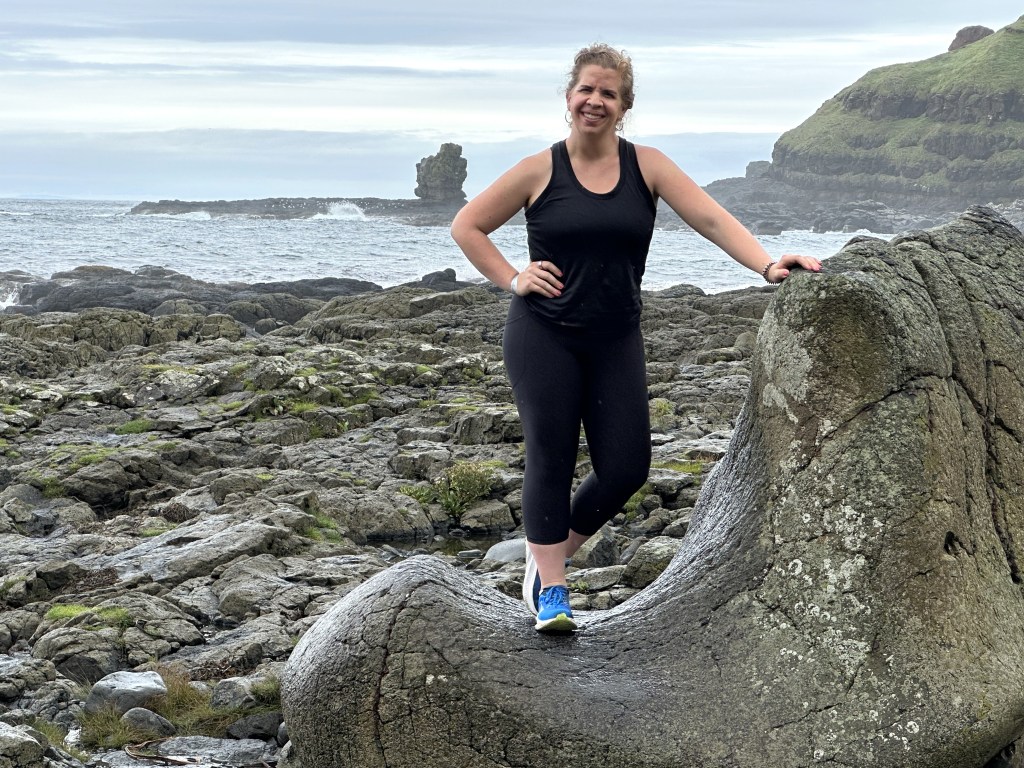
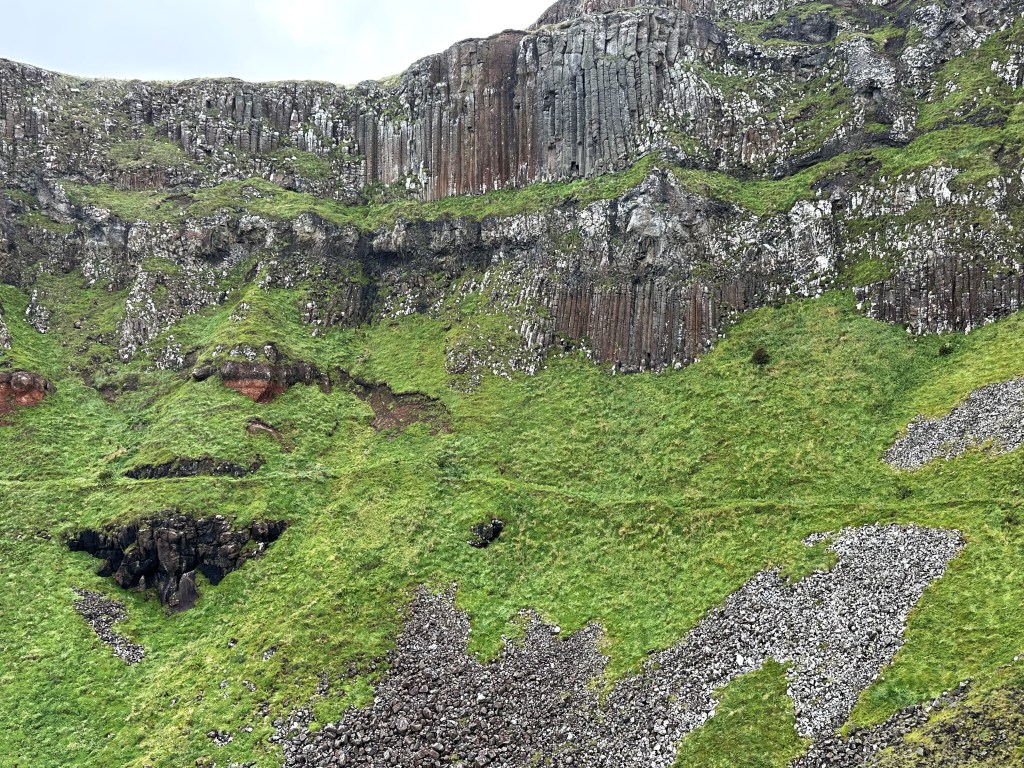
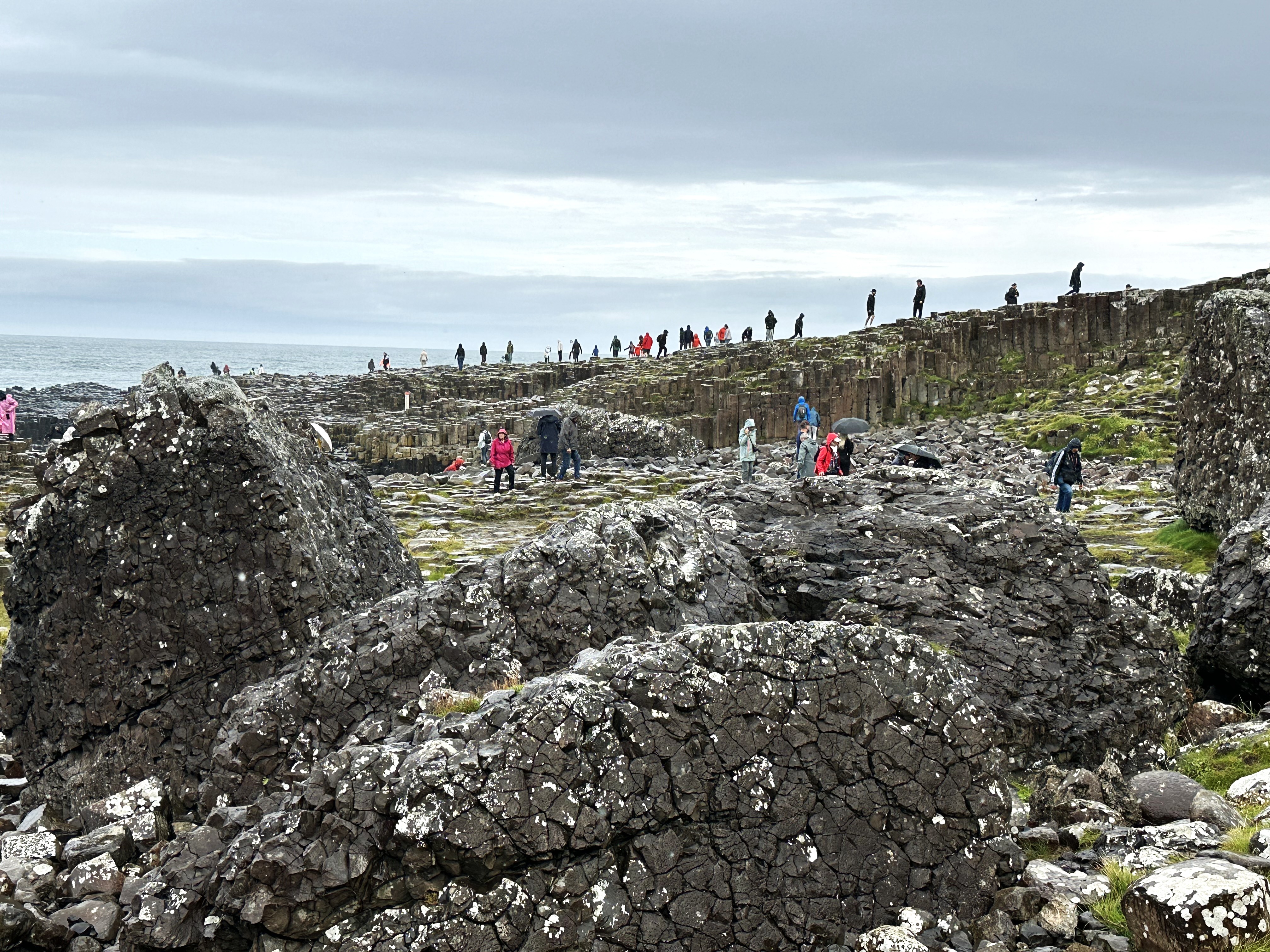
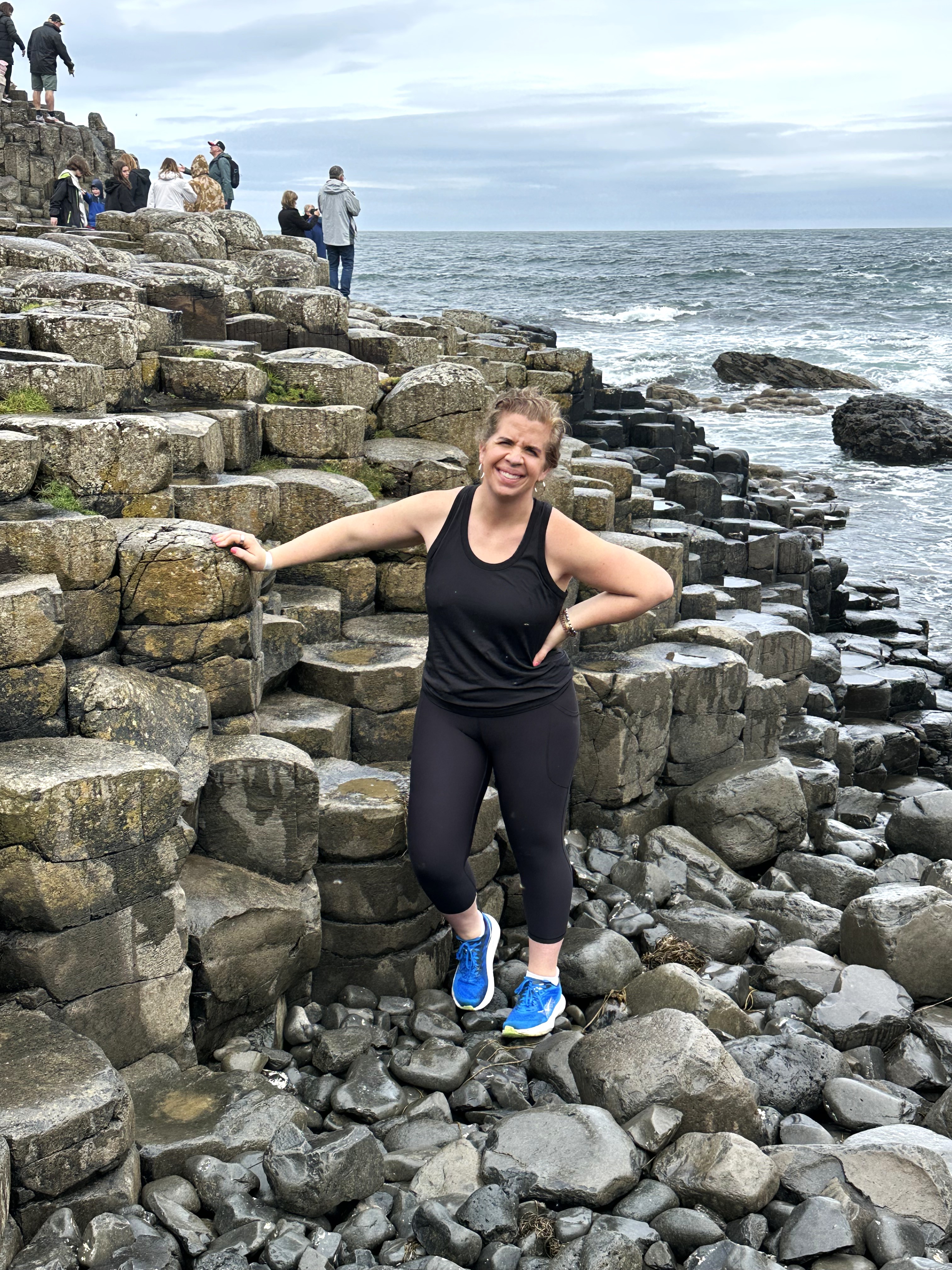
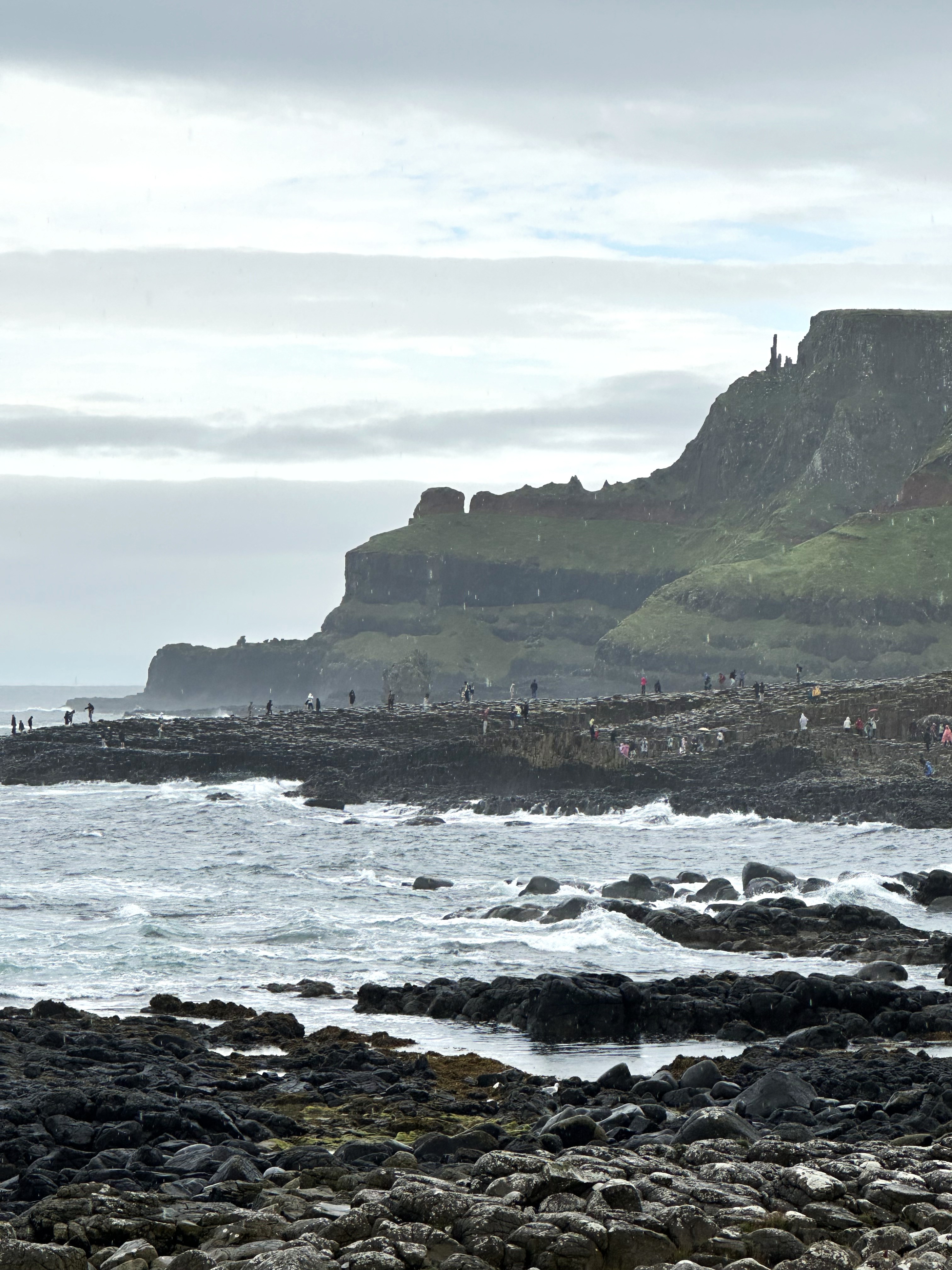
Giant’s Causeway World Heritage Site, Antrim County, Ireland
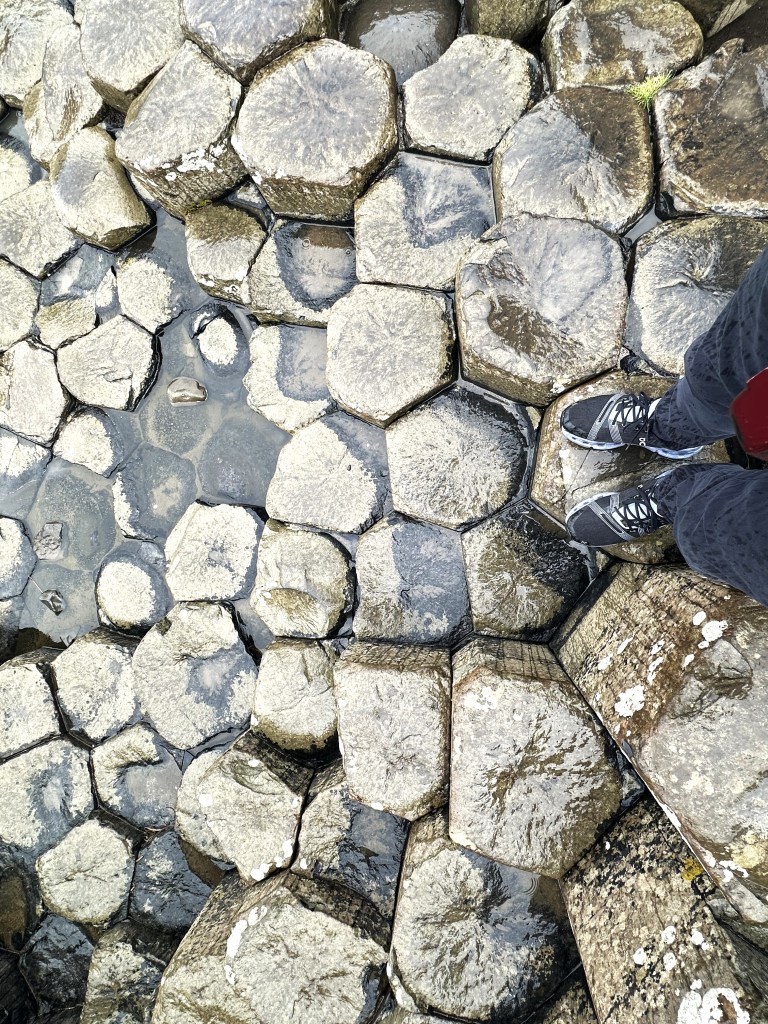
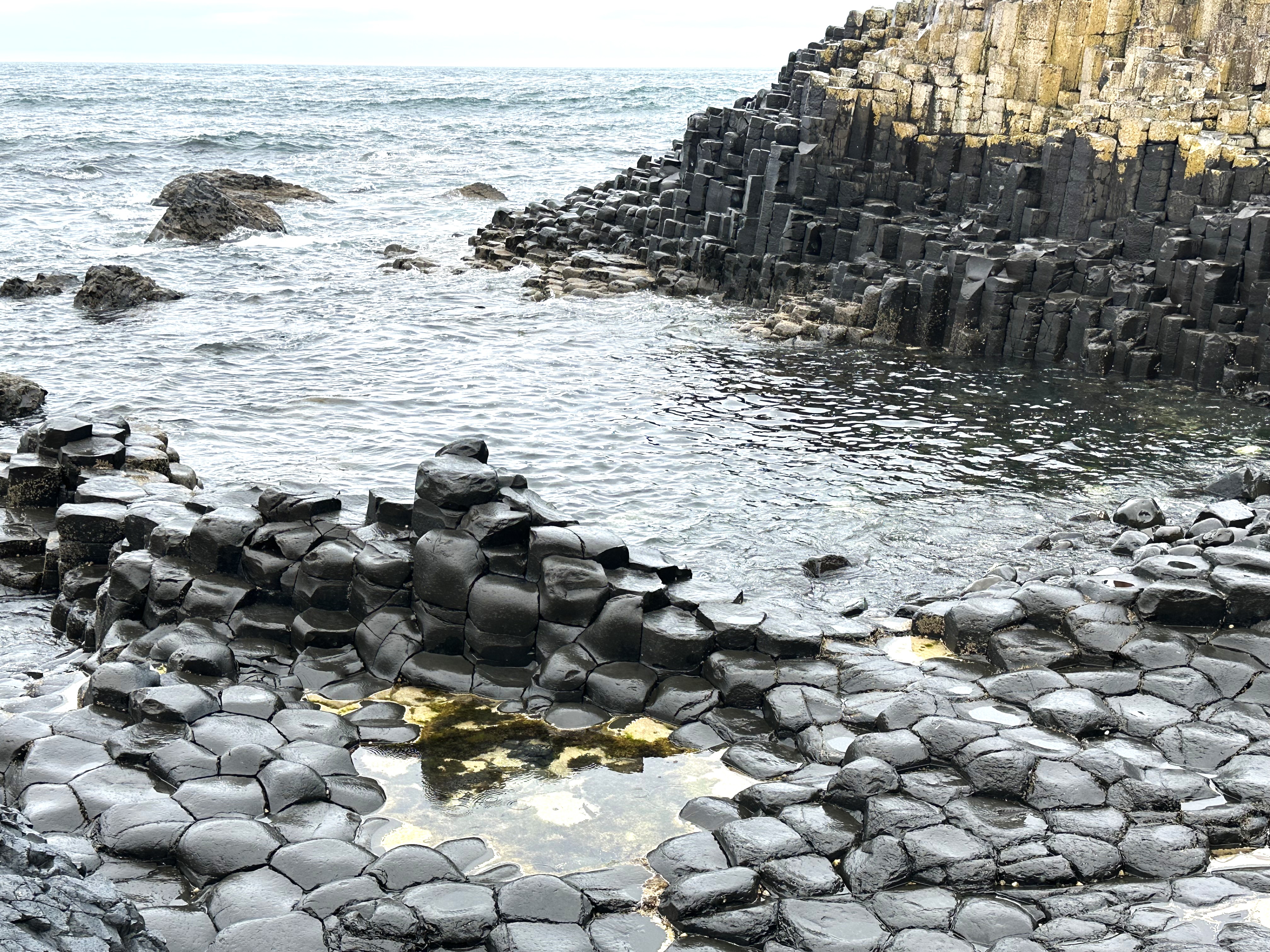
With the exact same geologic formation, the northern coast of Ireland has some quadrangular, hexagonal, and polygonal columns. Why do these shapes keep showing up around the globe? And what stories lie behind them from the generations of ancestors from yesteryear?
The Giant’s Causeway is famous in Ireland for its unique basalt columns. The difference with these formations is that they are interwoven with a rich labrynth of folklore surrounding its creation.
Two Giants: Finn McCool and Benandonner
The most popular legend of the Causeway involves the Irish giant named Finn McCool (also known at Fionn mac Cumlaill). He was building the causeway as a path across the ocean to fight his Scottish rival, Benandonner. However, upon seeing Benandonner and his immense size, Finn quickly and quietly retreats to Ireland. Benandonner soon follows Finn’s path back from Scotland to Ireland.
Finn’s wife, Una, cleverly disguises him as a baby, leading Benandonner to flee in fear as to how large he would be as an adult. In his retreat, Benandonner destroys the causeway behind him, leaving behind the hexagonal columns we see today.
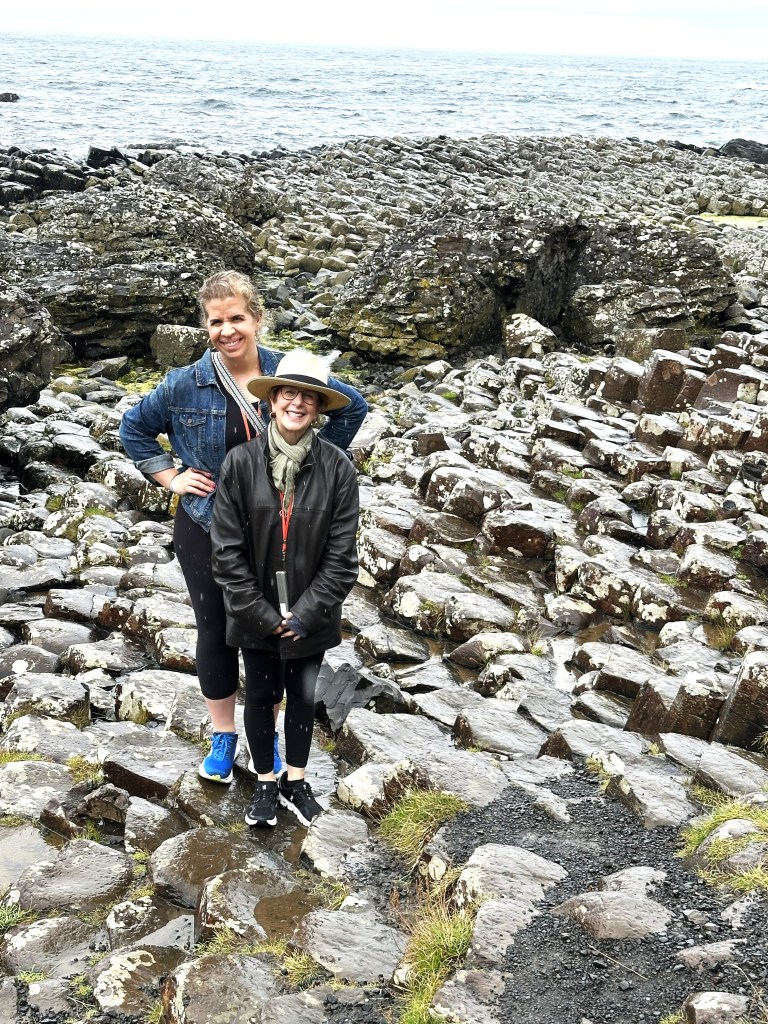





- The Rivalry: Finn McCool and Benandonner were giants known for their fierce rivalry.
- The Challenge: They exchanged insults across the sea, leading to Finn deciding to build a causeway to reach Benandonner for a fight.
- The Construction: Finn began building the causeway using basalt columns, creating a path towards Scotland.
- The Encounter: When Finn saw the size of Benandonner, he realized he was outmatched and retreated.
- The Deception: Finn’s wife, Una (or Sadhbh), hid him in a giant cradle disguised as a baby. Seeing the “baby,” Benandonner fled, destroying the causeway behind him to prevent Finn from following.
- The Result: The destruction of the causeway left behind the unique hexagonal columns we see today, a testament to the legend of Finn McCool and Benandonner.







There are variations of the Giant’s Causeway legend, including one where Finn builds the causeway out of love for a Scottish giantess. Another version tells of Benandonner pulling up the causeway stones in his retreat, causing them to land in the sea as the Isle of Man and creating Loch Neagh.
 Henry E. Hooper