
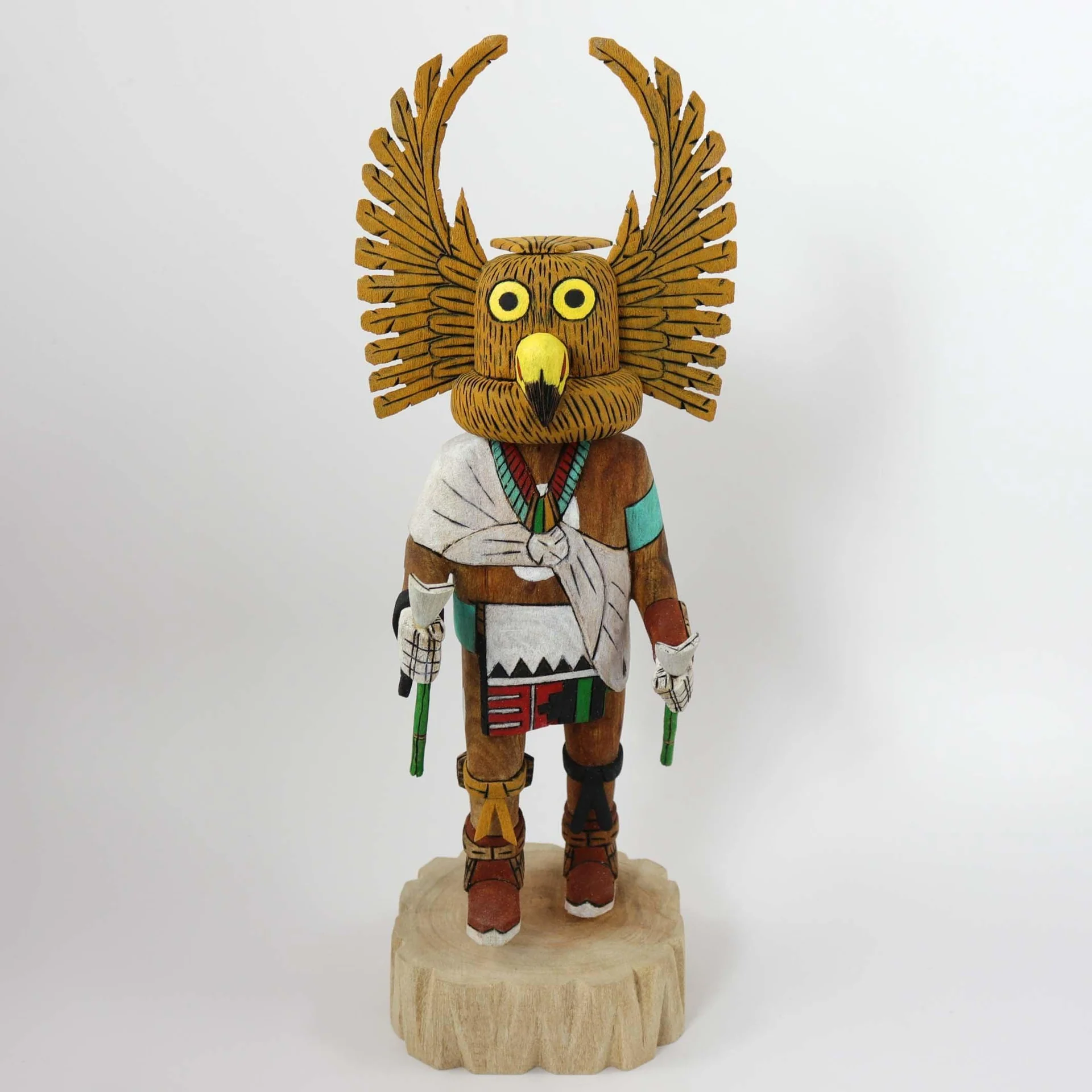
Kachina: Great Horned Owl
The Mongwa or Mongwu (representing the Great Horned Owl) is a traditional Hopi Kachina who acts as a stern lawman and protector in pueblo ceremonies. The Great HornedvOwl Kachina doll is a prominent spiritual figure in Hopi Pueblo traditions. It symbolizes wisdom, intelligence, protection, and agricultural help by hunting rodents that threaten crops.[1]
We have had an Owl Kachina in our collection for many years. This year (2026) at the 100th anniversary of the Prairie Trek Expeditions in Thoreau, NM, Dr. Rick Madden had a Great Horned Owl that he offered up for the silent auction. We were happy to pay the price, as it is for a good cause and the kachina is far superior to the fur covered owl that was on our shelf.
The core symbolism and meanings of the Great Horned Owl are firmly embedded in the Hopi culture: the owl is repected for its sharp senses (sight and hearing), its quiet flight, and its deep wisdom; therefore, standing for wisdom and intellect. The Great Horned Owl is also an agricultural protector, because owls control mice and other harmful pests in the fields. The owl spirit helps to safeguard the critical crops from planting to harvest. The Great Horned Owl is also a master hunter, using its keen eyesight (especially at night) and it represents the ability to see what others miss.
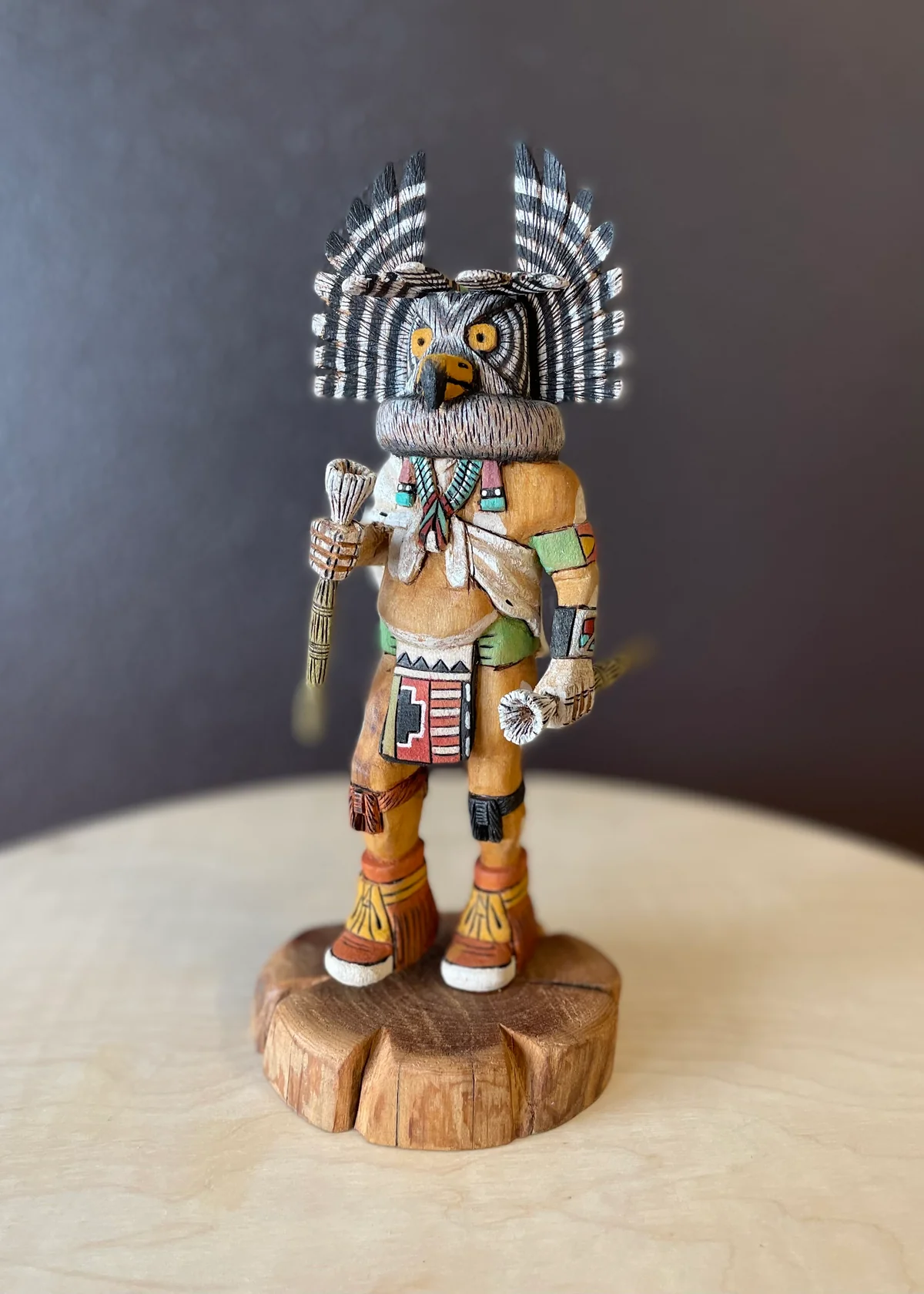
Across many cultures, including the Hopi, horns of the Great Horned Owl represent high spiritual strength, heightened awareness, and a strong link to divine realms.
As to ceremonial roles in the Pueblo dances, the Great Horned Owl is the disciplinarian. During traditional ceremonies, like the Bean Dance (Powamuya), he is the one who disciplines the clown. When the clowns’ behavior becomes too outrageous, the Owl is the one who enforces order, sometimes using sharply cut yucca blades to inflict pain. The Owl takes part in other Mixed Kachina Dances and in some ordinary dances. At Hopi’s First Mesa he takes part in the Water Serpent Ceremony.
The Owl Kachina appears to watch over and correct the behavior of other dancers, and to re-enforce community standards. Mongwa and Mongwu typically carries yucca stalks, yucca whips, or a bow and arrows in his hands. And the sharp-eyed bird serves as a spiritual leader among warrior katsinam. They are embodiments of protective medicine, warrior guardians, or warnings of impending danger.[2]
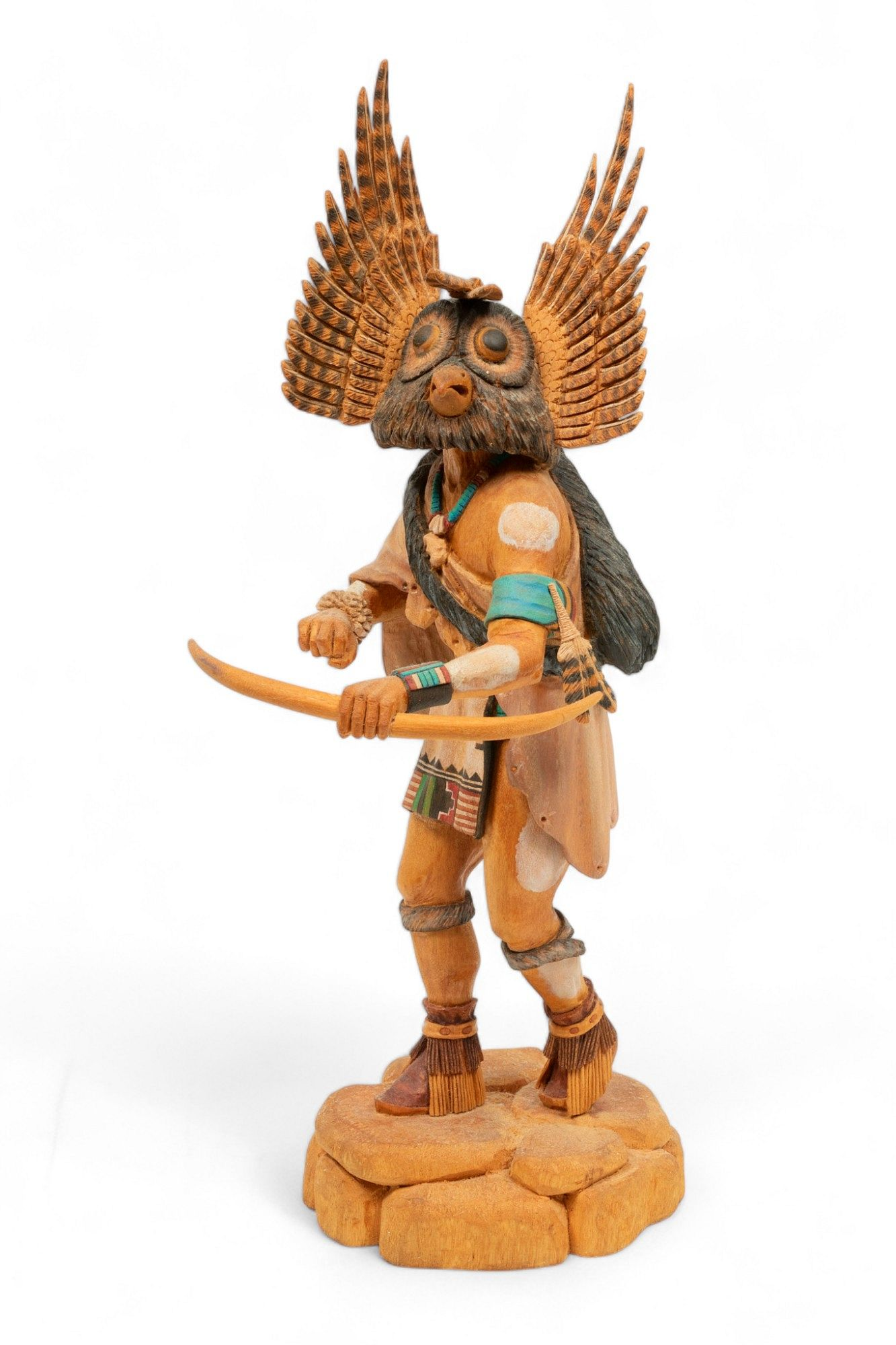
Traditional depictions of the Great Horned Owl feature: A rounded head with prominent horn-like ear tufts (often exaggerated in carvings). Large, staring eyes (yellow or white with black pupils). Brown/gray/white feather patterning on the body. A beak, sometimes with a ruff or collar of fur/feathers. And actual accessories are added to the kachina, like natural feathers on the head or body for added realism.
References:
[1] https://en.wikipedia.org/wiki/Hopi_Kachina_figure
[2] https://santafemotel.com/about-santa-fe/general/history/kachina

