

Friday Finance: What is a B Corp vs. a PBC?
Yes, there is a corporate structure known as a B Corp, which stands for Benefit Corporation. There is also a PBC (or Public Benefit Corporation), which makes matters even more confusing. This Friday Finance is an attempt to separate these two structures and to give example of each. That said, once you hear of the differences, you may still be confused (as I am) as to why we need these two distinct designations.
Let’s start with a story about ice cream:
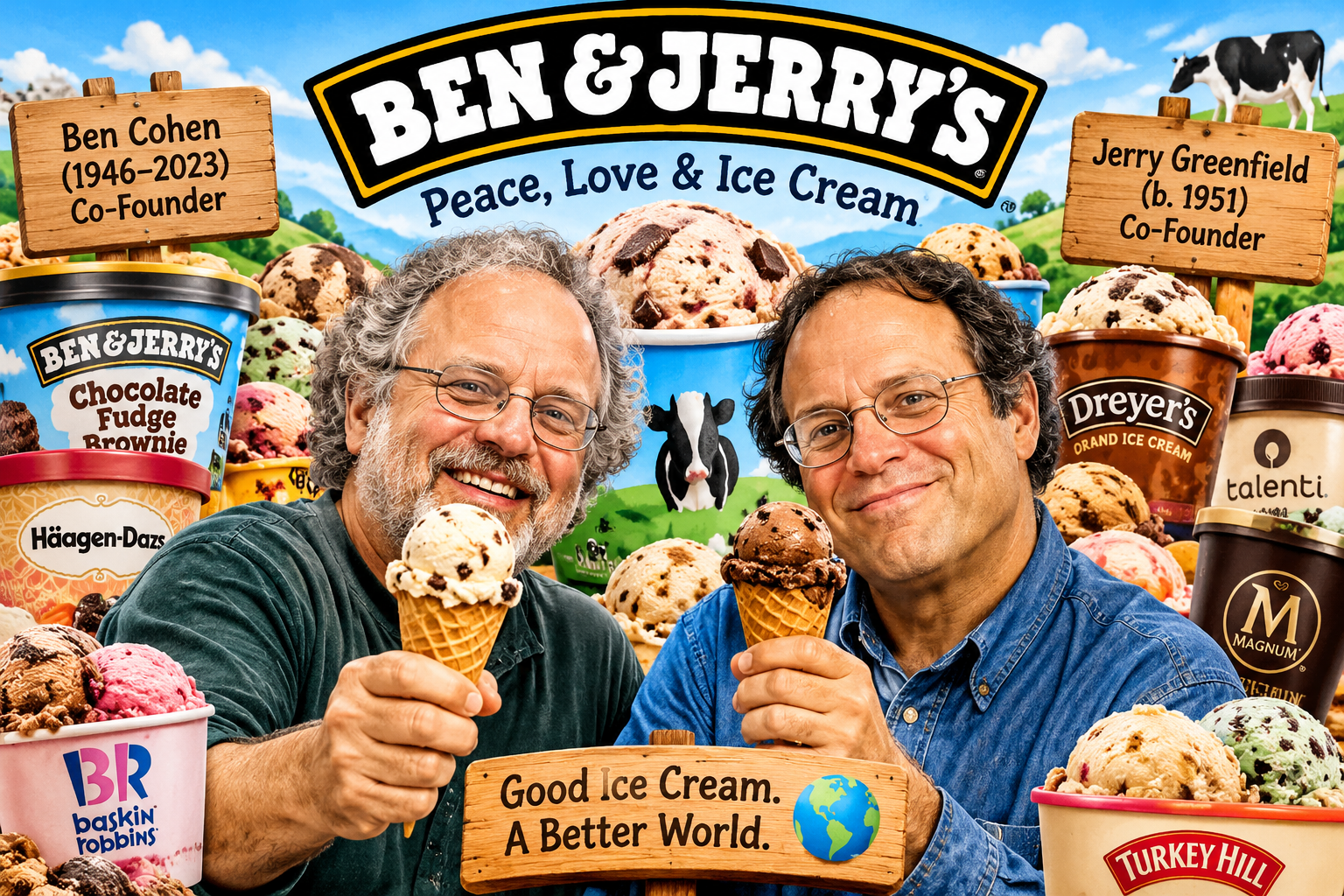
When Unilever bought Ben & Jerry’s in 2000, the founders negotiated an unusual deal. To get the acquisition done, Unilever agreed to let Ben & Jerry’s independent board of directors stay in control of the brand’s social mission. The work is split in two. The parent company (formerly Unilever, now Magnum) handles financial and operational decisions, while the independent board oversees the mission and the brand’s integrity. foodnavigatordairyreporter
What makes this rare is that the board perpetuates itself. The independent board controls its own membership, even after a change of ownership. Under the 2000 merger agreement, Ben & Jerry’s directors can only be removed by each other, with two exceptions: the board asks the parent in writing to remove someone, or a director becomes “ineligible” to serve. Most acquired brands don’t have anything like this. Normally the owner simply appoints the board. foodnavigatordairyreporter
but that’s not the unusual structure people usually mean. Those are two separate things.
The unusual part: an independent board inside a wholly owned subsidiary
Where B Corp fits in
B Corp is a third-party certification, not a legal structure. Ben & Jerry’s has been a Certified B Corporation since September 2012. It was the first wholly owned subsidiary to earn the certification, and the independent board created at the Unilever acquisition had long backed B Corp values. One caveat: B Corp certification gives no legal protection against shareholders. The merger agreement is what gave the board its legal teeth. ben and jerrys +2
Why it’s in the news
That structure is now being tested in court. Ben & Jerry’s and its independent board have been in a legal fight in a New York federal court since 2024, first with Unilever and now with Magnum, after the ice cream business was spun off in December 2025. Magnum brought in a nine-year term limit for directors, and longtime chair Anuradha Mittal, who joined in 2007 and had chaired since 2018, was pushed out. By January 1, 2026, all the independent directors were gone, leaving only a Unilever-appointed director and CEO Jochanan Senf. Magnum argues the directors became ineligible for re-election, which it says is different from removing them. Ben & Jerry’s Foundation joins legal fight over independence from Magnum +3
In August, Judge Kevin Castel dismissed seven of the ten counts brought by the former independent directors and trimmed another. One surviving claim relates in part to the ongoing governance dispute. So whether the 2000 protections still mean much in practice is an open question right now.
Once Upon a Farm’s structure is quite different from Ben & Jerry’s. It’s an independent, publicly traded company that is legally incorporated as a public benefit corporation (PBC). There’s no parent company and no separate mission board.
Public Benefit Corporation
The company’s legal name is Once Upon a Farm, PBC. Being a PBC means it is legally committed to balancing profit with its stated mission, which is to “drive systemic change in childhood nutrition.” The company says this status requires it to uphold high social and environmental standards and be transparent with all stockholders. According to one report, it became a PBC in 2021. jennifer garners once upon a farm files for nyse ipo +3
This is the key contrast with Ben & Jerry’s. B Corp is a voluntary certification from a nonprofit. PBC status is written into the company’s charter under state law, so the mission obligation is legally binding on the directors themselves.
Public company since February 2026
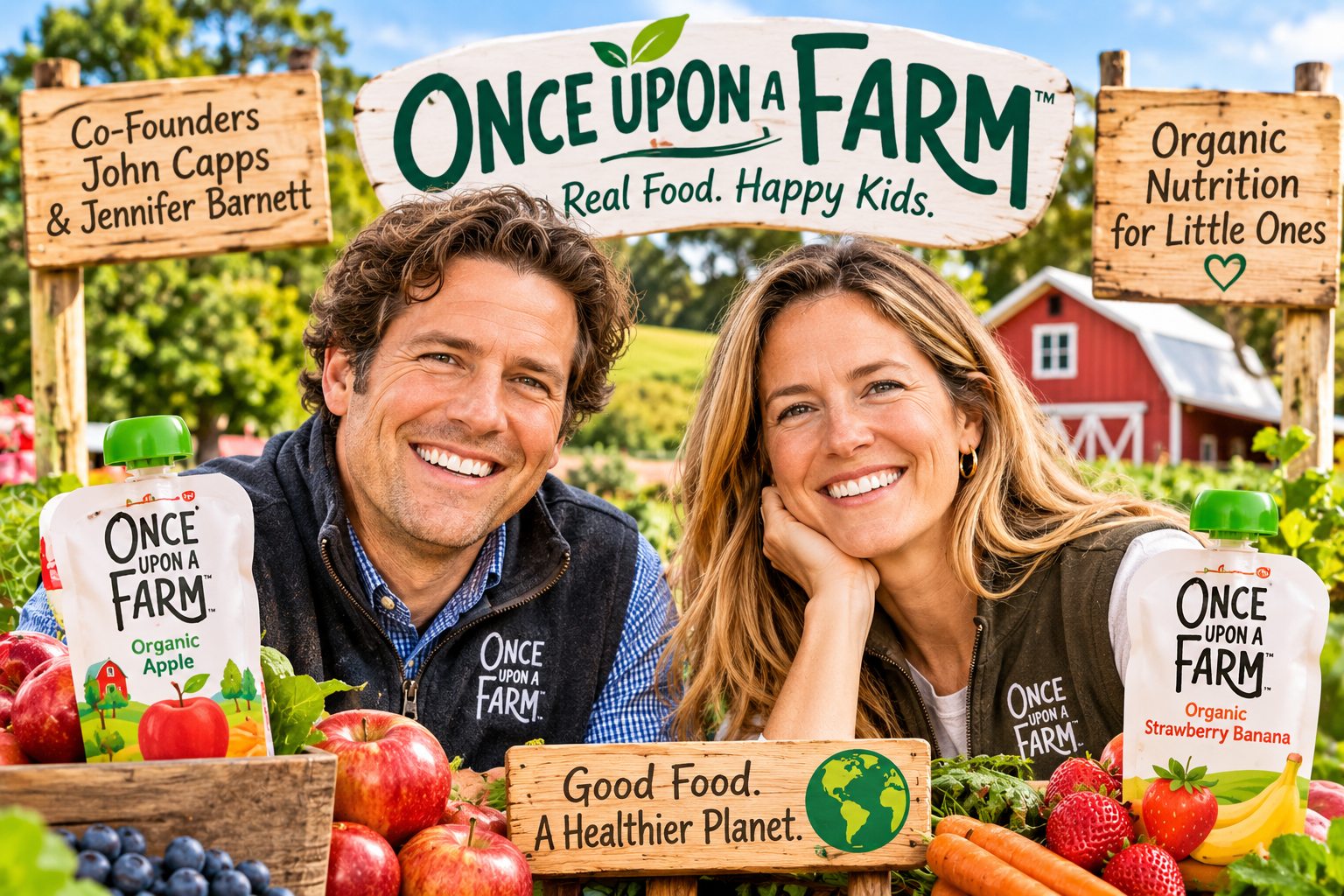
It began trading on the New York Stock Exchange under the ticker “OFRM” after its IPO offered 11 million shares at $18 each, raising about $198 million and valuing the company around $724 million. Co-founders Cassandra Curtis and Ari Raz were early to the game, then came John Kapps and Jennifer Barnett, along with CEO John Foraker. Foraker said the company’s commitment to its mission is why it chose to go public rather than seek a sale, which is a much more common goal for young consumer brands. That choice is arguably a lesson from the Ben & Jerry’s story: a sale to a conglomerate puts the mission in someone else’s hands. www.mexc.com +2
Who owns it
Cassandra Curtis and Ari Raz founded the company in 2015, and Jennifer Garner and John Foraker joined as co-founders in 2017. Before the IPO, venture investors held the largest stakes. The shares sold by existing stockholders likely came from Garner, Curtis, Raz, Foraker, a handful of individual investors, and two investment funds. Garner remains a director and, per SEC filings, holds 3,057,280 shares, about 7.1% of the company, which includes directly held shares, shares in the Jennifer Garner Trust, and exercisable options
What is the difference between a PBC and a B Corp?
The short version: a PBC is a legal form a company chooses under state law, while a B Corp is a certification a company earns from a private nonprofit. They’re often confused because the names sound alike and many companies have both, but they work differently.
Public Benefit Corporation (PBC)
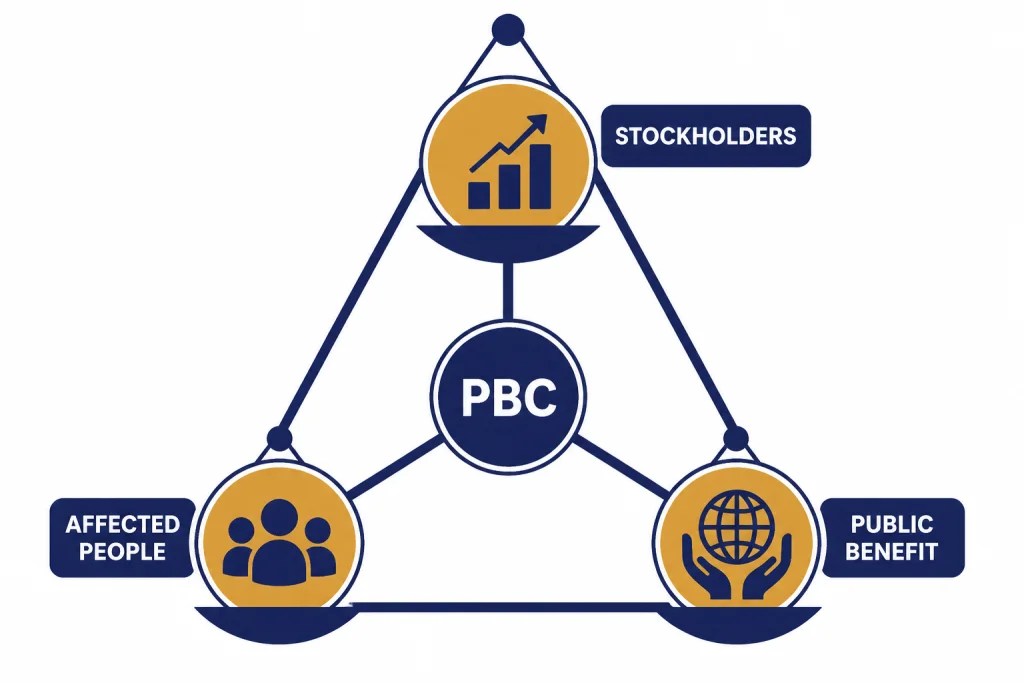
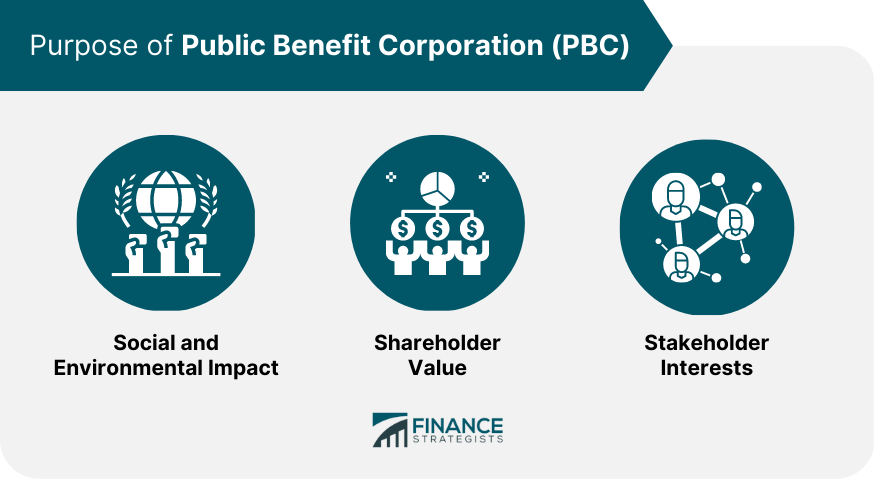
A PBC is a type of corporation created by state statute; Delaware’s version is the most common, and most states have something similar (some call it a “benefit corporation”). The company writes a specific public benefit into its charter, and the law then requires directors to balance three things: shareholders’ financial interests, the interests of people materially affected by the company, and that stated public benefit.
The main effect is protection for directors. In an ordinary corporation, especially during a sale, directors face pressure (and potential lawsuits) to maximize shareholder value. A PBC’s directors can legally choose a mission-aligned path over the highest bid. PBCs also have to report periodically to shareholders on how they’re pursuing the benefit. Enforcement is light, though: generally only shareholders can sue, there’s no outside auditor, and courts give directors a lot of latitude.
Certified B Corporation
B Corp certification comes from B Lab, a nonprofit. A company is assessed on its social and environmental performance across areas like workers, community, environment, governance, and customers, has to meet B Lab’s standards, publishes its results, and must recertify every few years. B Lab can check the company’s claims and revoke certification. B Corp is closer to an organic or Fair Trade label: it’s a third-party seal of approval, not a legal obligation.
How they overlap
B Lab requires certified companies to build stakeholder considerations into their governing documents. In states where it’s available, that often means converting to a PBC or benefit corporation, which is why many B Corps are also PBCs (Patagonia, Allbirds, and Warby Parker are examples of one or both). A company can be either one without the other, though.
Your two examples show the difference. Ben & Jerry’s is a certified B Corp, but as a subsidiary its real protection came from a private contract (the 2000 merger agreement), and that’s what is now being fought over in court. Once Upon a Farm is a PBC, so its mission obligation sits in its corporate charter and binds its own board, without depending on a parent company honoring a deal.
NOTE: The largest PBCs are now AI companies valued in the hundreds of billions of dollars. The largest B Corps are mostly consumer-goods subsidiaries of big multinationals, and they’re usually measured by revenue because they don’t trade on their own.
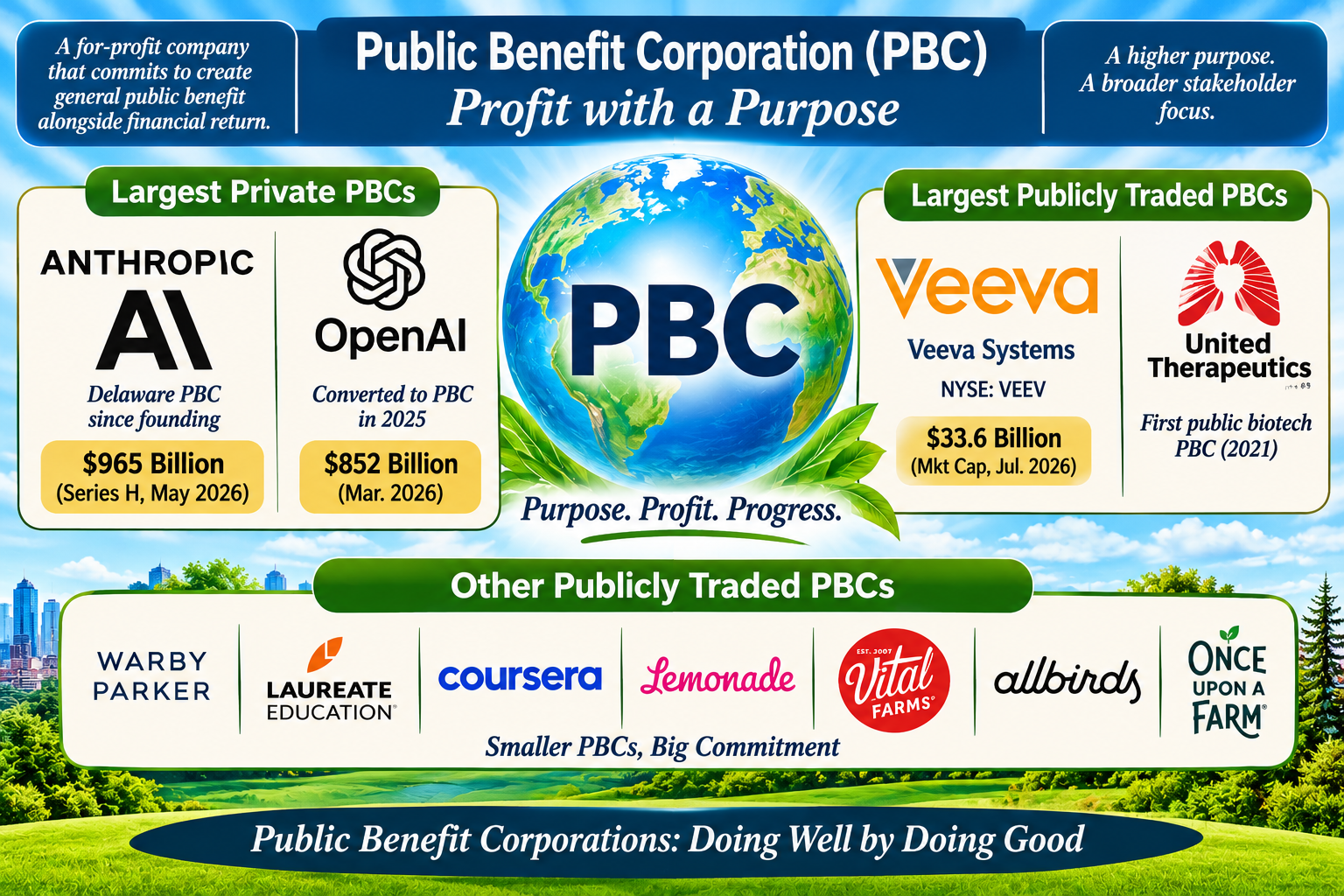
Largest Public Benefit Corporations
- Anthropic PBC (private, IPO pending). I should note that Anthropic is the company that makes me. Its May 2026 Series H stock valued it at $965 billion. It has been a Delaware PBC since its founding, and a “Long-Term Benefit Trust” appoints a majority of its board seats. As of the latest reporting I found, it was expected to start marketing its IPO in mid-October at the earliest and complete the listing in November, so it may not be public yet.
- OpenAI (private). Its most recent valuation was $852 billion, set in March 2026. It converted from a capped-profit structure to a PBC in 2025, and its nonprofit kept a 26% stake.
- Veeva Systems (public, NYSE). Veeva is the largest publicly traded PBC I found. It had a market cap of about $33.6 billion as of late July 2026. When it converted on February 1, 2021, it became the first publicly traded company to convert to a PBC.
- United Therapeutics (public). It was the first public biotech or pharmaceutical company to convert to a PBC, in October 2021. I didn’t pull a current market cap, but it is likely next in size.
- A group of smaller public PBCs with market caps of a few billion or less: Warby Parker (about $3.09 billion in Sustainability Magazine’s ranking), Laureate Education, Coursera, Lemonade, Vital Farms, Allbirds, and Once Upon a Farm (about $724 million at its IPO).
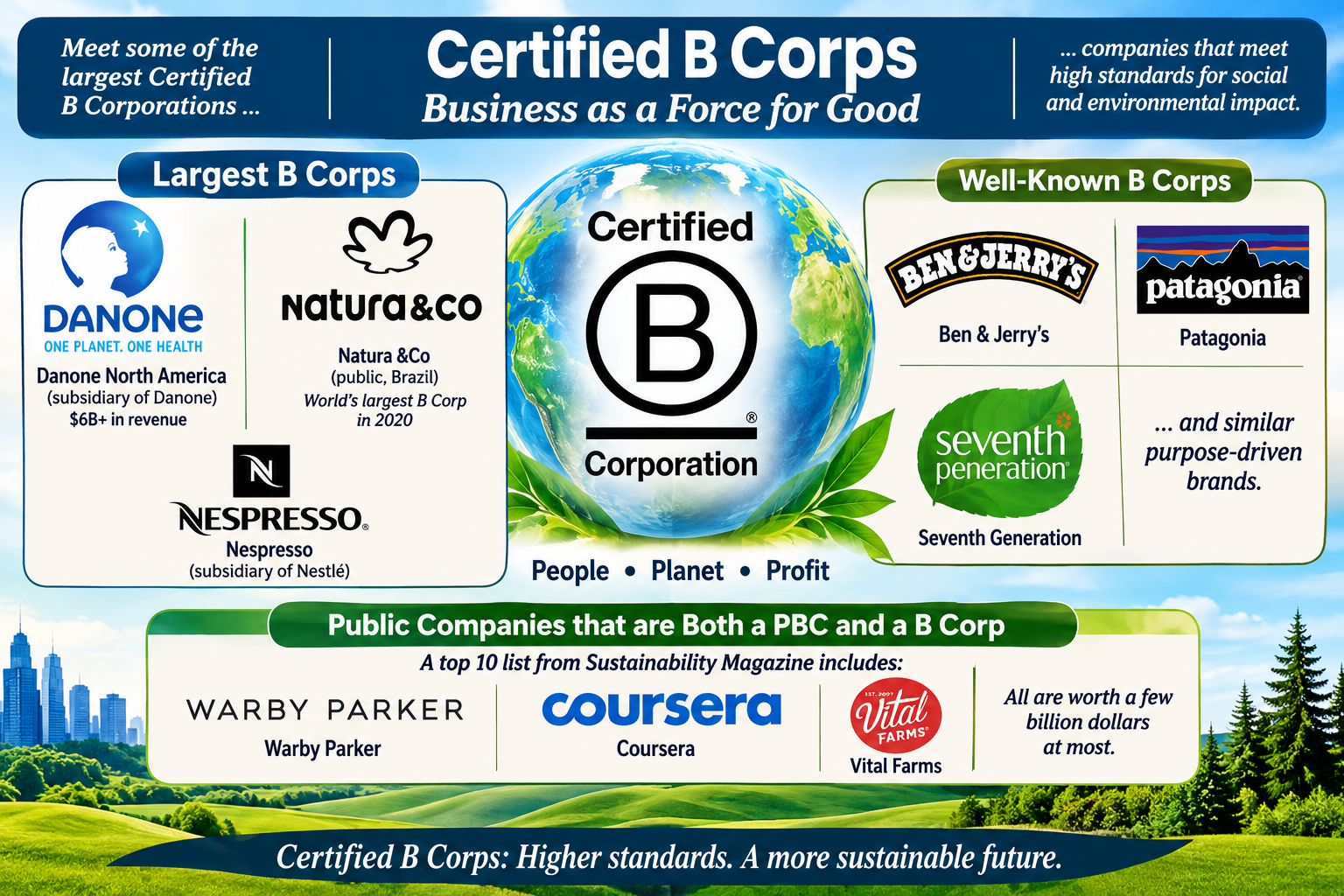
Largest B Corps
- Danone North America (subsidiary of Danone). With more than $6 billion in revenue, it has been called the largest B Corp in the world. Danone has certified many of its subsidiaries, but the parent company as a whole is not certified.
- Natura &Co (public, Brazil). In 2014, Natura became the first publicly traded company to earn B Corp certification. By 2020 it was calling itself the world’s largest B Corp. That was when it owned Avon, The Body Shop, and Aesop. It has since sold Aesop and The Body Shop, so it is smaller now.
- Nespresso (subsidiary of Nestlé). B Lab described it as one of the largest companies to certify anywhere. Its revenue is in the billions, but Nestlé doesn’t break out a figure the way a standalone company would.
- Ben & Jerry’s, Patagonia (private), Seventh Generation, and similar brands. These are well known, but their revenue is roughly in the low billions or less.
- Public companies that are both a PBC and a B Corp. Sustainability Magazine ranks the largest of these by market cap, and its top 10 includes Warby Parker, Coursera, and Vital Farms. All of them are worth a few billion dollars at most.
The biggest names on each list mostly don’t overlap. As you can see from the graphics above, Veeva, OpenAI, and Anthropic are PBCs but not B Corps, while Danone North America, Nespresso, and Ben & Jerry’s are B Corps inside larger companies that aren’t certified themselves.
These figures come from different dates and sources, and the AI valuations come from private funding rounds, not trading prices. Treat the ranking as approximate.

