
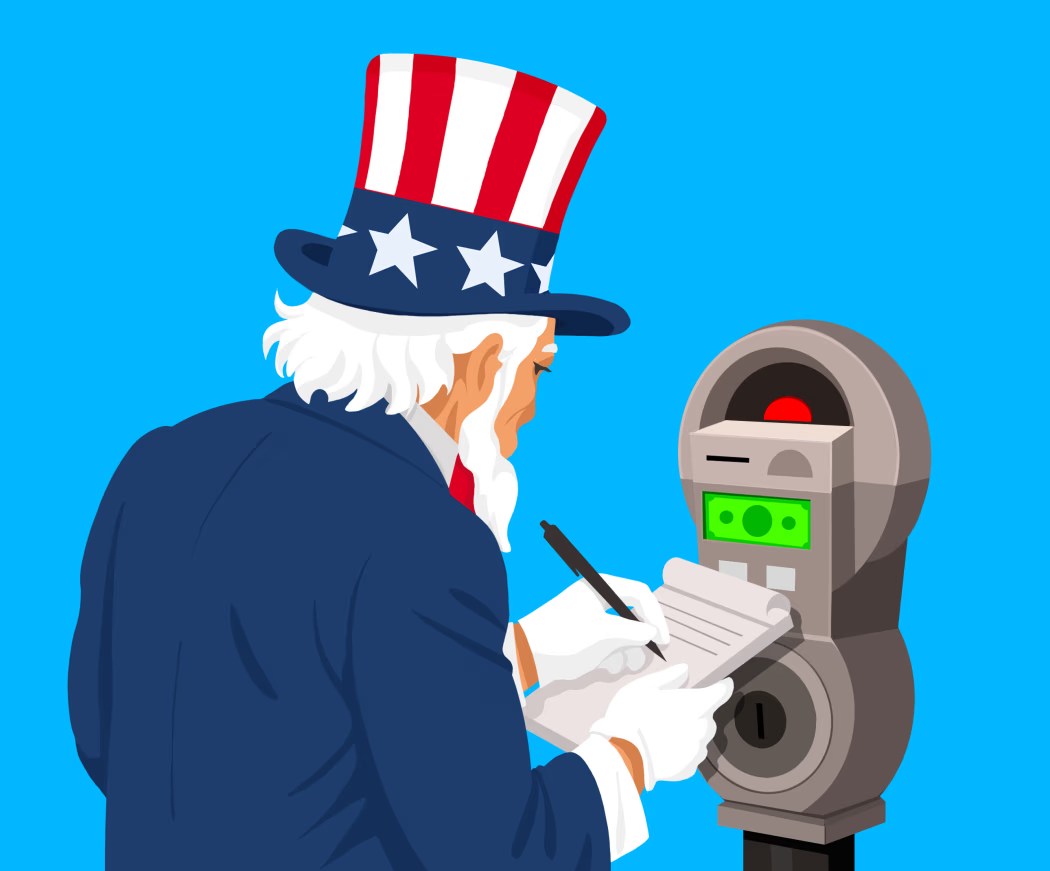
Friday Finance: Estimated Taxes are a PITA
At our regular Friday Finance call on February 20, 2026, we were discussing TAXES. You know the saying, “The only two guarantees we have in the US these days are death and taxes.” Well, this discussion hits on that second guarantee and what a Pain-In-The-Ass they can be, especially when you are blindsided with penalties.
Today the underlying story was about an interest payment that caused acute wallet pain. Our daughter is a vocal artist who generates income from concerts, vocal lessons, royalties, and recordings. Her income is inherently uneven from month to month and year to year. Her exasperation was due to missing a quarterly payment that was due to the IRS from 2024. The interest payment late fee was $112.50. While that sum sounds small, the size of the iritation was enormous. Equally unfortunate are the chaffing feeling around her collar and the deep disturbance to her nether regions. “It hits you like a boot to your butt, even if it is a small sum.”
The good news is that there are professionals out there who can help us avoid penalties for late payments. And they can remind us to find the “Safe Harbors” in the tax code that can shield us from higher tax bills than we deserve. This Friday Finance discussion happened on the same day as an article in the Wall Street Journal by Laura Saunders. The article appeared as ‘Estimated Taxes Are a Pain. Here’s How to Avoid Costly Penalties.’ The Saunders article helps provide the guardrails to save you from paying those late fees for the rest of your life.
To be more specific the fees come from penalties for underpayments of estimated taxes. Our IRS tax Form 1040 specifies the fee on Line 38. These fees are accrued when filers have mistimed their quarterly tax payments. If this penalty scheme sounds like gibberish, it is time to get more granular. Most Americans have their taxes (for your primary state of residence, federal, Social Security & Medicare) withheld by their employer. Every employee declares these withholdings on their individual IRS Form 4. Your employer uses that data as instructions on how much you want withheld for taxes due to the state and federal government that tax year. Known as “Employee Withholding Certificate,” the form should be reviewed by employees annually, adjusting it for any changes in your life (marriage, divorce, children, etc.). Many employees fail to review the Form 4, as it seems to be on auto-pilot. In every case the companies should be diligent about keeping employees aware of changes that they may want to make to their automatic withdrawals at least annually.
Increasingly in our US economy, more and more individuals do not have a steady, named employer who is automatically withholding tax burdens for them. In our Gig Economy more and more individuals have side-hussles and/or are small business owners generating their own income. Their cash flows are often “lumpy” and their resulting income is hard to predict. This is also true of retirees, serial investors, and entrepreneurs. The “RULES” about withholdings apply to anyone who makes over $1,000 a year. Most of these penalty payments are for income that have not had taxes withheld. These individuals, without Form 4 disciplines, are required by the IRS to file “Quarterly Taxes,” which break the tax burden into 4 equal parts. The “Estimated Taxes” are calculated from the previous year and divided your payments into these four chunks. The quarterly estimated payments are due on April 15 (paid in addition to the annual Form 1040 taxes), June 15, September 15, and December 31. To avoid penalties, the individuals taxpayers must send their payments (and those payments must be received by the IRS) on the dates above. (More on this topic below.)
So why is this such a Big Deal? The answer stems from individuals who are either confused by the rules, or they have thought it was a suggestion to pay quarterly, rather than a hard and fast requirement. In 2024 there were about 3,000,000 filers who have been charged interest penalties on their estimated taxes, and the amount that those making between $200,000 and $500,000 have been charged in penalties by the IRS is over $1.3 billion. According to the IRS, that sum is 30% higher than it was in 2021. And that sum does not include Form 1040 filers who make less than $200,000 or more than $500,000.
Background on the Employee Withholding Statutes
U.S. tax law requires filers not only to pay their taxes, but to pay them on time. Since World War II, and the return of 16,000,000 men and women who served overseas, lawmakers expanded the income tax provisions. To assist the companies and the returning GI’s with the tax obligations, the IRS instituted paycheck withholding policies, whereby employees had taxes withheld by their employers, who sent the appropriate portion of their wages to the IRS.
To prevent any gaming of the system, the IRS required that people with income not covered by withholding, such as from investments or self-employment, to pay estimated taxes on each quarter’s taxable income. Filers who fall short on payments often owe an interest-based penalty on the underpayment for the quarter, which compounds (6-7%) over the time it is tardy.
It is worth noting that 10,000 Baby Boomers are retiring every day, and these thousands will be stepping out of the work force over the next 10 years: that wave means 36 million retirees. Tax advisers are seeing the surge in retirees. “These tax penalties are more on our radar now because people are having life changes like retirement, gig work and investment accounts have grown,” says Jan Lewis, a CPA and tax specialist in Jackson, Mississippi, who is vice chair of the American Institute of CPAs. “Also, they’re very, very confusing.”
So in practical terms let’s say that our daughter has a $10,000 capital gain in February and waits until December to pay taxes on it, she could owe an underpayment penalty for three quarters, which could add up quickly…the late penalty could be 7% (lowering to 6% in May) or from $120-$170, going out of her pocket and to the Government.
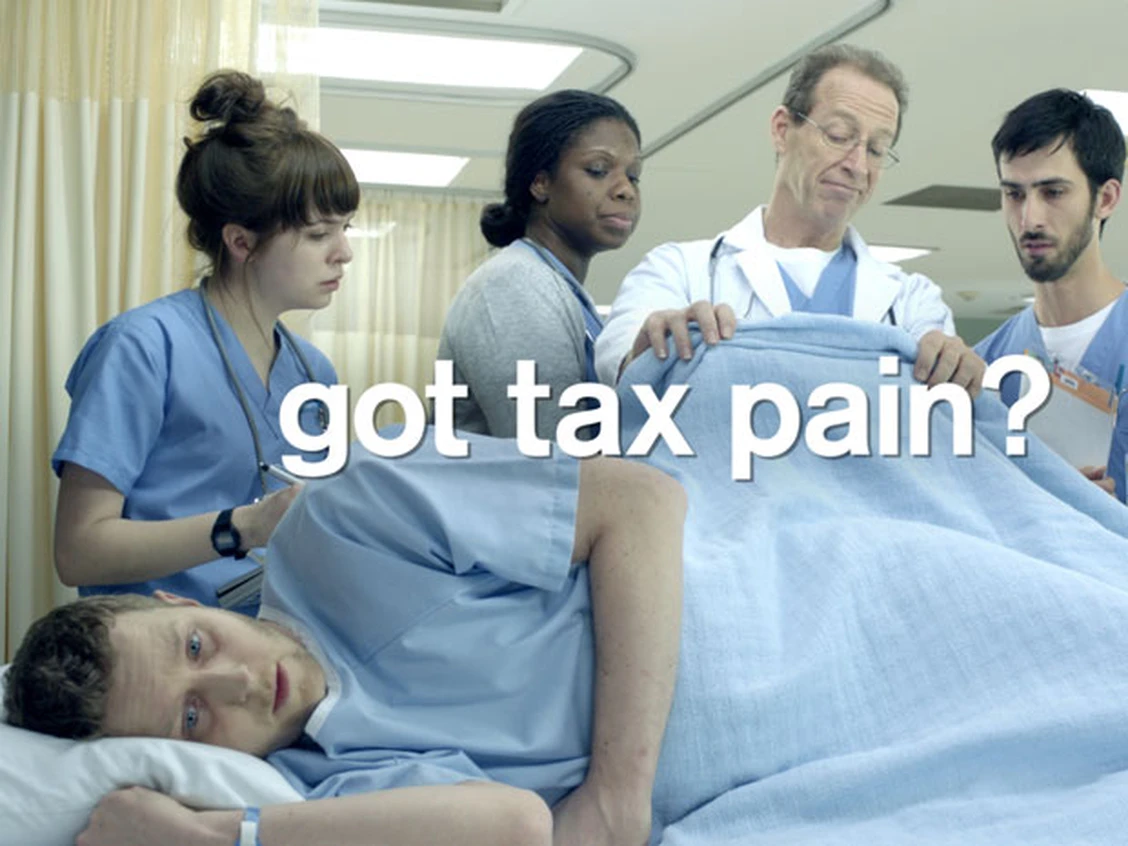
Taxpayer confusion, and general embarrassment are factors as well. Laura Saunders from the Wall Street Journal notes that, “the estimated-tax rules are one of the tax code’s most treacherous minefields, especially for filers who have income that’s eligible for withholding and income that’s not.” People claim that their income is so lumpy and unpredictable that they do not know enough about estimated taxes to make sure they are “doing the right thing.”
Saunders points out that ironically, the laws around taxes offers ways to avoid all of these tax penalties. First and foremost people need to understand the nuances of the tax code. Here’s more:
Know the Fundamentals
Tax filers who owe $1,000 or more in taxes each year normally must pay 90% of their tax bill for the current year long before the April 15 due date to avoid future penalties accrued from the prior year. They have three ways to pay taxes: 1) through withholding, 2) through quarterly estmated taxes or 3) a combination of the two. The deadline for taxes paid through withholding is December 31. For 2026 the quarterly payment deadlines are April 15, June 15, September 15 and January 15, 2027.
For taxes paid through withholding, the 90% threshold is what is known as a “Safe Harbor.” Paying up to this threshold, tax payers can prevent IRS penalties even if income is uneven. For estimated taxes on other income, the 90% often should be paid in four equal installments. This can be hard if income is variable.
Make Use of Other Safe Harbors
Another safe harbor protects all tax filers who pay 100% of their prior-year tax by the deadline, if income is $150,000 or less, or 110% if it’s more.
Saunders cautions tax payers to be careful: “To deflect penalties, safe-harbor amounts should be paid quarterly in equal installments. If a filer pays all the prior-year tax in the third and fourth quarters, penalties would likely apply for those missed first and second quarters (with interest). This provision can prevent penalties even if your income balloons. Say that someone owed $50,000 of taxes for 2024 and paid $55,000 (110%) in equal installments during 2025. Even if this filer had a taxable windfall in 2025 and will owe $100,000 of tax on April 15, there would likely be no underpayment penalties due to the safe harbor.”
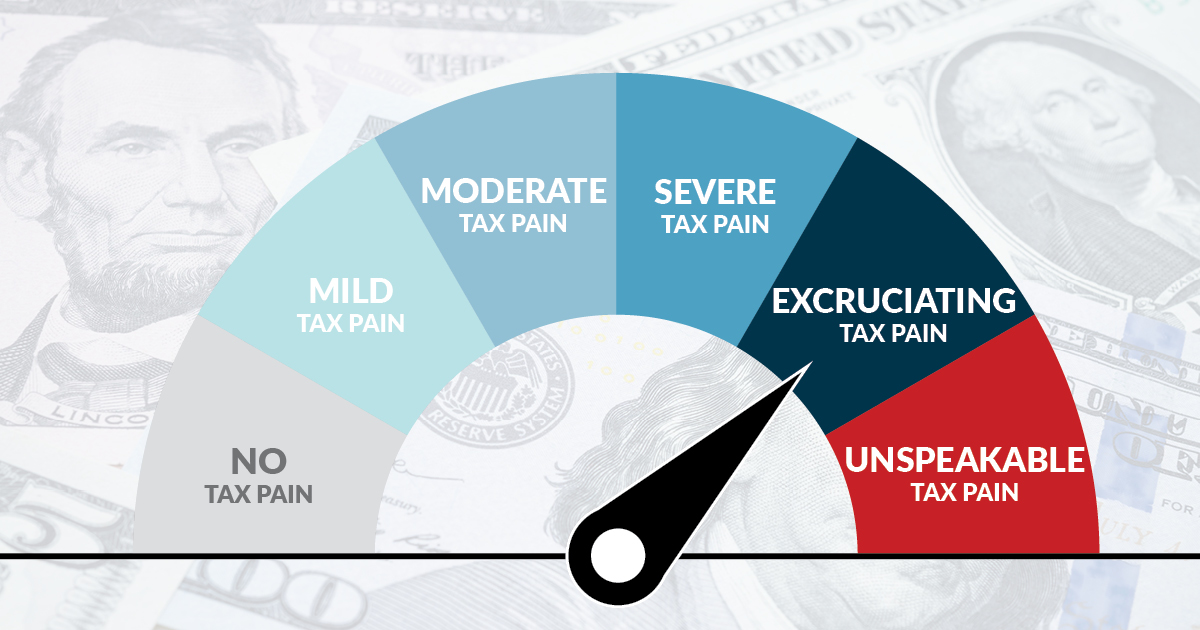
Fight Undeserved Tax Penalties
Although the IRS is comprised of real people, much of the work is done by IRS’s computers. Some computations can impose unwarranted penalties, because they treat income as if it’s earned equally throughout the year. Saunders offers the following example. “Let’s say that someone does a Roth IRA conversion or receives large fund payouts in the fourth quarter and pays the correct tax at that time. The system will likely assume the income was earned equally during the year while tax was paid only in the fourth quarter—and impose a penalty.”
“Tax filers often can avoid or reduce these penalties by filing Schedule AI of Form 2210, which details when income was earned and taxes paid during the year. But it’s often easier to use a safe harbor. The IRS will typically waive estimated-tax penalties for many filers who recently retired or became disabled, among other things.”
To request a waiver, follow the instructions on Form 2210.
Look to Withholding
Many filers, especially small business owners and retirees, have income that qualifies for withholding as well as income that doesn’t. Taxable withdrawals from traditional IRAs and similar plans, pensions, Social Security payments and employee bonuses are all eligible for withholding.
Such income has a great benefit: The law considers withheld taxes to come in evenly throughout the year, even if they don’t. If your tax advisor knows your income sources, they can advise you on the best way to pay the taxes you owe and avoid the penalties and interest charges for getting additional charges to your account.
There are instances where some investors don’t pay any estimated taxes during the year. Instead, they make a taxable IRA withdrawal late in the year, when their total taxable income is known. This way they have enough tax withheld to cover at least 90% of what they’ll owe, thereby sidestepping those PITA penalties.
=-$=-$=-$=-$=-$=-$=-$=-$=-$=-$=-$=-$=-$=-$=-$=-$=-$=-$=-$=-$=-
[1] The inspiration for this Friday Finance post was a conversation we had on February 20, 2026. Coincidentally an article on the exact same topic appeared in the February 21, 2026, by Laura Saunders. The article appeared as ‘Estimated Taxes Are a Pain. Here’s How to Avoid Costly Penalties‘ in the print version of our subscription the next morning.
 Henry E. Hooper