
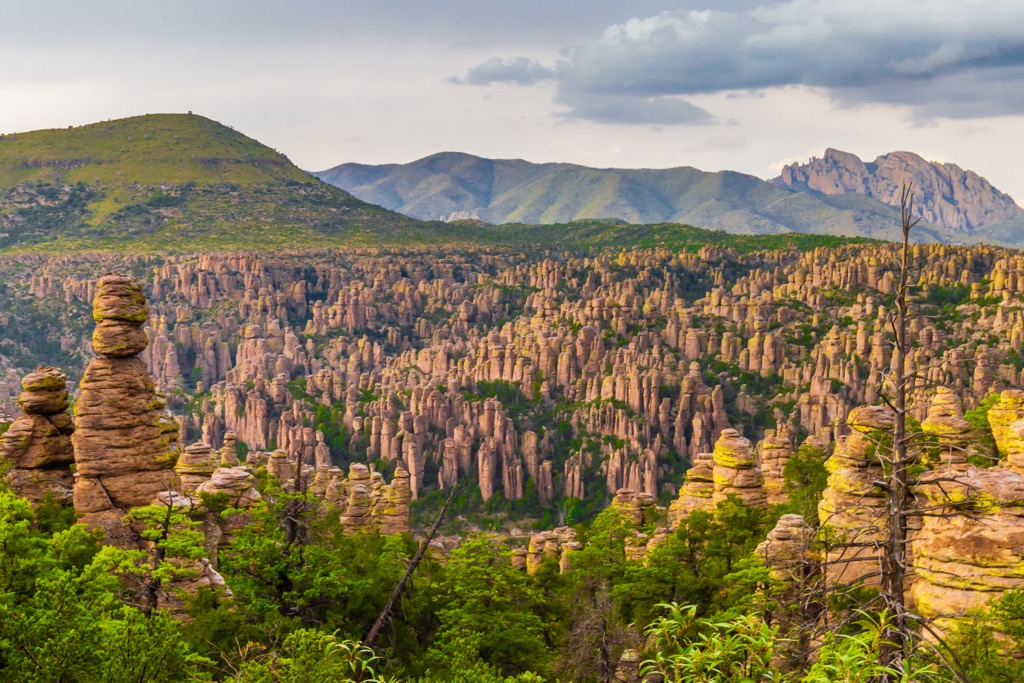
Birds of the Chiricahua Wilderness
Centella Point is about five miles south of Rustler Park Campground and offers the hiker a sensational vista of the Gila Wilderness to the north, Mexico to the south, and approximately 180 degrees of the Chiricahua Mountains and the desert of the San Simon Valley in between.
Yesterday we drove down from Rustler Park to South Fork in the Chiricahua Valley in search of the spectacular coppery-tailed trogon. A rare summer visitor to this section of southern Arizona, the trogon is a much-searched-for bird from the tropics of Central and South America. Brian Malcolm (Boston) and Tim Lord (Baltimore) are the most bird-curious campers in our group this year, so the daylight trip was a must for their personal life-lists of birds.
Once in South Fork, we grabbed our binoculars and went out early, listening and watching. In the distance, that morning, we heard what sounded like a croak, or as Brian Malcolm explained, “It made the sound of a dog being chased by a cat!” We creaped as carefully as we could in the underbrush toward the croaking sounds.
Suddenly a brilliant bird flew by too quickly for any positive identification, but we all knew that this was the trogon. It landed near us. We knelt down under the Gambel Oaks and focused our binoculars on what appeared to be the iridescent green back of a male trogon. I gave a disruptive whistle and slowly the trogon turned his head toward us, rotating his head toward us like an owl with 180 degree flexibility. The three shades of green on his back glittered, then his red/orange breast caught the light and filled the view of my binoculars. His wings were grayish, his face was black, and he had a bright yellow ring around his black eye. His bill was bright yellow and he had a bright white breast stripe/patch that separated his green/black throat from his brilliantly colored body. Having never seen a trogon in the wild, we were mesmerized. Due to the direction of his perch, I did not get a good look at the copper coloring on his tail, nonetheless I was spellbound by his overall beauty. His tail color, while a signature feature, seemed insignificant to the overall impression he gave us.

Coppery-Tailed Trogon (Trogon elegans)
The noted ornithologists, Rick “Catcher” Taylor, spoke to us on one outing. He is an ornithologist, naturalist, and author who lives in the area near Portal, Arizona. He described in detail the life around Cave Creek and the specific habits and environment needed for the trogon. He gave us a slide show of his findings, which were extraordinarily in depth. He mentioned that the name Trogon comes from the Greek word Trogonuris, which means “one who gnaws.” According to Taylor, the male trogon rarely gnaws, but his sharp bill is used skillfully in fighting, and it looks like it could be useful as a gnawing tool, if needed. Instead the male trogon typically takes over empty nests: i.e. they claim already prepared nests usually carved in sycamores and made in previous seasons by flickers and woodpeckers.
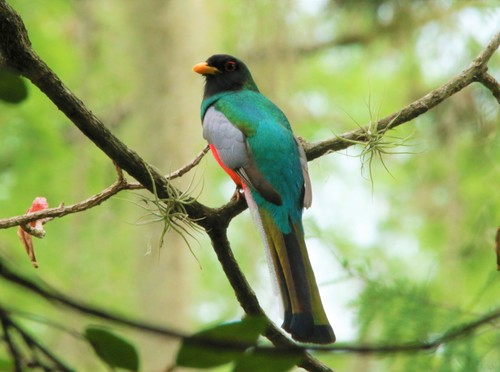
Only about 40%-50% of the adult male trogons have coppery tails, but all of them have those other distinctive features: red breasts, white strip/collar, and green backs. That morning the outer tail of the male appeared to be a lighter gold or dark lime green. The coloring of the female trogon is much more understated, AND they have the distinctive coppery tail feathers.

These birds are obligates of the pine/oak woodlands and migrate each year probably a minimal distance to protect themselves from the cold. (Interestingly trogons in warmer climates do not migrate at all.)
A large percentage of Mexican terrain is covered with pine/oak woodlands and only a small number of isolatd areas are suitable for trogons in the US, such as the Chiricahua and Santa Rita Mountain ranges. This particular region is ideal for trogons because of Cave Creek. As Rick Taylor pointed out, it has the lush riparian zone (sycamores, pines, maples, oaks, walnuts, etc.), the underbrush is rich (columbine, canyon grape, birchleaf buckthorn, mosses, ferns, etc.) and there is permanent water flowing in the creek. These elements combine to attract many birds of a feather.

Red-Faced Warbler (Cardellina rubrifrons)
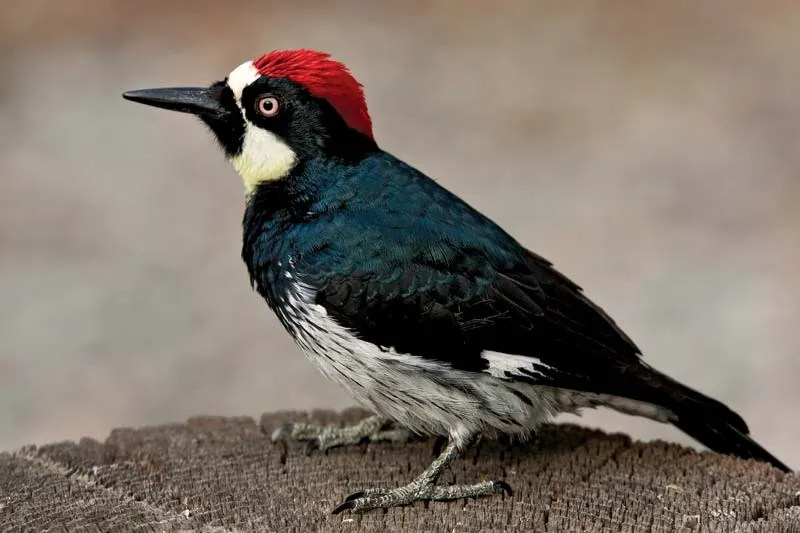
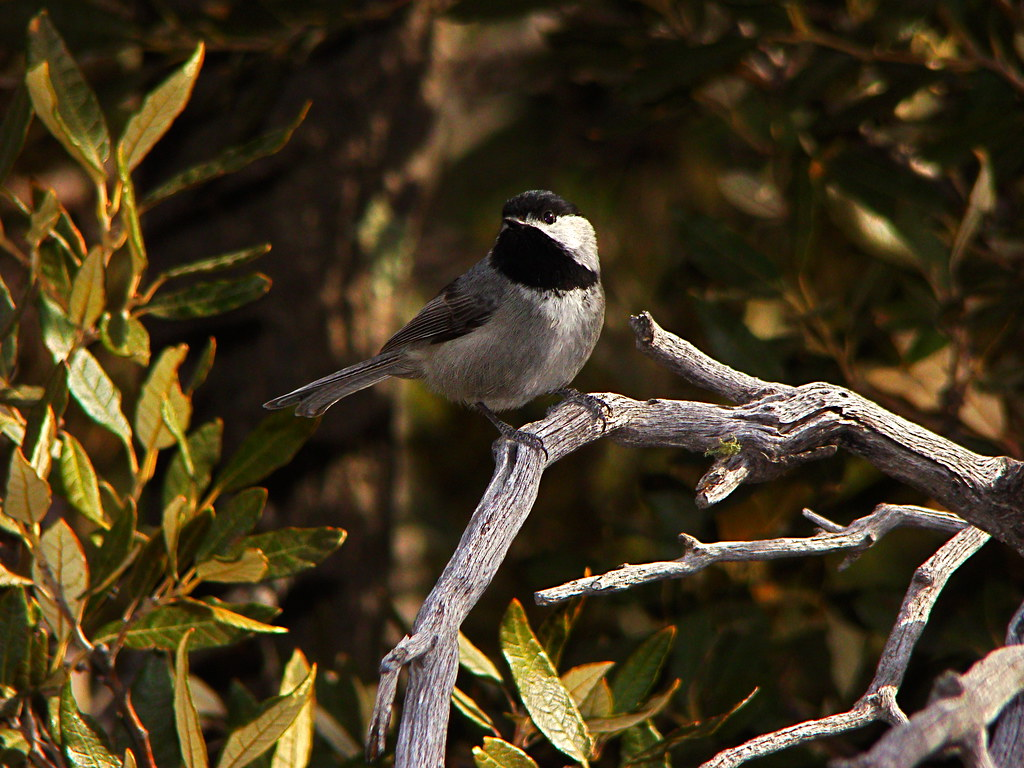
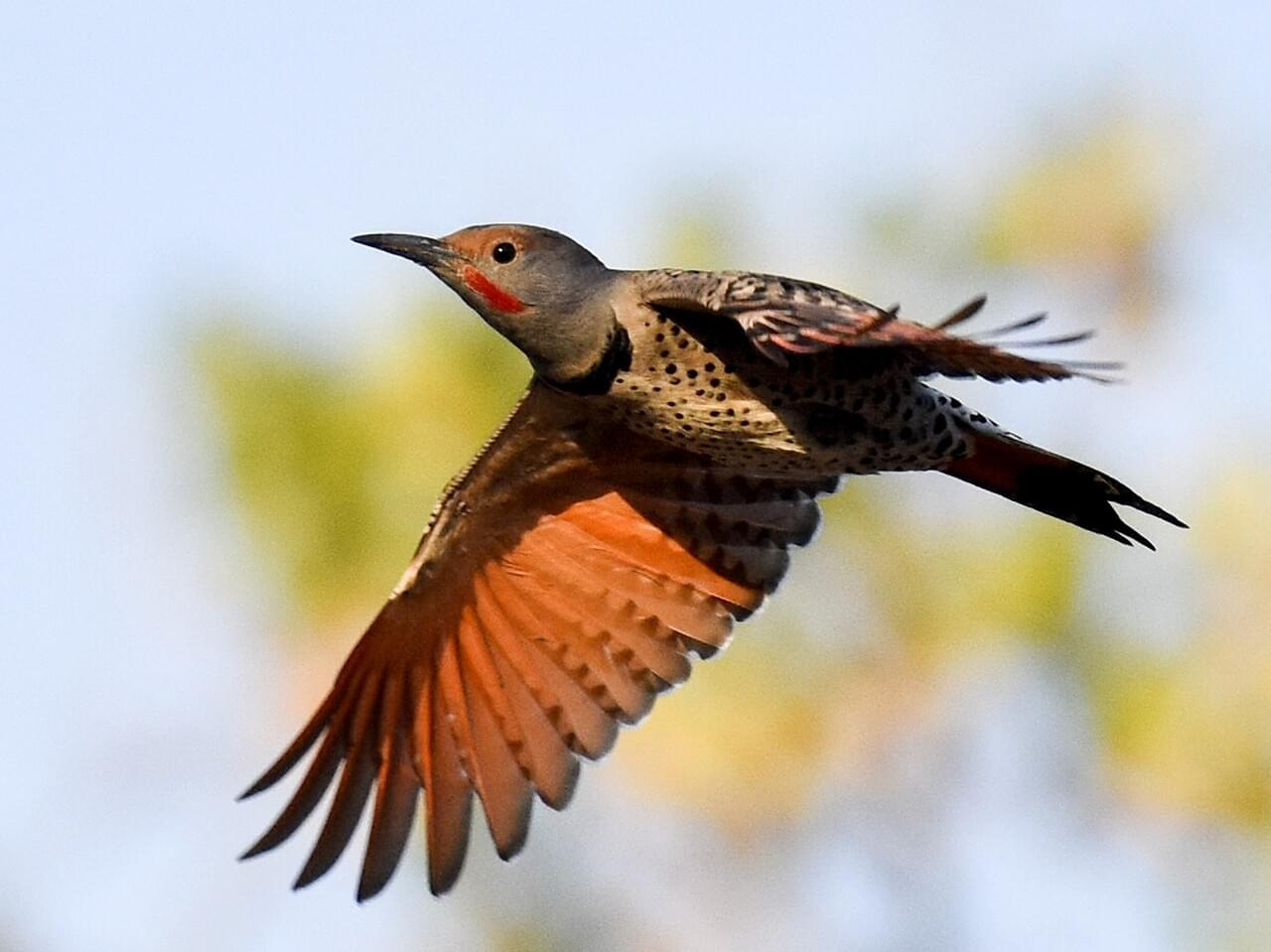
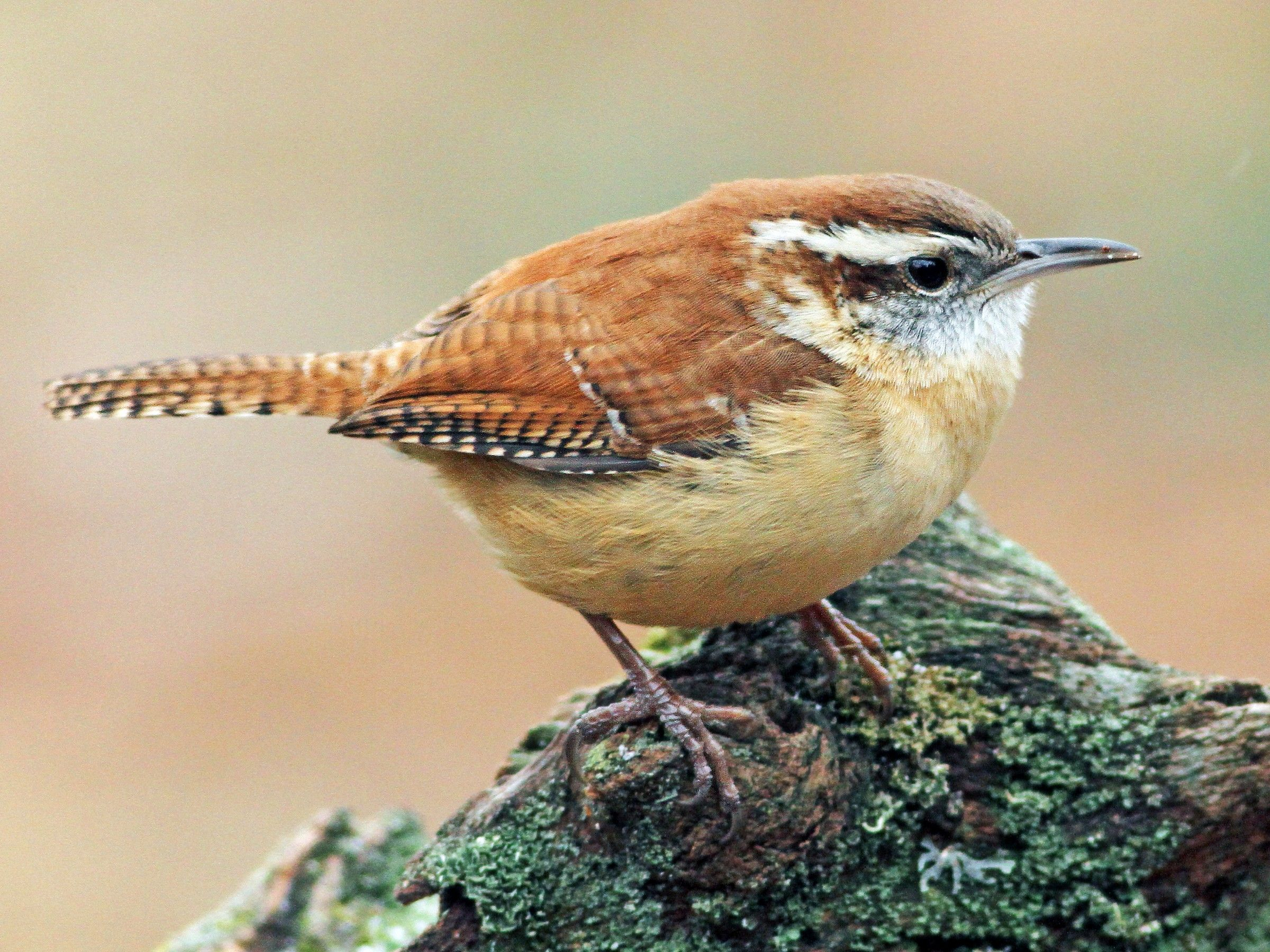
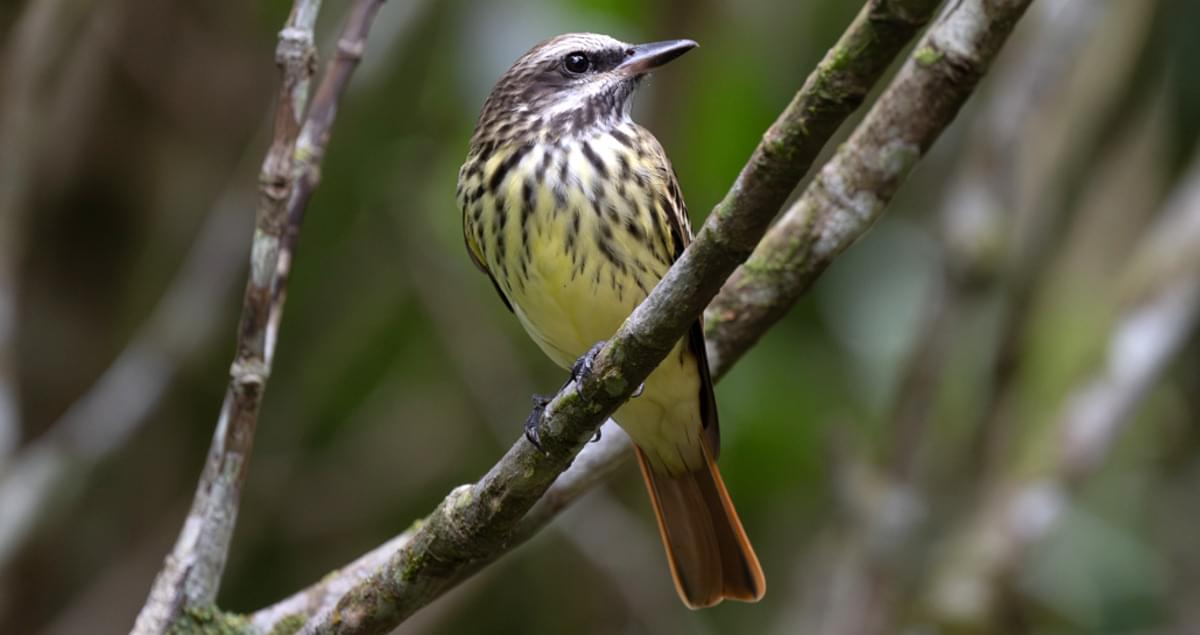
In two outings we spotted a series of unique species for our bird lists. Others, while more familiar to us, were equally fun to identify and watch for those days of bird watching. We positively identified a baker’s dozen +1 of these avian beauties: Red-Shafted Flickers (recently renamed Northern Flickers), Vermilion Flycatchers, Allen’s Hummingbirds, Calliope Hummingbirds, Gambel’s Quail, Red-Faced Warblers, Sulphur-Bellied Flycatchers, Black-Headed Grosbeaks, Scott’s Orioles, Mexican Chickadees, Carolina Wren (sometimes called warblers), Painted Redstarts, Acorn Woodpeckers, and Elegant Trogons. Quite the spot for birding.
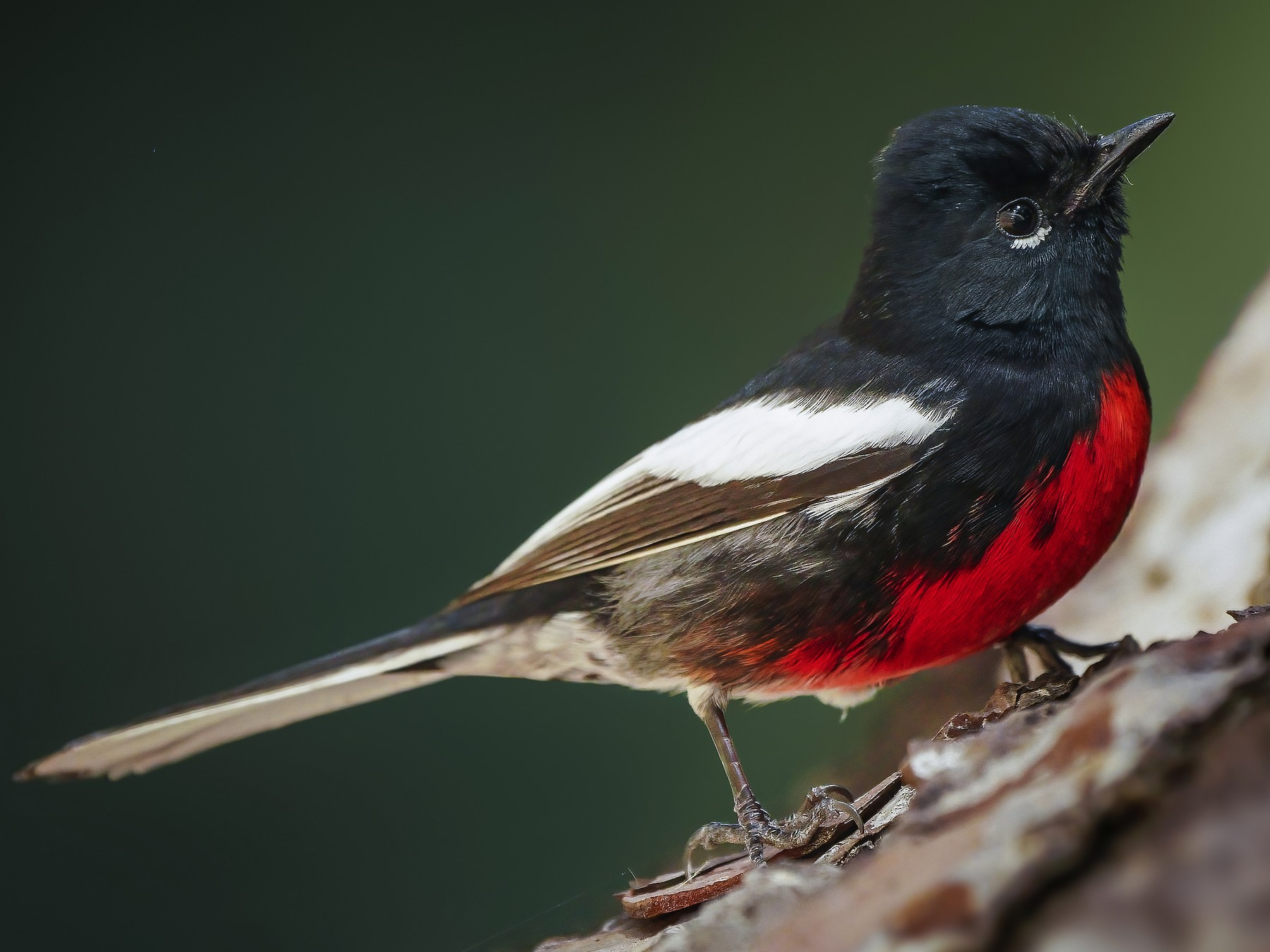

The variety of birds in these tropical oases and arid deserts was astonishing: the colors were so vibrant and the acrobatics of the males and females were so fun to watch.


Allen’s Hummingbird (Selasphorus sasin)

Gambel’s Quail (Callipepla gambelii)


 Henry E. Hooper